
Written by: Dr. Akash Chandawarkar, Board Certified Plastic Surgeon, Mirror Plastic Surgery | Last updated: September 9, 2026
Key Takeaways for St. Petersburg Injectable Patients
- Physician-led practices with board-certified injectors show safer outcomes and higher patient satisfaction than high-volume, non-physician settings.1
- Complication rates rise sharply when injectors lack deep anatomical training, with most complications treated by dermatologic surgeons originating at med spas.1
- Premier injectable care includes verifiable credentials, on-site physician oversight, emergency protocols with reversal agents, and supplier-neutral product choices.
- St. Petersburg patients should verify injector licenses through the Florida Department of Health portal and confirm that the medical director actively participates in care.
- Experience physician-led injectable care at Mirror Plastic Surgery in St. Petersburg.
The Research Behind Physician-Led Injectable Safety
A 2025 review in the Journal of Craniofacial Surgery shows that injectable fillers carry risks such as vascular occlusion, tissue necrosis, and vision loss. Complication rates increase when injectors lack detailed anatomical training, especially in high-risk areas like the glabella, nose, and nasolabial folds. A 2025 JMIR Dermatology study found that consumer interest in med spas has grown faster than consistent safety standards across states.
The safety data by provider setting is clear. Surveyed dermatologic surgeons report that between 61 and 100 percent of the complications they treated originated at med spas. A review of med spa safety protocols found that skin-tightening complications reached 77 percent at med spas versus zero percent at physician-run offices1. Non-physician providers were linked to more burns and discoloration, with injuries clustering in spa settings rather than medical offices.
Board-certified plastic surgeons complete residency training that includes facial vascular anatomy, which directly supports safer injectable treatment. Physician-level providers are identified as the safest choice for injectables because they can recognize vascular anatomy, stock reversal agents on site, and respond to vascular complications within the critical treatment window.
Schedule a physician-led injectable visit with Ellie at Mirror Plastic Surgery in St. Petersburg.
Defining Premier Injectable Care in St. Petersburg
The American Med Spa Association defines a medical spa as a hybrid between an aesthetic medical center and a day spa. It provides non-invasive aesthetic medical services under the oversight of a licensed healthcare professional, delivered by trained practitioners in a spa-like environment. That definition sets a basic safety floor for med spas.
A premier injectable practice goes well beyond that minimum. The “certified injector” label is not a protected title, and any company can issue a certificate. Verifiable, accredited training and documented supervised patient volume carry more weight. Employers hiring injectors rank credentials in this order: license and scope of practice first, documented supervised repetitions second, accredited training with named faculty third, and insurability fourth.
The Medspa Board’s certification standards require that every provider be licensed and active in their state. A qualified medical director must take ultimate responsibility for patient safety, and every patient must receive a good-faith examination by a physician, NP, or PA before treatment. Emergency preparedness standards include a minimum of 16 vials of hyaluronidase on hand at all times and a written vascular occlusion procedure plan reviewed annually.
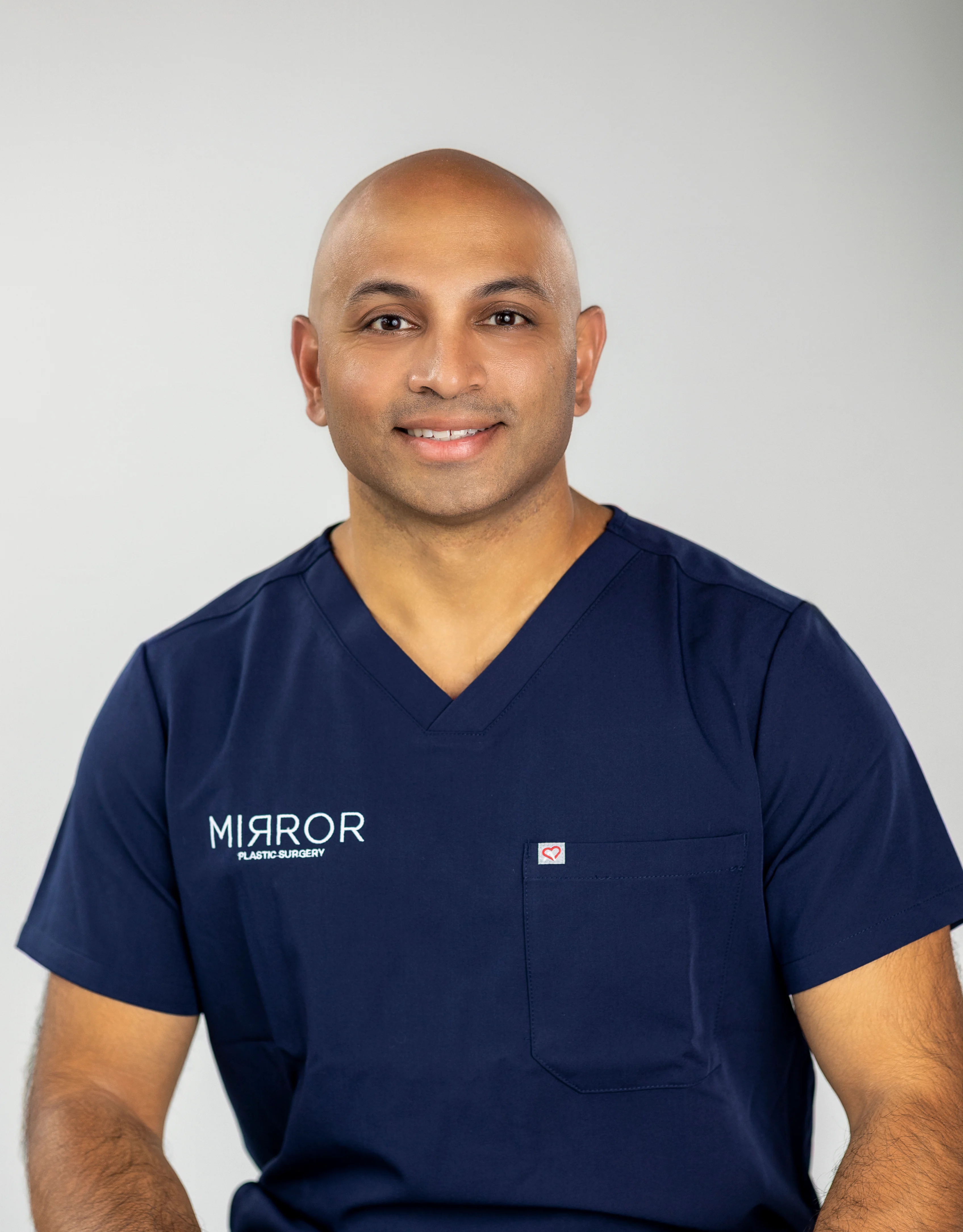
A board-certified plastic surgeon brings a surgeon’s command of subdermal anatomy, which makes injectable treatment safer and more precise. Mirror Plastic Surgery exemplifies this standard. Dr. Akash Chandawarkar is Harvard-educated, Johns Hopkins-trained, board-certified by the American Board of Plastic Surgery, and fellowship-trained in aesthetic surgery at MEETH/Lenox Hill Hospital. He personally performs every neuromodulator and dermal filler treatment at the practice, meeting the highest level of injector qualification described in the safety research.
Market Analysis of St. Petersburg’s Injectable Options in 2026
The Tampa Bay metro is home to more than 320 active med spas, dermatology offices, and plastic surgery practices, a number that has grown roughly 30 percent over three years. Injectables account for roughly 55 percent of all med spa procedures nationally, with neuromodulators leading at 9.88 million procedures in 2024 and dermal fillers at 5.33 million.
This rapid growth has outpaced regulatory oversight. The FDA issued its first-ever Drug Supply Chain Security Act warning letter to a medical spa in April 2026, after finding significantly more Botox administered than purchased from authorized distributors. Similarly, a January 2026 New York investigation of 223 med spas resulted in suspensions and fines for unlicensed procedures and unsafe conditions. With more than 10,000 medical spas operating in the United States, practices face a patchwork of state laws governing ownership, supervision, scope of practice, and delegation.
Market growth alone does not guarantee quality. The presence of dozens of injectable providers in the Tampa Bay area makes the distinction between a premier practice and a high-volume mill more critical and more challenging for patients to evaluate without expert guidance.
2026 Trends Toward Natural and “Undetectable” Aesthetics
A global study of more than 12,000 consumers presented by Allergan Aesthetics at AMWC 2026 found that 74 percent prefer aesthetic results that look undetectable. In the same study, 85 percent favored natural and subtle outcomes, and 71 percent worried about appearing overdone.1 NewBeauty’s State of Aesthetics Summer ’26 report found that 50.6 percent of respondents prefer subtle treatments that maintain a natural look, and 71 percent ranked natural-looking results as a top priority when choosing a neurotoxin.1
RealSelf’s Q1 2026 Trend Report shows a 12 percent decline in interest in Botox alongside strong growth in biostimulatory fillers like Sculptra, which signals a move toward longer-lasting, restorative approaches. This shift toward “undetectable” aesthetics favors practices that focus on subtle, harmonious changes over dramatic alterations.
Achieving natural-looking results depends on more than product selection. An overdone result more often comes from treating an area in isolation instead of in relationship to the whole face1, rather than from using too much product. Dr. Akash’s philosophy aligns with this research. His initial focus is on revitalizing inherent facial characteristics and considering volume augmentation only after foundational restoration. His full-face approach creates smooth transitions between the upper, middle, and lower facial regions, which helps prevent the “overdone” appearance that follows isolated, single-area injections.1
Red Flags That Signal a “Med Spa Mill” in 2026
Alex Thiersch, JD, CEO of the American Med Spa Association, highlights common red flags such as deals that seem too good to be true, reluctance to answer questions about practitioner credentials, and pressure to sign up for services. The FDA’s April 2026 warning letter underscores sourcing discrepancies as a primary enforcement focus. State regulators now pursue “ghost medical directors,” physicians who lend their names without meaningful oversight. In December 2025, a medical director was fined $10,000 for being on-site only two to three hours per month at a med spa he supervised.
The following warning signs come directly from 2026 enforcement actions and clinical safety research:
- No clear physician oversight, with no ability to identify the medical director or confirm active on-site involvement
- Inability to verify provider credentials, including reluctance to share license numbers or direct patients to state licensing portals
- Pressure to book same-day treatments or time-limited pricing that discourages thoughtful decision-making
- Unusually low pricing that may suggest diluted, counterfeit, or improperly sourced product
- No before-and-after photos from the treating provider, relying instead on stock imagery or heavily filtered selfies
- Providers who discuss benefits but skip risks, despite the requirement for a balanced, compliant consultation
- Unclear communication about what is being injected and why, without clear details on product, concentration, and rationale
- No emergency protocol for vascular occlusion, even though the Medspa Board requires reversal agents on hand and a written vascular occlusion procedure plan
Evaluation Framework for St. Petersburg Injectable Consultations
The American Med Spa Association advises that patients should have a face-to-face consultation with a doctor, NP, or PA prior to each medical treatment. The following evidence-based questions give St. Petersburg patients a clear framework for evaluating any injectable provider:
- Who will perform my injections, and what are their credentials? Verify the injector’s license through the Florida Department of Health’s online portal. Board certification by the American Board of Plastic Surgery represents the highest standard.
- Is a physician on-site and meaningfully involved in my care? “Ghost medical directors” remain a primary enforcement target. Ask how often the physician is present and whether they personally perform treatments.
- What is your protocol for vascular occlusion and other complications? A provider who cannot clearly describe an emergency response plan falls below the standard of care.
- How do you achieve natural-looking results? Ask about full-face assessment and harmonization rather than isolated area treatment.
- Can you show me before-and-after photos of patients with similar concerns? Photos should come from actual patients of the treating provider, not stock imagery.
- What products do you use, and can you verify their authenticity? Ask to see the sealed syringe and lot sticker. FDA 2026 enforcement actions target counterfeit and improperly sourced injectables.
- What does your consultation process involve? A legitimate consultation includes medical history review, discussion of goals, honest assessment of treatment appropriateness, and conversation about alternatives, rather than a package quote before questions are addressed.
Arrange a comprehensive consultation with Ellie at Mirror Plastic Surgery to walk through each of these safety and results questions in detail.
Why Mirror Plastic Surgery Reaches the Premier Standard
Mirror Plastic Surgery is located at 780 4th Ave S, St. Petersburg, FL 33701. Dr. Akash Chandawarkar personally performs all injectable treatments, so every neuromodulator and dermal filler is placed by a board-certified plastic surgeon with fellowship training in aesthetic surgery. The practice’s differentiators align directly with the 2026 safety research.
- Physician-led care at every treatment: Dr. Akash’s credentials, detailed earlier, match the highest standard of injector qualification described in peer-reviewed literature. He serves on advisory boards for Merz Aesthetics and Tiger Aesthetics, which keeps him current on injectable innovation.
- Concierge medicine model: Hour-long consultations with a top-to-bottom assessment contrast with the rushed, high-volume model that research links to higher complication rates. The practice limits itself to one to two procedures per day to provide focused attention before, during, and after every treatment.
- Safety-focused philosophy: Dr. Akash’s framework prioritizes safety, then function, then aesthetics, aligning with evidence that strong physician oversight reduces complication risk.
- Supplier-neutral recommendations: Mirror Plastic Surgery does not participate in product commission structures, so recommendations reflect individual patient anatomy and goals rather than portfolio quotas.
- Comprehensive product range: Neuromodulators (Botox, Dysport, Xeomin, Daxxify, Jeuveau) and dermal fillers (Juvederm, RHA, Versa, Restylane, Radiesse, Evolysse) allow tailored product selection based on patient factors instead of inventory limitations.
Research Limitations and Patient Due Diligence
The research strongly supports physician-led injectable care, yet limitations remain. Some studies on med spa complications rely on self-reported data from treating physicians, which may undercount events. Enforcement data also varies by state. Patients should independently verify all credentials through the Florida Department of Health’s licensing portal rather than relying only on marketing claims.
Frequently Asked Questions
What Is the Difference Between a Med Spa and a Plastic Surgeon’s Office for Injectables?
A medical spa functions as a hybrid between an aesthetic medical center and a day spa, offering non-invasive treatments under physician supervision. A plastic surgeon’s office offers similar injectable treatments, but the physician has completed residency training in facial vascular anatomy, which directly supports safer injectable care. Board-certified plastic surgeons stock reversal agents like hyaluronidase on-site and receive training in using cannulas over needles in high-risk zones. The American Med Spa Association advises that if the medical director of a med spa is not a board-certified plastic surgeon or dermatologist, the practice may not represent the safest option for injectables. At Mirror Plastic Surgery, Dr. Akash Chandawarkar, a board-certified plastic surgeon, personally performs every injectable treatment, combining surgical-level clinical depth with a premier aesthetic experience.
How Do I Verify an Injector’s Credentials in Florida?
The Florida Department of Health maintains an online licensing portal where you can verify any healthcare provider’s license by name and license number. Confirm that the license is active and not expired, suspended, or on probation, and screenshot the record on the day of verification. For physicians, verify board certification through the American Board of Medical Specialties at certificationmatters.org. The Medspa Board requires that every provider on a med spa team be licensed and active in their state, with current license numbers on file. A practice that hesitates to share individual provider credentials should be avoided.
What Is a “Med Spa Mill” and How Do I Avoid It?
A “mill” operates as a high-volume practice that prioritizes speed and sales over patient care. Documented red flags include no clear physician oversight, inability to verify provider credentials, pressure to book same-day treatments, and unusually low pricing that may suggest diluted or counterfeit product. The FDA’s 2026 enforcement actions focus on practices with sourcing discrepancies, such as more product administered than purchased from authorized distributors. The “ghost medical director” arrangement, where a physician signs an agreement but rarely appears on-site, now sits at the center of many state medical board investigations. Choose a practice where the physician is on-site and personally performs treatments, rather than one where the medical director’s name appears only on signage.
Are Injectables Safe When Performed by a Board-Certified Plastic Surgeon?
Injectable safety tracks the injector’s medical training and clinical experience more closely than the specific product used. Board-certified plastic surgeons complete residency training that includes facial vascular anatomy. A 2025 review in the Journal of Craniofacial Surgery documents that complication rates rise when injectors lack thorough anatomical training. As noted earlier, the majority of complications treated by dermatologic surgeons originate at med spas, not physician offices. No training removes anatomical variability, yet physician-level training improves the odds of early recognition and effective response.1 At Mirror Plastic Surgery, Dr. Akash’s surgical background shapes every injectable treatment with the precision of a reconstructive surgeon.
What Should I Expect During a Consultation at Mirror Plastic Surgery?
Dr. Akash provides a comprehensive, hour-long consultation that includes a top-to-bottom assessment. The process explores the emotional reasons behind your interest in treatment and your long-term goals. You receive a personalized, evidence-based treatment plan that supports your overall well-being rather than a quick package quote. Dr. Akash is known for his transparency and often advises clients when an expensive service is not necessary yet, which builds trust and helps ensure that you receive only the treatments you genuinely need. The consultation covers medical history, goal-setting, honest assessment of treatment appropriateness, product selection rationale, and a clear discussion of realistic outcomes and risks.
Conclusion: Choosing Evidence-Based Injectable Care in St. Petersburg
The 2026 research shows that injectable safety and outcomes depend on injector credentials, physician oversight, and safety protocols rather than amenities, reviews, or marketing. The U.S. med spa industry has grown to more than $17 billion with over 11,000 locations, while state oversight remains fragmented and FDA enforcement actions continue to rise. In this environment, choosing a provider based on evidence instead of aesthetics is essential.
Mirror Plastic Surgery meets every criterion the research establishes for premier injectable care, including physician-led treatment by a board-certified plastic surgeon, concierge-level consultation, a safety-focused philosophy, and supplier-neutral product recommendations. Dr. Akash Chandawarkar personally performs all injectables at 780 4th Ave S, St. Petersburg, FL 33701, bringing a surgeon’s command of facial anatomy to every treatment.
Request your injectable consultation with Ellie to experience the standard that current research, and your face, deserve.
Disclaimer: Results may vary from person to person. Editorial content, before and after images, and patient testimonials do not constitute a guarantee of specific results.
1 Results may vary from person to person. Editorial content, before and after images, and patient testimonials do not constitute a guarantee of specific results.