

Written by: Dr. Akash Chandawarkar, Board Certified Plastic Surgeon, Mirror Plastic Surgery | Last updated: September 9, 2026
Key Takeaways
- Non-surgical facial rejuvenation with neuromodulators and dermal fillers dominates minimally invasive procedures in the St. Petersburg and Tampa Bay area.
- The injector’s expertise, anatomical knowledge, and treatment philosophy matter more than the med spa brand or marketing.
- Elite injectors are board-certified in plastic surgery or dermatology, prioritize full-face balance, and maintain supplier-neutral practices.
- Red flags such as rushed consultations, pressure to purchase, and lack of credentials increase the risk of unnatural results and costly corrections.
- Schedule a personalized consultation with Dr. Akash Chandawarkar by scheduling your physician-led consultation for safety-first facial rejuvenation injections.
How This Guide Helps You Choose the Right Injector
Choosing the right injector for facial rejuvenation shapes both your results and your safety. This guide explains what separates elite injectors from average ones, how to spot red flags, and what to expect from a high-quality consultation. You will also see how physician-led care at Mirror Plastic Surgery applies these principles in St. Petersburg and Tampa.
What Makes an Injector Elite for Facial Rejuvenation Injections?
An elite injector for facial rejuvenation combines deep anatomical knowledge, a full-face approach, and a commitment to safety and natural results. They prioritize function and safety over aesthetics, use supplier-neutral products, and spend ample time in consultation to understand your unique facial structure and goals.
Several criteria distinguish elite injectors from average practitioners. The American Society of Plastic Surgeons identifies plastic surgery, facial plastic surgery, and dermatology as the only medical specialties that require comprehensive training in the treatments typically offered at med spas. Beyond board certification, the following qualities define an elite injector:
- Board certification in plastic surgery or dermatology, or equivalent advanced medical training
- Years of experience specifically in facial aesthetics, not general aesthetics
- Deep understanding of facial aging, volume loss patterns, and three-dimensional anatomy
- Ability to perform full-face balancing rather than isolated spot treatments
- A treatment philosophy that prioritizes safety and function before aesthetics
Schedule your physician-led consultation to see a detailed, anatomy-first approach in person.
Why the Injector Matters More Than the Med Spa Brand
The individual injector’s training and judgment influence your outcome more than the med spa’s name. Some regions allow nurses and PAs to begin administering aesthetic injections after just a weekend course, which shows how low the legal bar can be. High-volume clinics across St. Petersburg and Tampa often rely on rushed consultations, menu-based treatment planning, and rotating injectors, which increases the risk of unnatural results and complications.
Physician-led practices tend to take a full-face approach, prioritize long-term results, and avoid overtreatment, which supports more natural outcomes. Physician involvement also supports faster recognition and appropriate intervention when complications arise.
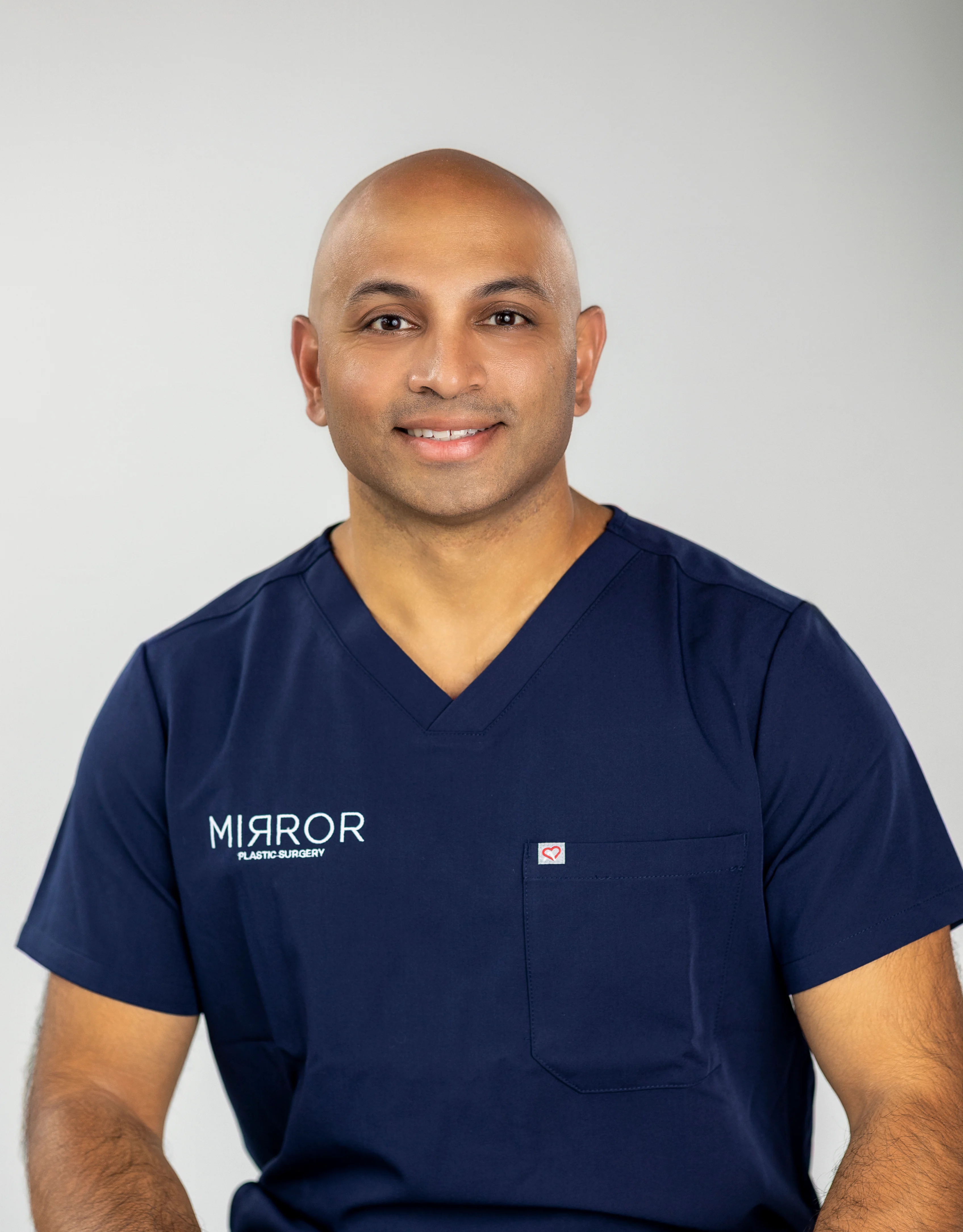
At Mirror Plastic Surgery, Dr. Akash Chandawarkar, a Harvard-educated, Johns Hopkins-trained, board-certified plastic surgeon, personally performs all injectable treatments. Every neuromodulator and dermal filler is placed by a physician with a surgeon’s command of facial and subdermal anatomy, which makes injectable treatment both safer and more precise. High-volume med spas often implement standardized protocols that ignore individual anatomy, rush consultation times, and prioritize treatment throughput over precision placement. Mirror Plastic Surgery limits itself to one to two surgeries per day and dedicates up to an hour to each consultation, which supports a slower, more precise model of care.
What to Look for in a Med Spa Injector in St. Petersburg and Tampa
Evaluating potential injectors across the Tampa Bay area starts with asking focused questions before any treatment begins. Good aesthetic medicine includes knowing when to treat, how much to treat, and when to decline further product. Use the following checklist when assessing any injector:
- Credentials and Training: Look for board certification in plastic surgery or dermatology, plus fellowship training in aesthetic medicine. Confirm the injector’s specific experience with facial injectables.
- Consultation Depth: A thorough initial consultation typically lasts between 30 and 60 minutes and includes medical history, facial assessment, goals, risk discussion, and time for questions.
- Full-Face vs. Spot Treatment: Favor injectors who consider how your entire face ages together. The strongest results come from planning for balance across the upper, middle, and lower face.
- Supplier Neutrality: Ask whether the injector is tied to product quotas or commissions. Supplier-neutral practices base recommendations on your anatomy and goals.
- Safety Protocols: Ask about complication management procedures, use of ultrasound guidance when appropriate, and the injector’s willingness to decline unnecessary treatments.
- Communication Style: Look for honesty, transparency, and clear education about the science, risks, and realistic outcomes.
Red Flags at Med Spas for Fillers and Injections
Red flags during a consultation include practitioners who rush, dismiss concerns, make unrealistic promises, pressure you to proceed immediately, lack credentials, or skip informed consent documentation. Additional warning signs include:
- Consultations under 15 minutes that feel like sales pitches
- Pressure to book multiple treatments or upsell products
- Inability to clearly explain the anatomy and rationale behind recommendations
- Lack of before-and-after photos or reluctance to discuss potential complications
- One-size-fits-all approaches with identical unit counts or syringe volumes for every patient
- Injectors who are not physicians or who lack advanced training in facial anatomy
Correction treatments for improperly placed fillers typically cost 2–3 times more than the original procedure and may require 3–4 appointments over 2–3 months. Choosing the right injector from the start is usually the most cost-effective choice.
Full-Face Balancing vs. Spot Treatment: What You Need to Know
Aging affects the face in three dimensions: volume loss, muscle dynamics, and skin quality. Treating only one area often creates unbalanced, “overdone” results that draw attention to the work instead of your features. At Mirror Plastic Surgery, Dr. Akash evaluates the upper, middle, and lower face as a cohesive unit and restores foundational volume and structure before addressing specific concerns.
This strategy supports smooth transitions between facial regions and avoids the pitfalls of isolated injections. A 2026 international consensus in the Journal of Cosmetic Dermatology concluded that natural outcomes go beyond appearance alone and include how treated areas look, feel, and move. The consensus also noted that patient characteristics, product selection, and injector-related factors all influence the final result. Dr. Akash focuses first on revitalizing inherent facial characteristics and considers volume augmentation after this foundation is in place.
The Role of Biostimulatory Fillers and Modern Innovations
Recent aesthetic trends emphasize regenerative treatments that support your own collagen rather than simply adding volume. Industry analysts describe this as “self-regeneration,” with demand centered on natural, durable, inside-out improvement. Biostimulatory fillers sit at the center of this shift.
Radiesse (calcium hydroxylapatite) provides immediate volume and contour while also stimulating collagen, with results lasting 12 to 18 months1. 1In early 2026, the FDA approved Radiesse for décolleté wrinkles using a hyperdilute approach, with a reported 71.2% responder rate at 24 weeks.1 AlloClae, an adipose-derived filler, represents another step forward in regenerative injectable medicine.
Dr. Akash serves on advisory boards for Merz Aesthetics (Radiesse) and Tiger Aesthetics (AlloClae), which keeps him closely involved with these innovations. Advanced clinics use portable ultrasound technology to visualize deep tissue structures and blood vessels in real time during facial injectable procedures, which adds a critical layer of safety by helping injections avoid intra-arterial placement. This practice is becoming standard among elite injectors and aligns with Mirror Plastic Surgery’s safety-first philosophy.
How to Evaluate Consultation Quality: Questions to Ask Your Injector
The consultation shapes your treatment plan, your safety, and your long-term results. The aesthetic consultation is where a practice either identifies patients who should not receive fillers or misses those warning signs and proceeds anyway. Bring these questions to any consultation:
- How do you assess my facial anatomy and plan for balance across my entire face?
- What is your training and experience in injectable treatments?
- How do you handle complications, and what is your protocol if something goes wrong?
- Are you supplier-neutral, or are you incentivized to use specific brands?
- Can you show me before-and-after photos of patients with similar facial structure to mine?
- What is your philosophy on saying “no” to a treatment that is not right for me?
- How long will my results last, and what maintenance will I need?
Common Misconceptions About Facial Rejuvenation Injections
Several persistent myths can push patients toward poor decisions about injectable treatments. Clarifying these misconceptions helps you set realistic expectations and choose safer options.
- “More product means better results.” The right amount in the right anatomical location determines quality. Over-injected Radiesse can look unnaturally firm along the jaw, which makes injector technique and judgment critical. Overfilling in any area leads to distorted, unnatural appearances.
- “Injections are very painful and require significant downtime.” Neuromodulators require no downtime, while dermal fillers may cause mild swelling or bruising for 2–5 days. Modern techniques and numbing options reduce discomfort, and most patients resume normal activities right away.
- “All fillers are the same.” Different fillers vary in consistency, longevity, and mechanism. Sculptra, Radiesse, and hyaluronic acid fillers each restore volume through different mechanisms and have different longevity, downtime, and reversal profiles, so they are not interchangeable in a facial rejuvenation plan.
- “Injections stop aging.” Injections can turn back the clock but do not halt aging. Ongoing maintenance and a long-term relationship with a trusted injector usually produce the best cumulative outcomes.
- “Any med spa can provide the same results.” Results depend on who is injecting, their training, the oversight in place, and how they respond when something goes wrong.
Risks, Limitations, and Common Tradeoffs
Facial rejuvenation injections have a well-characterized risk profile that every patient should understand. Common side effects include bruising, swelling, and temporary asymmetry. Vascular occlusion is one of the most serious filler complications, with reported incidences below 0.1%1. The risk is higher in anatomically risky regions such as the glabella, forehead, and nose, where connections with the ophthalmic artery can lead to skin necrosis or permanent vision loss.
If a vascular occlusion occurs during filler injection, early administration of hyaluronidase within 4 to 6 hours reverses approximately 80% of cases1, which is why providers should carry hyaluronidase on-site. Choosing a board-certified plastic surgeon who understands facial vascular anatomy and maintains emergency protocols reduces these risks substantially. Even with an excellent injector, results remain temporary and require maintenance. Some patients benefit from combination treatments, and not everyone qualifies for every injectable. A thorough consultation is essential to determine your suitability.
Why Mirror Plastic Surgery Stands Out in St. Petersburg and Tampa
Mirror Plastic Surgery offers a physician-led, concierge alternative to high-volume clinics across the Tampa Bay area. The practice structure, training, and safety protocols reflect a deliberate focus on precision and long-term relationships.
- Physician-Led Injections: Dr. Akash Chandawarkar, a Harvard-educated, Johns Hopkins-trained, board-certified plastic surgeon with fellowship training in aesthetic surgery at the Manhattan Eye Ear & Throat Hospital/Lenox Hill Hospital, personally performs all injections. His surgical command of facial anatomy supports a level of precision and safety that mid-level providers typically cannot match.
- Concierge Medicine Philosophy: Mirror Plastic Surgery limits itself to one to two surgeries per day and dedicates up to an hour to each consultation. This schedule allows for detailed planning and individualized care.
- Safety-First Approach: The practice prioritizes safety, then function, then aesthetics. Dr. Akash will recommend against treatments that are not in a patient’s best interest, even when that reduces revenue, which builds long-term trust.
- Supplier-Neutral Product Selection: Mirror Plastic Surgery does not rely on product quotas. Dr. Akash selects products based on each patient’s anatomy from brands including Botox, Dysport, Xeomin, Daxxify, Jeuveau, Juvederm, RHA, Versa, Restylane, Radiesse, and Evolysse.
- Full-Face Restorative Approach: Dr. Akash focuses on revitalizing inherent facial characteristics first and considers volume augmentation after foundational restoration. This approach helps patients avoid the “overdone” appearance common in high-volume clinics.
- Advanced Training and Innovation: Fellowship training in aesthetic surgery and additional study in medical innovation at Stanford keep Dr. Akash current on biostimulatory fillers and emerging technologies.
- Complication Management: As a board-certified plastic surgeon, Dr. Akash is equipped to manage potential complications, which adds an extra layer of safety beyond what many nurse injectors and mid-level providers can offer.
Experience the Mirror Plastic Surgery approach and see how physician-led care feels in a real consultation.
Frequently Asked Questions
How Long Do Facial Rejuvenation Injections Last?
Neuromodulators like Botox typically last 3–4 months, while dermal fillers last 6–18 months depending on the product and treatment area. Biostimulatory fillers such as Radiesse can last 12–18 months by stimulating your own collagen production, and Sculptra can last up to two years across a full treatment series. Daxxify, the newest FDA-approved neuromodulator, has an average duration of approximately 6 months in clinical trials.1 Your injector will recommend a maintenance schedule based on your treatment plan and how your anatomy responds over time.
Are Facial Rejuvenation Injections Safe?
When performed by a qualified, experienced injector, facial rejuvenation injections have an excellent safety profile. As noted earlier, vascular occlusion is rare, though the risk is higher in certain areas. The overall risk profile improves when a board-certified plastic surgeon performs treatment, understands facial vascular anatomy, maintains on-site emergency protocols including hyaluronidase, and follows a safety-first philosophy. Over 90% of adverse events from dermal fillers are mild and transient, such as redness, swelling, and bruising at the injection site.1
What Is the Difference Between Botox and Dermal Fillers?
Botox and other neuromodulators temporarily relax targeted muscles to soften dynamic wrinkles like frown lines, forehead lines, and crow’s feet. They work by blocking the release of acetylcholine at the neuromuscular junction, which reduces muscle contraction. Dermal fillers restore volume, structure, and contour to areas affected by age-related volume loss, such as the cheeks, jawline, and nasolabial folds. Many patients benefit from combining both approaches, using neuromodulators for the upper face and fillers for the mid and lower face in a “liquid facelift.” A skilled injector assesses the entire face to determine the right combination for your anatomy and goals.
How Do I Choose Between a Med Spa and a Plastic Surgeon for Injections?
The injector’s expertise matters more than the practice label, yet training depth often differs. A board-certified plastic surgeon brings surgical-level anatomical knowledge, comprehensive complication management skills, and a full-face treatment philosophy that most mid-level providers do not have. High-volume med spas may employ practitioners with limited training and rushed consultations. A dermatology or plastic surgery practice becomes especially important if you have a history of complications, plan treatment in high-risk zones such as the nose or periorbital area, or want access to both non-surgical and surgical options as your needs change.
What Should I Expect During a Consultation for Injections at Mirror Plastic Surgery?
A consultation with Dr. Akash Chandawarkar at Mirror Plastic Surgery is a comprehensive, top-to-bottom assessment that can extend up to an hour. The visit begins with an open-ended discussion of your motivations, long-term goals, and medical history. Dr. Akash then performs a detailed assessment of your facial structure, muscle movement, volume distribution, and skin quality, evaluating the upper, middle, and lower face as a cohesive unit. You receive a personalized, evidence-based treatment plan with clear explanations of each recommendation, realistic expectations, potential risks, and a long-term maintenance strategy. You can take time to decide, without pressure to proceed the same day.
Conclusion: Choose Expertise for Your Facial Rejuvenation Injections
The best med spa for facial rejuvenation injections in St. Petersburg and Tampa is defined by the injector’s anatomical expertise, safety protocols, and commitment to full-face balance. Mirror Plastic Surgery, led by board-certified plastic surgeon Dr. Akash Chandawarkar, offers a physician-led, concierge alternative to high-volume clinics across the Tampa Bay area and prioritizes safety, function, and natural results.
To schedule a consultation, contact Mirror Plastic Surgery at 780 4th Ave S, St. Petersburg, FL 33701. Call or text (727) 361-6515 or email hello@mirrorplasticsurgery.com.
Your Next Step
Choosing the right injector is the most important decision in your facial rejuvenation journey. Schedule your personalized consultation at Mirror Plastic Surgery and receive a detailed, physician-led assessment from Dr. Akash Chandawarkar, the anatomy-first, safety-first choice for facial rejuvenation injections in St. Petersburg and Tampa.
Disclaimer: Results may vary from person to person. Editorial content, before and after images, and patient testimonials do not constitute a guarantee of specific results.
1 Results may vary from person to person. Editorial content, before and after images, and patient testimonials do not constitute a guarantee of specific results.


