Written by: Dr. Akash Chandawarkar, Board Certified Plastic Surgeon, Mirror Plastic Surgery | Last updated: September 9, 2026
Key Takeaways
- Brazilian butt lift recovery usually spans 6–8 weeks for daily activities, with final results visible between 3 and 6 months.1
- The first two weeks include strict no-sitting protocols to protect newly transferred fat cells and support strong survival rates.1
- Pain peaks during the first 48–72 hours but is manageable with prescribed medication, then shifts to over-the-counter options by days 8–9.1
- Most patients return to desk work within 2–4 weeks using a BBL pillow, while full exercise clearance usually occurs around week 8.1
- Plan a personalized consultation with Mirror Plastic Surgery to receive a tailored recovery plan from Dr. Akash and his concierge team.
What To Expect Immediately After Surgery (The First 48 Hours)
You wake up in a compression garment, feeling groggy and sore. Pain peaks in the first 48–72 hours, with most patients rating it between 5 and 7 out of 10 at its worst.1 Prescription pain medication usually manages this early phase effectively.
Several things in the first 24–72 hours are entirely normal:
- Blood-tinged drainage from liposuction incisions for 24–72 hours, which helps reduce fluid buildup
- Significant swelling and bruising at both the donor sites and the buttocks
- Grogginess from anesthesia that makes standing and walking require assistance
- The absolute rule: no sitting directly on your buttocks, no lying on your back
You cannot drive yourself home after a BBL and must have a responsible adult stay with you for at least the first 24–72 hours. Arrange that caregiver before your surgery date.
At Mirror Plastic Surgery, Dr. Akash or a member of his team checks in on you personally after surgery. You have direct access for questions about medications, drainage, or any concern that arises at any hour.
Week-By-Week BBL Recovery Timeline
Every patient heals differently, but this timeline reflects a standard, evidence-based recovery protocol from board-certified plastic surgeons. Use it as a roadmap and adjust with your surgeon’s guidance.
Weeks 1–2: The Strict No-Sitting Phase
For the first two weeks, patients should avoid sitting directly on their buttocks entirely. Instead, lie on your stomach or side, stand when possible, and use the toilet briefly if unavoidable.
The reason is biological. Newly grafted fat cells rely on a new microvascular blood supply to survive. Direct pressure crushes those fragile cells, cutting off blood supply and reducing fat survival.
Key milestones and instructions for weeks 1–2:
- Pain: Prescription pain medication is typically used for the first 3–5 days, followed by over-the-counter medication. By day 8–9, most patients transition off prescription pain meds as acute pain drops significantly.1
- Donor site discomfort: The liposuction donor sites are often more uncomfortable than the buttocks themselves. This surprises many patients.
- Sleeping: Sleeping on the stomach is the most effective position during the first eight weeks. Side sleeping is a safe alternative with pillows to prevent rolling onto the back.
- Movement: Short walks of 2–5 minutes every two hours while awake are recommended to prevent blood clots.
- Compression garment: Stage 1 compression garments are worn 23 hours per day, removed only for brief showering.
- Nutrition: Aim for 80–100 grams of protein per day and at least 64 ounces of water, while avoiding high-sodium foods, alcohol, and smoking.
Weeks 3–4: Gradual Return To Light Activity
Brief sitting of 10–15 minutes at a time using a BBL pillow is typically allowed starting around day 8–10. This can increase to 20–30 minutes by week three and 45 minutes by week four. The BBL pillow shifts body weight onto the thighs, keeping the buttocks suspended and pressure-free.
- Pain: Pain is significantly reduced, and most patients manage with over-the-counter options.
- Swelling: The “fluffing” stage, where firm, tight tissue transitions to a softer, more natural feel, begins around weeks 3–8 as new blood vessels establish and tissue relaxes.
- Fat survival: By the end of week four, approximately 60–80% of transferred fat has established blood supply.1
- Work: Most patients can return to remote or desk-based work within 10–14 days,1 provided they use a BBL pillow correctly.
- Lymphatic drainage: Lymphatic massage sessions often begin around week 2 or 3 to speed swelling resolution, with a typical protocol of 6–12 sessions over 4–6 weeks.
- Compression garment: Wear the garment about 12 hours per day (typically overnight) during weeks 3–4.
Weeks 5–6: Returning To Work And Normal Routine
Sitting time with a BBL pillow extends to 30–45 minutes per session. Light exercise is cleared at weeks 5–6: walking, light upper-body work, and gentle stretching. Squats, lunges, and lower-body resistance training remain on hold.
- Work: Most patients with desk jobs can return to the office with a BBL pillow and a supportive chair. Jobs involving physical labor may require 4–6 weeks before resuming full duties.
- Emotional note: Many patients feel frustrated or impatient during this phase. Your body is healing, but you may not yet see the results you envisioned. The emotional journey section below explains this phase in more detail.
Weeks 7–8: Exercise And Full Activity
By 6–8 weeks, most patients can slowly resume normal sitting without special cushions,1 as the fat has stabilized and blood supply is established. Running, jumping, and other high-impact exercises should wait until about week 8 to avoid jarring the healing tissue. Always get your surgeon’s clearance before resuming any lower-body exercise.
- Sleeping: You can gradually return to sleeping on your back.
- Compression garment: Compression garments are typically worn for 6–8 weeks post-BBL in a two-stage approach and are usually retired around this point.
- Important caveat: You may feel fully recovered, but your body is still healing internally. Ease back into exercise gradually.
Months 3–6: Final Results And Long-Term Care
Roughly 20–30% of grafted fat is reabsorbed by the body in the first three months,1 before surviving cells fully revascularize. Surgeons account for this by transferring more fat than the intended final volume. Around month three, most patients can see a reliable preview of their final result, with the full picture clear by six months.1
Maintaining a stable weight within 10 lb of your surgical weight is the single most important factor in preserving BBL results long-term. With a stable weight and healthy lifestyle, BBL results can last comfortably into the 10-year mark and beyond.1
Once you understand the timeline, the next concern is how recovery feels day to day, especially pain levels.
How Painful Is BBL Recovery?
By day 8–9, pain drops significantly, and by week 2, most patients describe it as mild soreness.1 The sensation often feels more like the aftermath of an intense workout than sharp surgical pain.
The liposuction donor sites—abdomen, flanks, thighs—are often more uncomfortable than the buttocks themselves. Many patients do not expect this.
Pain management usually follows a stepped approach:
- Prescription medications for the first 3–5 days
- Transition to over-the-counter acetaminophen or ibuprofen (as approved by your surgeon) by days 8–9
- Ice packs on donor sites only, never directly on the buttocks
- Short, gentle walks every two hours to promote circulation
A 2026 comprehensive review in Current Pain and Headache Reports emphasizes that pain-management plans should be multimodal rather than relying on any single anesthetic approach. Dr. Akash applies this principle in his pre-operative and post-operative protocols. Before you leave the surgical center, you receive a detailed, personalized pain management plan, and his team is available around the clock to answer questions.
Sitting And Sleeping Restrictions: Protecting Your Results
Newly grafted fat cells rely on a new microvascular supply to survive. Direct pressure on the buttocks early in healing crushes those cells, which can ruin results and lead to deformed contours. This biology explains the no-sit rule.
When sitting is unavoidable:
- Use a BBL pillow that shifts weight entirely onto your thighs
- Keep sessions short at first, about 10–15 minutes, and build gradually
- Stand and move between every sitting period
- Sitting too early after a BBL can decrease fat survival, reduce volume, affect symmetry and contour, and impact the overall outcome
For sleeping, stomach or side positions are required for the first 4–6 weeks. Use extra pillows to prop yourself up and prevent rolling onto your back. Occasional accidental back sleeping usually does not ruin results, but consistent pressure should be avoided for several weeks. Most surgeons clear normal sitting and back-sleeping between weeks 6–8.
Once you feel confident about sitting and sleeping, everyday tasks like using the bathroom and showering become the next focus.
How To Handle Daily Activities: Pooping, Showering, And More
Recovery still includes real life. You need clear, practical steps for bowel movements, showering, and garment care.
Bowel Movements
Constipation is one of the most common and least-discussed challenges of BBL recovery. Prescription opioids slow the digestive system, reduced activity compounds the problem, and positioning on the toilet feels awkward when you cannot sit normally.
Use these practical solutions:
- Start a stool softener such as Colace the day after surgery and avoid waiting until you are uncomfortable
- Stay hydrated with at least 64–80 oz of water daily
- Eat high-fiber foods such as fruits, vegetables, and whole grains
- Use a step stool or squatting position on the toilet to elevate your knees, which reduces straining and shifts pressure away from the buttocks
- Do not strain. If you have not had a bowel movement by day 3–4, contact your surgical team immediately.
Showering And Incision Care
Clean, gentle hygiene protects your incisions and supports healing.
- Wait until your surgeon clears you to shower, typically 48–72 hours post-op
- Keep incisions clean and dry, and gently pat them dry with a clean towel
- Avoid submerging in a bathtub, pool, or hot tub until your surgeon explicitly clears it
Compression Garments
Compression garments after a BBL are typically worn 23 hours per day during early recovery, removed only for showering once the surgeon clears bathing. The garment design leaves the buttock area open or covered only by light non-compressive mesh because direct compression on grafted fat reduces blood flow and lowers graft survival rates.
- Keep a second garment on hand so you can alternate while one is being washed
- Hand-wash in cold water with mild detergent and air-dry flat to preserve elasticity
- Warning sign: If you experience numbness, tingling, sharp pain, or skin discoloration under the garment, it may be too tight. Size up or loosen adjustable closures immediately and contact your surgical team.
When Can I Return To Work And Exercise?
10–14 days3–4 weeks4–6 weeksDay 1 (2–5 min every 2 hours)Weeks 5–6Weeks 5–6Week 8+Week 8+
| Activity | Typical Timeline | Notes |
|---|---|---|
| Desk work (remote) | Requires BBL pillow and frequent standing breaks | |
| Desk work (in-office) | Requires BBL pillow and a supportive chair | |
| Physical labor | Requires surgeon clearance | |
| Short walks (clot prevention) | Essential from day one | |
| Brisk walking / light cardio | With surgeon clearance | |
| Upper-body resistance training | Avoid lower-body exercises | |
| Lower-body workouts (squats, lunges) | With surgeon clearance only | |
| High-impact exercise (running, jumping) | With surgeon clearance only |
Returning to exercise too early is one of the most common ways patients work against their own outcomes. Excessive cardio within the first 3–6 months can drive overall body fat reduction and shrink BBL results. Patience here protects your investment.
Potential Complications And When To Call Your Surgeon
Knowing warning signs helps you act quickly if something feels off. Call your surgeon or seek emergency care for any of the following:
- Fever above 101.5°F
- Chest pain or shortness of breath (possible fat embolism)
- Calf pain or leg swelling on one side (possible blood clot)
- Inability to urinate for more than 8 hours
- Increasing pain after week 2
- Wound separation or unusual discharge
The most serious risk associated with BBL is fat embolism. The American Board of Cosmetic Surgery’s core safety recommendation is to keep fat injection out of the muscle and use a subcutaneous-only approach, injecting fat only into the tissues below the skin and no deeper. Injecting fat into the deep gluteal muscle is dangerous because the muscle houses large pelvic veins. If a cannula punctures one, fat can travel to the lungs or heart, causing a deadly pulmonary fat embolism.
Dr. Akash uses the subcutaneous-only injection technique, placing fat above the muscle to minimize this risk. His safety-first philosophy, which prioritizes safety, function, and aesthetics in that order, guides every decision. He performs only 1–2 surgeries per day, keeps his full attention on your care, and remains personally available during your recovery.
Explore Dr. Akash’s safety protocols and concierge aftercare model to see how they protect you at every stage of your BBL journey.
The Emotional Journey Of Recovery
The physical milestones tell only part of the story. The psychological arc of BBL recovery is real and deserves attention.
Many patients feel frustrated, impatient, or low during recovery. You have invested significant time, money, and emotional energy, so wanting instant results feels natural. A psychological dip is common during weeks 4–6, when patients may feel “deflated” as swelling shifts. This phase reflects normal inflammation, not fat loss.
Significant reabsorption occurs during months 2–3, which can make results look smaller for a time. This pattern reflects normal biology. The fluffing stage, where transferred fat softens and settles into a more natural look, continues through months 2–6. Most patients find results look significantly better at month four than at month one.
Use these coping strategies during emotional lows:
- Focus on what you can do, such as light walks, reading, or catching up on shows
- Prepare meals and snacks in advance so nutrition stays simple and stress-free
- Connect with online BBL support communities to share experiences with people who understand
- Remind yourself that final results take 3–6 months, so week 5 does not reflect your outcome
Mirror Plastic Surgery’s concierge model keeps you supported throughout this process. Dr. Akash and his team provide regular check-ins that address your emotional well-being alongside your physical healing. That continuity of care reflects a practice built on relationships rather than volume.
Why Choose Mirror Plastic Surgery For Your BBL?
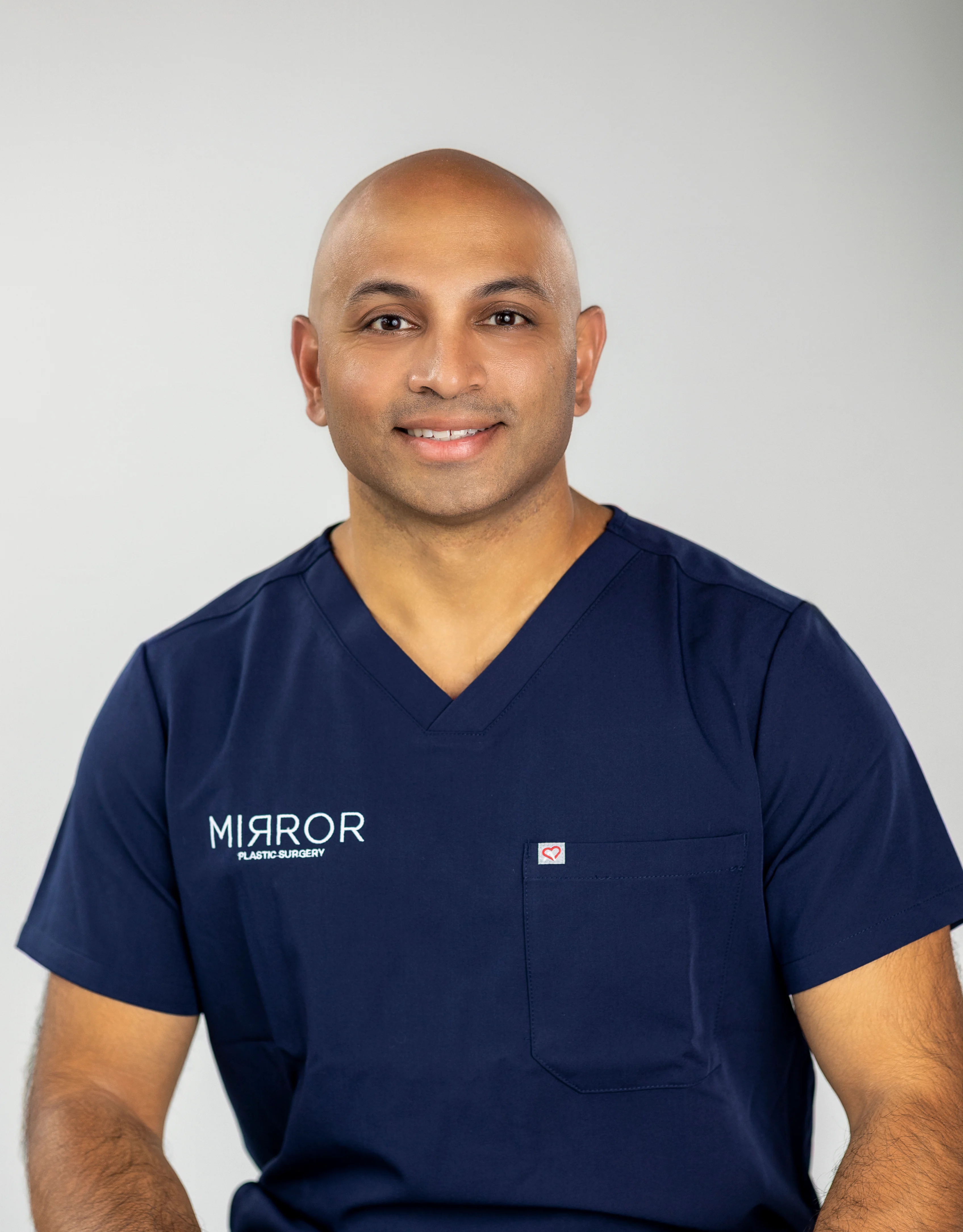
Dr. Akash Chandawarkar is a Harvard-educated, Johns Hopkins-trained, board-certified plastic surgeon with specialized fellowship training in aesthetic surgery at Manhattan Eye Ear & Throat Hospital (MEETH)/Lenox Hill Hospital. He also holds medical innovation training from Stanford University and serves as an advisory board member for Merz Aesthetics and Tiger Aesthetics, keeping him at the forefront of technique and technology.
The American Board of Cosmetic Surgery warns that unqualified surgeons in high-volume, heavily discounted centers performing BBL have led to a significant number of fatalities and high incidences of post-surgery complications. Mirror Plastic Surgery takes the opposite approach. The practice limits to one or two surgeries per day, provides direct surgeon access, and offers personalized aftercare without call centers.
For a procedure like BBL, where technique, fat placement depth, and post-operative compliance all directly determine your safety and your results, the practice you choose matters as much as the procedure itself.
Your recovery journey starts with the right surgeon. Schedule a conversation with Ellie at Mirror Plastic Surgery to discuss your goals and learn more about our personalized approach to BBL surgery and aftercare. Call or text us at 727-361-6515.
Frequently Asked Questions
How Long Does BBL Recovery Take?
Most patients can return to desk work within 2–4 weeks and resume full activity, including lower-body exercise, by week 8. However, complete healing and final results take 3–6 months as swelling resolves and transferred fat stabilizes.1 The fat that survives past the six-month mark is considered permanent, provided weight remains stable.1
When Can I Sit After A BBL?
Direct sitting on the buttocks must be avoided for at least the first two weeks. After that, short sitting periods of 10–15 minutes using a BBL pillow that shifts weight to the thighs are gradually introduced. Most surgeons clear normal sitting without a pillow between weeks 6–8, beginning with soft surfaces. Sitting too early compresses newly transferred fat cells before they have established a blood supply, which reduces fat survival and can affect your final contour.
How Painful Is BBL Recovery?
Pain peaks in the first 48–72 hours1 and then steadily improves. Pain decreases significantly by day 8–9, and by week 2, most patients describe it as mild soreness rather than acute pain. The liposuction donor sites, including the abdomen, flanks, and thighs, often cause more discomfort than the buttocks. Pain management usually starts with prescription medication for the first 3–5 days, then shifts to over-the-counter options as needed.
When Can I Exercise After A BBL?
Light walking is encouraged from day one to prevent blood clots, with short 2–5 minute walks every two hours. Most surgeons clear brisk walking and light upper-body work around weeks 5–6. Lower-body resistance training, including squats and lunges, is typically not cleared until week 8 or later. High-impact exercise such as running and jumping usually follows the same timeline. Always get your surgeon’s explicit clearance before resuming any exercise program.
How Do I Poop After BBL Surgery?
Constipation is common after BBL due to prescription opioid pain medications, reduced mobility, and the challenge of positioning on the toilet without sitting directly on the buttocks. Start a stool softener such as Colace the day after surgery and avoid waiting until you are uncomfortable. Stay hydrated with at least 64–80 oz of water daily, eat high-fiber foods, and use a step stool to elevate your knees on the toilet, which reduces straining and shifts pressure away from the butt.
Disclaimer: Results may vary from person to person. Editorial content, before and after images, and patient testimonials do not constitute a guarantee of specific results.
1 Results may vary from person to person. Editorial content, before and after images, and patient testimonials do not constitute a guarantee of specific results.