

Written by: Dr. Akash Chandawarkar, Board Certified Plastic Surgeon, Mirror Plastic Surgery | Last updated: September 9, 2026
Key Takeaways
- A surgical BBL delivers permanent results for most transferred fat that survives.1 The visible shape still changes with weight, aging, and lifestyle.
- Non-surgical BBL options using Radiesse or AlloClae create gradual, collagen-stimulating volume that usually lasts one to two years and needs maintenance.1
- Weight stability is the single most important factor for preserving long-term BBL results. Larger weight swings are the leading cause of volume change.
- Modern safety protocols, including subcutaneous-only injection with real-time ultrasound guidance, have dramatically reduced BBL mortality. Surgeon selection and strict adherence to guidelines remain critical.
Ready to explore your BBL options? Schedule a personalized consult with Ellie at Mirror Plastic Surgery to discuss which approach fits your goals.
How A BBL Works: Surgical Vs. Non-Surgical
The Surgical BBL: A Fat Transfer Procedure
A surgical BBL is a two-stage procedure. First, liposuction removes fat from donor areas such as the abdomen, flanks, or thighs. That fat is then purified and strategically injected into the buttocks to enhance shape, projection, and volume. The goal of modern BBL is a natural, proportionate contour, not exaggerated volume. Key principles include waist-to-hip ratio, smooth transitions, and a balanced silhouette. Because this is a surgical procedure, it requires anesthesia and a meaningful recovery period.
The Non-Surgical BBL: Injectable Biostimulators
The non-surgical BBL uses injectable biostimulatory fillers, such as Radiesse and AlloClae at Mirror Plastic Surgery, to add volume, smooth contours, reduce the appearance of cellulite and stretch marks, and improve skin quality without surgery. It is an in-office procedure with minimal to no downtime. Results build gradually as the body’s own collagen production increases, with optimal outcomes visible over weeks to months. Both options are available at Mirror Plastic Surgery, and the right choice depends on individual goals and anatomy.
Meet with Ellie for a one-on-one BBL planning visit to match the approach to your anatomy and long-term goals.
The Science Of Fat Survival: Why Not All Fat Lasts
During a surgical BBL, the body does not accept every transferred fat cell. A portion of the transferred fat is reabsorbed by the body in the first two to three months, which explains why the buttocks initially appear larger immediately after surgery than the final result.
The biology behind this is precise. During the first 48–72 hours after fat transfer, transplanted adipocytes have no direct blood supply and rely on diffusion of oxygen and nutrients from surrounding tissues, a process called plasmatic imbibition. New blood vessels begin developing within days through neovascularization. Fat cells that successfully establish this blood supply become living tissue and behave like any other fat cell in the body. They can enlarge with weight gain and shrink with weight loss, and they do not simply disappear.
Surgeons account for expected reabsorption by intentionally overcorrecting volume during surgery. They typically overfill by a modest percentage to compensate for predictable early reabsorption. The microdroplet injection technique, which places many small parcels of fat across multiple tissue layers, maximizes surface area contact with vascularized tissue. This improves oxygen diffusion and accelerates neovascularization. This approach is one of the most important advances in fat grafting technique and a hallmark of Dr. Akash’s surgical style.
For non-surgical BBLs, biostimulatory fillers like Radiesse trigger the body’s own collagen production. Results are durable but not permanent and usually last one to two years or more before maintenance treatments are recommended.
Given this biology, patients often want a clear picture of how results unfold over time. The following timelines outline what to expect from both surgical and non-surgical BBLs.
The BBL Timeline: What To Expect And For How Long
Surgical BBL Results Timeline
Here is how a typical surgical BBL progresses, from the early swollen phase to the long-term settled result.
- Immediately After Surgery: Results appear overdone because of swelling and the intentional transfer of extra fat to offset expected reabsorption.
- 3–6 Months Post-Surgery: Swelling subsides and fat reabsorption stabilizes. From the sixth month, the shape seen is very close to the definitive result.1
- 1 Year Post-Surgery: Results are fully settled. The surviving fat now functions as a permanent part of the body.
- 5–10 Years Post-Surgery: At five years post-BBL, if the patient’s weight remained stable, the volume and shape of the buttocks are usually preserved with minimal changes.1 Natural aging and gravity begin to have a gradual effect.
- 10+ Years Post-Surgery: A well-performed BBL produces results that are largely permanent and can last comfortably into the 10-year mark and beyond when weight remains stable and lifestyle is healthy.1 Age-related skin laxity and volume redistribution gradually soften the original contour.
Non-Surgical BBL Results Timeline
Non-surgical BBL results build in stages as collagen forms and then slowly taper, which is why planned maintenance matters.
- Immediately After Treatment: Some initial volume is visible, and mild swelling may temporarily affect the appearance.
- 4–6 Weeks Post-Treatment: Collagen stimulation begins to show, and volume builds progressively.
- 3–6 Months Post-Treatment: Peak results are typically seen at 4–6 months as new collagen matures.1
- 12–24 Months: Results usually last one to two years or more. Maintenance treatments every 12–18 months help sustain volume and collagen stimulation.
What Happens To A BBL After 10 Years?
The surviving fat cells from a surgical BBL remain in the body permanently. Published follow-up studies with five or more years of data show sustained BBL outcomes in many patients, and year-10 results are similar to year-5 results in weight-stable patients.
The surrounding tissue changes over time. Natural aging is the single biggest driver of change in BBL results over a long period, as the skin gradually loses collagen and elastin, leading to softening and mild sagging. The buttocks age like any other body part. A BBL does not speed up this process and does not stop it.
Around half of patients remain satisfied with their BBL results at the 10-year mark and seek no further surgery, while the other half may choose a refresh procedure such as a secondary fat transfer to restore volume or a buttock lift to address loose skin. For non-surgical BBL patients, sustaining results over a decade requires periodic maintenance treatments, typically every 12–18 months.
Whether your BBL lasts that long depends heavily on a few controllable variables. The next section highlights the factors that matter most.
Factors That Affect BBL Longevity
Several variables determine how well your BBL holds up over time. The most influential are:
- Weight Fluctuations: Weight fluctuations above a moderate range are the single most common reason results change after the initial 6-month stability point. Weight gain enlarges surviving fat cells, and weight loss shrinks them.
- Aging: Skin laxity and the natural loss of collagen and elastin affect the firmness and position of the buttocks over time, regardless of any prior surgery.
- Pregnancy: Pregnancy after a BBL can alter results because pregnancy weight changes affect the grafted fat, and abdominal wall changes can shift overall body proportions. Many surgeons advise completing family planning before pursuing a BBL when possible.
- Lifestyle: Smoking decreases blood flow and oxygen delivery essential for newly transplanted fat cells and can significantly reduce fat survival. A poor diet and excessive cardio in the months following surgery can also reduce results.
- Surgeon Skill: The microdroplet injection technique places many tiny parcels of fat throughout multiple tissue layers, increasing surface area exposed to vascularized tissue, improving oxygen diffusion, and creating smoother contours. Technique is a primary determinant of fat survival and long-term outcome quality.
How To Maintain Your BBL Results
Maintaining a stable weight is the single most impactful action a patient can take to preserve surgical BBL results. In practical terms, this means keeping caloric intake close to your surgical maintenance level, which is the most reliable approach to protecting transferred fat volume.
Additional evidence-backed strategies include:
- Avoiding direct pressure on the buttocks for at least six to eight weeks post-surgery and using a BBL pillow during recovery.
- Wearing compression garments for six to eight weeks as directed.
- Returning to high-impact activity gradually, with no high-impact exercise for six to eight weeks, followed by gradual reintroduction of resistance training from weeks eight to twelve.
- Incorporating glute-strengthening exercises such as hip thrusts, Romanian deadlifts, and Bulgarian split squats for long-term shape maintenance.
- Attending all follow-up appointments to monitor long-term results and address any concerns early.
For non-surgical BBL patients, maintenance treatments every 12–18 months help sustain volume and collagen stimulation. Mirror Plastic Surgery offers personalized, long-term maintenance plans for all patients, surgical and non-surgical.
Plan your long-term BBL maintenance with Ellie and tailor it to your anatomy and lifestyle.
Surgical Vs. Non-Surgical BBL: A Longevity Comparison
When choosing between a surgical and non-surgical BBL, longevity and degree of change are the key differences. Here is how the two approaches compare.
Surgical BBL offers permanent results for surviving fat. It requires anesthesia, a significant recovery period, and a higher upfront investment. It can achieve dramatic volume changes and three-dimensional sculpting. Results evolve with weight and aging but do not vanish. Most peer-reviewed data places typical BBL longevity in the 5–10+ year range, with a substantial portion of the initial transferred volume retained beyond the first year.1
Non-Surgical BBL offers results lasting one to two years or more, with no downtime and no surgery. It works best for subtle enhancement, contouring, hip dip correction, skin quality improvement, and cellulite reduction. It does not create major volume increases, which require surgical fat transfer. Ongoing maintenance treatments are necessary to sustain the effect. Non-surgical buttock enhancement is best suited for mild-to-moderate contour goals and cannot recreate the dramatic volume change of a BBL.
The right choice depends on the patient’s aesthetic goals, anatomy, available donor fat, and willingness to undergo surgery. Dr. Akash evaluates all of these factors during a personalized consultation and recommends the approach that best supports long-term health and aesthetic outcomes.
Risks And Considerations
A surgical BBL carries risks that every informed patient deserves to understand. The most serious is pulmonary fat embolism, a rare but potentially fatal complication that occurs when fat enters the bloodstream. The April 2022 joint Practice Advisory from ASPS, ASAPS, and ISAPS mandated subcutaneous-only fat injection and mandatory intraoperative ultrasound guidance, formally prohibiting intramuscular injection to prevent fatal pulmonary fat embolism. In June 2022, the Florida Board of Medicine mandated ultrasound guidance for every BBL performed in the state.
Among surgeons following the 2022 guidelines, BBL mortality fell to 1 in 23,818 by 2022, compared to the historic 1 in 3,000 rate. Other non-fatal complications include seroma, infection, asymmetry, fat necrosis, and the potential need for revision surgery.
For non-surgical BBL, risks are considerably lower but include the possibility of nodule formation, product migration, or uneven distribution. These events are rare when an experienced, board-certified injector performs the treatment. Because Dr. Akash has surgical command of subdermal anatomy, his injectable treatments are safer and more precise than those of a non-surgeon injector.
Choosing a board-certified plastic surgeon with extensive anatomical knowledge and strict adherence to current safety protocols is the most important decision a BBL patient makes.
Common Misconceptions About BBL Longevity
Myth: “BBL results are permanent and never change.” The fat cells that survive are permanent, and their size and position still change with weight fluctuations and aging. The aesthetic result evolves over time.
Myth: “Non-surgical BBL is just as effective as surgical.” Non-surgical options are highly effective for subtle enhancement, contouring, and skin quality improvement. Major volume increases require surgical fat transfer.
Myth: “All BBLs look unnatural.” A skilled surgeon prioritizes natural-looking results that are proportionate to the patient’s body. Modern BBL aims for a natural, proportionate contour rather than exaggerated volume. Dr. Akash’s philosophy of safety first, function second, aesthetics third supports results that are both beautiful and anatomically appropriate.
Frequently Asked Questions
How Long Does A Brazilian Butt Lift Last?
As covered above, a surgical BBL’s surviving fat is permanent, and most transferred fat that survives the early healing phase remains long term. The visible aesthetic result is usually stable by six months to one year and can remain largely intact for a decade or more in patients who keep a stable weight. For a quick recap of how results change over time, see the timeline section. Non-surgical BBL results generally last one to two years or more and need periodic maintenance.
What Happens To A BBL After 10 Years?
The surviving fat cells remain in the body permanently. The surrounding tissue changes as skin loses elasticity and the natural aging process gradually softens the original contour. Many patients at the 10-year mark feel satisfied and do not pursue further surgery. Others choose a secondary fat transfer or a procedure to address skin laxity. As discussed earlier, long-term appearance depends heavily on weight stability across the decade following surgery.
How Much Fat Is Reabsorbed After A BBL?
A portion of transferred fat is naturally reabsorbed by the body during the first several months after surgery. This is a normal part of healing. Surgeons intentionally overcorrect volume to account for this predictable reabsorption. The fat that successfully establishes a blood supply becomes permanent living tissue. No ethical surgeon can guarantee a specific survival percentage because individual outcomes vary with technique, patient health, and lifestyle.
Can I Lose Weight After A BBL?
Weight loss after a BBL shrinks the surviving fat cells and reduces the volume and projection of the buttocks. Small losses cause modest change, while larger losses can significantly alter the result. Maintaining a stable weight, as discussed in the maintenance section, is the most effective way to preserve long-term results. Crash dieting in the early months after surgery is particularly harmful because it accelerates fat reabsorption during the critical healing window.
How Long Does A Non-Surgical BBL Last?
Non-surgical BBL results using biostimulatory fillers like Radiesse or AlloClae typically last one to two years or more. Results build gradually over weeks to months as collagen production increases, with peak outcomes visible at three to six months post-treatment. Maintenance treatments every 12–18 months help sustain volume and collagen stimulation. Waiting until results fully fade before returning for maintenance means restarting the collagen-building process from the beginning.
Is A BBL Safe?
A surgical BBL is safe when a board-certified plastic surgeon strictly follows current safety protocols, including subcutaneous-only fat injection with real-time ultrasound guidance. These protocols, now mandated by Florida law, have dramatically reduced the risk of pulmonary fat embolism, the procedure’s most serious complication. Practice style also matters. High-volume “mill” practices that perform many surgeries per day differ from concierge practices that limit themselves to one to two surgeries per day and provide more individualized attention. Non-surgical BBL carries a significantly lower risk profile and suits patients who are not surgical candidates or who prefer a non-invasive approach.
How Do I Choose Between Surgical And Non-Surgical BBL?
The decision depends on the degree of volume change desired, available donor fat, tolerance for surgery and recovery, and long-term maintenance preferences. Surgical BBL suits patients seeking significant, lasting volume augmentation and three-dimensional sculpting. Non-surgical BBL works well for subtle enhancement, contouring, hip dip correction, or skin quality improvement without surgery or downtime. A personalized consultation with Dr. Akash, including a thorough top-to-bottom anatomical assessment, is the most reliable way to determine which approach fits your specific goals and anatomy.
Conclusion: Your Path To Lasting Results
A Brazilian butt lift, surgical or non-surgical, is a significant investment in your body and your confidence. For the surgical procedure, the fat that survives is permanent, and the aesthetic result still evolves with your weight, your lifestyle, and the natural aging process. Clear understanding of this distinction supports realistic expectations and long-term satisfaction.
Maintenance plays a central role. Weight stability, a healthy lifestyle, and regular follow-up appointments are the difference between results that last a decade and results that fade sooner. For non-surgical BBL patients, periodic maintenance treatments sustain the outcome.
The provider you choose matters most. At Mirror Plastic Surgery, Dr. Akash Chandawarkar brings a Harvard education, Johns Hopkins training, fellowship-level aesthetic expertise, and a concierge philosophy of safety first, function second, aesthetics third to every surgical and non-surgical BBL. Mirror Plastic Surgery limits itself to one to two surgeries per day, which ensures that every patient receives focused, personalized attention.
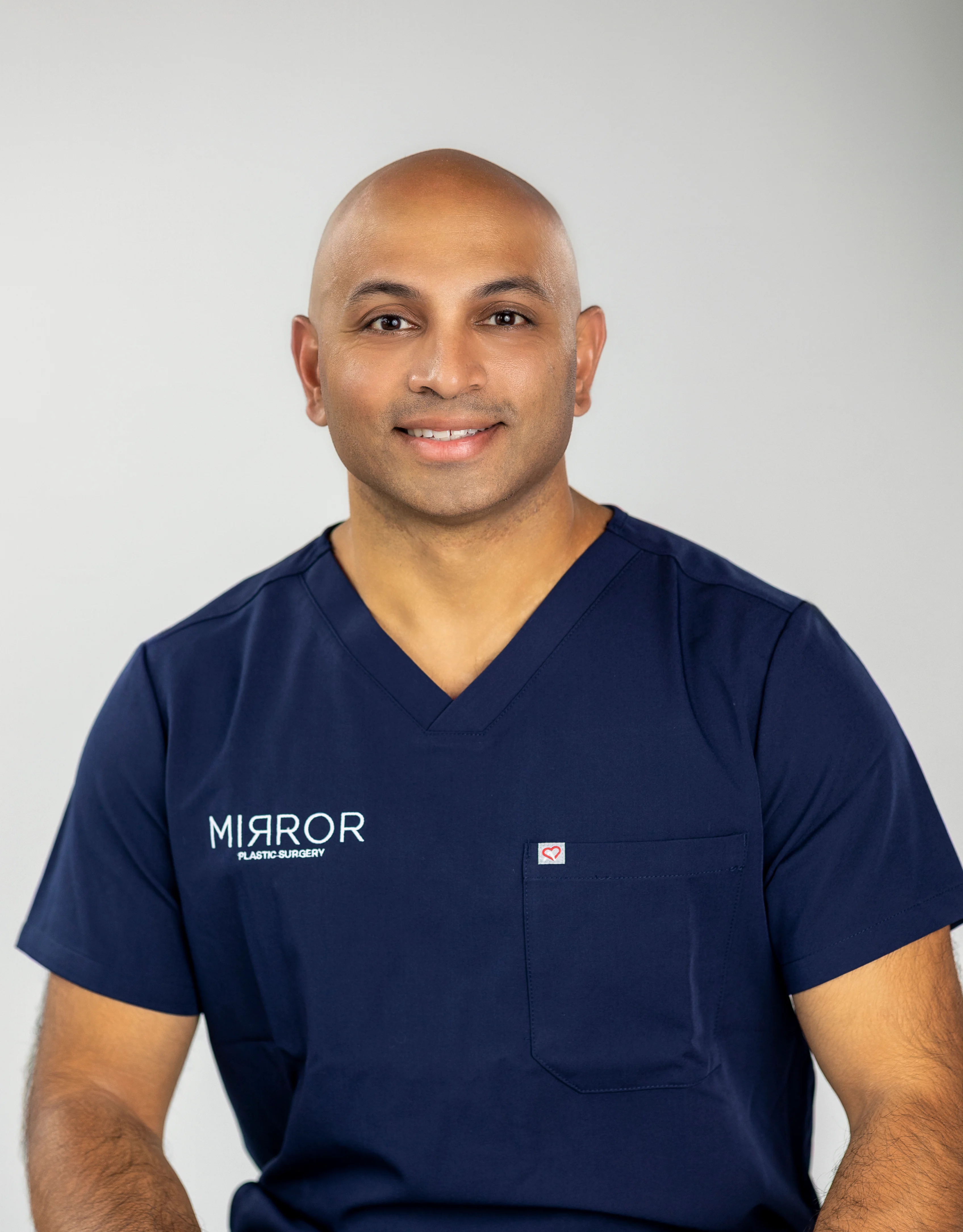
Start an honest, evidence-based BBL consult with Ellie at Mirror Plastic Surgery in St. Petersburg, FL.
Ready To Explore Your BBL Options?
Patients who want to learn more about BBL options can schedule a consultation with Dr. Akash Chandawarkar at Mirror Plastic Surgery in St. Petersburg, FL. Call 727-361-6515 or text the practice to get started.
Disclaimer: Results may vary from person to person. Editorial content, before and after images, and patient testimonials do not constitute a guarantee of specific results.
1 Results may vary from person to person. Editorial content, before and after images, and patient testimonials do not constitute a guarantee of specific results.


