

Written by: Dr. Akash Chandawarkar, Board Certified Plastic Surgeon, Mirror Plastic Surgery | Last updated: September 9, 2026
Key Takeaways
- Natural-looking BBL results depend on proportion and surgeon skill, not maximum volume transferred.1
- Choosing a board-certified plastic surgeon who prioritizes frame-appropriate enhancement is the most critical factor for believable outcomes.
- Modern safety protocols, including subcutaneous-only injection, ultrasound guidance, and accredited facilities, significantly reduce BBL risks.1
- Both surgical fat transfer and non-surgical biostimulatory fillers can produce natural results when performed by an experienced, board-certified plastic surgeon.1
- Ready to explore your options for natural-looking curves? Schedule a personalized consultation with Ellie at Mirror Plastic Surgery to review your goals and options.
Step 1: Understand What “Natural-Looking” Actually Means
A natural-looking BBL result is defined by proportion, not volume.1 Surgeons describe natural outcomes using specific visual markers: balanced proportions relative to the patient’s frame, gentle side-profile projection rather than a shelf-like appearance, rounded upper buttock fullness, and smooth transitions where the buttock meets the hip and thigh, with no abrupt step-offs.
A result reads as “done” or unnatural when proportions are pushed past what the frame can carry, such as too much projection for the waist or a sharp transition the skin cannot hold. A natural result is planned to the patient’s frame and long-term balance, not to a trend or a maximum volume.
Surgeons evaluate natural proportions using concrete reference points. A waist-to-hip ratio around 0.65–0.75 looks believable for most women, while thigh circumference and torso length help determine how much enhancement fits a given frame. Body type matters, because fullness that suits one patient’s height and shoulder width may look disproportionate on another. The goal, as double board-certified plastic surgeons describe it, is a better silhouette, not a bigger buttock.
Step 2: Choose A Surgeon Who Prioritizes Proportion Over Volume
Now that you have a clear picture of what natural means, the next step is finding the surgeon who can deliver it. Surgeon selection is the single most critical factor in achieving natural results. The American Board of Plastic Surgery (ABPS) is the only plastic surgery board recognized by the American Board of Medical Specialties, which makes it the gold standard for U.S. medical certification. ABPS certification requires six years of surgical training after medical school, including at least three years of plastic surgery residency, plus rigorous written and oral board examinations.
Beyond credentials, the surgeon’s aesthetic philosophy matters. Red flags include surgeons who push maximum volume, dismiss requests for subtle enhancement, or cannot articulate their approach to proportion. Reviewing before-and-after photos of patients with similar body types is essential. A confident surgeon will show a range of outcomes, including less dramatic transformations, as well as more striking cases.
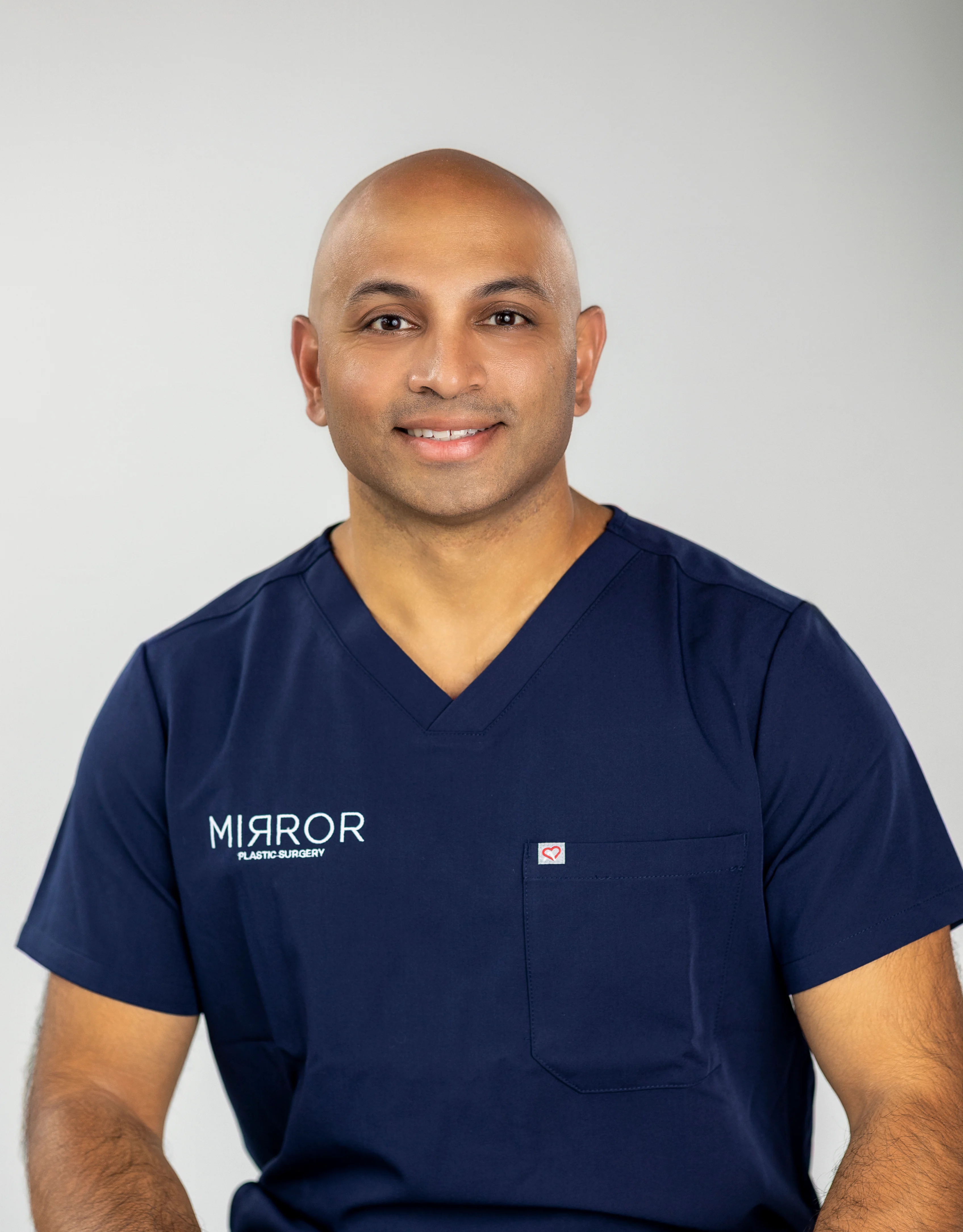
At Mirror Plastic Surgery, Dr. Akash Chandawarkar brings a Harvard education, Johns Hopkins plastic surgery training, and a specialized aesthetic surgery fellowship at the Manhattan Eye Ear & Throat Hospital to every consultation. His practice performs only one to two surgeries per day, which creates time for focused planning and the detailed execution that natural results require.
Step 3: Ask These Questions During Your Consultation
A productive BBL consultation feels like a two-way conversation. These questions help you assess whether a surgeon’s approach aligns with a natural outcome and whether their safety protocols meet the current standard of care.
- “How do you determine the right amount of volume for my specific body type?” This reveals whether the surgeon plans around your frame or defaults to a standard volume. Proportionality is patient-specific, not a universal formula.
- “What is your approach to liposuction and fat transfer to achieve proportion, not just size?” A natural BBL relies heavily on liposuction for waist contouring and flank sculpting, which creates the contrast that makes the buttocks appear enhanced.
- “Can you show me before-and-after photos of patients with my body type and similar goals?” Photos of patients with comparable anatomy are far more informative than dramatic transformations on very different frames.
- “Do you use ultrasound guidance during fat injection, and do you inject only into the subcutaneous layer?” Subcutaneous injection, ultrasound confirmation, blunt cannulas, and an accredited facility are the minimum standard of care for BBL as of 2026.
- “What is your complication rate, and how do you track outcomes?” Patients should ask about the surgeon’s own complication history, and the surgeon is expected to answer directly and explain how the figure is tracked.
- “How do you handle cases where a patient wants a subtle result?” A surgeon who gives specific, confident answers, rather than vague reassurances, is more likely to deliver the outcome you want.
Step 4: See How Liposuction And Fat Transfer Create Natural Curves
A surgical BBL involves liposuction from donor areas such as the abdomen, flanks, thighs, and lower back, followed by purification and strategic injection of fat into the buttocks. Natural results depend on the surgeon’s skill in sculpting both the donor and recipient areas. Achieving a natural result depends as much on shaping the surrounding frame, including narrowing the waist and flanks and softening hip dips, as on the volume added to the buttock itself.
Where fat is placed matters as much as how much is transferred. Research from a 2017 multi-society task force, a 2018 ASERF study, and subsequent cadaveric investigations confirmed that deep intramuscular injection caused BBL-related deaths. This evidence led to a paradigm shift toward injecting fat exclusively in the subcutaneous plane. Ultrasound guidance is now considered the gold standard, because it allows the surgeon to visualize tissue layers in real time and confirm the cannula remains above the muscle fascia.
Many natural BBLs involve 250–500 mL of fat per buttock.1 Moderate, frame-appropriate volumes produce more natural and longer-lasting results than overfilling, which reduces fat survival from a typical 60–80% down to under 40% and can cause firmness, lumpiness, and disproportionate projection.1
Step 5: Follow These Recovery Tips To Preserve Your Results
Recovery decisions directly affect the final aesthetic outcome. The following protocol reflects current clinical guidance for protecting fat graft survival and supporting smooth contours.
- Avoid sitting directly on the buttocks for at least two to three weeks after surgery to protect graft viability. If sitting is unavoidable, use a specialized BBL pillow that redistributes weight to the thighs and reduces pressure on the grafted area.
- Sleep on the stomach or side throughout the early recovery period so the buttocks stay free of direct pressure.
- Wear compression garments as directed on liposuction sites, but not over the buttocks, to manage swelling and support contouring.
- Strictly avoid smoking for several weeks before and after surgery, because nicotine can severely compromise the survival of transferred fat cells.
- Perform light activity such as short, frequent walks to boost circulation and lower the risk of venous thromboembolism.
Final results stabilize between three and six months as swelling resolves and surviving fat establishes its blood supply.1 Maintaining weight within 10–15 pounds of the surgery baseline is the single most effective strategy for preserving BBL results long term.
Step 6: Plan For Long-Term Maintenance And Aging Changes
BBL results are long-lasting but continue to evolve with your body. Most patients retain 60–80% of transferred fat permanently after the initial three-to-six-month healing period, with surviving fat cells becoming established as native tissue.1 Coleman’s long-term data shows that fat-graft volume stabilizes after two to three months and remains stable for up to 12 years, which supports the durability of retained fat after integration.
With a stable weight and healthy lifestyle, many patients maintain visible enhancement for five to ten or more years.1 Projection may decrease 10–20% by year ten due to natural aging processes including collagen loss and skin laxity.1 Transferred fat cells behave exactly like native fat cells, shrinking with weight loss and expanding with weight gain, so significant weight fluctuations will affect the contour over time.
A natural-looking BBL ages more gracefully than an overdone one because it was designed to fit the patient’s frame. Touch-up procedures or non-surgical enhancements remain an option for patients who wish to refresh their contour years later.
Step 7: Consider Non-Surgical BBL For Subtle Enhancement
For patients who want subtle enhancement or cannot undergo surgery, a non-surgical BBL offers a meaningful alternative. A non-surgical BBL is a legitimate pathway for patients seeking modest contour changes, those who lack sufficient donor fat for surgery, or those who are not surgical candidates. At Mirror Plastic Surgery, Dr. Akash Chandawarkar uses biostimulatory fillers, specifically Radiesse (calcium hydroxylapatite) and AlloClae (adipose-derived filler), to add volume, smooth cellulite, and improve shape.
This approach also addresses concerns like hip dips without incisions, anesthesia, or downtime. Dr. Akash serves on the advisory boards of Merz Aesthetics (Radiesse) and Tiger Aesthetics (AlloClae and Avéli for cellulite), which gives him direct insight into the science behind these products. Because he is a board-certified plastic surgeon, every injection is placed with a surgeon’s command of subdermal anatomy, an expertise that makes non-surgical BBL both safer and more precise than the same procedure performed by a less qualified provider.
Results from these biostimulatory fillers develop gradually over multiple sessions, producing an enhancement that looks completely natural.1 This approach carries fewer risks than surgery and requires no recovery period, which makes it ideal for patients who want a modest, believable improvement. Non-surgical filler approaches are more appropriate for subtle contour refinement than for major volume change, and Dr. Akash communicates that distinction clearly during every consultation.
Explore whether a non-surgical BBL fits your goals by arranging a consultation with Ellie.
Before you decide between surgical and non-surgical options, you need a clear picture of safety. The next section outlines key risks and how modern protocols reduce them.
Step 8: Prioritize Safety With Modern BBL Protocols
Safety and aesthetic outcome go hand in hand in BBL. The most serious risk of surgical BBL is fat embolism, which occurs when fat is injected into or below the gluteal muscle, where large-calibre venous sinusoids allow fat to enter the bloodstream. Multiple publications and evolving position statements from the American Society of Plastic Surgeons and the Aesthetic Surgery Education and Research Foundation support ultrasound guidance as a meaningful safety adjunct in BBL.
The Florida Board of Medicine mandated subcutaneous-plane-only fat grafting in 2019, capped BBLs per surgeon at three per day in 2022, and required intraoperative ultrasound guidance. These regulations reflect the state’s commitment to patient safety and directly inform the standard of care at Mirror Plastic Surgery.
A properly performed BBL does not cause odor. BBL odor can stem from rare complications like fat necrosis or infection, and it can also result from bacterial overgrowth, poor hygiene, or fluid drainage. Choosing a board-certified plastic surgeon operating in an accredited facility helps minimize these risks. A 2020 survey found that after updated safety guidance, the reported BBL mortality rate fell from 1 in 3,448 to 1 in 14,952, a dramatic improvement attributable to subcutaneous-only injection and ultrasound guidance.
For non-surgical BBL, using FDA-approved or FDA-cleared dermal fillers administered by a licensed health care provider experienced in dermatology or plastic surgery is safer than using unapproved substances or receiving injections from unlicensed injectors. Mirror Plastic Surgery’s supplier-neutral philosophy means Dr. Akash recommends only the products that are right for each patient’s anatomy, without pressure from quotas or commissions.
Practical Takeaways: Quick Checklist For Natural BBL Results
- Natural results depend on surgeon skill and proportion, not volume alone.
- Choose a board-certified plastic surgeon verified through the American Board of Plastic Surgery with specific BBL experience.
- Ask targeted questions about technique, safety protocols, and before-and-after photos of patients with your body type.
- Remember that liposuction contouring of the waist and flanks is as important as fat transfer to the buttocks.
- Follow recovery instructions strictly, especially the no-sitting protocol, to support fat survival and smooth contours.
- Maintain a stable weight within 10–15 pounds of your surgery baseline for long-term results.
- Consider non-surgical BBL with biostimulatory fillers for subtle enhancement.
- Prioritize safety with subcutaneous-only injection, ultrasound guidance, an accredited facility, and a qualified anesthesia team.
Frequently Asked Questions
Can You Get A BBL That Looks Natural?
Natural-looking Brazilian butt lift results are achievable when the surgeon prioritizes proportion over volume, uses modern safety techniques including subcutaneous-only fat injection and ultrasound guidance, and designs the outcome around the patient’s unique frame. The key is choosing a surgeon with a demonstrated aesthetic eye for subtle, harmonious enhancement who treats waist and flank sculpting as equally important as the volume added to the buttocks. Patients who say “I want to look better, but not obvious” are often strong candidates for this approach.
How Do I Know If A BBL Is Right For Me?
You may be a good candidate for surgical BBL if you have adequate donor fat for harvesting, are at a stable weight, do not smoke, and have realistic expectations about what a natural result looks like. If you lack sufficient donor fat or prefer to avoid surgery, a non-surgical BBL using biostimulatory fillers may be a better option. A thorough, hour-long consultation with a board-certified plastic surgeon, the kind Mirror Plastic Surgery provides as standard, will help determine the best path for your specific anatomy and goals.
What Is The Difference Between Surgical And Non-Surgical BBL?
A surgical BBL uses your own fat, harvested via liposuction and transferred to the buttocks, providing immediate, significant volume enhancement with approximately 60–80% of transferred fat surviving long term. A non-surgical BBL uses injectable biostimulatory fillers to add volume gradually over multiple sessions, producing a more subtle result without surgery, anesthesia, or downtime. The surgical approach offers greater and more immediate volume change, while the non-surgical approach suits patients seeking modest, natural-looking enhancement or those who are not surgical candidates.
How Long Do Non-Surgical BBL Results Last?
Results from biostimulatory fillers typically last 12–24 months, depending on the product used and the patient’s individual metabolism and lifestyle.1 Touch-up sessions can maintain or enhance results over time. Unlike surgical fat transfer, where surviving fat cells become permanent, non-surgical results require ongoing maintenance. Dr. Akash Chandawarkar approaches non-surgical BBL as a long-term care relationship, not a one-off procedure, which aligns with Mirror Plastic Surgery’s concierge medicine philosophy.
Will I Need Touch-Ups After A Surgical BBL?
Most patients do not need touch-ups if they maintain a stable weight and follow recovery instructions carefully. Significant weight fluctuations, aging, or pregnancy can alter results over time, because transferred fat behaves like native fat and expands with weight gain and shrinks with weight loss. Some patients choose a revision procedure or non-surgical enhancement years later to refresh their contour. A surgeon who tracks long-term outcomes and maintains an ongoing relationship with patients, as Dr. Akash does at Mirror Plastic Surgery, is well positioned to guide those decisions when the time comes.
Your Path To Natural-Looking Results Starts Here
Natural-looking Brazilian butt lift results come from careful surgeon selection, a clear understanding of the procedure, disciplined recovery, and honest consideration of both surgical and non-surgical alternatives. The common thread across every step is the same: proportion, safety, and realistic expectations instead of chasing volume. A result designed to fit your frame will not only look more natural today, it will also age more gracefully over the years ahead.
Dr. Akash Chandawarkar at Mirror Plastic Surgery brings board certification, Harvard and Johns Hopkins training, and a concierge, safety-first philosophy to every patient. His practice limits surgical volume deliberately, spends up to an hour in consultation, and recommends only what each patient’s anatomy and goals genuinely call for.
Disclaimer: Results may vary from person to person. Editorial content, before and after images, and patient testimonials do not constitute a guarantee of specific results.
This article is for informational purposes only and does not replace professional medical advice.
1 Results may vary from person to person. Editorial content, before and after images, and patient testimonials do not constitute a guarantee of specific results.


