Written by: Dr. Akash Chandawarkar, Board Certified Plastic Surgeon, Mirror Plastic Surgery | Last updated: September 9, 2026
Key Takeaways
- Authentic BBL before-and-after photos use consistent lighting, angles, and unretouched images with detailed captions for reliable clinical documentation.
- Real results show three key changes: waist contouring from liposuction, improved buttock shape and volume from fat transfer, and the natural evolution of results across healing stages.1
- Healing timelines matter. Final settled proportions usually appear between three and six months after surgery, not in the early weeks.1
- Body type significantly influences outcomes. Viewing results on patients with similar frames helps set realistic expectations for what is safely achievable.
- Consulting with a board-certified plastic surgeon who documents results with clinical integrity is the final step in making an informed decision.
What Real BBL Photos Show
Authentic clinical photography documents three primary changes. The goal is more than simply creating bigger buttocks.
- Waist Contouring: Liposuction of the abdomen, flanks, and lower back creates a narrower waist, which visually amplifies the appearance of the buttocks. The contrast created by fat removal often matters as much as the fat transferred.
- Shape And Volume: Genuine photos demonstrate smooth transitions from the lower back to the hips, with added fullness distributed across the upper, mid, and lower buttock using transferred fat.
- Healing Stages: Early post-operative photos capture residual swelling that inflates apparent size. Final settled proportions are not visible until three to six months post-surgery1. Reputable surgeons schedule definitive result photography during this window.
How To Evaluate BBL Photos: Angles, Lighting, And Red Flags
Clinical Photography Standards For BBL Results
Reputable surgeons follow standardized protocols across every patient session. Professional clinical photo standards require that head and body orientation, posture, lighting, background, exposure, camera-to-subject distance, and zoom remain materially consistent across both the before and after image. This consistency ensures that the surgical result explains any visible difference.
When those variables shift between frames, the photograph reflects stagecraft rather than surgery. Any camera filter, lighting adjustment, or digital retouching invalidates a photo as a clinical record. Social media has normalized subtle editing, but even minor skin-smoothing filters disqualify an image from serving as honest documentation.
Red Flags That Signal Staged Or Edited Photos
The following warning signs indicate that a photo pair should not be trusted as clinical evidence:
- Inconsistent lighting or background between the before and after shots
- Different poses, camera angles, or distances across the pair
- Visible filters, retouching, or skin smoothing in the after image
- No caption detailing patient age, height, weight, or time elapsed since surgery
- Only perfect results shown, with no cases of similar anatomy to the patient’s own, or results that seem unrealistic given the patient’s starting point
- Results that look dramatically better than every other clinic’s. A gallery that outperforms all others is usually better staged, not better performed.
BBL Results By Body Type
Individual anatomy, including skeletal structure, skin elasticity, fat distribution, and available donor fat, significantly influences what a BBL can achieve. Viewing results on patients with a similar frame to your own is the most reliable way to calibrate expectations.
Petite And Athletic Frames
A petite or “skinny” BBL is designed for lean individuals who want subtle, natural-looking curves rather than dramatic volume, with typical fat transfer volumes of 150–300cc per cheek. Traditional BBL procedures often use 400–800cc or more. The goal for petite patients is proportion and lift, not size.
Athletic patients with lower body fat have fewer donor sites, making the harvest plan more critical than the technique name. For these patients, surgeons often combine liposuction from the flanks, lower back, and abdomen to reach a usable graft volume. This approach also contours those areas at the same time.
Curvier And Plus-Size Frames
Patients with more available donor fat give the surgeon more to work with, but skin elasticity and tissue capacity still limit what is safely achievable. When a surgeon forces a high-volume result onto a frame that cannot anatomically support it, the outcome is unnatural contours and a higher risk of complications. The most satisfying outcomes prioritize proportion over maximum size.
BBL Healing Stages: What To Expect At 1 Week, 1 Month, 3 Months, And 6 Months
The First Month: Swelling And The “Too Big” Illusion
During weeks one and two, swelling peaks around days three to five, and the buttocks can appear larger than the final outcome1. By the end of the first month, swelling begins to subside, but the buttocks may still appear firm or positioned higher than they will ultimately settle. This early appearance reflects healing rather than the true result.
Months 3–6: The “Fluffing” Phase And Final Results
Between months three and six, the “fluff-and-drop” phase occurs: residual swelling disappears, the buttocks soften and settle into a more natural position, and final results can take up to six months to show fully. Reputable surgeons schedule final result photography no earlier than the three-month mark, because fat survival continues to shift through month six. Any gallery showing final results at six weeks is presenting an early stage, not a stable outcome.
If you want to see how safety-first, realistic BBL results look on a range of body types, you can request a consultation at Mirror Plastic Surgery.
Long-Term Results: What Happens 10 Years Later
Typically 60–80% of transferred fat establishes a blood supply and becomes permanent1, and surgeons deliberately over-correct during the procedure to account for predictable early reabsorption. The surviving fat behaves exactly like native body fat from that point forward.
Weight fluctuations above 10–15 pounds are the single most common reason BBL results change after the initial six-month stability point. Significant weight loss reduces buttock volume. Significant weight gain enlarges it, sometimes disproportionately. For patients who maintain a stable weight, long-term follow-up studies show that most of the enhanced volume remains after a decade, with aging-related skin laxity softening shape slightly while volumetric improvement over pre-surgery baseline stays visible.1
Potential Complications And How To Avoid Them
The Safety Evolution In BBL
The historical risk of fatal fat embolism was directly linked to intramuscular fat injection. Eliminating intramuscular injection and using only subcutaneous placement reduced BBL mortality from approximately 1 in 3,000 to approximately 1 in 14,952 procedures, making it comparable to other elective surgeries of similar duration and anesthetic risk. Florida became the first state to require real-time ultrasound guidance during gluteal fat grafting, which formally recognizes that confirmation of cannula placement is essential.
Understanding Rare Issues Like Odor
Beyond the major safety protocols, patients often have questions about less common side effects. One such issue is odor. Some patients notice odor from minor fat necrosis or drainage after BBL, which typically resolves. A mild, transient odor in the first one to two weeks is a known healing phenomenon caused by trapped tumescent fluid and old blood.
A strong, foul, pungent, or sweet rot-like odor accompanied by fever above 38.5°C, spreading redness, warm skin, thick pus, or rapidly worsening swelling is a warning sign of infection and requires immediate contact with the surgical team.
The Role Of Surgeon Selection
Choosing a board-certified plastic surgeon who operates in an accredited facility and follows strict subcutaneous-only fat placement protocols is the single most important risk-reduction step available to any BBL patient. Surgeon volume, facility accreditation, and intraoperative ultrasound use are the three structural checks that separate safe practice from dangerous shortcuts.
How To Choose A Surgeon Based On Their Photo Gallery
A surgeon’s photo gallery serves as clinical evidence. Evaluating it critically means looking for consistent, unretouched images with detailed captions that include patient age, height, weight, and time elapsed since surgery. Asking to see cases with anatomy similar to your own is a reasonable request and often the most informative step before committing to a provider.
The questions worth asking at any consultation include:
- Are all of these photos from your own patients?
- Where exactly will you be placing the fat?
- How do you confirm cannula depth during injection?
- How many cases like mine have you performed?
Each question explores a different layer of the surgeon’s transparency. The first verifies the gallery’s authenticity, the second and third address surgical safety, and the fourth gauges relevant experience.
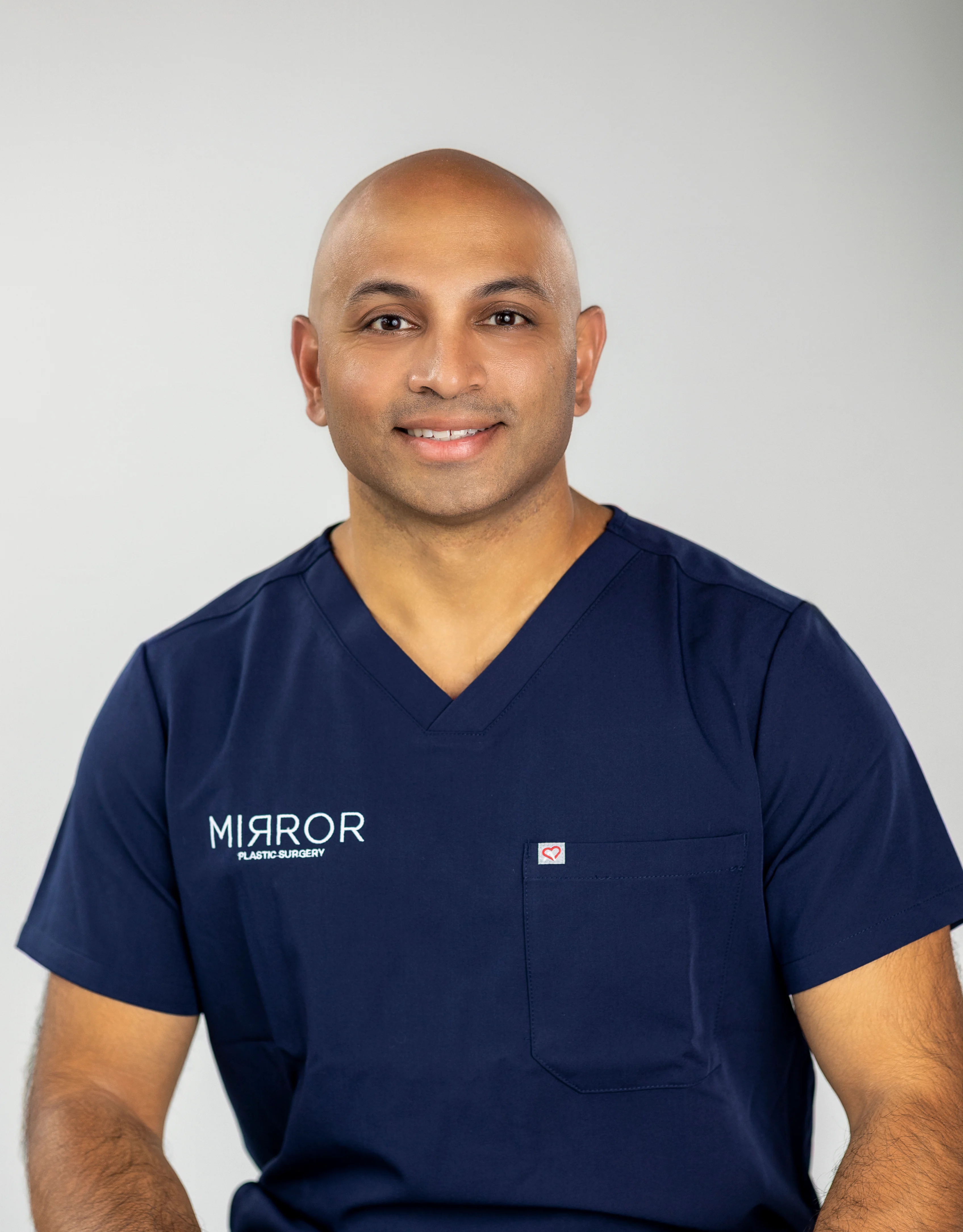
At Mirror Plastic Surgery, Dr. Akash Chandawarkar is a board-certified plastic surgeon with training from Harvard and Johns Hopkins. He brings a surgeon’s command of anatomy to every procedure and consultation. His concierge approach means consultations can run up to an hour, and the practice limits itself to one to two procedures per day, which supports careful, safety-focused care.
Mirror Plastic Surgery is located at 780 4th Ave S, St. Petersburg, FL 33701, and serves the greater Tampa Bay area.
Conclusion: See Clearly, Choose Wisely
Real BBL before and after photos function as clinical documents rather than simple marketing images. Healing takes time, and the three-to-six-month window is when results truly settle. Results vary meaningfully by body type, available donor fat, and skin elasticity. Safety is the prerequisite for any outcome worth having and cannot be traded off against aesthetics.
Mirror Plastic Surgery and Dr. Akash Chandawarkar embody these standards through a philosophy that places safety first, function second, and aesthetics third, supported by honest, evidence-based communication at every stage of the patient journey.
If you are ready to review your own candidacy with a surgeon who values clinical integrity in photography and planning, you can schedule a consultation at Mirror Plastic Surgery.
Frequently Asked Questions
How Can I Tell If A BBL Before-And-After Photo Is Real And Unedited?
Authentic clinical photos share identical shooting conditions across both frames: same lighting setup, same neutral background, same camera distance, same patient posture, and no filters or skin-smoothing applied. The after image should include a caption stating the patient’s age, approximate weight, and the time elapsed since surgery. Red flags include softer or warmer lighting in the after photo, a different pose or camera angle, visible skin retouching, and the absence of any patient context. Galleries that show only flawless results, with no variation in starting anatomy or outcome quality, are almost certainly curated for marketing rather than clinical documentation. A gallery that shows a range of patients, including moderate cases and early healing stages, demonstrates documentation rather than advertising.
What Is The “Fluffing” Phase, And When Does It Happen?
The fluffing phase is the period between approximately three and six months post-surgery when residual internal swelling fully resolves and the transferred fat softens and settles into its final position. In the first weeks after a BBL, the buttocks often appear larger, firmer, and positioned higher than they will ultimately be, which reflects surgical swelling rather than final volume. As that swelling dissipates and the surviving fat integrates with surrounding tissue, the shape becomes softer, rounder, and more natural. This timing explains why reputable surgeons do not photograph final results before the three-month mark and why any photo labeled final result at six weeks deserves skepticism.
How Do BBL Results Differ Between Petite, Athletic, And Curvier Body Types?
Body type significantly influences both what is achievable and how the procedure is planned. Petite and athletic patients typically have less subcutaneous donor fat, which limits transfer volume and makes the harvest plan, often drawing from multiple sites including the flanks, lower back, and abdomen, more critical than the technique itself. These patients are often best suited to a subtle shaping approach, with transfer volumes in the range of 150–300cc per cheek, focused on proportion rather than dramatic size. Curvier patients with more available donor fat give the surgeon more material to work with, but skin elasticity and tissue capacity still define the ceiling of what can be safely and naturally achieved. Forcing a high-volume result onto any frame that cannot anatomically support it produces unnatural contours. The most satisfying outcomes across all body types prioritize harmony with the individual’s existing silhouette over maximum projection.
How Long Do BBL Results Last, And What Affects Longevity?
Once the transferred fat establishes a blood supply, a process largely complete by six weeks post-surgery, the surviving cells become a permanent part of the body and behave like native fat tissue. As noted earlier, most transferred fat that survives becomes permanent, and the six-month result represents the stable baseline. From that point, the primary variable affecting longevity is weight stability. The surviving fat expands with weight gain and shrinks with weight loss, just like fat elsewhere in the body. Patients who maintain their weight within approximately 10–15 pounds of their surgical weight report the most consistent long-term results. Long-term follow-up data shows that weight-stable patients retain most of their enhanced volume after a decade, with gradual skin laxity from aging softening shape slightly but not erasing the volumetric improvement over baseline.
What Safety Questions Should I Ask A BBL Surgeon Before Booking?
The most important safety question is where, precisely, the fat will be placed. The answer should be exclusively in the subcutaneous layer, above the gluteal muscle fascia, never into or beneath the muscle. Intramuscular injection is the primary cause of fatal fat embolism, the most serious BBL complication. Beyond injection plane, ask whether the surgeon uses intraoperative ultrasound to confirm cannula position in real time, whether the procedure will be performed in an accredited surgical facility, and what the surgeon’s specific complication rate is for BBL procedures. Board certification by the American Board of Plastic Surgery, facility accreditation by AAAASF, AAAHC, or the Joint Commission, and the use of intraoperative ultrasound are the three structural markers of a safe practice. Any surgeon who cannot answer these questions precisely or who minimizes BBL risk by calling it a simple procedure warrants serious reconsideration.
Disclaimer: Results may vary from person to person. Editorial content, before and after images, and patient testimonials do not constitute a guarantee of specific results.
1 Results may vary from person to person. Editorial content, before and after images, and patient testimonials do not constitute a guarantee of specific results.