
Written by: Ellie Pranckevicius, FNP-BC, Aesthetic Nurse Practitioner & Aesthetic Injector | Facial Restoration & Regenerative Injectable Specialist, Mirror Plastic Surgery | Last updated: June 30, 2026
Key Takeaways
- Standardized 6-month-plus timelines are essential for evaluating authentic BBL results, because early photos mostly show swelling.
- Both surgical and non-surgical BBL procedures use body-type-specific planning to create natural-looking results and address hip dips and cellulite.
- Patients should watch for red flags such as untimestamped photos, unnatural contours, and providers who skip non-surgical options when presenting BBL galleries.
- Mirror Plastic Surgery prioritizes safety with thorough assessments, limited surgical volume, and supplier-neutral recommendations for all BBL candidates.
- Schedule your personalized consultation at Mirror Plastic Surgery to receive a complete evaluation and learn which BBL approach fits your goals.
BBL Results at 6 Months and Beyond
Most patients misjudge BBL galleries online because the photos come from different stages of healing. Early post-operative images, often taken at two to six weeks, mainly show residual swelling rather than true volume. Authentic surgical BBL results need at least six months for fat-graft integration and soft-tissue remodeling to reach a stable baseline.1 Non-surgical BBL results with biostimulatory fillers such as Radiesse and AlloClae follow a different timeline, with collagen stimulation continuing for three to six months after treatment.1
At Mirror Plastic Surgery, before-and-after documentation follows standardized intervals: pre-procedure, 6 weeks, 3 months, 6 months, and 12 months. Each image pair includes exact post-procedure timing so patients can evaluate results with full context. Captions also note starting anatomy, number of treatment sessions, and whether the result is surgical or non-surgical.
When patients review these documented results, they frequently ask about hip dips, cellulite texture, and stretch-mark visibility. These details matter because they reflect real-life outcomes, not just overall size. Surgical fat grafting can soften hip dip contour by redistributing volume laterally, although the degree of correction depends on the underlying iliac crest anatomy.1 For patients who want hip dip correction without surgery, non-surgical BBL with biostimulatory fillers offers a different mechanism. Targeted injections address the depression directly while collagen induction improves skin quality over time, which can reduce the surface appearance of cellulite and stretch marks.1
Schedule your consultation to see how your timeline and results would be documented at each milestone.
Surgical vs. Non-Surgical BBL Timeline Comparison
The table below compares key outcome milestones for surgical BBL and non-surgical BBL using biostimulatory fillers. These timelines reflect general clinical expectations. Individual results vary based on anatomy, lifestyle, and provider technique.
| Milestone | Surgical BBL | Non-Surgical BBL (Radiesse / AlloClae) | Clinical Notes |
|---|---|---|---|
| Initial swelling resolution | 6–10 weeks | 2–4 weeks | Surgical swelling involves liposuction donor sites in addition to the gluteal region |
| Fluffing stage | 3–6 months post-op | Not applicable | Surgical fluffing refers to skin and soft tissue relaxing around the grafted fat, while non-surgical volume appears immediately with gradual collagen buildup |
| Stable 6-month result | Fat survival typically stabilizes and retained volume reflects the final outcome | Collagen stimulation peaks and shape plus skin quality improvements are visible | Confirms the 6-month benchmark established earlier as the earliest reliable comparison point |
| 12-month result | Volume remains stable and weight fluctuations affect the result proportionally | Maintenance session may be recommended depending on goals | Both modalities benefit from stable body weight after the procedure |
| 5–10-year result | Retained fat behaves like native fat and natural aging and gravity apply | Collagen scaffold persists and periodic maintenance sustains the outcome | Surgical results last longer but are not permanent, while non-surgical results require planned maintenance |
Body-Type Matching for Natural BBL Results
BBL outcomes look most natural when the plan matches the patient’s unique body type. Effective planning accounts for hip-to-waist ratio, skeletal frame, gluteal muscle mass, and skin laxity. A patient with a narrow iliac crest and prominent hip dips needs a different strategy than a patient with a wider frame who mainly wants projection enhancement.
To ensure the right approach for each body type, Dr. Akash Chandawarkar performs a top-to-bottom anatomical assessment that maps bony landmarks, soft-tissue distribution, and skin quality before any surgical plan is finalized. For non-surgical cases, Ellie Pranckevicius uses the same structured framework and identifies whether the primary goal is volume, symmetry correction, hip dip filling, cellulite smoothing, or a combination. This shared assessment process helps prevent overcorrection and asymmetry that can occur when the buttocks are treated in isolation without considering the surrounding anatomy.
How to Spot Botched BBL Results Online
Patients researching BBL results online see a wide range of outcomes, and some reflect unsafe or poor-quality work. The red flags below, based on the anatomical and surgical standards upheld by Dr. Akash, a Harvard-educated physician and Johns Hopkins-trained plastic surgeon, signal results that may involve poor technique, inadequate patient selection, or unsafe injection practices.
- Unnatural shelf appearance: A hard, shelf-like upper pole with no smooth transition to the lower back suggests overcorrection or improper fat placement.
- Visible asymmetry at rest: Minor asymmetry is normal, but pronounced left-right volume differences at 6 months indicate uneven fat survival or injection technique issues.
- Skin dimpling or tethering: Irregular surface texture that worsens over time may reflect fat necrosis or poor liposuction technique at donor sites.
- Loss of waist definition: A BBL should enhance the waist-to-hip ratio. Results that flatten or widen the waist suggest fat was placed without contouring the surrounding anatomy.
- Photos without post-op timestamps: Any gallery that does not disclose when photos were taken cannot show true outcomes.
- No documentation of non-surgical alternatives offered: A provider who recommends surgical BBL without discussing non-surgical options for appropriate candidates is not completing a full assessment.
Safety-First BBL Checklist at Mirror Plastic Surgery
Mirror Plastic Surgery follows a clear hierarchy: safety first, function second, aesthetics third. This hierarchy shapes every part of the practice, starting with patient selection. Surgical BBL is only recommended when the patient’s anatomy, health status, and goals align with evidence-based candidacy criteria.
Key safety criteria evaluated during Mirror’s 60-minute top-to-bottom assessment include:
- BMI and fat availability at donor sites for surgical candidates
- Skin laxity and elasticity at the gluteal region
- Cardiovascular and anesthetic risk stratification
- Realistic volume expectations relative to starting anatomy
- Post-operative positioning and recovery compliance capacity
- For non-surgical candidates: contraindications to biostimulatory fillers, autoimmune history, and prior filler placement
Patients who do not meet surgical candidacy criteria are not pressured toward an operation. Mirror’s supplier-neutral philosophy means the team recommends what is clinically appropriate, not what generates the highest volume.
Start your safety assessment to determine which BBL approach fits your anatomy and health profile.
Non-Surgical BBL with Radiesse and AlloClae
Ellie Pranckevicius leads Mirror Plastic Surgery’s non-surgical BBL program using Radiesse and AlloClae, two biostimulatory agents with distinct but complementary actions. Radiesse stimulates the body’s own collagen production through a calcium hydroxylapatite scaffold, creating immediate volume and progressive skin-quality improvement over three to six months. AlloClae, a regenerative allograft product, supports tissue remodeling and works especially well for hip dip correction and gluteal symmetry refinement.
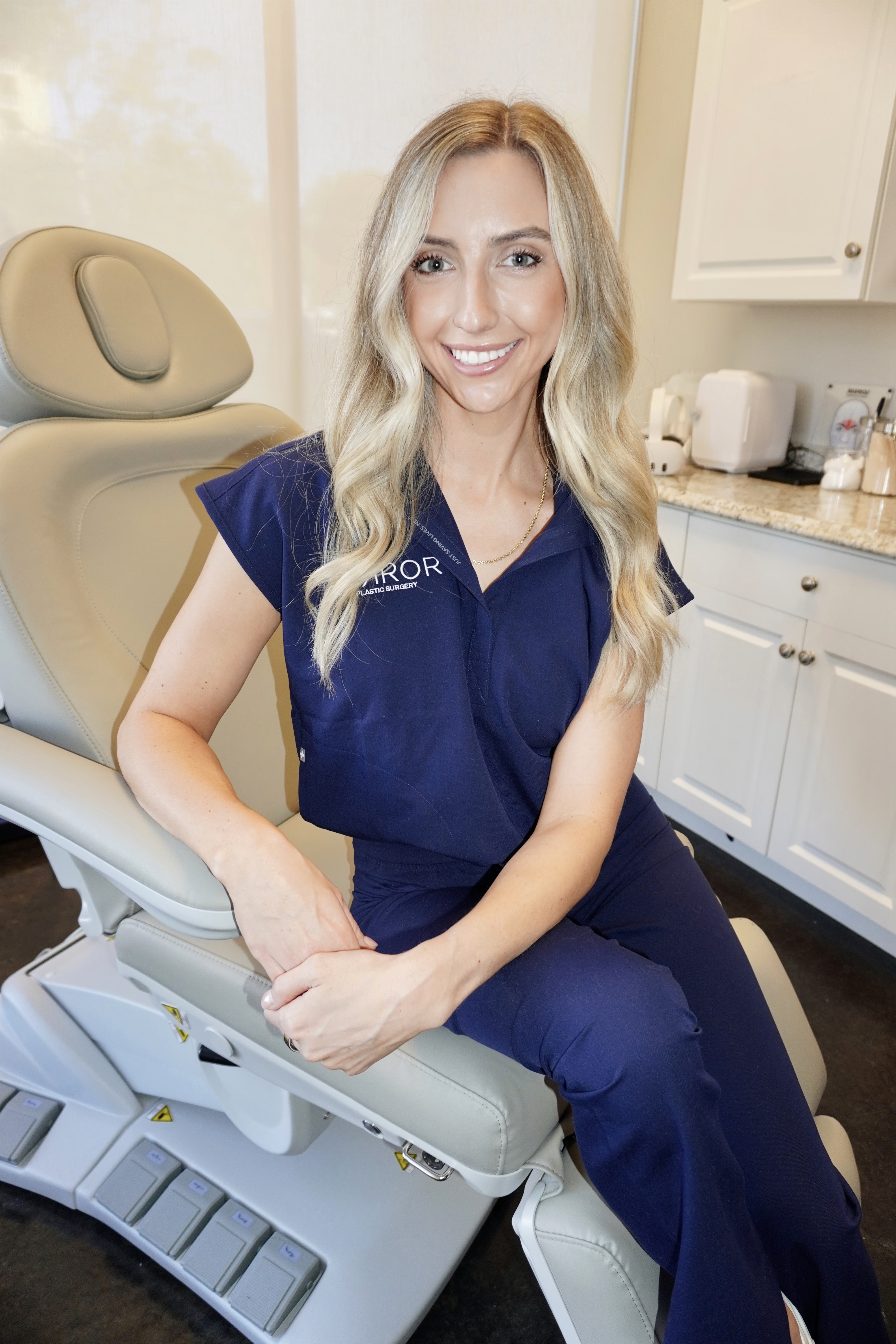
Ellie’s approach combines regenerative medicine principles with precise anatomical injection technique informed by her dual background in esthetics and advanced nursing, including four years in the Neuroscience ICU at Tampa General Hospital. Using the same top-to-bottom assessment framework described earlier, she documents outcomes across three primary goals: significant volume enhancement, subtle projection improvement, and correction of specific concerns such as hip dips, cellulite texture, and stretch-mark visibility. Results are photographed at standardized intervals so patients can see an honest progression from treatment day through the 6-month collagen maturation point.
Because Mirror is a supplier-neutral practice, Ellie selects Radiesse, AlloClae, or a combination based on each patient’s anatomy and goals rather than product quotas or brand agreements.
People Also Ask: Fluffing, Long-Term Jiggle, and Safe Providers
What is the fluffing stage after a surgical BBL?
The fluffing stage describes the period between about 3 and 6 months after surgery when the skin and surrounding soft tissue gradually relax around the newly grafted fat. During this phase, the buttocks may feel firmer than expected and appear slightly smaller than the final result. As the tissue softens, the shape becomes rounder and more natural. Fluffing represents a continuous process of tissue adaptation that usually concludes when the result stabilizes near the 6-month mark.
Will a BBL still look natural and jiggle at 10 years?
Retained fat from a surgical BBL behaves like native adipose tissue because it is native adipose tissue that has been moved from one area of the body to another.1 At 10 years, surviving fat cells respond to weight changes, hormonal shifts, and natural aging in the same way as surrounding tissue. A result that looks proportionate and natural at 6 months generally remains proportionate at 10 years if body weight stays relatively stable.1 Significant weight loss can reduce volume, while significant weight gain can increase it. The natural jiggle and movement associated with a well-executed BBL persist as long as the fat survives.
How do I choose a safe BBL provider?
Board certification in plastic surgery by the American Board of Plastic Surgery serves as the baseline credential. Beyond certification, patients should confirm that the provider performs a thorough pre-operative assessment that includes anatomical analysis, health screening, and a candid discussion of non-surgical alternatives. Ask how many surgeries the practice performs per day, because high-volume practices that operate at five to ten cases daily cannot match the individualized attention of a concierge practice. Request before-and-after photos with documented post-operative timestamps of at least 6 months. A provider who cannot or will not show timestamped results is not offering a transparent view of their outcomes.
Conclusion: Transparent BBL Planning in Tampa Bay
Real BBL results, surgical or non-surgical, rely on standardized timelines, honest fat-retention data, and body-type-specific planning. Galleries without timestamps, practices without thorough pre-operative assessments, and providers who skip non-surgical alternatives do not present the full picture. Mirror Plastic Surgery’s concierge model, led by Dr. Akash Chandawarkar and Ellie Pranckevicius, is built on the principle that every patient deserves a complete, evidence-based evaluation before any recommendation.
Patients researching BBL options in the Tampa Bay area who want a transparent, unhurried assessment of their anatomy and goals can visit Mirror Plastic Surgery at 780 4th Ave S, St. Petersburg, FL 33701.
Plan your personalized assessment and explore which BBL approach aligns with your body and goals.
Disclaimer: Results may vary from person to person. Editorial content, before and after images, and patient testimonials do not constitute a guarantee of specific results.
Frequently Asked Questions
How long does it take to see final BBL results?
For surgical BBL, the earliest reliable benchmark for final results is 6 months after the procedure. Before that point, residual swelling from both the liposuction donor sites and the gluteal region can hide the true outcome. The fluffing stage, when skin and soft tissue relax around the grafted fat, usually concludes between 3 and 6 months. For non-surgical BBL with biostimulatory fillers like Radiesse and AlloClae, collagen stimulation continues for 3 to 6 months after treatment, so full skin-quality and volume improvement appear gradually. At Mirror Plastic Surgery, patients are photographed at standardized intervals so they can track their progression with accurate context.
Is a non-surgical BBL a good alternative to surgery?
Non-surgical BBL with biostimulatory fillers works well for patients who are not surgical candidates, prefer no downtime, or have focused goals such as hip dip correction or cellulite smoothing rather than major volume increase. Radiesse and AlloClae stimulate collagen and support tissue remodeling, which produces shape refinement and skin-quality improvement over time. The results are not permanent and require planned maintenance, but they carry a very different risk profile than surgery. During Mirror Plastic Surgery’s 60-minute assessment, Ellie evaluates whether non-surgical BBL fits your anatomy, goals, and health history before making any recommendation.
What makes Mirror Plastic Surgery’s BBL approach different from other Tampa Bay practices?
Mirror Plastic Surgery follows a safety-first, function-second, aesthetics-third framework that guides every treatment plan. Dr. Akash Chandawarkar’s Harvard and Johns Hopkins training, combined with fellowship-level aesthetic surgery experience, supports this structured approach. For non-surgical BBL, Ellie Pranckevicius brings esthetics training, advanced nursing credentials, and ICU clinical experience to each injection assessment. As noted in the safety checklist, the practice also maintains limited surgical volume so the clinical team can focus fully on each patient. Product selection remains supplier-neutral, so recommendations reflect what is clinically optimal for each individual rather than brand agreements or volume incentives.
Can a BBL improve hip dips, cellulite, and stretch marks?
Hip dip correction ranks among the most common goals for BBL patients, and both surgical and non-surgical approaches can help, although the underlying skeletal anatomy sets limits. The shape of the iliac crest determines how much volume can safely fill the lateral hip depression. Cellulite and stretch-mark improvement respond more consistently to non-surgical BBL with biostimulatory fillers, which stimulate collagen remodeling in the dermis and subdermis over time. Surgical fat grafting can soften the surface appearance of cellulite in some cases, but it does not function primarily as a skin-quality treatment. Ellie’s non-surgical BBL cases document skin-texture outcomes at 3 and 6 months so patients can see realistic expectations.
What should I bring to my BBL consultation at Mirror Plastic Surgery?
The most helpful preparation for your consultation is a clear description of your goals, including photos of results you like and results you want to avoid. Bring a list of medications, supplements, and prior aesthetic treatments, including any previous filler placements in the gluteal region. If you have had prior surgeries in the abdominal or gluteal area, bring relevant operative notes if they are available. Mirror’s 60-minute top-to-bottom assessment gathers this information systematically, so you do not need a formal presentation. The more context you provide about your goals and history, the more precise and personalized your treatment plan can become.
1 Results may vary from person to person. Editorial content, before and after images, and patient testimonials do not constitute a guarantee of specific results.