
Written by: Ellie Pranckevicius, FNP-BC, Aesthetic Nurse Practitioner & Aesthetic Injector | Facial Restoration & Regenerative Injectable Specialist, Mirror Plastic Surgery
Key Takeaways
- Non-surgical body contouring falls into three main categories: fat reduction, muscle toning, and skin tightening. Each targets a different tissue layer and uses specific technologies for predictable results.
- Cryolipolysis and laser lipolysis are the most studied non-surgical options for localized fat reduction, usually achieving 20–25% volume loss per area after 1–2 sessions, with results visible in 8–12 weeks.1
- Muscle toning with HIFEM devices like Emsculpt NEO typically involves 4–6 sessions and can deliver both fat reduction and muscle strengthening, with improvements continuing over 3–6 months.1
- Radiofrequency and ultrasound-based skin tightening treatments stimulate collagen remodeling for mild to moderate laxity, while Avéli offers a single-session structural solution for cellulite by releasing the fibrous septa that cause dimpling.
- Schedule a consultation with Ellie at Mirror Plastic Surgery for a personalized, anatomy-first assessment and a body contouring plan tailored to your goals.
How Non-Surgical Body Contouring Targets Fat, Muscle, and Skin
Non-surgical body contouring divides into three distinct categories, and each targets a different tissue layer. Fat reduction uses cooling, heat, laser, or ultrasound energy to permanently damage subcutaneous fat cells. The lymphatic system then clears these cells over several weeks. Muscle toning uses high-intensity focused electromagnetic (HIFEM) energy to drive supramaximal contractions that strengthen and thicken muscle fibers. Skin tightening uses radiofrequency (RF) or ultrasound energy to stimulate collagen remodeling, which improves laxity and surface texture. Each category addresses a specific anatomical concern, so choosing the wrong one for your goal often produces underwhelming results.
Most Effective Options for Non-Surgical Fat Reduction
Effectiveness in fat reduction depends on the technology used and your anatomy. The three most clinically documented options are cryolipolysis, laser lipolysis, and HIFEM combined with RF.
Cryolipolysis is widely regarded as the most effective non-surgical option for targeted fat reduction, producing up to 20–25% fat-volume loss per area after a single treatment.1 Results appear gradually at 3–4 weeks and peak at 8–12 weeks. This treatment requires a pinchable fat bulge and is FDA-cleared for nine body areas. A rare but serious complication, paradoxical adipose hyperplasia (PAH), can cause the treated fat to enlarge into a firm bulge instead of shrinking and may require surgical correction. Updated informed consent that explains PAH now represents standard of care.
Laser systems such as SculpSure achieve about 24% average fat reduction after a single treatment, with 1–2 sessions recommended per area.1 These systems suit patients whose fat layer is not thick enough for a cryolipolysis applicator.
Emsculpt NEO combines HIFEM with radiofrequency and can provide both fat reduction and muscle increase. This dual-action approach works well for patients who want fat loss and muscle gain in the same area.
While these technologies offer measurable fat reduction, their scope remains limited. Non-invasive body contouring does not produce weight loss, does not remove visceral fat, and cannot reliably match the immediate volume change of liposuction. These treatments target localized subcutaneous fat in patients already near their goal weight.
Schedule your fat-reduction assessment with Ellie to receive a top-to-bottom anatomical evaluation and a treatment plan matched to your specific tissue profile.
Session Counts and Timelines for Muscle Toning
Muscle toning via HIFEM typically requires 4 sessions, with visible changes appearing gradually over weeks to months.1 The two primary options differ in scope.
Emsculpt delivers high-intensity focused electromagnetic energy to induce supramaximal muscle contractions. A standard protocol includes four 30-minute sessions. A 2023 systematic review evaluated HIFEM for noninvasive body contouring but did not report the specific abdominal imaging averages of 5.5 mm less fat thickness and 2 mm more muscle thickness. Follow-up in that review ranged from one to six months.
Emsculpt NEO extends this protocol to four to six sessions and adds synchronized RF heating for simultaneous fat reduction. Maintenance sessions are recommended every three to six months to preserve muscle tone and fat reduction results.1
HIFEM is FDA-cleared for strengthening, firming, and toning the abdomen, buttocks, thighs, arms, and calves. It does not replace resistance training and is contraindicated in patients with pacemakers, metal implants, or pregnancy.
Skin Tightening Technologies That Patients Actually Notice
Radiofrequency skin tightening devices in 2026 provide deeper collagen stimulation, better comfort, faster sessions, and improved performance for post-weight-loss skin. RF heats tissue to 40–45°C, disrupting fat cell membranes while contracting existing collagen and stimulating new collagen production.
Radiofrequency treatments usually require several weekly sessions and can produce visible skin tightening. Devices such as Morpheus8 Body, which delivers RF microneedling to 8 mm depth, and Emtone, which combines RF with pressure, work particularly well for skin laxity combined with moderate fat or cellulite.
For patients who may not be ideal candidates for RF or who prefer a different energy modality, high-intensity focused ultrasound (HIFU) offers an alternative mechanism. HIFU can reduce waist circumference by raising adipose tissue temperature to cause fat cell destruction.
Non-surgical treatments may help mild skin laxity through collagen stimulation but cannot remove large amounts of extra skin, making surgery the more effective option for significant loose skin.1 Patients with a hanging abdominal apron after major weight loss usually benefit more from a surgical body lift.
Skin-tightening results from RF are temporary, and many patients benefit from periodic maintenance treatments.
Targeted Cellulite Treatments at Mirror Plastic Surgery
Cellulite behaves differently from subcutaneous fat. Fibrous septal bands tether the skin downward and create the characteristic dimpled appearance. Fat reduction technologies address volume but not this mechanical tethering, so dedicated cellulite treatment requires a different approach.
Mirror Plastic Surgery offers Avéli, a minimally invasive, single-session in-office procedure performed by Dr. Akash Chandawarkar. Avéli uses a handheld device to identify and release the specific septa responsible for each dimple under real-time visualization. This approach addresses the root structural cause rather than only the overlying tissue. Clinical data supporting Avéli demonstrate durable dimple reduction and set it apart from topical or energy-based cellulite treatments that produce more variable and temporary outcomes.
For patients seeking a non-invasive adjunct, RF-based devices such as Emtone, which combine radiofrequency with pressure, are particularly effective for cellulite combined with moderate skin laxity. These modalities complement but do not replicate the structural correction Avéli provides.
Goal-Matching Guide for Common Body Concerns
The table below maps primary patient goals to the most appropriate treatment category, typical session range, and approximate timeline to visible results. All figures come from cited clinical sources and represent population averages, not guaranteed individual outcomes.
| Primary Goal | Recommended Category | Typical Sessions | Timeline to Visible Results |
|---|---|---|---|
| Localized fat reduction (abdomen, flanks, thighs) | Cryolipolysis or laser lipolysis | 1–2 sessions1 | 8–12 weeks1 |
| Simultaneous fat reduction and muscle toning | HIFEM + RF (e.g., Emsculpt NEO) | 4 sessions | 2–4 weeks, improving over 3–6 months1 |
| Skin tightening (mild to moderate laxity) | Radiofrequency or HIFU | Multiple sessions | Several months |
| Cellulite reduction (structural dimpling) | Avéli (septa release) ± RF adjunct | Single session (Avéli) | Results visible within weeks, with durable long-term effect |
| Gluteal contouring and volume (non-surgical BBL) | Biostimulatory fillers (e.g., Radiesse, AlloClae) | 1–2 sessions depending on goals | Immediate shape, with collagen stimulation over 3–6 months |
How to Vet a Medical Spa Before You Commit
In med spas, patients must undergo an initial face-to-face consultation with a physician, nurse practitioner, or physician assistant who determines candidacy, documents a diagnosis, and prescribes the course of medical treatment before any aesthetic procedure. A provider who skips this step or recommends a device before completing a physical assessment is not following established standards of care.
The following criteria distinguish a rigorous provider from a high-volume operation. Together, they ensure you receive an individualized treatment plan based on medical assessment rather than a standardized protocol driven by device availability:
- A standardized intake and examination process that assesses medical history, localized fat distribution via hands-on assessment, skin turgor and elasticity, hernias or tissue abnormalities, and realistic outcome expectations
- Confirmation that treatment is performed by a licensed medical professional with procedure-specific training and direct physician supervision
- Documented SOPs covering patient selection criteria, contraindications, pre-treatment assessment, step-by-step procedure instructions, post-treatment care, follow-up scheduling, and complication management
- Unbiased communication that acknowledges when a treatment is not appropriate for a given anatomy or goal
- Standardized pre-treatment photography to document baseline and support objective progress evaluation
Mirror Plastic Surgery’s concierge model dedicates up to an hour per consultation to a top-to-bottom anatomical assessment. Ellie Pranckevicius, FNP-BC, brings dual expertise in esthetics and advanced nursing, including four years in a Neuroscience ICU, to every body contouring evaluation. When surgical insight is warranted, Dr. Akash Chandawarkar, a Harvard-educated, Johns Hopkins-trained plastic surgeon, provides direct oversight and referral pathways.
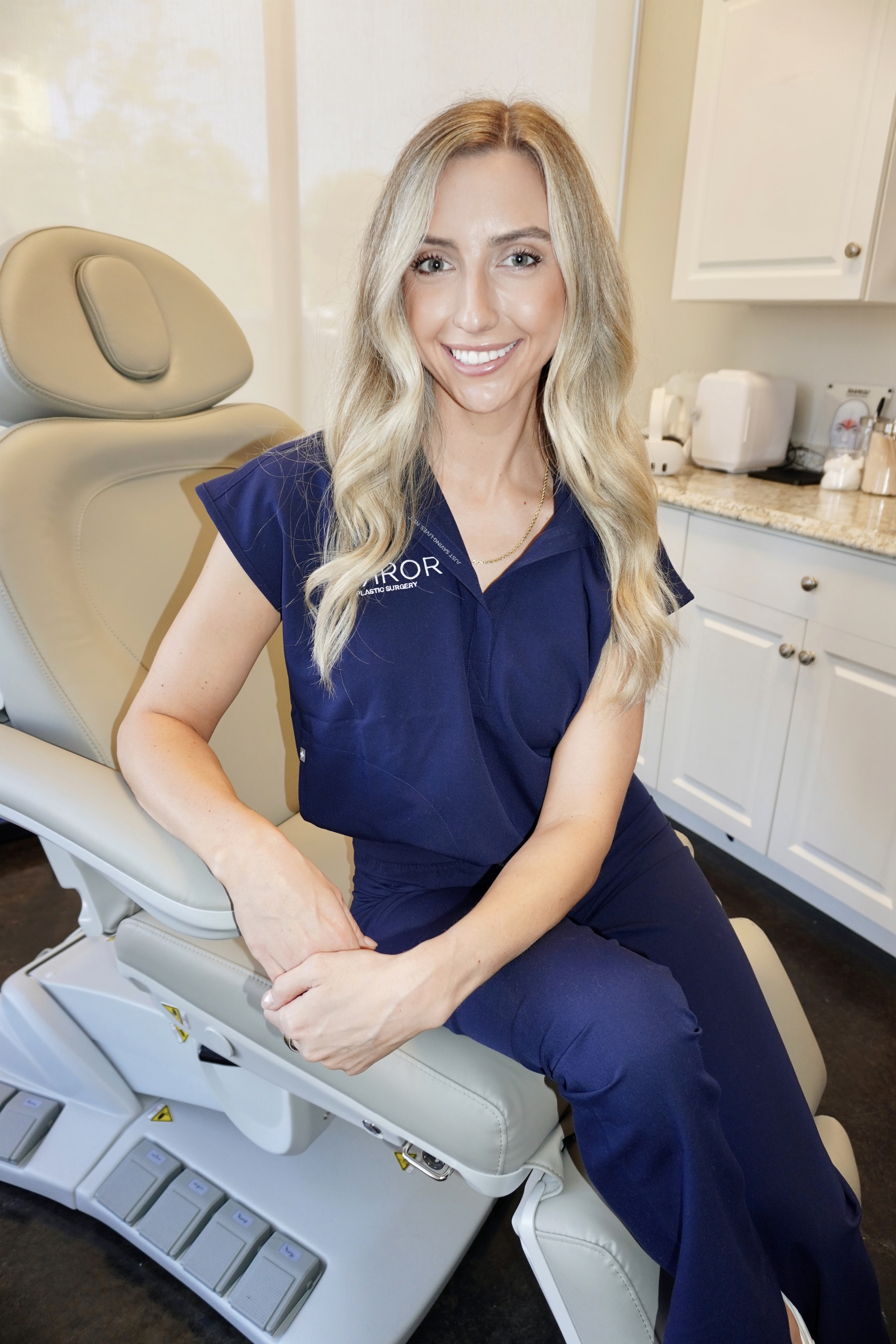
Experience Mirror’s anatomy-first assessment and see what a thorough evaluation actually looks like.
Common Misconceptions About Permanence, Downtime, and Candidacy
Several persistent myths cause patients to either overestimate or underestimate non-surgical body contouring.
On permanence: Results for destroyed fat cells are permanent because adult humans do not regenerate fat cells. However, this permanence applies only to the specific cells treated. Remaining fat cells can still enlarge with future weight gain, so lifestyle stability is essential for preserving results. Additionally, muscle gains from HIFEM require maintenance every 3–6 months, and skin-tightening results from RF are temporary, so these modalities require ongoing commitment rather than a single treatment.
On downtime: Non-surgical body contouring procedures typically involve 30- to 60-minute sessions with little to no downtime, allowing patients to return to normal activities immediately afterward. Temporary side effects including redness, swelling, bruising, numbness, and soreness are common and well documented.
On suitability: Non-surgical body contouring works best for healthy adults within 10–30 pounds of their goal weight with a stable weight pattern who have localized stubborn fat, mild skin laxity, or muscle-toning goals; it is not appropriate for obesity treatment or major weight loss. The FDA explicitly states that these devices do not treat obesity and do not deliver the health benefits associated with weight loss.
On equivalence to surgery: Claims that non-surgical body contouring produces results equivalent to liposuction are not supported by published evidence, and surgery remains the gold standard for significant reshaping.
Consultation Checklist for Results, Cost, and Surgical Alternatives
Before committing to a non-surgical body contouring plan, use the following checklist to evaluate both the treatment and the provider:
- Is my primary concern fat, muscle, skin, or cellulite? Each concern requires a different modality. A provider who recommends one device for all four concerns warrants scrutiny.
- Am I within the recommended weight range? As noted earlier, non-surgical body contouring is best suited for patients within 10–30 pounds of ideal body weight who seek modest localized contour changes.
- Has my weight been stable for at least 3–6 months? Practices are advised to wait until patients reach stable weight for 3–6 months before treatment, particularly for those who have recently used GLP-1 medications.
- Do I have contraindications? Relative contraindications for fat freezing include cold-related disorders such as Raynaud’s disease, scars in the treatment area, and nearby hernias, while electromagnetic muscle stimulation is contraindicated for patients with pacemakers, metal implants in the treatment area, cardiac disorders, or pregnancy.
- Has my provider completed a hands-on physical assessment? Practitioners must obtain written informed consent after explaining the procedure, expected results, risks, alternatives, and circumstances requiring postponement or referral. That conversation should follow a detailed in-person exam.
- Is surgery a more appropriate option? Patients with a hanging abdominal apron after major weight loss typically gain more benefit from skin-removal surgery than from device-based non-surgical treatments alone. Board-Certified Plastic Surgeons should be consulted for complex or advanced body contouring procedures, revisions of prior treatments, or personalized plans involving multiple modalities when anatomy or medical history requires surgical insight.
Conclusion: Matching Technology to Your Anatomy
Non-surgical body contouring delivers meaningful, evidence-based results when the treatment modality matches the correct tissue target and follows a thorough anatomical assessment. Fat reduction, muscle toning, skin tightening, and cellulite correction each require distinct technologies, session protocols, and maintenance commitments. A goal-based framework, not a single-device promotion, provides the right starting point for any serious evaluation.
Mirror Plastic Surgery’s concierge approach, led by Ellie Pranckevicius, FNP-BC, and supported by Dr. Akash Chandawarkar’s surgical expertise, gives Tampa and St. Petersburg adults exactly that framework. Patients receive an hour-long, top-to-bottom assessment, unbiased modality selection, and specialized offerings including Avéli cellulite treatment and non-surgical BBL with biostimulatory fillers. The practice’s philosophy of safety first, function second, and aesthetics third keeps every recommendation grounded in your anatomy and long-term goals, not a device quota.
Start your personalized body contouring plan at Mirror Plastic Surgery in St. Petersburg, FL, and receive the evidence-based assessment your goals deserve.
Frequently Asked Questions
What is the most effective non-surgical body contouring treatment for belly fat?
The most effective option depends on whether the primary concern is subcutaneous fat, muscle tone, or skin laxity, and these often coexist in the abdominal area. For isolated fat pockets, cryolipolysis has the strongest body of published evidence, achieving the 20–25% reduction documented in clinical studies.1 For patients who want simultaneous fat reduction and muscle toning, a combined HIFEM and radiofrequency platform such as Emsculpt NEO can deliver both fat reduction and muscle increase. Neither option removes visceral, or deep abdominal, fat or produces weight loss. The most accurate answer for any individual comes from a hands-on anatomical assessment that identifies the primary tissue concern and confirms whether non-surgical treatment is appropriate. At Mirror Plastic Surgery, Ellie conducts this type of evaluation before making any recommendation.
How many sessions do you need for non-surgical body contouring to see results?
Session requirements vary by modality and goal. Fat reduction via cryolipolysis or laser lipolysis typically requires 1–2 sessions per area, with results appearing gradually over 8–12 weeks as the body clears treated fat cells. Muscle toning with HIFEM-based devices follows the 4-session protocol described earlier, with the maintenance commitment noted above remaining essential for sustained results. Skin tightening with radiofrequency or HIFU usually requires multiple sessions, and collagen remodeling continues for months after the final treatment. Combination protocols that pair fat reduction with skin tightening or muscle toning may extend the overall timeline but often produce more balanced and comprehensive results.
Is non-surgical body contouring safe, and what are the main risks?
Non-surgical body contouring carries a complication rate under 1% across major technologies, and most side effects are mild and temporary. Common short-term effects include redness, swelling, bruising, temporary numbness, and mild soreness. The most clinically significant risk specific to cryolipolysis is paradoxical adipose hyperplasia, a rare complication in which the treated fat enlarges rather than shrinks and may require surgical correction. RF and laser-based treatments carry a small risk of burns or pigment change when performed without proper temperature monitoring. HIFEM devices are contraindicated in patients with pacemakers, metal implants, or pregnancy. Safety outcomes depend heavily on provider qualifications, proper patient selection, and adherence to documented treatment protocols, which are all areas where Mirror Plastic Surgery’s concierge assessment process offers a meaningful advantage over high-volume operations.
What makes Mirror Plastic Surgery’s approach to body contouring different from other Tampa med spas?
Most high-volume medical spas operate on a single-modality or promotional model, where a featured device becomes the default recommendation regardless of anatomy or goals. Mirror Plastic Surgery follows a concierge medicine model that begins with a top-to-bottom anatomical assessment lasting up to an hour. Ellie Pranckevicius, FNP-BC, brings a dual background in esthetics and advanced nursing, including ICU-level clinical judgment, to every body contouring consultation. The practice remains supplier-neutral, so recommendations are driven by patient anatomy and evidence, not product quotas. When a non-surgical treatment is not the right answer, Ellie explains that clearly, and Dr. Akash Chandawarkar’s surgical expertise is available for patients whose goals require it. Specialized offerings including Avéli for structural cellulite correction and non-surgical BBL using biostimulatory fillers further distinguish the practice from general aesthetic clinics.
Who is a good candidate for non-surgical body contouring?
Ideal candidates are healthy adults within approximately 10–30 pounds of their goal weight, with a stable weight pattern for at least three to six months, who have localized concerns such as stubborn fat pockets, mild to moderate skin laxity, or muscle-toning goals that have not responded to diet and exercise. A BMI under approximately 30 is generally required for most devices, although specific thresholds vary by technology. Non-surgical body contouring is not appropriate for patients seeking significant overall fat reduction, those with substantial excess skin after major weight loss, or individuals with contraindications such as cold-sensitivity disorders, metal implants, pacemakers, or pregnancy. Patients who have recently lost significant weight through GLP-1 medications should wait until their weight has been stable for at least three to six months before pursuing contouring. The most reliable way to determine candidacy is a comprehensive in-person assessment with a qualified provider.
Disclaimer: Results may vary from person to person. Editorial content, before and after images, and patient testimonials do not constitute a guarantee of specific results.
1 Results may vary from person to person. Editorial content, before and after images, and patient testimonials do not constitute a guarantee of specific results.