
Written by: Ellie Pranckevicius, FNP-BC, Aesthetic Nurse Practitioner & Aesthetic Injector | Facial Restoration & Regenerative Injectable Specialist, Mirror Plastic Surgery
Key Takeaways for Safer Injectable Treatments
- Physician-led practices with board-certified oversight show lower complication rates and more balanced outcomes than high-volume med-spa settings.1
- Comprehensive anatomical assessment, longer consultations, and evidence-based protocols are the main drivers of safer injectable care.
- Provider training, on-site reversal agents, and clear escalation pathways reduce the risk of serious events such as vascular occlusion.
- Patients should compare credentials, consultation structure, and complication readiness instead of focusing only on per-unit pricing.
- Schedule your personalized consultation at Mirror Plastic Surgery to experience a safety-first, full-face approach to injectable aesthetics.
The Injectable Landscape in 2026 and Why Patients Seek Physician-Led Care
Demand for injectable aesthetics continues to grow, and patient expectations are rising alongside it. New Beauty’s State of Aesthetics Summer 2025 report shows that patients now weigh board certification, education and training, reviews, and before-and-after photographs when choosing an injector. More than half of surveyed patients also report needing a clearer explanation of how regenerative treatments work before they feel comfortable booking them.
This shift reflects growing frustration with rushed, volume-driven care. Many Tampa Bay adults who have experienced quick med-spa visits now look for practices where anatomical assessment, complication readiness, and honest guidance outrank speed and sales.
Key Injectable Terms: Neuromodulators, Biostimulatory Fillers, and Full-Face Assessment
Neuromodulators (Botox, Dysport, Xeomin, Daxxify, Jeuveau) temporarily relax targeted facial muscles to soften dynamic wrinkles. Biostimulatory fillers such as Radiesse stimulate the body’s own collagen production instead of simply adding volume, which makes them useful for structural restoration and body contouring.
Full-face assessment refers to a structured diagnostic process that evaluates facial thirds, bone structure, fat compartment changes, skin quality, and movement patterns before any treatment plan is proposed. This approach contrasts with isolated, single-area injections that ignore how one change affects the rest of the face.
How Mirror Plastic Surgery Plans Injectable Treatments Safely
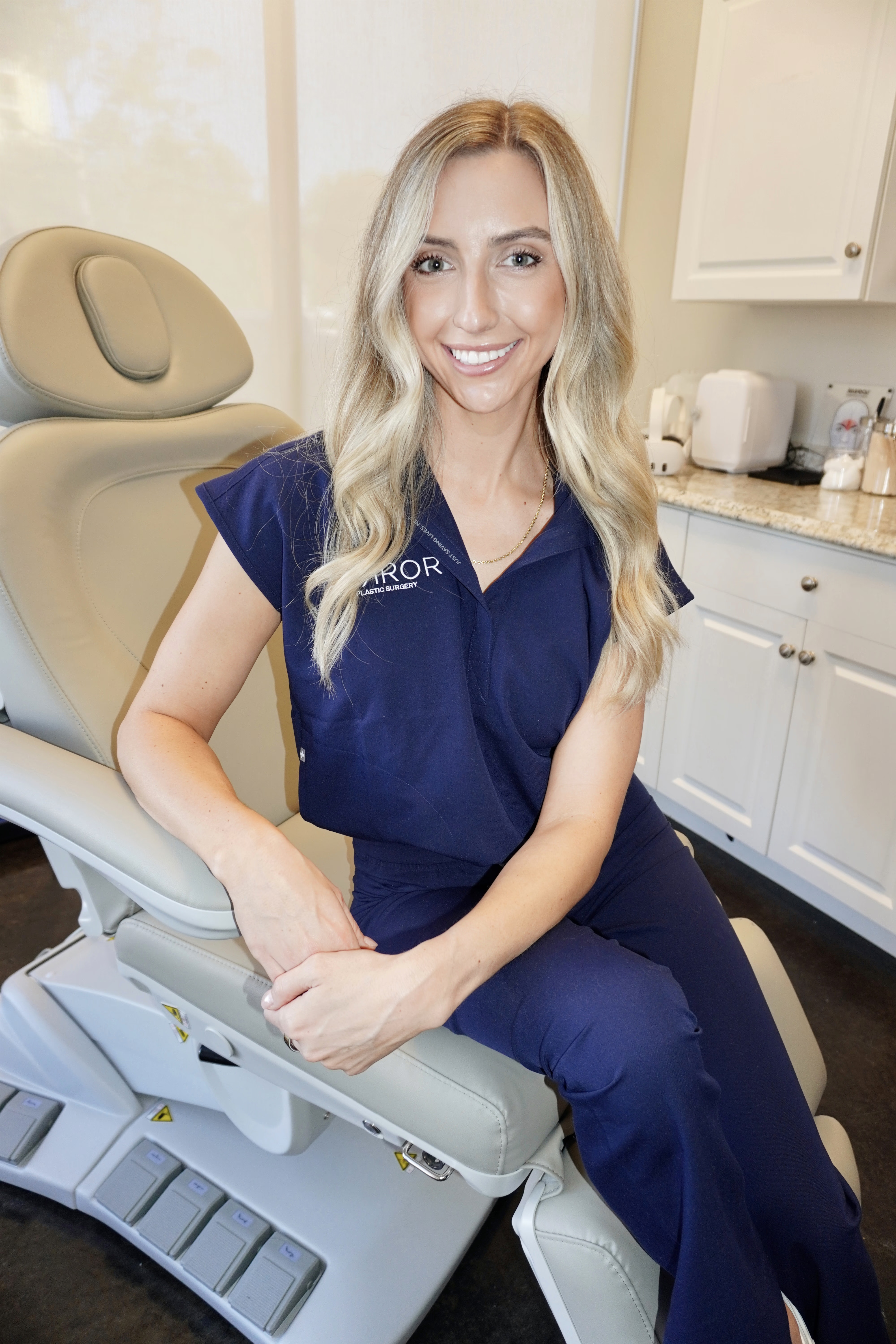
At Mirror Plastic Surgery in St. Petersburg, Florida, every injectable journey starts with a comprehensive consultation led by Ellie Pranckevicius, FNP-BC. She is an Aesthetic Nurse Practitioner with a dual background in esthetics and advanced nursing, plus four years in the Neuroscience ICU at Tampa General Hospital, which shapes her clinical judgment. The process follows a clear sequence:
- Open-ended dialogue to understand emotional drivers and long-term goals
- Top-to-bottom anatomical assessment covering facial thirds, volume distribution, muscle activity, and skin quality
- Review of medical history, prior treatments, medications, and contraindications
- Evidence-based treatment plan with rationale, realistic expectations, and maintenance schedule
- Informed consent with explicit discussion of risks, limitations, and warning signs
This process often takes up to an hour, which contrasts with the abbreviated visits common in high-volume settings. Rushed consultations correlate with more errors and lower satisfaction, while longer visits support better retention and follow-up.
Industry Safety Trends: Oversight, Consultation Time, and Protocols
The strongest single predictor of population-level harm in non-surgical facial aesthetics is the regulatory environment in which treatment occurs, with operator training and clinic-level protocols as the main modifiable factors. Safety-focused clinics maintain a readiness bundle that includes in-date reversal agents on site, a written and signed complication protocol reviewed quarterly, named escalation pathways to secondary care, and documented follow-up at 24 hours, 72 hours, and two weeks.
How to Evaluate Injectable Providers Step by Step
Informed patients can evaluate injectable providers by moving through a sequence of six connected factors that build on one another.
Start with credentials and oversight. Confirm that a board-certified physician is actively involved in clinical protocols rather than serving as a nominal medical director.
Next, assess anatomical expertise. Look for an injector who can explain facial thirds, vascular danger zones, and how muscles work together and against each other.
Then review the clinic’s safety infrastructure. Patients are advised to confirm that hyaluronidase is stocked on site and that a written vascular occlusion protocol exists.
After that, examine the consultation structure. Safer practices separate consultation from treatment and include a full medical history review before any injections.
Also consider how the provider handles realistic outcomes. Ethical injectors discuss limitations openly and acknowledge when not proceeding is the better choice.
Finally, ask about maintenance planning. Look for built-in follow-up and reassessment instead of automatic repetition of prior treatments.
Risks, Limitations, and Trade-Offs of Injectable Treatments
Minor injection-site events such as bruising, swelling, and transient redness occur in about 10–35% of dermal filler treatments and usually resolve on their own. Clinically meaningful nodules and persistent inflammatory reactions appear in roughly 0.01–1% of dermal filler treatments, depending on the product.
Vascular occlusion is the most serious non-permanent complication. It occurs in roughly 1 in every 6,000 filler syringes, with estimates ranging from 1 in 2,000 to 1 in 10,000 injections, and serious filler-related injuries increased 1,700% between 2005 and 2020. Botulinum toxin adverse events such as ptosis, brow asymmetry, and diplopia are usually local and reversible, although the patient experience during resolution can still be significant.
Common Misconceptions About Cost, Speed, and Who Can Inject
No federal standard exists for who can inject Botox or dermal fillers in the United States. Each state sets its own licensing rules, supervision requirements, and scope-of-practice boundaries. In Florida, aesthetic procedures such as Botox and dermal fillers are not considered primary care, so even autonomous APRNs cannot perform them independently. Non-autonomous APRNs must practice under a physician protocol that includes oversight and patient assessment.
Nominal supervision, where a physician’s name appears on a medical director agreement without direct patient examination or individualized protocols, is most often associated with adverse events in aesthetic medicine. The FDA and CDC have also documented multiple cases of counterfeit botulinum toxin causing hospitalizations between 2024 and 2025, frequently tied to product sourced outside authorized supply chains.
Cost comparisons can mislead patients. Lower per-unit pricing at high-volume settings does not reflect the potential cost of corrective treatments, revision procedures, or complication management after inadequate assessment. Mirror Plastic Surgery operates as a supplier-neutral practice, so product recommendations follow patient anatomy and goals rather than quotas or commissions.
Highest-Risk Areas for Botox and Filler Injections
Complications in aesthetic neurotoxin practice often stem from incomplete understanding of how treating one muscle affects nearby structures. The glabella, or area between the brows, carries the highest risk profile for both neuromodulators and fillers. This region carries a high risk of permanent blindness because the supratrochlear and supraorbital arteries connect directly to the ophthalmic artery.
Injections into the glabella and nasal dorsum are most often implicated in blindness, while the nasolabial fold and forehead are associated with cerebral embolic events. For neuromodulators specifically, the FDA prescribing information for Botox Cosmetic lists five ptosis-prevention rules for glabellar treatment, including avoiding injection near the levator palpebrae superioris and placing lateral corrugator injections at least 1 cm above the bony supraorbital ridge.
Cost Comparison: Dermatologist vs Med Spa for Botox
Per-unit pricing at med spas often appears lower than pricing at physician-led practices. That comparison usually ignores several key variables, including consultation depth, anatomical assessment quality, complication readiness, product authenticity, and the cost of corrective care when results disappoint.
Provider qualification is the strongest predictor of injectable safety, and that factor never appears on a price sheet. Mirror Plastic Surgery does not publish standardized pricing because each patient receives a personalized plan based on unique anatomy and goals, which the team reviews transparently during consultation.
Regenerative and Biostimulatory Options Instead of Botox
Patients who want alternatives to traditional neuromodulators can consider a growing group of regenerative treatments. Biostimulatory fillers such as Radiesse stimulate collagen and elastin production, which creates gradual structural improvement that blends with existing tissue. For body contouring, including non-surgical BBL, Mirror Plastic Surgery uses Radiesse and AlloClae. These options provide gluteal volume, cellulite smoothing, and symmetry correction with a strong safety record.
Platelet-Rich Plasma (PRP) and secretome-based hair restoration offer additional regenerative choices for patients addressing hair thinning along with facial concerns. These treatments match Ellie’s philosophy of restoring foundational function before adding volume.
Oversight Models for Injectables: How Different Settings Compare
| Factor | Board-Certified Plastic Surgeon–Led Practice (e.g., Mirror Plastic Surgery) | High-Volume Med Spa (RN Injector, Active MD Oversight) | Esthetician-Only or Minimally Supervised Setting |
|---|---|---|---|
| Medical Director Involvement | Harvard-educated, Johns Hopkins-trained plastic surgeon actively sets protocols and remains available for escalation | Licensed MD on agreement; involvement varies and may reflect the nominal arrangement flagged earlier | May lack licensed physician oversight entirely; medical directors bear ultimate responsibility for all medical procedures |
| Injector Credentials | FNP-BC with dual esthetics and advanced nursing background, ICU experience, and supervised aesthetic training | RN or NP; training depth varies widely, and accredited programs require supervised neuromodulator and filler experience | Esthetician license does not authorize injectable procedures in Florida; in Florida, NPs require physician delegation for injectables |
| Consultation Model | Up to 60-minute top-to-bottom anatomical assessment, consultation separate from treatment, no same-day pressure | Typically 20–45 minutes; practices offering same-day treatment are advised to schedule 60–90 minutes total to avoid rushing | Often abbreviated or combined with treatment; patients should pause if they feel rushed or lack clear follow-up plans |
| Complication Readiness | Hyaluronidase on site, written escalation protocol, surgical backup available, documented follow-up schedule | Varies; some maintain the full readiness bundle described earlier, while others have gaps | Higher adverse event rates cluster in unregulated environments with inadequate training and no on-site emergency capability |
Making an Informed Choice for Your Injectable Journey
The setting you choose for injectable treatments represents a medical decision, not just a beauty choice. About 68% of Gen Z consumers prioritize natural-looking aesthetic enhancements, and that preference aligns best with providers whose assessment process matches the complexity of the face.
Mirror Plastic Surgery offers Tampa Bay adults a concierge alternative. Dr. Akash Chandawarkar sets the clinical standard through his surgical expertise, and Ellie Pranckevicius delivers injectable care grounded in dual esthetics and nursing training, ICU-level judgment, and a full-face philosophy that favors restoration before augmentation. The practice remains supplier-neutral, limits volume by design, and structures care around long-term well-being instead of throughput.
Repeated filler sessions without reassessment can create facial heaviness, distorted proportions, and reduced tissue flexibility over time. Mirror Plastic Surgery offers a different model built on staged treatment, honest reassessment, and the restraint to recommend less when less serves the patient better.
Frequently Asked Questions
Who is a good candidate for neuromodulators or biostimulatory fillers?
Good candidates are adults in overall good health who hold realistic expectations and have specific concerns such as dynamic wrinkles, volume loss, structural asymmetry, or contour irregularities that injectables can address. Suitability does not depend on age or appearance alone. At Mirror Plastic Surgery, Ellie bases recommendations on a full-face assessment that includes medical history, prior treatment responses, medications, skin quality, and anatomical findings.
Certain conditions, including neuromuscular diseases, active skin infections, pregnancy, and some autoimmune conditions, may represent contraindications that must be identified before treatment. Patients who show unrealistic expectations or psychological red flags receive honest counseling, and treatment may be deferred or declined when that better protects their well-being.
How do safety protocols differ between high-volume and concierge settings?
In concierge physician-led settings, safety protocols follow a system rather than individual preference. Hyaluronidase is stocked on site and kept in date, written complication protocols are reviewed regularly, escalation pathways to secondary care are documented, and follow-up occurs at defined intervals after treatment.
High-volume settings vary widely. Some maintain strong protocols, while others rely on nominal medical director oversight without individualized standards. The key difference lies in whether the physician actively shapes and reviews clinical protocols or simply appears on an agreement. At Mirror Plastic Surgery, Dr. Akash Chandawarkar’s surgical background and active involvement ensure that the full spectrum of complication management, including surgical intervention when needed, remains available within the same practice.
What results can patients realistically expect after a full-face assessment?
A full-face assessment produces a treatment plan tailored to the patient’s actual anatomy instead of a one-size-fits-all protocol. Ellie’s approach focuses on restoring inherent facial characteristics such as volume balance, structural support, and harmony before adding augmentation.
Patients can expect natural-looking improvements that enhance existing features rather than creating an overdone look.1 Treatment is staged, and each session includes reassessment before further steps. Results develop over days to weeks depending on the modality, and maintenance schedules are discussed clearly at the outset.1 Ellie often advises patients when an expensive service is not yet necessary, which supports trust and long-lasting outcomes that require fewer corrections.
What is the typical recovery and maintenance schedule?
Recovery from neuromodulators is minimal, and most patients return to normal activity immediately. Full effect usually appears within 7–14 days.1 Biostimulatory fillers require a longer integration period as collagen production increases over weeks to months. Minor bruising and swelling at injection sites are common and typically resolve without intervention.
Maintenance intervals depend on product type, treatment area, and individual metabolism. Neuromodulators generally require retreatment every 3–6 months, while biostimulatory fillers may provide benefit for 12–24 months or longer.1 At Mirror Plastic Surgery, maintenance visits function as reassessments. The team evaluates the face at each visit to confirm that the prior plan still fits ongoing anatomical changes instead of automatically repeating the same treatment.
When should someone seek professional evaluation instead of proceeding with treatment?
Any patient who has experienced a prior adverse event such as prolonged swelling, nodules, asymmetry, or skin changes after injectables should seek a thorough evaluation before more treatment. Patients considering injections in high-risk zones such as the glabella, nasal dorsum, or periorbital region should confirm that their provider has supervised training in those areas and follows a written vascular occlusion protocol.
Patients should also pause if they feel rushed during consultation, if questions are dismissed, or if a provider offers a treatment plan without an anatomical assessment. At Mirror Plastic Surgery, consultation always occurs as a separate appointment from treatment, and patients never face pressure to proceed on the same day.
How do complication rates compare across practice models?
Minor events such as bruising and swelling occur at similar rates across practice settings and usually resolve on their own. Meaningful differences appear in serious complication rates and how effectively clinics manage those events. Regulated, clinician-led settings with written protocols consistently report lower serious adverse event rates than unregulated environments.
Key variables include operator training depth, anatomical knowledge, access to reversal agents, and clear escalation pathways. Nominal physician oversight, where a medical director is named but not actively involved, appears most often in association with adverse events. Practices where the supervising physician has surgical training and actively shapes clinical protocols offer the highest tier of safety infrastructure for injectable treatments.
Disclaimer: Results may vary from person to person. Editorial content, before and after images, and patient testimonials do not constitute a guarantee of specific results.
1 Results may vary from person to person. Editorial content, before and after images, and patient testimonials do not constitute a guarantee of specific results.