
Written by: Dr. Akash Chandawarkar, Board Certified Plastic Surgeon, Mirror Plastic Surgery | Last updated: September 9, 2026
Key Takeaways
- Non-surgical BBL reviews split sharply because they reflect two standards of care: qualified physicians using FDA-approved biostimulatory fillers and unregulated injectors using unapproved substances.
- Between 2022 and 2024, the UK Save Face register documented 479 complaints after liquid BBL procedures by non-medical practitioners, and 91% of those patients needed hospital treatment.
- Clinical trials show high satisfaction and physician-rated improvement when qualified providers use Sculptra or Radiesse for non-surgical BBL.1
- Provider training, product choice, and medical setting drive safety and results for non-surgical BBL, more than the procedure category itself.
What a Non-Surgical BBL Is and How It Works
A non-surgical BBL, also called a liquid BBL, enhances buttock shape and volume with injectable biostimulatory fillers. It offers less downtime than a traditional surgical BBL but requires ongoing maintenance sessions.
Poly-L-lactic acid (Sculptra) gradually stimulates collagen and new fat cell development over weeks to months, with results often lasting two years or longer.1 Calcium hydroxylapatite (Radiesse) is usually diluted to improve skin tightness and texture, with results lasting at least seven months.1 Both fillers trigger the body’s own collagen production instead of simply adding inert volume.
One regulatory fact guides every decision. No injectable filler currently holds FDA approval for buttock augmentation, so all gluteal filler use is off-label. Provider expertise therefore becomes the key safety variable. This approach differs from Emsculpt, which builds gluteal muscle with electromagnetic energy, and from surgical BBL, which uses the patient’s own fat transferred with liposuction.
What Real Patient Reviews Reveal
Positive Review Themes From Satisfied Patients
Satisfied patients describe gradual, natural-looking enhancement, improved confidence, and very short downtime. Most return to normal activities the same day, with one to three days of minimal downtime.1 Many also notice smoother skin, better texture, and softer cellulite, which reflect collagen stimulation rather than pure volume gain.
Clinical studies show that 80% of patients remain satisfied with Sculptra results 25 months after treatment.1 Trials of biostimulatory fillers report very high overall satisfaction and strong physician-rated improvement.1 This durability, combined with gradual change, explains why happy reviewers often highlight subtle, believable results rather than dramatic transformation.
Negative Review Themes From Unsatisfied and Harmed Patients
Negative reviews fall into two main groups. The first involves unmet expectations, such as less volume than hoped, the need for several sessions, and temporary swelling or bruising. Non-surgical BBL cannot reproduce the dramatic structural reshaping of a surgical BBL.1 Patients who expect surgical-level change from a non-surgical procedure often feel disappointed.
The second group involves serious harm. In the 479 Save Face complaints mentioned earlier, patients reported infection, sepsis, abscesses, necrosis, and cellulitis, and 39% required surgery. A Save Face survey of more than 2,000 qualified surgeons, doctors, and nurses found that 99% would not offer liquid BBL because of these risks. Most of these severe outcomes trace back to non-medical injectors using unapproved substances rather than board-certified physicians using FDA-approved biostimulators.
Patient Voices: Common Experiences Behind the Numbers
The following themes come from public platforms such as RealSelf and Reddit. They represent common patterns rather than direct quotes from named individuals.
- One RealSelf reviewer reached her ideal shape after a second Sculptra session. She felt underwhelmed after the first visit, then felt thrilled when full results appeared at four months.
- A Reddit user treated by a non-medical injector developed painful lumps and asymmetry that required correction, highlighting how strongly provider credentials influence outcomes.
- Many reviewers mention that waiting three to six months for peak results required patience. They still describe the natural final look as the main advantage.
These contrasting experiences set up the next practical questions: how to judge whether non-surgical BBL feels worthwhile and how to weigh cost over time.
Is a Non-Surgical BBL Worth It for Your Goals?
Perceived value depends on your goals, anatomy, and budget. Patients who want subtle enhancement with minimal downtime often achieve satisfying results when a qualified physician uses approved biostimulatory fillers. Patients who want a large, structural change similar to fat transfer usually need a surgical BBL to reach that goal.
Over a decade, consistent non-surgical treatment can equal or exceed the cost of a longer-lasting surgical procedure.1 The need for maintenance makes long-term budgeting just as important as the initial quote, even though many marketing pages focus only on the first session price.
Non-surgical BBL can be a good fit for patients who accept gradual change, multiple sessions, and ongoing upkeep. Surgical BBL better serves those who prioritize significant volume and permanence and can accommodate recovery time.
Cost Over Time: The 5–10 Year Financial Picture
Per-session pricing hides the true financial commitment of non-surgical BBL. Looking at a 5–10 year window gives a more realistic comparison.
| Procedure | Initial Cost Range | Result Longevity | 10-Year Estimated Range |
|---|---|---|---|
| Sculptra BBL | $5,000–$15,000 | 2–3 years, with maintenance every 18–24 months1 | Often comparable to or higher than surgical BBL over 10 years because of maintenance |
| Radiesse BBL | $4,800–$28,800, depending on vial count | 12–18 months, with maintenance every 12–24 months1 | Similar or higher than Sculptra BBL over 10 years because of more frequent touch-ups |
| Surgical BBL | $8,057 national average, range $5,459–$13,959 | Permanent surviving fat that ages with the body1 | $8,000–$20,000 one-time, with optional touch-ups of $1,000–$3,000+ |
Sculptra-based non-surgical BBL often uses 10–20 vials, costing $6,000–$24,000 initially, plus roughly one vial per year at $700–$1,200 for maintenance. Mirror Plastic Surgery provides individualized quotes after consultation because anatomy, goals, and vial needs vary widely.
Beyond cost, safety becomes the next critical factor, and regulatory data shows why provider choice matters so much.
Risks and Safety: What Regulators and Studies Show
The FDA advises against using any injectable filler for buttock augmentation, including PLLA, calcium hydroxylapatite, PMMA, and silicone. Buttock treatments require much larger volumes than facial injections, which increases the risk of vascular events, migration, and immune reactions.
On 18 February 2026, the UK House of Commons Women and Equalities Committee recommended an immediate ban on liquid BBL after evidence of deaths, sepsis, and tissue necrosis. In April 2025, the UK Advertising Standards Authority banned ads from six providers for downplaying risk and using pressure tactics such as time-limited discounts.
The regulatory reports highlight a range of severe complications, including:
- Infection that progresses to sepsis
- Vascular occlusion that causes tissue necrosis
- Filler or fat embolism
- Granuloma formation
- Migration and asymmetry
- Chronic pain
These risks concentrate in unregulated settings. A 2024 review of 4,725 gluteal filler cases found that a small share of patients experienced complications, and most issues were mild and short-lived. That pattern reflects procedures performed by qualified medical providers using approved products.
Red Flags for Unsafe Providers:
- Offers of “silicone,” “biopolymer,” or “hydrogel” injections
- Treatments in hotel rooms, private homes, or other non-medical locations
- Prices far below typical medical practice fees
- No real discussion of medical history, risks, or follow-up care
- Guaranteed results or high-pressure, time-limited offers
How to Vet a Non-Surgical BBL Provider
Patients searching for non-surgical BBL reviews rarely find a clear vetting process, even though regulators have documented deaths and severe injuries. The steps below draw on guidance from medical organizations and regulatory reports.
- Start by verifying board certification in plastic surgery or dermatology. The American Academy of Dermatology stresses choosing board-certified providers for injectables, especially for off-label uses such as PLLA gluteal injections.
- Once credentials are confirmed, ask about the filler used and its FDA approval status. The FDA specifically warns against injectable silicone for body contouring because of migration, chronic inflammation, hardened lumps, and serious infection.
- Then review before-and-after photos of patients with similar body types and goals. Focus on real patient images that match your anatomy and desired outcome.
- Read independent reviews on platforms such as RealSelf. These sources complement, rather than duplicate, testimonials on the provider’s own website.
- Confirm that the consultation covers your medical history, risks, and realistic expectations. A thorough visit signals a safety-focused practice.
- Check the treatment setting and confirm that procedures occur in a licensed medical facility. UK investigators documented liquid BBL procedures in Airbnbs, hotel rooms, garden sheds, and even public toilets, often by people with no medical training.
- Ask about anatomical expertise and injection technique. Safety for PLLA gluteal injections depends heavily on avoiding key vascular structures in the gluteal “danger triangle.”
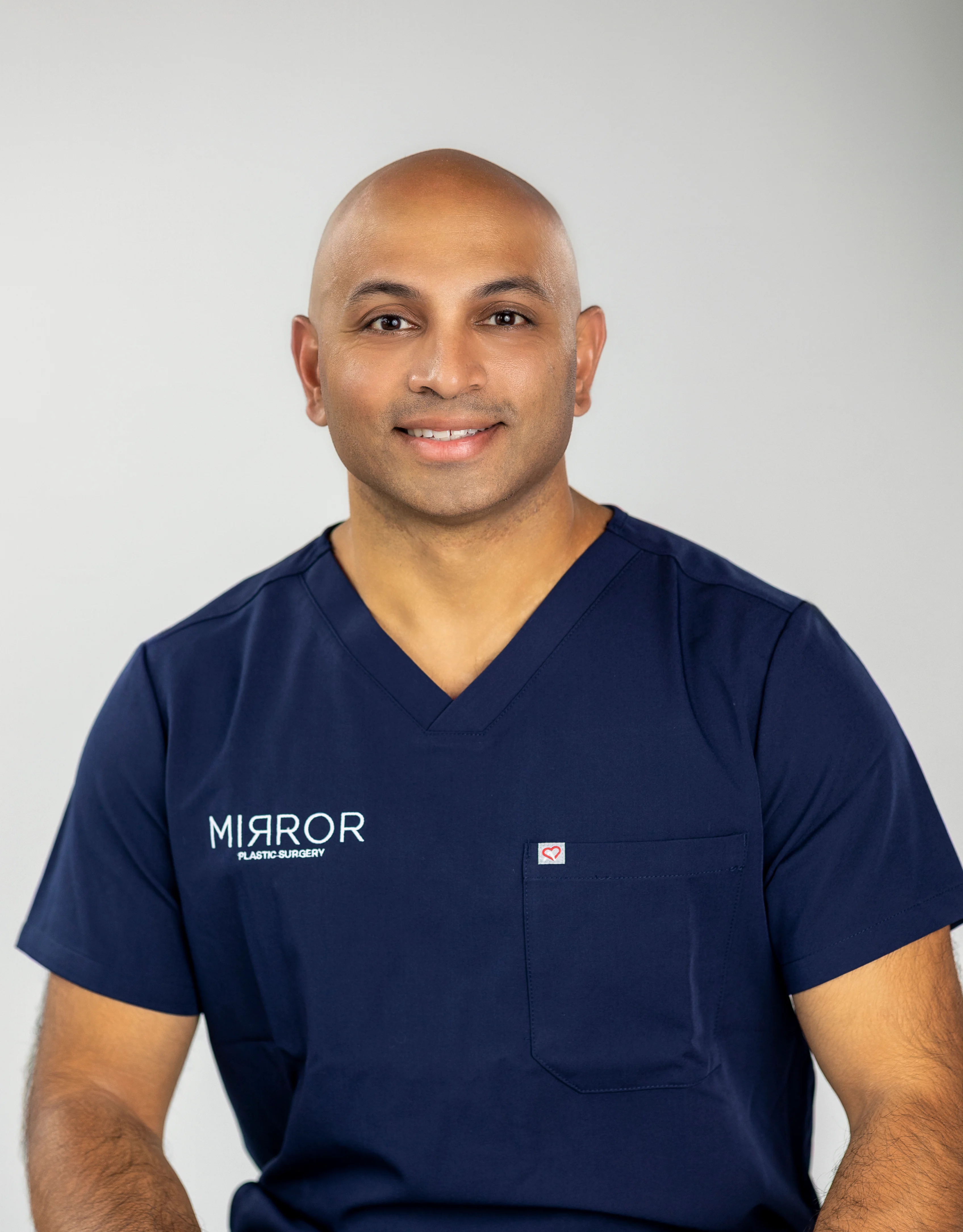
Dr. Akash Chandawarkar meets these standards as a board-certified plastic surgeon, Harvard-educated and Johns Hopkins-trained, with fellowship training at Manhattan Eye Ear & Throat Hospital/Lenox Hill Hospital and advisory roles for Merz Aesthetics (Radiesse) and Tiger Aesthetics (AlloClae).
Non-Surgical vs. Surgical BBL: Matching the Procedure to Your Goals
In Dr. Akash’s practice, recommendations follow anatomy and goals. Non-surgical BBL works well for subtle enhancement, for patients with limited donor fat, and for those who cannot take extended time off. Surgical BBL suits patients who want significant, lasting volume and accept surgical risks and recovery.
Long-Term Outlook: What to Expect 5–10 Years Later
Long-term data for non-surgical BBL remains more limited than for fat transfer, but current evidence still offers guidance. Sculptra-built collagen usually lasts 2–3 years, and many protocols recommend 4–8 vials every 18–24 months to maintain results.1
Natural aging continues regardless of treatment. Weight changes and sun exposure still affect tissues, so stable weight helps preserve contours, while major weight loss can reduce the fat that supports new collagen.
Filler migration appears as an uncommon but real long-term risk. The FDA lists migration among dermal filler risks, and delayed complications can appear months or years later. True long-distance migration is extremely rare; many patients who worry about it are actually seeing aging changes or swelling from hydrophilic fillers.
Patients can still pursue a surgical BBL later if their goals change. Non-surgical BBL often serves as a “test drive” for those who feel unsure about committing to a permanent surgical change.
Biostimulatory collagen cannot correct severe skin laxity. Injectables and energy devices do not remove excess tissue, so patients with major sagging or a strong desire for a dramatic lift usually benefit from a surgical consultation.
Frequently Asked Questions
How Long Does a Non-Surgical BBL Last?
Biostimulatory fillers such as Sculptra typically last two to three years, with maintenance every 18–24 months to sustain results. Radiesse results usually last 12–18 months. Longevity varies with metabolism, weight stability, and total product volume. Results build gradually over three to six months as collagen forms.
Is a Non-Surgical BBL Safe?
When a board-certified physician uses FDA-approved biostimulatory fillers in a licensed medical facility, the risk profile improves significantly compared with unregulated alternatives. A 2024 review of 4,725 gluteal filler cases found that most complications were mild and short-lived. However, no filler currently has FDA approval for buttock augmentation, and off-label gluteal use has caused severe harm in unregulated settings, including deaths. Provider credentials remain the most important safety factor.
What Is the Recovery Time for a Non-Surgical BBL?
Recovery is usually brief. Most patients return to work and daily activities within 24–48 hours. Mild swelling, bruising, tenderness, or redness can last several days. Many providers recommend avoiding heavy exercise for 48 hours, prolonged pressure on the area, and hot tubs or saunas for about a week. After Sculptra injections, the “5-5-5 rule” often applies: massage for five minutes, five times a day, for five days.
Can I See Results Immediately After a Non-Surgical BBL?
Some early volume appears from the injection fluid, but this does not represent the final outcome. Biostimulatory fillers work over two to six months as collagen develops. Changes usually become noticeable at four to six weeks, with peak results three to six months after the last session.
How Much Does a Non-Surgical BBL Cost?
Published ranges for Sculptra-based non-surgical BBL often fall between $5,000 and $15,000 for initial treatment, depending on sessions and vials. Radiesse-based plans vary with vial count and goals. Maintenance every 18–24 months adds to long-term cost. Because anatomy and goals differ, Mirror Plastic Surgery offers personalized quotes after a detailed consultation instead of flat package pricing.
Conclusion: Turning Reviews Into an Informed Plan
Non-surgical BBL reviews make sense once you separate two realities. Qualified physicians using approved biostimulatory fillers produce the high satisfaction rates seen in clinical studies, while unregulated injectors using unapproved substances drive the 479 documented complaints and severe harms. The central decision focuses less on the procedure label and more on who performs it, with what product, and in what setting.
Over 5–10 years, non-surgical maintenance can approach or exceed the one-time cost of surgical BBL, so long-term budgeting matters as much as the first quote. Long-term results also depend on stable weight, realistic expectations, and consistent follow-up rather than a single visit.
Mirror Plastic Surgery centers its approach on these realities. Patients meet a board-certified plastic surgeon with deep anatomical expertise, receive up to an hour of consultation time, and benefit from supplier-neutral product selection and honest guidance, including clear explanations when a procedure does not match their goals.
If you are considering a non-surgical BBL, start with an evidence-based consultation that reviews your anatomy, clarifies your goals, and outlines the safest, most effective options for you.
Disclaimer: Results may vary from person to person. Editorial content, before and after images, and patient testimonials do not constitute a guarantee of specific results.
1 Results may vary from person to person. Editorial content, before and after images, and patient testimonials do not constitute a guarantee of specific results.