Written by: Dr. Akash Chandawarkar, Board Certified Plastic Surgeon, Mirror Plastic Surgery | Last updated: September 9, 2026
Key Takeaways
- Non-surgical BBL alternatives create subtle-to-moderate enhancement and do not match the dramatic size increase of surgical fat transfer.1
- Biostimulatory injectables like Sculptra and Radiesse stimulate collagen for gradual volume, while electromagnetic devices build muscle for lift and firmness without adding volume.
- No injectable filler holds FDA approval for gluteal augmentation. All body use is off-label, and safety depends on provider expertise and precise anatomical technique.
- Results vary by modality: Sculptra often lasts 2–3+ years, Radiesse about 12–18 months, and Emsculpt or CoolTone need maintenance every 3–6 months.
- Schedule a personalized consultation to receive an evidence-based assessment of which non-surgical approach best matches your goals.
Why Consider Non-Surgical BBL? The Safety Imperative
Surgical BBL transfers your own fat from other body areas to the buttocks. In South Florida alone, 25 deaths from fat embolism were recorded between 2010 and 2022, with 92% of those surgeries performed at high-volume, budget clinics. Recovery involves weeks of avoiding direct sitting, compression garments, and significant downtime.
Non-surgical alternatives remove these specific surgical risks. Patients avoid general anesthesia, incisions, fat transfer, and embolism risk. Most patients resume normal daily activities within 24 hours. The trade-off is outcome magnitude. Non-surgical options produce subtle-to-moderate enhancement rather than dramatic transformation.
Patients who want noticeable but natural improvement in shape, firmness, or skin quality without surgical risk often benefit from non-surgical BBL alternatives. Patients who want a dramatic size increase still need surgery to reach that goal. For those seeking a safer alternative, the following comparison shows how the main non-surgical options differ.
Non-Surgical BBL Alternatives: Side-By-Side Comparison
The table below summarizes the key differences among the main non-surgical options. It highlights what each treatment is best for, FDA status, and how long results typically last so you can quickly see which approach aligns with your primary goal.
| Treatment | Best For | FDA Status | Results Longevity |
|---|---|---|---|
| Sculptra (PLLA) | Gradual Volume, Hip Dips, Skin Quality | Approved For Face Only (PMA P030050); Off-Label For Buttocks | 2–3+ Years |
| Radiesse (CaHA) | Immediate Volume + Collagen Stimulation | Approved For Face/Hands/Décolleté; Off-Label For Buttocks | 12–18 Months |
| Emsculpt (HIFEM) | Lift And Firmness, Muscle Tone | 510(K)-Cleared (K192224) For Muscle Toning | Requires Maintenance Every 3–6 Months |
| CoolTone | Muscle Firming And Strengthening | 510(K)-Cleared (K192940) For Muscle Toning | Requires Maintenance Every 3–6 Months |
| Radiofrequency / Ultrasound | Skin Laxity, Cellulite Texture | 510(K)-Cleared For Skin Tightening; Not Cleared For Gluteal Enhancement | 12–18 Months With Maintenance |
| Vacuum Therapy | Temporary Plumping | Not FDA-Regulated As A Medical Device For Gluteal Enhancement | Hours To Days |
Biostimulatory Injectables: Sculptra And Radiesse
How Biostimulatory Fillers Build Volume
Biostimulatory injectables do not simply fill space like traditional fillers. They trigger your body’s own collagen production and build volume gradually over weeks to months. Two products dominate this category for gluteal use: Sculptra (poly-L-lactic acid, or PLLA) and Radiesse (calcium hydroxylapatite, or CaHA).
Sculptra (Poly-L-Lactic Acid)
Sculptra is FDA-approved under PMA P030050 for three facial indications only: HIV-associated lipoatrophy (2004), nasolabial fold correction (2009), and cheek wrinkles (2023). The FDA labeling states that safety and effectiveness for larger amounts, different frequencies, or different anatomic sites have not been evaluated. Buttock injection remains strictly off-label.
PLLA microparticles stimulate fibroblasts to produce new collagen. Results develop gradually over 3–6 months with no immediate volume effect. A 2026 multicenter retrospective study of 498 patients treated with PLLA in nonfacial areas found treatment-related adverse events in 6.6% of subjects, all mild or moderate, with bruising the most common at 5.0% and nodules rare at 0.2%. The gluteal region was the most commonly treated area, accounting for 60.3% of sessions. The study was funded by Galderma, Sculptra’s manufacturer, which represents a potential conflict of interest.
Sculptra offers natural, gradual results that integrate with surrounding tissue. Many patients enjoy 2–3+ years of improvement and notice better skin quality and smoother cellulite. Key limitations include the 3–6 month development window, the need for multiple sessions, and the fact that the product cannot be dissolved if complications occur.
Radiesse (Calcium Hydroxylapatite)
Radiesse is FDA-approved under PMA P050052 for facial wrinkles, hand augmentation, and décolleté wrinkles. Buttock injection remains off-label. The FDA MAUDE database documents serious adverse events from off-label Radiesse use, including vascular occlusion requiring intervention to prevent permanent damage.
CaHA microspheres suspended in a gel carrier provide immediate volume. The microspheres then stimulate collagen production over time. For body use, Radiesse is often hyperdiluted with additional saline to spread across broader areas and improve skin quality. In a randomized split-faced study (n=117), 94% of treated folds were rated improved at 6 months. No large-scale peer-reviewed studies specifically evaluate Radiesse for gluteal augmentation.
Radiesse provides immediate visible volume and strong collagen stimulation, usually with fewer sessions than Sculptra. Results often last 12–18 months. It cannot be dissolved with hyaluronidase, and CaHA particles are radiopaque and visible on CT scans and X-rays, so patients must inform imaging providers.
Critical Safety Note: The FDA has explicitly warned that no injectable filler is approved for buttock augmentation and that injectable silicone or products falsely marketed as FDA-approved fillers can cause chronic inflammation, migration, tissue necrosis, embolism, infection, disfigurement, stroke, and death. Neither Sculptra nor Radiesse can be dissolved if complications arise. The gluteal region contains significant vascular structures, and the “danger triangle” bounded by the posterior superior iliac spine, greater trochanter, and ischial tuberosity requires precise anatomical knowledge from any injector.
Book your evidence-based consultation with Dr. Akash, a board-certified plastic surgeon with advisory board roles at Merz Aesthetics (Radiesse) and Tiger Aesthetics, to discuss whether biostimulatory injectables fit your anatomy and goals.
Electromagnetic Muscle Building: Emsculpt And CoolTone
How HIFEM Technology Builds Lift
High-intensity focused electromagnetic (HIFEM) technology delivers pulsed magnetic fields that depolarize motor neurons and induce involuntary muscle contractions stronger than voluntary exercise. A single 30-minute session delivers approximately 20,000 supramaximal contractions.
Emsculpt And Emsculpt Neo
Emsculpt is FDA 510(k)-cleared (K192224) as a class II powered muscle stimulator for toning and strengthening muscles. Clearance means the device is considered substantially equivalent to existing devices. It does not mean the FDA has independently evaluated its efficacy for buttock enhancement. Emsculpt Neo adds synchronized radiofrequency to reduce overlying fat while stimulating muscle.
A 2022 systematic review by Rambhia et al. in Dermatologic Surgery evaluated 20 studies covering 521 patients and concluded that electromagnetic muscle stimulation is effective for abdominal contouring, with documented increases in muscle thickness and reductions in fat thickness lasting up to a year. Evidence for buttocks remains comparatively thin, with only 156 of 521 patients treated for gluteal enhancement. A 2023 independent systematic review by Dr. Eric Swanson in Annals of Plastic Surgery described the published evidence for efficacy as tenuous because of heavy industry sponsorship, with nearly all imaging studies authored or co-authored by BTL Industries advisors or employees.
HIFEM devices build muscle and provide modest lift. They do not add fat or volume. These devices are contraindicated for patients with pacemakers, metal implants, or copper IUDs.
CoolTone
CoolTone uses magnetic muscle stimulation and is FDA 510(k)-cleared (K192940) for muscle toning and strengthening. Less published evidence exists for CoolTone than for Emsculpt, and no large-scale peer-reviewed studies specifically evaluate CoolTone for gluteal enhancement. Results require maintenance every 3–6 months.
Energy-Based Skin Tightening: Radiofrequency And Ultrasound
Radiofrequency (RF) and ultrasound devices deliver controlled thermal energy to deeper skin layers, contract existing collagen fibers, and stimulate new collagen production. Various devices hold 510(k) clearances for dermatological and aesthetic use, including skin tightening. None are specifically cleared for gluteal enhancement.
A 2022 review of noninvasive body contouring by Murgia et al. in Clinics in Dermatology concluded that clinical trials across this category remain limited and that head-to-head comparisons between modalities are largely absent. RF and ultrasound show the strongest support for skin laxity and cellulite texture improvement rather than volume addition. Many patients use these modalities as companion treatments alongside biostimulatory injectables.
Vacuum Therapy: The Temporary Option
Vacuum therapy uses mechanical suction cups applied to the buttocks to draw blood to the surface and create temporary plumping. It is not FDA-regulated as a medical device for gluteal enhancement, and no peer-reviewed studies support it for lasting buttock enhancement. Results last hours to days. Vacuum therapy functions as a spa treatment rather than a medical procedure and does not create lasting structural change.
Safety And Regulatory Considerations
No injectable filler, including Sculptra or Radiesse, holds FDA approval for gluteal augmentation. For FDA-approved products used off-label, the absence of FDA review for this indication means no standardized dosing, no established safety protocols, and no evaluated long-term complication rates for gluteal use.
A 2026 retrospective study of 26 patients undergoing gluteal filler injection reported minor adverse events in 19.2% of patients and no major complications. The authors attributed this safety profile to meticulous technique, blunt cannula use, and avoidance of high-risk anatomical zones. The same principles apply to biostimulatory fillers. A board-certified plastic surgeon with deep anatomical knowledge can minimize risks through precise injection technique.
The following safety principles guide every non-surgical BBL candidate:
- Never accept injectable silicone or unapproved substances, because these can cause catastrophic complications including embolism, tissue necrosis, and death.
- Verify that your provider uses FDA-approved products, even when used off-label, since approved products have known safety profiles.
- Choose a board-certified physician with specific gluteal injection experience to reduce the risk of vascular injury and asymmetry.
- Understand that PLLA and CaHA cannot be dissolved if complications occur, so conservative dosing and careful placement matter.
- Avoid any provider offering treatment in non-medical settings such as hotels, salons, or private residences, which lack appropriate safety infrastructure.
How To Choose Based On Your Goals
Each non-surgical BBL modality targets a different anatomical objective. Your primary goal determines the right approach or combination.
For patients whose primary goal is volume, biostimulatory injectables such as Sculptra or Radiesse remain the only non-surgical options that add meaningful volume. Sculptra provides gradual, long-lasting results that suit patients who want natural enhancement. Radiesse offers more immediate volume with collagen stimulation.
If your primary goal is instead lift and firmness, HIFEM devices such as Emsculpt or CoolTone build gluteal muscle and create a firmer, more lifted appearance. Results require maintenance every 3–6 months, and these treatments do not add volume.
Patients who care most about skin tightening and cellulite reduction often choose radiofrequency or ultrasound treatments. These modalities improve skin elasticity and texture but do not add volume.
Many patients achieve their best outcome by combining modalities. A common protocol pairs Sculptra for volume foundation with Emsculpt for muscle tone or adds hyperdilute Radiesse for skin quality improvement. A board-certified provider can design a staged treatment plan tailored to your anatomy.
Non-surgical BBL alternatives deliver subtle-to-moderate enhancement rather than surgical-scale transformation. Patients who want a dramatic size increase still require surgery. Patients who want natural improvement in shape, firmness, and skin quality without surgical risk often see excellent results when an expert performs these treatments.
Why Mirror Plastic Surgery For Non-Surgical BBL
Mirror Plastic Surgery, serving St. Petersburg and the Tampa Bay area, offers a concierge, safety-first, evidence-based approach to non-surgical BBL. Patients receive thoughtful guidance instead of one-size-fits-all packages.
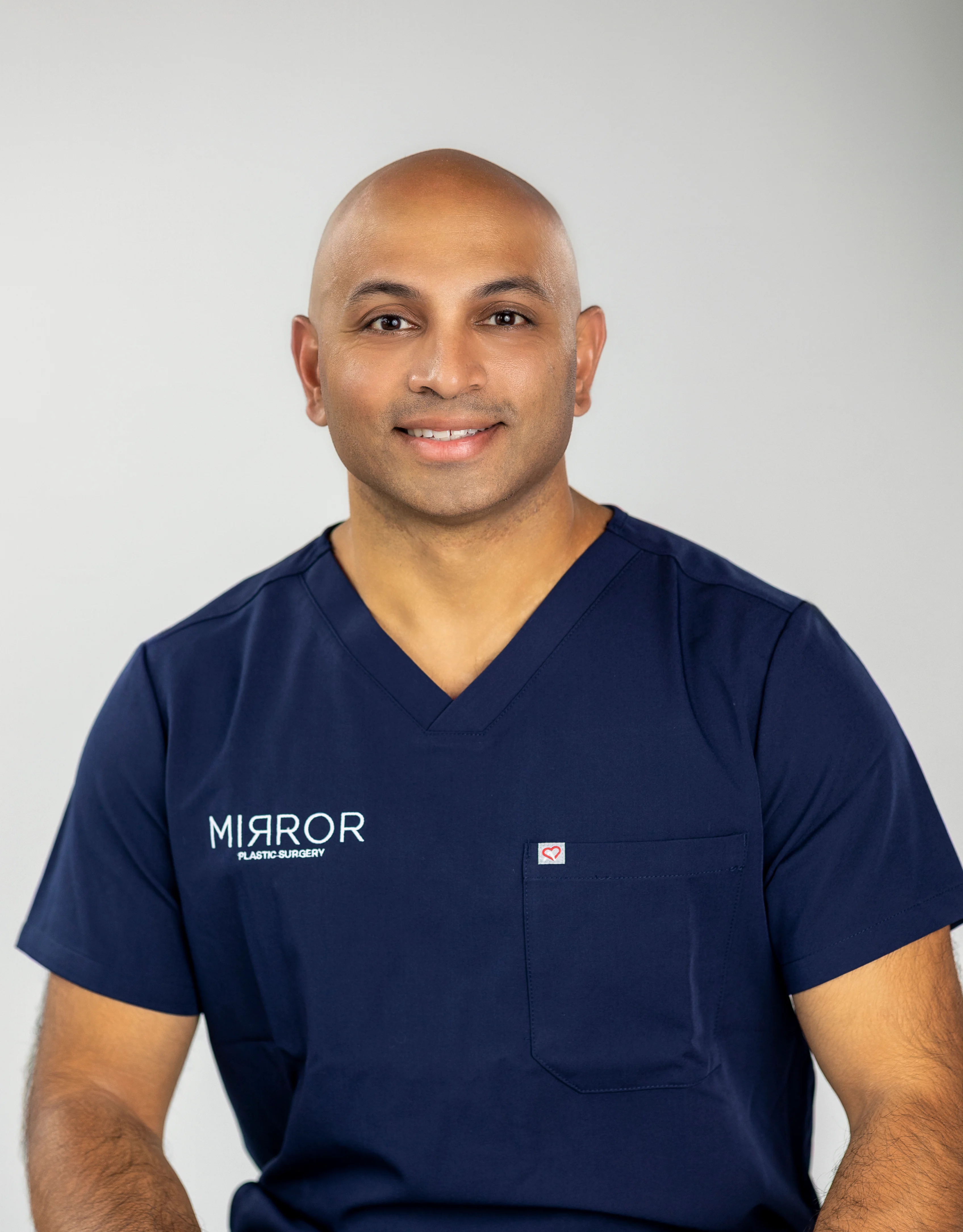
Dr. Akash Chandawarkar is a Harvard-educated, Johns Hopkins-trained, board-certified plastic surgeon with fellowship training in aesthetic surgery at the Manhattan Eye Ear & Throat Hospital. His advisory board roles with Merz Aesthetics (Radiesse) and Tiger Aesthetics (Alloclae) reflect his position at the forefront of injectable innovation. Unlike many med-spa settings where treatments may be delegated to non-physicians, Dr. Akash personally performs every injectable treatment and brings a surgeon’s command of gluteal anatomy to every procedure.
The Mirror Difference includes:
- Up to one-hour consultations that provide a top-to-bottom assessment of your goals, anatomy, and concerns.
- A philosophy that places safety first, function second, and aesthetics third, so your well-being always comes before quick results.
- Supplier-neutral recommendations that focus on the right amount of the right product for your goals instead of quota-driven upselling.
- Honest communication so you hear clearly when a non-surgical approach cannot achieve your goals and a surgical referral makes more sense.
- Evidence-based protocols that align every treatment plan with peer-reviewed research and FDA regulations.
Schedule your consultation to discuss your goals and receive unvarnished, anatomy-first guidance.
Frequently Asked Questions
What Is A Liquid BBL?
A “liquid BBL” is a non-surgical procedure using injectable biostimulatory fillers, typically Sculptra or Radiesse, to add volume and improve contour in the buttocks. Surgical BBL transfers your own fat, while a liquid BBL stimulates your body’s collagen production to build volume gradually over several months. Results are subtle to moderate and develop over 3–6 months. The procedure involves no general anesthesia and no incisions, which removes fat embolism risk and makes it a good option for patients who want natural enhancement without surgical downtime.
Is Sculptra FDA-Approved For Buttocks?
Sculptra is FDA-approved under PMA P030050 for three facial indications only: HIV-associated lipoatrophy, nasolabial fold correction, and cheek wrinkles. Buttock injection remains strictly off-label. The FDA has not evaluated Sculptra’s safety or effectiveness for gluteal augmentation, and the approved labeling explicitly states that safety and effectiveness have not been evaluated for anatomic sites different from those specified in the intended use. As noted earlier, a 2026 multicenter study of 498 patients found a favorable short-term safety profile for nonfacial PLLA use, but this does not constitute FDA approval for gluteal augmentation.
How Long Do Non-Surgical BBL Results Last?
Longevity varies significantly by modality. Sculptra often maintains results for the 2–3+ year window mentioned earlier, with maintenance touch-ups recommended every 18–24 months. Radiesse typically lasts about 12–18 months. Emsculpt and CoolTone require maintenance sessions every 3–6 months to preserve muscle tone, because results begin to fade by month 3–4 without continued treatment. Energy-based skin tightening, such as RF microneedling (for example, Morpheus 8), often shows outcomes lasting 12–18 months with annual maintenance. Vacuum therapy results remain transient and last hours to days. No non-surgical option provides permanent results, and all modalities require some degree of ongoing maintenance to sustain outcomes.
Are Non-Surgical BBLs Safe?
Non-surgical BBLs carry a low risk profile when a qualified, board-certified provider uses FDA-approved products, even when those products are used off-label. As discussed in the safety section, no filler is FDA-approved specifically for buttock augmentation, and complications such as vascular occlusion, nodules, and asymmetry can occur. The gluteal region contains significant vascular structures and requires detailed anatomical knowledge. The most serious risks arise from unapproved substances. Injectable silicone, industrial-grade materials, and counterfeit fillers have caused embolism, tissue necrosis, permanent disfigurement, and death. Patients should accept only FDA-approved products from board-certified physicians in licensed medical facilities.
What Is The Difference Between Sculptra And Radiesse For Buttock Enhancement?
Sculptra and Radiesse are both biostimulatory injectables that trigger collagen production, but they differ in mechanism, timeline, and longevity. Sculptra (poly-L-lactic acid) works entirely through biostimulation and provides no immediate volume effect. Results develop gradually over 3–6 months and align with the 2–3+ year longevity discussed earlier. Radiesse (calcium hydroxylapatite) provides immediate structural volume through its gel carrier on day one, while its microspheres stimulate collagen over time. Results usually last 12–18 months. Neither product can be dissolved with hyaluronidase if complications arise, so provider expertise and conservative dosing are critical for both. The right choice depends on your timeline, anatomy, and goals, and a board-certified plastic surgeon can assess which approach or combination fits you best.
Conclusion: Making An Informed Choice
Non-surgical BBL alternatives offer safer paths to gluteal enhancement, yet each modality plays a different role. Biostimulatory injectables such as Sculptra and Radiesse add volume through collagen stimulation, often with results that extend into the multi-year range. Electromagnetic devices such as Emsculpt and CoolTone build muscle for lift and firmness but require ongoing maintenance and do not add volume. Energy-based treatments such as RF and ultrasound tighten skin without adding volume, and vacuum therapy provides only temporary effects.
The evidence shows that no non-surgical option replicates surgical BBL results. Patients who want natural, gradual improvement without surgical risk can still achieve meaningful change when a board-certified expert who understands gluteal anatomy uses FDA-approved products correctly. Your choice of provider matters as much as your choice of modality.
At Mirror Plastic Surgery, Dr. Akash Chandawarkar offers that standard of care through honest, anatomy-first guidance from a board-certified plastic surgeon who explains clearly what non-surgical alternatives can and cannot achieve for your specific goals.
Start your journey with a personalized consultation at Mirror Plastic Surgery in St. Petersburg, FL, and take the first step toward a decision you can trust.
Disclaimer: Results may vary from person to person. Editorial content, before and after images, and patient testimonials do not constitute a guarantee of specific results.
1 Results may vary from person to person. Editorial content, before and after images, and patient testimonials do not constitute a guarantee of specific results.