

Written by: Dr. Akash Chandawarkar, Board Certified Plastic Surgeon, Mirror Plastic Surgery | Last updated: September 9, 2026
Key Takeaways
- Surgical BBL mortality improved from roughly 1 in 3,000 to 1 in 15,000 with ultrasound guidance and subcutaneous-only injection, yet fat embolism risk remains.
- Non-surgical BBL with biostimulatory fillers such as Radiesse and Sculptra removes fat embolism risk while creating gradual, natural-looking volume and contour changes.
- Over 90% of documented South Florida BBL deaths occurred at high-volume budget clinics, which highlights the value of physician-led, low-volume practices that prioritize safety.
- Non-surgical BBL offers minimal downtime (1–2 days), no general anesthesia, and works especially well for lean patients without enough donor fat for surgical transfer.
- Patients seeking a safe, physician-led non-surgical BBL in Tampa can schedule a personalized consultation at Mirror Plastic Surgery to explore tailored treatment options.
The Data: Risks Of Surgical BBL In 2026
The 2017 ASERF Task Force survey, published in the Aesthetic Surgery Journal (Mofid et al.), analyzed data from 4,843 plastic surgeons performing over 198,000 BBLs and estimated BBL mortality at approximately 1 in 3,000, the highest of any cosmetic procedure at the time. The anatomical mechanism is well documented. The gluteus maximus muscle contains a dense plexus of large, thin-walled veins. Fat injected into or beneath that muscle can enter the venous system under pressure, travel to the lungs, and cause fatal pulmonary fat embolism within minutes. Cadaveric dissection studies found that in 100% of confirmed fatal BBL cases, injected fat was located deep within the gluteus maximus muscle or submuscular space. In no confirmed death did grafted fat remain exclusively in the subcutaneous plane.
The regulatory and clinical response was significant. Florida became the first state to mandate real-time ultrasound guidance during gluteal fat grafting, with HB 1471 taking effect July 1, 2023, legally requiring the operating surgeon to personally perform both fat extraction and injection, with ultrasound guidance during the injection phase. The 2022 multi-society task force also capped BBL procedures at no more than three per surgeon per day to reduce fatigue-related errors.
The result: the 2022 BAAPS Gluteal Fat Grafting Safety Review concluded that BBL mortality falls to approximately 1 in 15,000 when subcutaneous-only injection and real-time ultrasound guidance are followed, a rate it judged similar to the mortality risk in abdominoplasty. Even with these improvements, surgical BBL retains inherent risks that non-surgical options avoid entirely.
The provider-volume dimension compounds the risk. A study by Pazmino and Garcia (2023), published in the Aesthetic Surgery Journal, reviewed medical examiner records of BBL deaths in South Florida and found that over 90% of 25 fatal cases occurred at high-volume, corporate-owned budget clinics. Critically, 68% of documented South Florida BBL deaths involved ABPS-certified surgeons, which confirms that board certification is necessary but not sufficient.
The Alternative: Non-Surgical BBL With Biostimulatory Fillers
Many safety-conscious patients now choose non-surgical BBL to avoid the risks described above. A non-surgical BBL uses injectable biostimulatory fillers, at Mirror Plastic Surgery primarily Radiesse (calcium hydroxylapatite) and Sculptra, to add volume, smooth cellulite, soften stretch marks, and improve symmetry in the gluteal region. The procedure requires no surgery, no general anesthesia, and no fat harvesting. Non-surgical BBL eliminates the fat embolism risk that defines surgical BBL’s danger, offering a path free from the mortality concerns detailed earlier.
Results build gradually over 3–6 months as collagen production increases.1 The approach works particularly well for lean patients who lack sufficient donor fat for surgical transfer.1 It can also address hip dips, creating a smoother silhouette and making the waist appear narrower.1
Liposuction plus fat transfer under general anesthesia2–3 weeks off work, no sitting for 2–4 weeks, compression garments for 6–8 weeksFat embolism, with mortality now reduced when modern protocols are followedLong term, with surviving transferred fat becoming permanent tissue
| Factor | Surgical BBL | Non-Surgical BBL (Biostimulatory Fillers) |
|---|---|---|
| Procedure | Injectable biostimulatory fillers, often with only topical or local anesthesia | |
| Recovery | 1–2 days, quick return to normal activity, mild swelling or bruising possible for several days | |
| Primary Risk | No fat embolism risk, mild bruising or swelling possible | |
| Result Duration | Approximately 18–24 months with biostimulatory fillers, with maintenance sessions recommended |
The Safest Path To Buttock Enhancement
The safest buttock enhancement avoids fat embolism and general anesthesia while still delivering visible, natural-looking results. Non-surgical BBL with biostimulatory fillers meets these criteria and aligns with the safety data outlined above. Patients see gradual contour changes as their own collagen builds, rather than relying on transferred fat.
Evaluating Tampa’s BBL Providers: Criteria For Premier Care
BBL providers in Tampa vary widely, and many describe themselves as “premier.” Clear criteria based on research and regulation help you separate marketing from measurable safety.
- Board Certification: Verification of certification by the American Board of Plastic Surgery (ABPS) is the starting point. The 68% statistic mentioned earlier shows that credentials must pair with strict adherence to current safety protocols.
- Safety Protocols: For surgical BBL, real-time ultrasound guidance and subcutaneous-only injection are the 2026 standard of care. The non-surgical equivalent is physician-led injection, where a surgeon’s command of gluteal anatomy provides a comparable safeguard.
- Practice Model: The 90% figure from the South Florida data links most deaths to high-volume budget clinics. The 2022 task force capped BBLs at three per surgeon per day for this reason. Practices performing five to ten procedures daily show a documented risk pattern that safety-conscious patients should avoid.
- Range Of Options: A truly premier center offers both surgical and non-surgical pathways. This range allows the provider to recommend the safest effective option for each patient’s anatomy, rather than steering everyone toward surgery.
Mirror Plastic Surgery meets every criterion. The practice combines ABPS board certification, physician-led injections performed personally by Dr. Akash Chandawarkar, a concierge model limiting procedures to one to two per day, and specialized expertise in non-surgical BBL with Radiesse and Sculptra.
Why Mirror Plastic Surgery Leads In Non-Surgical BBL
Dr. Akash Chandawarkar is Harvard educated, Johns Hopkins trained, and fellowship trained in aesthetic surgery at the Manhattan Eye Ear & Throat Hospital/Lenox Hill Hospital, with additional medical innovation training at Stanford University. He serves on advisory boards for Merz Aesthetics (Radiesse) and Tiger Aesthetics (Sculptra), the products used in Mirror’s non-surgical BBL treatments. This role provides product insight that extends beyond standard clinical familiarity.
Every injection at Mirror is performed by Dr. Akash personally. As a board-certified plastic surgeon, he places each treatment with a surgeon’s understanding of subdermal and gluteal anatomy. That expertise makes injectable treatment safer and more precise than procedures delegated to non-physician injectors.
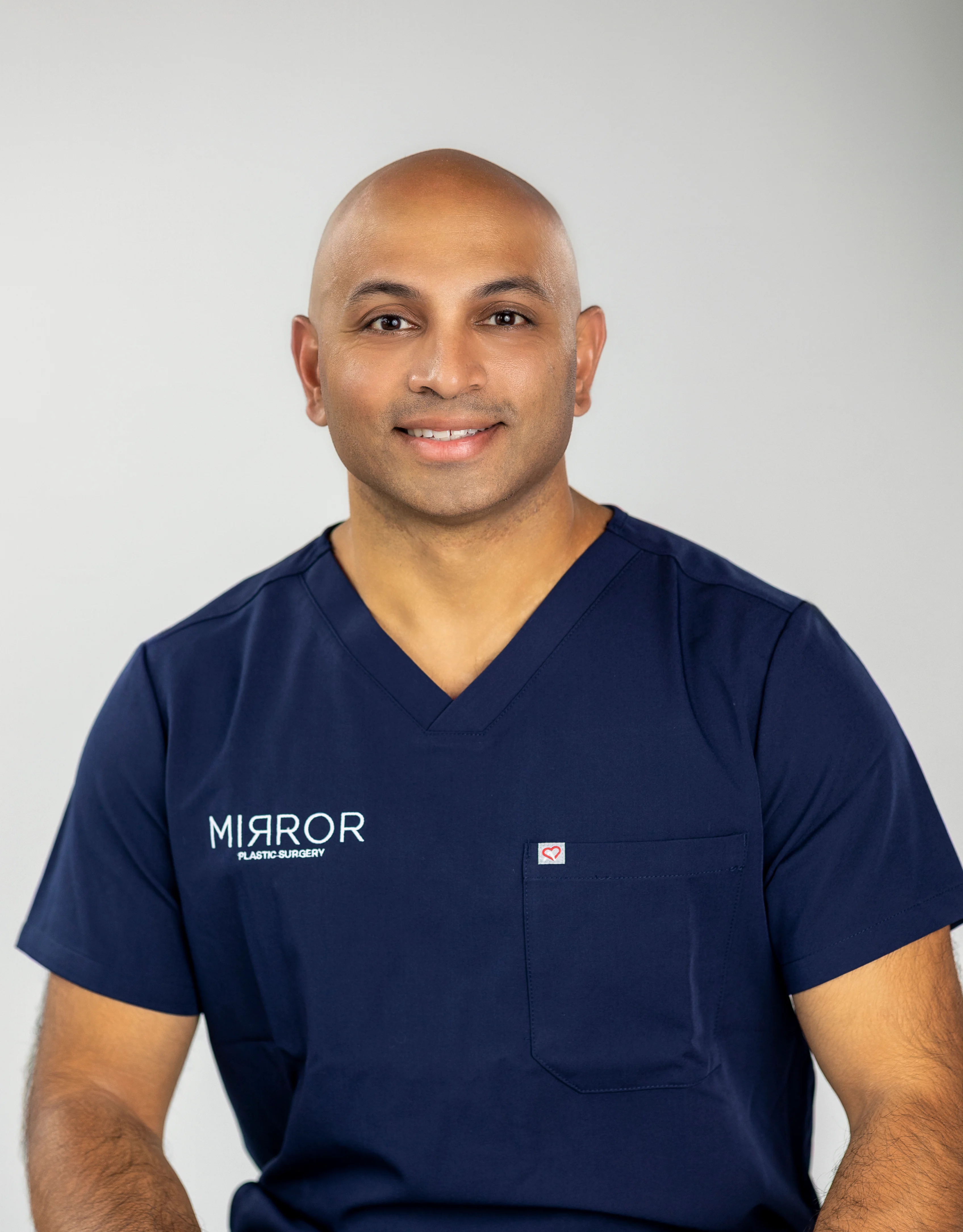
Mirror’s concierge model means consultations run up to an hour. Each includes a top-to-bottom assessment that evaluates anatomy, goals, and motivations before any treatment plan is proposed. The practice’s guiding philosophy, safety first, function second, aesthetics third, shapes every recommendation. Dr. Akash will recommend the safest effective option for each patient and will advise against a procedure when it is not appropriate. Mirror also remains supplier neutral. Product selection is based on what serves the individual patient, not on brand relationships or volume incentives.
Non-surgical BBL at Mirror can address hip dips, reduce the appearance of cellulite and stretch marks, and suit patients who are not surgical candidates due to insufficient donor fat or other medical considerations.
Recovery And Aftercare: The Non-Surgical Advantage
Surgical BBL recovery typically requires 2–3 weeks off work, with patients unable to sit or lie directly on their buttocks for a minimum of 2–4 weeks, and compression garments worn daily for 6–8 weeks. The physical and logistical demands of that recovery are substantial.
Non-surgical BBL usually involves only a day or two of downtime, with mild swelling, bruising, or tenderness possible for several days. Most patients return to desk work and normal daily activities the same day or the following day.
Mirror’s concierge aftercare model provides personalized follow-up guidance, including massage protocols and activity modifications designed to support filler distribution and collagen response. That level of post-procedure attention extends the same safety-focused philosophy that shapes the consultation and treatment.
Cost Considerations: Comparing Surgical And Non-Surgical BBL
Surgical BBL is a significant financial commitment. Surgical BBL usually costs $8,000 to $15,000 or more, including liposuction, fat transfer, anesthesia, facility fees, and downtime. That figure does not include time off work, compression garments, or the logistical costs of a multi-week recovery.
Non-surgical BBL is generally more affordable than traditional cosmetic surgery because it avoids costs associated with liposuction, anesthesia, operating room fees, and extended time away from work. Multiple sessions with biostimulatory fillers are typically required, with costs varying by vial count and individual treatment plan.
Mirror Plastic Surgery provides transparent, personalized quotes during consultation. Patients receive a clear explanation of recommended products, session counts, and pricing.
Questions To Ask Any BBL Provider
Specific questions help you evaluate any BBL provider in Tampa using the same safety-focused lens.
- Are you board certified by the American Board of Plastic Surgery?
- Do you use real-time ultrasound guidance for surgical BBL?
- How many BBL procedures do you perform per day, and how does that align with the three-per-day guideline?
- Do you offer non-surgical BBL options with biostimulatory fillers?
- Who performs the injections, a physician or a non-physician injector?
- Can I see before-and-after photos of your work?
- What is your plan if a complication occurs?
Mirror Plastic Surgery answers each of these questions favorably. Arrange a consultation with Ellie to ask them directly and see how a physician-led, concierge practice feels in person.
Frequently Asked Questions
Who Is The Best BBL Doctor In Florida?
The best BBL doctor combines American Board of Plastic Surgery certification, strict adherence to current safety protocols, and the ability to offer both surgical and non-surgical pathways based on what is safest for each patient’s anatomy. In the Tampa Bay area, Dr. Akash Chandawarkar of Mirror Plastic Surgery stands out for his Harvard education, Johns Hopkins training, fellowship in aesthetic surgery at the Manhattan Eye Ear & Throat Hospital, and specialized expertise in non-surgical BBL using Radiesse and Sculptra. He personally performs every injection and serves on advisory boards for the companies that manufacture the products he uses, a level of product-specific expertise that is rare in the Tampa market.
What Is The Safest Buttock Enhancement?
Based on current clinical data, non-surgical BBL with biostimulatory fillers such as Radiesse or Sculptra is the safest buttock enhancement option available. It carries zero risk of fat embolism, the primary cause of surgical BBL mortality, and requires no general anesthesia. Surgical BBL has become safer with ultrasound guidance and subcutaneous-only injection technique, as detailed earlier, yet it cannot remove the fat-embolism risk category entirely. For appropriate candidates, non-surgical BBL at a physician-led practice like Mirror Plastic Surgery represents the safest effective path to gluteal enhancement.
How Long Does A Non-Surgical BBL Last?
Results from biostimulatory fillers such as Radiesse and Sculptra typically last 18–24 months, with maintenance sessions recommended to preserve contour over time.1 Unlike surgical BBL, which depends on living fat cells establishing a blood supply, biostimulatory fillers work by stimulating the body’s own collagen production. The visible result is the patient’s own collagen, which moves naturally with the body and integrates with surrounding tissue. Full results are generally visible 3–6 months after the final session, as collagen production builds gradually.1
Is Non-Surgical BBL Painful?
Most patients report minimal discomfort during non-surgical BBL, largely because the procedure uses only topical or local anesthesia, with no general anesthesia or sedation. Mild swelling or bruising may occur for 1–3 days post treatment, yet most patients return to normal activities within 24–48 hours. At Mirror Plastic Surgery, Dr. Akash uses a blunt cannula technique that pushes vessels aside rather than piercing them, which reduces both discomfort and the risk of vascular complications during injection.
Can Non-Surgical BBL Correct Hip Dips?
Non-surgical BBL can effectively correct hip dips.1 Strategic placement of biostimulatory fillers in the lateral hip depressions fills the concavities that create the appearance of hip dips, producing a smoother, more continuous silhouette from the waist to the upper thigh.1 This approach makes the waist appear narrower and the overall contour more balanced. Hip dip correction is one of the most common applications of non-surgical BBL at Mirror Plastic Surgery and can be addressed as a standalone goal or as part of a broader gluteal enhancement plan tailored to the individual patient’s anatomy.
Conclusion: The Premier Choice For Safety-Conscious Patients
The data clearly favors non-surgical BBL for patients who prioritize safety. Surgical BBL has become meaningfully safer with ultrasound guidance and subcutaneous-only injection, yet it retains an inherent risk category, fat embolism, that non-surgical BBL removes entirely. A premier BBL center in 2026 must offer the safest effective option for each patient, including a non-surgical pathway for those who want real results without surgical risk.
Mirror Plastic Surgery fills that role in Tampa. Dr. Akash Chandawarkar’s credentials, concierge model, supplier-neutral product selection, and personal performance of every injection define what premier care looks like as a clinical standard rather than a marketing slogan.
Disclaimer: Results may vary from person to person. Editorial content, before and after images, and patient testimonials do not constitute a guarantee of specific results.
1 Results may vary from person to person. Editorial content, before and after images, and patient testimonials do not constitute a guarantee of specific results.


