
Written by: Dr. Akash Chandawarkar, Board Certified Plastic Surgeon, Mirror Plastic Surgery | Last updated: September 9, 2026
Key Takeaways
- BBL safety has improved dramatically since 2017 because surgeons adopted subcutaneous-only injection with real-time ultrasound guidance.
- Board certification by the American Board of Plastic Surgery, hospital privileges, accredited facilities, and limited daily case volume are the credentials that truly protect patients.
- Florida’s HB 1471 law mandates ultrasound guidance and subcutaneous-only injection for every BBL, giving Tampa Bay patients a legal safety advantage they should confirm with each surgeon.
- Patients should ask specific safety questions during consultation, including whether the surgeon personally performs both liposuction and injection and limits cases to three per day.
- Schedule a Safety-Focused BBL Consultation With Ellie to receive care from Dr. Akash Chandawarkar at Mirror Plastic Surgery in St. Petersburg.
How To Choose A BBL Surgeon In Tampa Bay: Credentials That Protect You
In all 50 states, any licensed physician can legally perform surgery in their office, regardless of specialty training. That reality makes credential verification the first and most critical step in choosing a BBL surgeon.
Board Certification Is Essential For BBL Safety
The American Board of Plastic Surgery (ABPS) is the only plastic-surgery board recognized by the American Board of Medical Specialties to certify doctors in the full scope of plastic surgery for the entire body. ABPS certification requires at least six years of surgical training, with a minimum of three years focused exclusively on plastic surgery, plus rigorous written and oral examinations and lifelong continuing education. Verify any surgeon’s certification directly through the ABPS public registry. Ask which board certifies them and confirm the answer.
Fellowship Training Shows Advanced Aesthetic Expertise
Fellowship training in aesthetic surgery signals specialized, advanced skill beyond basic residency. A surgeon who has completed an accredited aesthetic surgery fellowship has invested extra years mastering cosmetic procedures and complex body contouring.
Hospital Privileges And Accredited Surgical Facilities
Verify that the surgeon maintains hospital admitting privileges. This status indicates they meet the standards of peer-reviewed hospital credentialing committees. Similarly, the surgical facility itself must be accredited by a recognized body such as AAAASF, AAAHC, or The Joint Commission, ensuring hospital-grade safety standards, sterile protocols, and emergency preparedness.
Case Volume And Focus On Body Contouring
Ask how many BBL procedures the surgeon performs annually and what percentage of their practice focuses on body contouring. The 2022 Multi-Society Practice Advisory on Gluteal Fat Grafting from ASPS, ASAPS, and ISAPS recommends limiting BBL cases to no more than three per surgeon per day, citing surgeon fatigue as a formal risk factor. Very high daily volume places patients in the same risk environment seen in the South Florida death cluster.
BBL Safety: Why Ultrasound Guidance Matters In Florida
The Historical Risk: Fat Embolism
The primary danger in BBL is pulmonary fat embolism, which occurs when fat enters large gluteal blood vessels and travels to the lungs. This complication happens when fat is injected into or beneath the gluteal muscle. The 2017 ASERF Task Force study found that deep muscle injection carried a 403 percent increased risk of fatal and nonfatal pulmonary fat embolism on multivariate analysis. Anatomical dissection studies confirmed that in 100 percent of fatal BBL cases, injected fat was located deep within the gluteus maximus muscle or submuscular space, and in no confirmed death did the grafted fat remain exclusively in the subcutaneous plane.
The Modern Solution: Subcutaneous-Only Injection With Ultrasound
In April 2022, the American Society of Plastic Surgeons (ASPS), American Society for Aesthetic Plastic Surgery (ASAPS), and International Society of Aesthetic Plastic Surgery (ISAPS) jointly mandated two non-negotiable techniques for BBL: subcutaneous-only fat injection and mandatory intraoperative ultrasound guidance, formally prohibiting intramuscular injection. Ultrasound allows the surgeon to visualize the cannula tip in real time and confirm fat placement in the safe subcutaneous layer above the muscle fascia. This technique has proven effective. Since its widespread adoption, zero fatal pulmonary fat embolism cases have been documented across more than 12,000 procedures in follow-up surveys from 2019 to 2021.
Florida’s Legal Mandate And Tampa Bay Patient Protection
Florida HB 1471, effective July 1, 2023, was the first law in the United States to mandate specific BBL safety techniques, requiring intraoperative ultrasound guidance, subcutaneous-only fat injection, the operating surgeon to personally perform both extraction and injection, and an in-person patient examination no later than one day before surgery. Tampa Bay patients benefit from this legal protection, and they should confirm that every surgeon they consider follows each requirement.
Red Flags To Watch For In BBL Practices
- Surgeons who cannot clearly explain their injection plane or who dismiss ultrasound as unnecessary
- Practices performing more than three BBLs per surgeon per day
- High-pressure sales tactics or same-day booking incentives
- Vague answers about complication rates or emergency protocols
- Lack of hospital admitting privileges or accredited facility verification
Surgical Vs. Non-Surgical BBL: How To Choose Your Approach
Two main approaches to buttock enhancement exist: surgical and non-surgical. The right choice depends on your anatomy, aesthetic goals, and tolerance for surgery, recovery, and risk. The comparison centers on results, recovery time, and safety profile.
A surgical BBL uses liposuction to harvest fat from donor areas such as the abdomen, flanks, thighs, and back. The surgeon then purifies and injects that fat into the buttocks. This approach offers the most dramatic, natural-feeling results because it uses your own tissue and also slims donor areas. It requires general anesthesia or deep sedation and involves significant recovery time and surgical risk. On average, 60 to 80 percent of transferred fat survives long-term, with final volume stabilizing by three to six months.1 Results are considered permanent once transferred fat establishes a blood supply, although a portion of injected fat may be naturally reabsorbed in the first months.1 Surgical BBL candidacy requires adequate donor fat and a BMI typically between 22 and 30.
A non-surgical BBL uses injectable biostimulatory fillers such as Radiesse (calcium hydroxylapatite) or AlloClae to add volume, smooth cellulite, reduce the appearance of stretch marks, and correct asymmetry or hip dips. This approach involves no incisions and no general anesthesia, and downtime is minimal. Most patients return to normal activity immediately. Results appear gradually over several months as the body builds new collagen.1 Non-surgical BBL works well for lean patients without sufficient donor fat, for those seeking subtle enhancement, or for individuals who cannot take extended time off for recovery. Results require maintenance sessions to sustain.1 When a board-certified plastic surgeon with deep anatomical knowledge performs the procedure, non-surgical BBL carries a substantially lower risk profile than surgery.
A qualified surgeon should clearly explain which approach fits your needs and should recommend against surgery when it does not serve your health or goals. At Mirror Plastic Surgery, Dr. Akash Chandawarkar offers both surgical and non-surgical BBL options and tailors recommendations to each patient’s anatomy and priorities.
Schedule A Consultation With Ellie To Compare Surgical And Non-Surgical BBL Options and choose the path that fits your body and lifestyle.
What To Ask During A BBL Consultation: Your Safety Checklist
Targeted questions during consultation help you separate genuinely qualified, safety-focused surgeons from providers who prioritize volume over outcomes.
- Are you board-certified by the American Board of Plastic Surgery? Verify directly through the ABPS website and confirm the exact board name.
- Do you use real-time ultrasound guidance during fat transfer? This is the single most important safety question. Florida law requires it under HB 1471, and the answer should be an unequivocal yes.
- Do you inject fat exclusively in the subcutaneous plane, above the muscle? Confirm the surgeon follows the subcutaneous-only protocol mandated by the 2022 Multi-Society Practice Advisory.
- How many BBL procedures do you perform per day? As noted in the 2022 guidelines, daily case volume should be limited. Ask for a specific number and compare it with the three-per-day recommendation.
- Will you personally perform both the liposuction and the fat injection? Florida law requires the operating surgeon to perform both components. Delegation to other providers signals a safety concern.
- What is your approach to achieving natural-looking results? A skilled surgeon explains how they assess your anatomy, waist-to-hip ratio, and aesthetic goals to create balanced, proportionate results.
- Can you show me before-and-after photos of patients with a similar body type? Relevant comparisons matter more than a highlight reel of ideal results, and difficulty providing such photos may indicate limited experience with your anatomy type.
- What is your revision rate, and how do you handle complications? An experienced surgeon answers transparently and explains their process for managing issues.
- Where will the surgery be performed, and is the facility accredited? Confirm accreditation by AAAASF, AAAHC, or The Joint Commission.
- What does your aftercare plan include? Comprehensive post-operative support, including clear instructions and access to care after hours, supports a safer recovery.
Why Mirror Plastic Surgery Stands Out For BBL In Tampa Bay
Mirror Plastic Surgery builds every part of the practice around a clear hierarchy: safety first, function second, aesthetics third. This philosophy shapes how the team schedules cases, plans procedures, and supports patients.
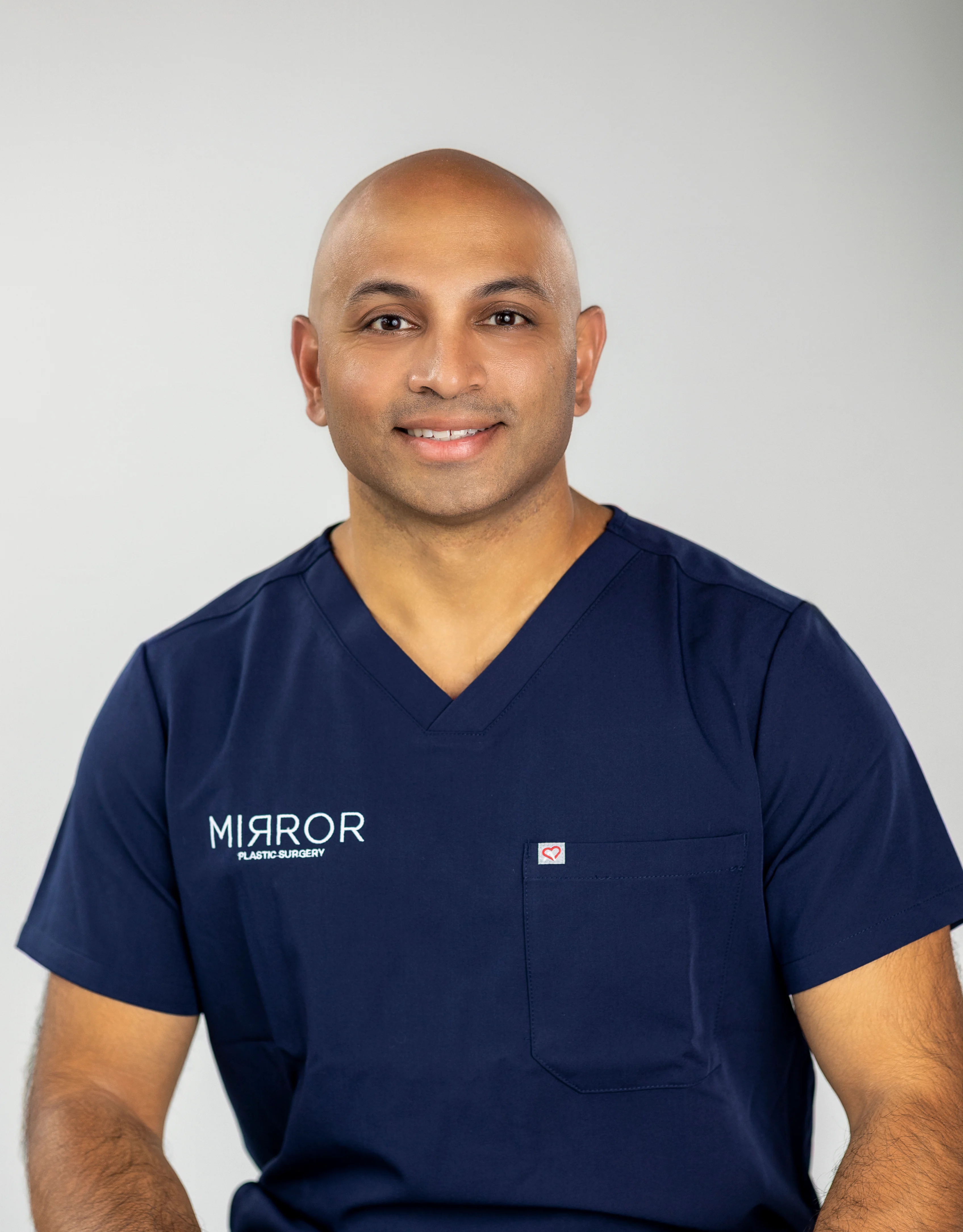
Dr. Akash Chandawarkar’s BBL Credentials
Dr. Akash Chandawarkar is board-certified by the American Board of Plastic Surgery, Harvard-educated, and Johns Hopkins-trained. He completed specialized fellowship training in aesthetic surgery at the Manhattan Eye Ear & Throat Hospital (MEETH)/Lenox Hill Hospital and holds medical innovation training from Stanford University. He serves on advisory boards for Merz Aesthetics (Radiesse) and Tiger Aesthetics (AlloClae), which keeps him closely connected to advances in injectable body contouring. This combination of elite education, rigorous surgical training, and commitment to modern technique places him among the most qualified BBL surgeons in the Tampa Bay area.
A Concierge, Safety-First Experience
Mirror Plastic Surgery limits the schedule to one to two surgeries per day to protect focus and safety. Dr. Akash personally performs all procedures, from consultation through surgery and follow-up care. Consultations extend up to an hour. This structure allows a comprehensive top-to-bottom assessment that explores aesthetic goals and the emotional motivations behind them. The practice remains supplier-neutral and selects the right product for each patient rather than meeting sales quotas. Patients receive direct, honest guidance, including clear recommendations against procedures that do not serve their health or results.
Mirror Plastic Surgery offers both surgical BBL and non-surgical BBL using biostimulatory fillers, providing safety-first care tailored to each patient’s anatomy and goals.
Contact Ellie To Book A Consultation And Review Your BBL Safety Checklist with a team that aligns with every standard described in this guide.
Contact Mirror Plastic Surgery:
Phone: 727-361-6515
Email: hello@mirrorplasticsurgery.com
Address: 780 4th Ave S, St. Petersburg, FL 33701
Frequently Asked Questions
How Long Does BBL Recovery Take?
Most patients require two to three weeks off work, with the first two weeks being the most restrictive. You cannot sit or lie directly on your buttocks for a minimum of two to four weeks after surgery, and most surgeons recommend avoiding direct pressure for six to eight weeks. Compression garments stay on around the clock for the first several weeks. Light walking starts early in recovery to reduce blood clot risk, while full exercise typically resumes at three months. Final results continue to refine over the following months as swelling resolves and transferred fat establishes its blood supply.1
How Long Do BBL Results Last?
Surgical BBL results are considered long-lasting once transferred fat establishes a blood supply, typically within three to six months.1 Some fat reabsorption during the initial healing phase is normal, and results evolve with significant weight changes and aging.1 Non-surgical BBL results using biostimulatory fillers require periodic maintenance.1 Radiesse typically lasts 12–18 months, while Sculptra can last 2–3 years, and touch-ups every 12–24 months help sustain results.1
What Disqualifies You From Getting A BBL?
Contraindications for surgical BBL include blood clotting disorders or a history of deep vein thrombosis or pulmonary embolism, significant cardiac or pulmonary conditions, active smoking, uncontrolled diabetes, autoimmune conditions affecting wound healing, and use of blood-thinning medications that cannot be safely paused. Surgical BBL also requires adequate donor fat. Many surgeons look for approximately 500 to 800 cc of purified fat per side for noticeable results, which makes very lean patients poor candidates for the surgical approach. Non-surgical BBL with biostimulatory fillers has a broader candidacy profile and may suit patients who cannot safely undergo surgery.
What Is The Safest Place To Get A BBL?
The safest setting is an accredited surgical facility, such as one accredited by AAAASF, AAAHC, or The Joint Commission, with a board-certified plastic surgeon who uses real-time ultrasound guidance and subcutaneous-only injection. As discussed earlier, Florida’s HB 1471 legally mandates these protocols, which gives Tampa Bay patients a safety advantage when they choose a compliant practice. Medical tourism and high-volume budget clinics carry substantially higher risk. Choosing an accredited facility with a board-certified, safety-focused surgeon in Florida offers one of the most protective combinations available.
Is Non-Surgical BBL Safe?
Non-surgical BBL using biostimulatory fillers such as Radiesse and AlloClae carries a substantially lower risk profile than surgical BBL when a board-certified plastic surgeon with deep anatomical knowledge performs the injections. The absence of general anesthesia, surgical incisions, and fat transfer removes the primary risk of pulmonary fat embolism. Injectable body contouring still requires careful product selection, precise technique, and a thorough understanding of gluteal anatomy. At Mirror Plastic Surgery, all non-surgical BBL procedures are performed by Dr. Akash Chandawarkar, a board-certified plastic surgeon with surgeon-level command of subdermal anatomy. Patients should avoid providers who use unapproved products or who lack formal medical training in body contouring, because these situations account for many complications in the non-surgical category.
Disclaimer: Results may vary from person to person. Editorial content, before and after images, and patient testimonials do not constitute a guarantee of specific results.
1 Results may vary from person to person. Editorial content, before and after images, and patient testimonials do not constitute a guarantee of specific results.