Written by: Dr. Akash Chandawarkar, Board Certified Plastic Surgeon, Mirror Plastic Surgery | Last updated: September 9, 2026
Natural-looking Botox starts with a clear plan, not a single “magic” injection site. This guide walks you through the most effective treatment areas, how different products compare, and what to expect at a surgeon-led practice like Mirror Plastic Surgery.
Key Takeaways
- The best Botox treatment is a personalized, anatomy-based strategy where the injector’s expertise matters more than the brand name.
- The “Rule of Three” treats forehead lines, frown lines, and crow’s feet together to create balanced, natural-looking upper-face rejuvenation.
- Advanced Botox uses such as masseter slimming, lip flip, chin smoothing, neck bands, and hyperhidrosis require precise anatomical knowledge.
- Choosing a qualified injector is the most important safety decision, especially for higher-risk areas near the eyes, mouth, and neck.
The Rule Of Three: Best Botox Injection Sites For A Balanced Upper Face
The foundation of most Botox treatment plans starts with the upper face. Allergan introduced a treatment protocol called “The Look Of 3,” which targets three key upper-face areas: forehead lines, frown lines between the brows, and crow’s feet. The protocol uses a combined 64 units across all three zones. Treating these areas together helps prevent an “overdone” look and maintains natural facial harmony.
Forehead Lines: Smoothing Horizontal Creases
Horizontal forehead lines appear when the frontalis muscle, the primary elevator of the brow, contracts. Botox relaxes this muscle to smooth the skin while preserving natural brow movement. The FDA label for Botox Cosmetic specifies that forehead line treatment must be combined with glabellar treatment to prevent brow ptosis, totaling 40 units for a combined treatment. Treating the forehead alone is a common cause of brow drooping.
Frown Lines (Glabella): Softening The “11s”
The vertical “11” lines between the eyebrows come from the corrugator supercilii and procerus muscles. Relaxing these muscles softens the tired or angry appearance associated with deep frown lines. The glabella is the most studied Botox area and also one of the highest-risk zones. The FDA label specifies that lateral corrugator injections must be placed at least 1 cm above the bony supraorbital ridge, and toxin must not be injected closer than 1 cm above the central eyebrow to reduce the risk of eyelid ptosis. Precise anatomical knowledge is the main safeguard against this complication.
Crow’s Feet: Refining Lateral Canthal Lines
The fan-shaped lines at the outer corners of the eyes appear when the lateral orbicularis oculi muscle contracts during smiling. Botox relaxes this muscle to soften the skin while preserving the ability to smile or squint naturally. Safe injection technique requires at least one centimeter from the orbital border and 1.5 centimeters from the outer corner of the eye, with superficial injections of 2 to 4 units per point. These guidelines help avoid complications such as dry eye or ectropion.
Beyond The Basics: Advanced Botox Treatment Areas
Botox’s versatility extends well beyond the upper face. Many advanced applications are off-label and demand even greater precision and a deep understanding of facial anatomy. Dr. Chandawarkar’s surgical training supports safe treatment in these complex zones.
- Masseter (Jawline Slimming And TMJ Relief): Botox injected into the masseter muscle can slim a square jawline and relieve TMJ pain and bruxism. If toxin diffuses to the risorius muscle, it can pull the mouth sideways when smiling. Incorrect placement in the anterior masseter can cause a “pseudo-bulge” or difficulty chewing solid food.
- Lip Flip: This subtle technique relaxes the upper lip’s orbicularis oris muscle so the lip rolls slightly outward for a fuller appearance when smiling, without filler. Precision is critical to avoid affecting speech or the ability to drink from a straw.
- Chin (Pebbly Chin): Botox smooths a dimpled or “pebbly” chin caused by an overactive mentalis muscle. Over-treatment can create a “witch’s chin” or affect lower lip movement.
- Neck (Platysma Bands): Treatment reduces the appearance of vertical neck bands. The FDA label specifies that all neck injections must be at least 1 cm below the lower mandibular border, and providers must avoid structures deep to the platysma to reduce the risk of dysphagia and other serious complications.
- Underarm Sweating (Hyperhidrosis): Botox can block the nerves that trigger excessive sweating. This use is an FDA-approved therapeutic indication for onabotulinumtoxinA and can be life-changing for many patients.
Schedule a personalized Botox consultation to review which advanced treatment areas match your anatomy and goals.
Botox VS. Other Neuromodulators: Options Explained
“Botox” is a brand name, onabotulinumtoxinA, not a generic term for all neuromodulators. Several FDA-approved products exist, each with distinct characteristics. A skilled injector selects the product based on your anatomy and goals rather than brand loyalty. Mirror Plastic Surgery offers all major brands to support unbiased, evidence-based recommendations.
The table below compares the primary neuromodulators on FDA-approved cosmetic areas, typical onset, and typical duration. Units are not interchangeable between brands. Your provider determines the dose based on the specific product and your individual muscle anatomy.
| Product | FDA-Approved Cosmetic Areas | Typical Onset | Typical Duration |
|---|---|---|---|
| Botox Cosmetic (onabotulinumtoxinA) | Glabellar lines, crow’s feet, forehead lines, platysma bands | 1–2 days | 3–4 months |
| Dysport (abobotulinumtoxinA) | Glabellar lines (adults under 65) | 1–3 days | 3–4 months |
| Xeomin (incobotulinumtoxinA) | Glabellar lines, forehead lines, crow’s feet (upper facial lines) | 3–7 days | 3–4 months |
| Jeuveau (prabotulinumtoxinA) | Glabellar lines only | 2–3 days | 3–4 months |
| Daxxify (daxibotulinumtoxinA) | Glabellar lines and cervical dystonia | 1–4 days | 6–9 months |
Botox Safety: Understanding Risks And Choosing A Qualified Injector
Whichever product you choose, safety depends most on the injector’s skill. Botox has an excellent safety profile when a qualified professional administers it. A 2023 systematic review in Aesthetic Surgery Journal analyzing 36 clinical trials found a serious adverse event rate of less than 0.001% for Botox. Complications occur most often when individuals without deep anatomical knowledge perform injections.
Most patients experience only mild, temporary effects such as bruising, swelling, or a slight headache. Rare, technique-related complications include:
- Eyelid ptosis (drooping): Ptosis occurs in about 1% to 5% of Botox patients, with one study finding a rate of 5.4% among inexperienced injectors compared to less than 1% among experienced injectors.
- Brow asymmetry or “Spock brow”: This results from uneven distribution across the frontalis, leaving outer brow fibers untreated.
- “Frozen” appearance: This effect comes from excessive units or product placed across too many areas at once.
Botox is contraindicated for pregnant or nursing women, individuals with certain neuromuscular conditions such as myasthenia gravis or Lambert-Eaton syndrome, and those with an active infection at the injection site. For a deeper review of side effects and reactions, see Botox Side Effects: A Surgeon’s Guide To Risks And Reactions.
The single most important safety decision is choosing your injector. A board-certified plastic surgeon understands the underlying muscles, blood vessels, and agonist–antagonist relationships that help prevent complications. Brief training courses cannot replace this level of expertise.
Long-Term Effects: What Happens When You Stop Botox?
Stopping Botox does not accelerate aging. Muscles gradually return to their pre-treatment level of activity over 3 to 6 months, and there is no withdrawal effect or rebound wrinkling.1 Wrinkles return to their natural baseline rather than worsening beyond what they would have been without treatment.
Consistent, long-term use offers a documented preventive benefit. A landmark study on identical twins found that the twin who received regular Botox for over 12 years had noticeably fewer crow’s feet and forehead lines than the twin who had only two treatments, and even seven months after their last session, the regularly treated twin still looked younger.1 Many long-term patients also find they need fewer units over time due to disuse atrophy, a gradual weakening of the treated muscle that is generally considered a positive effect.
How To Choose The Right Provider: Red Flags And Green Flags
Provider selection shapes both your results and your safety. Use the following framework to evaluate any practice.
Green flags to look for:
- Board certification in plastic surgery or dermatology
- Extensive, demonstrated experience with injectables
- A thorough, unhurried consultation of 15 or more minutes
- A focus on overall facial balance, not just a single wrinkle
- Transparent communication about risks, benefits, and alternatives
- Willingness to show before-and-after photos of their own patients
Red flags to avoid:
- High-volume “Botox parties” or heavily discounted pricing
- Injectors who push unnecessary treatments or additional products
- Lack of medical credentials or physician supervision
- Rushed consultations that skip a full facial assessment
- Inability or unwillingness to answer detailed anatomical questions
For a comprehensive breakdown of how to evaluate providers and settings, see How To Choose Safe Botox: Medical Settings Vs. Spas.
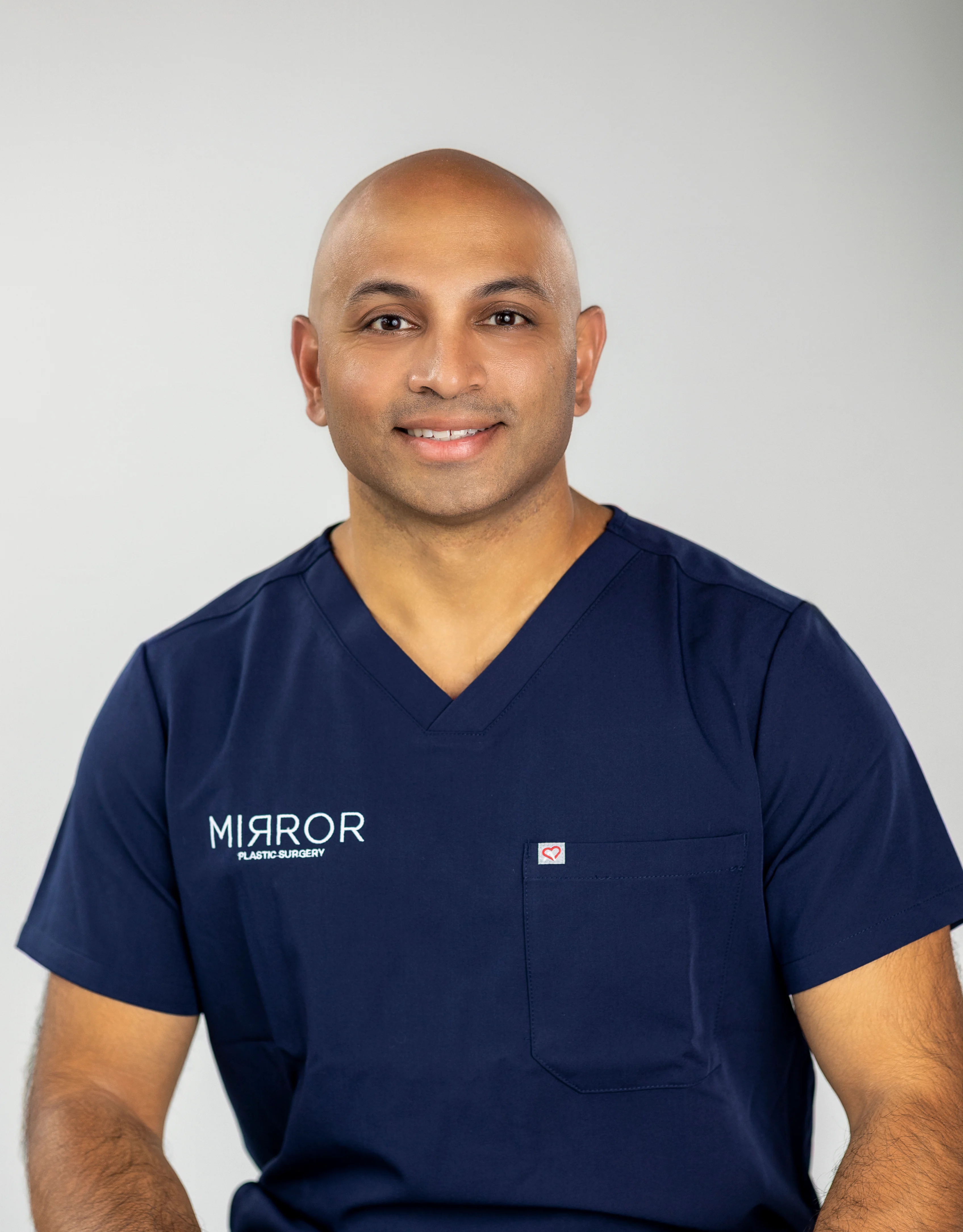
Dr. Akash Chandawarkar is a Harvard-educated, Johns Hopkins-trained, board-certified plastic surgeon who personally performs all injections at Mirror Plastic Surgery. His consultations prioritize safety first, function second, and aesthetics third, a framework that keeps every treatment decision grounded in your long-term well-being.
What To Expect: Your Botox Consultation And Treatment
Every patient journey at Mirror Plastic Surgery begins with a comprehensive, top-to-bottom facial assessment. Dr. Chandawarkar evaluates your facial anatomy, muscle movement patterns, and aesthetic goals, then explains the reasoning behind every recommendation. He is known for his transparency and often advises patients when an expensive service is not yet necessary, which builds trust that high-volume clinics rarely match.
The treatment itself is a quick, in-office procedure with minimal discomfort and no downtime, typically completed in 15 to 20 minutes. Initial effects appear within days, with peak results visible at 10 to 14 days, when a scheduled follow-up visit allows for fine-tuning.1 For a full overview of what to expect across the entire treatment cycle, visit the Botox: Complete Patient Guide To Cost, Results, And Safety.
Schedule your personalized assessment to experience surgeon-led, anatomy-first care focused on natural results.
Frequently Asked Questions
What Are The 3 Best Areas To Get Botox Injections?
The three classic upper-face treatment areas, forehead lines, frown lines (glabella), and crow’s feet, form the foundation of a balanced Botox plan. Treating these areas together in a single session produces the most harmonious rejuvenation of the upper face. This approach allows the injector to balance muscle forces and avoid brow asymmetry or an unnaturally relaxed appearance. Treating only one of these areas can create imbalance, such as brow drooping when the forehead is treated without the glabella.
What Are The Riskiest Areas For Botox?
The glabella and periorbital region carry the highest risk of eyelid ptosis if toxin diffuses to the levator palpebrae superioris muscle. The lower face, particularly around the mouth and chin, is high-risk because the muscles controlling speech, smiling, and eating are densely packed and interconnected. Incorrect placement can cause difficulty smiling naturally, drooling, or an asymmetric expression. The neck carries the most serious potential complications, including dysphagia or respiratory compromise, because muscles controlling swallowing and breathing sit just beneath the platysma. These areas call for an injector with advanced anatomical expertise, ideally a board-certified plastic surgeon or dermatologist.
Do You Age Faster After Stopping Botox?
No. As covered above, stopping Botox does not accelerate aging. Muscles simply return to their natural baseline over a few months, and wrinkles reappear at their usual rate.
How Long Does Botox Last?
Results from most neuromodulators, including Botox Cosmetic, Dysport, Xeomin, and Jeuveau, typically last three to four months.1 Duration varies by individual, treatment area, muscle mass, and product. Daxxify (daxibotulinumtoxinA) is a notable exception, with a median duration of about six months and results lasting up to nine months in some patients based on its Phase 3 clinical program.1 Long-term, consistent users may find that results gradually extend as treated muscles adapt to their relaxed state.1
Does Botox Hurt?
Most patients describe the sensation as a brief, mild pinch. The needles used for Botox injections are very fine, and the volume injected at each site is small. Dr. Chandawarkar uses techniques designed to minimize discomfort, and the full procedure typically takes only 15 to 20 minutes. Patients with sensitivity concerns can discuss comfort options during their consultation. There is no downtime after treatment, and most patients return to normal activities immediately.
Conclusion: Your Path To Natural, Surgeon-Led Results
The best Botox treatment is never a one-size-fits-all formula. It is a personalized strategy that considers your facial anatomy, your aesthetic goals, and the expertise of your injector. Once you understand the “rule of three,” the range of advanced treatment areas, and how neuromodulator brands differ, you can weigh anatomical risks and make a genuinely informed decision.
At Mirror Plastic Surgery, Dr. Akash Chandawarkar combines surgical precision with a concierge, patient-first philosophy. Every injection is performed by a board-certified plastic surgeon who prioritizes your safety, your facial function, and your natural beauty. Mirror Plastic Surgery is located at 780 4th Ave S, St. Petersburg, FL 33701. Call or text 727-361-6515 or email hello@mirrorplasticsurgery.com to get started.
Request a Botox consultation and take the first step toward natural, balanced results with a surgeon who puts your safety first.
Disclaimer: Results may vary from person to person. Editorial content, before and after images, and patient testimonials do not constitute a guarantee of specific results.
1 Results may vary from person to person. Editorial content, before and after images, and patient testimonials do not constitute a guarantee of specific results.