
Written by: Ellie Pranckevicius, FNP-BC, Aesthetic Nurse Practitioner & Aesthetic Injector | Facial Restoration & Regenerative Injectable Specialist, Mirror Plastic Surgery | Last updated: July 12, 2026
Key Takeaways
- The three most frequently treated Botox areas are the forehead, glabellar complex, and crow’s feet, with results typically lasting three to four months.1
- Outcomes depend primarily on injector expertise, accurate dosing, and a full-face anatomical assessment rather than brand selection.
- The periorbital region carries the highest risk profile, and toxin migration can cause ptosis, so precise placement and training are essential.
- Patients must follow the 4-hour rule and avoid rubbing, exercise, or lying down immediately after treatment to reduce the risk of toxin displacement.
- Schedule a personalized dosing assessment with Ellie at Mirror Plastic Surgery to match treatment to your muscle activity and facial anatomy.
Top Three Botox Areas for Facial Rejuvenation
The classic trio of treatment sites accounts for most cosmetic neuromodulator procedures in the United States. Each area has distinct muscular anatomy, established dosing ranges, and clear aesthetic goals.
Forehead lines are horizontal creases produced by the frontalis muscle. Dosing is calibrated to soften lines while preserving brow elevation and natural expression. Duration averages three to four months.1
The second zone, glabellar lines (the “11s”), usually requires higher dosing than the forehead. These vertical furrows between the brows are driven by the corrugator supercilii and procerus muscles, which are thicker and more resistant to relaxation. This area often receives the highest unit count in the classic trio, and results follow the standard three-to-four-month window.1
Completing the trio, crow’s feet are lateral orbital lines generated by the orbicularis oculi. Unlike the forehead and glabellar zones, this area requires bilateral treatment, targeting superficial muscle fibers while protecting the deeper structures that govern eyelid function. Duration matches the typical timeline described above.1
Schedule a personalized dosing assessment with Ellie to determine the exact unit count your muscle activity requires.
Highest-Risk Botox Zones and How Ellie Manages Them
Risk in neuromodulator injection depends on injector training, product sourcing, and anatomical precision. Several zones carry elevated risk profiles and call for particular expertise.
The periorbital region around the eyelids is the most frequently cited high-risk area. Botox should not be administered near the eyelids or in areas with weakened muscles, because toxin migration can cause ptosis, or drooping eyelid, which may persist for weeks. The lower eyelid and infraorbital zone carry similar risk of ectropion if the orbicularis oculi is over-relaxed.
The frontalis muscle presents a secondary risk. Excessive dosing or low placement can eliminate brow support entirely and create a heavy, flattened brow instead of the intended lift.
The CDC has documented an increased number of reports of harmful reactions, including difficulty swallowing and trouble breathing, following botulinum toxin injections, with some patients requiring hospitalization. These events are disproportionately associated with products sourced from unlicensed suppliers. Harmful reactions have occurred after injection with products purchased from unlicensed sources online, including counterfeit, unlabeled, or non-FDA-approved products that may contain incorrect toxin amounts or harmful ingredients.
These reactions can escalate to full botulism, with symptoms that extend beyond the injection site. Blurry or double vision, drooping eyelids, difficulty swallowing, difficulty breathing, and muscle weakness can begin hours to weeks after injection and require immediate emergency care. This delayed onset makes product sourcing verification critical.
Neck and lower-face injections involving the platysma and depressor anguli oris require precise depth and volume control to avoid dysphonia or asymmetric smile mechanics. These are off-label applications that demand advanced training rather than being contraindicated.
Post-Treatment Care: The 4-Hour Rule Explained
The 4-hour rule describes the immediate post-treatment window when patients should remain upright and avoid pressure on injected areas. Botulinum toxin needs time to bind to the presynaptic nerve terminal before it fully localizes. Mechanical pressure, vigorous exercise, or lying face-down during this period may theoretically displace the toxin to adjacent muscle groups.
Standard post-treatment guidance includes the following:
- Remain upright for at least four hours after injection.
- Avoid rubbing, massaging, or applying pressure to treated areas for 24 hours.
- Refrain from strenuous exercise for 24 hours, because increased circulation may accelerate toxin diffusion.
- Avoid alcohol for 24 hours to minimize bruising risk.
- Skip facials, saunas, and heat exposure for 24 to 48 hours.
Mild redness or swelling at injection sites usually resolves within a few hours, and small bumps after treatment are a normal and temporary side effect that typically resolve within a few hours. Full results usually appear within a few days of treatment.
Comparing the Five Most Common Neuromodulators
As of April 2026, the FDA-approved cosmetic botulinum toxin products include Botox®, Daxxify®, Dysport®, Jeuveau®, Letybo®, and Xeomin®. The table below compares five of the most commonly used options across onset and spread characteristics.
| Product | Onset | Spread Characteristics |
|---|---|---|
| Botox (onabotulinumtoxinA) | 2 to 5 days for most patients | Contains complexing proteins, moderate diffusion |
| Xeomin (incobotulinumtoxinA) | 4 to 7 days on average | “Naked” molecule without accessory proteins, may reduce antibody formation |
| Dysport (abobotulinumtoxinA) | 2 to 5 days | Wider diffusion profile, suited to larger muscle groups |
| Jeuveau (prabotulinumtoxinA) | As early as 2 days | Similar profile to Botox, cosmetic-only indication |
| Letybo (letibotulinumtoxinA) | Within a few days for most patients | High-purity 900 kDa complex |
Most neuromodulators deliver results lasting about three to four months.1 Dysport may extend to five months in some patients, while Botox’s duration varies by indication, and therapeutic uses such as overactive bladder can reach six months.1 Letybo’s duration is comparable to other products in the three-to-four-month range.1 Daxxify, discussed separately, offers approximately six months of cosmetic effect.
Daxxify (daxibotulinumtoxinA-lanm) is also FDA-approved and is notable for its longer reported duration of about six months, which suits patients seeking extended maintenance intervals.1 Product selection at Mirror Plastic Surgery is driven by individual anatomy and goals, not supplier relationships.
Top Treatment Areas: Units and Aesthetic Goals
Regardless of which neuromodulator is selected, dosing must match the specific treatment area and the patient’s muscle activity. The table below outlines typical unit ranges and aesthetic goals for five commonly treated zones.
| Treatment Area | Typical Unit Range | Primary Aesthetic Goal | Notes |
|---|---|---|---|
| Forehead | 10–20 units | Reduce horizontal lines, preserve brow position | Dose conservatively to avoid brow ptosis |
| Glabellar (“11s”) | 15–25 units | Soften vertical frown lines, reduce angry appearance | Highest-unit zone in the classic trio |
| Crow’s Feet | 10–20 units per side | Soften lateral orbital lines, preserve natural smile | Superficial placement protects deeper lid function |
| Masseter | 20–40 units per side | Jaw slimming, TMJ tension relief | Off-label, often requires 2–3 sessions for full atrophy |
| Neck / Trapezius | 20–60 units per side | Platysmal band softening, trapezius slimming (“Barbie neck”) | Off-label, proximity to swallowing muscles demands precision |
How the Classic Trio Works Together
The forehead, glabellar complex, and crow’s feet are often treated together in full-face neuromodulator sessions because their muscular actions are interdependent. Treating one area without considering the others can produce compensatory overactivity. For example, treating glabellar lines alone can cause the brow to drop asymmetrically.
Botox should soften facial lines while allowing natural movements and expressions, not freeze the face. Achieving this balance requires correct injection depth, thoughtful spacing of injection points, and unit calibration to the patient’s baseline muscle activity, all of which vary significantly between individuals.
Age, skin type, muscle movement, and overall facial structure all influence which areas are selected to create natural-looking results.
Off-Label Botox Zones: Masseter, Neck, and Trapezius
Off-label neuromodulator applications have strong clinical precedent and are routinely performed by experienced injectors. At Mirror Plastic Surgery, Ellie Pranckevicius focuses on three primary off-label zones.
Masseter: Injection into the masseter muscle reduces jaw bulk for a softer facial contour and can relieve bruxism-related tension. Dosing typically ranges from 20 to 40 units per side, and visible slimming emerges over six to eight weeks as the muscle gradually atrophies. Multiple sessions are often required to achieve full effect.
Platysma (neck bands): Vertical platysma bands that become prominent with age respond to targeted injection, which softens the neck profile without surgery. Precision is critical because of the nearby structures that govern swallowing and voice.
Trapezius (“Barbie neck” or “trap tox”): Injection into the upper trapezius reduces muscle bulk and creates a longer, more elongated neck-to-shoulder line. This application can also provide functional relief from chronic tension headaches and shoulder tightness. The typical dosage range for trapezius Botox is 20–60 units per side, adjusted for muscle mass and treatment goals.
What Botox Treats and What It Cannot Change
Neuromodulators address dynamic wrinkles, which are lines caused by repetitive muscle movement. They do not correct several other common concerns.
- Static wrinkles and volume loss: Lines present at rest, hollow temples, deflated cheeks, and thinning lips require dermal fillers such as Radiesse, alloClae, or other biostimulatory agents rather than neuromodulators.
- Skin laxity and texture: Loose skin, enlarged pores, acne scarring, and surface irregularities respond better to energy-based devices like radiofrequency or ultrasound, laser resurfacing, or microneedling.
- Significant structural change: Rhinoplasty, blepharoplasty, facelift, or other surgical procedures are appropriate when anatomical repositioning or tissue removal is needed, which injectables cannot replicate.
- Submental fat: Kybella (deoxycholic acid) or surgical intervention addresses fat beneath the chin, because neuromodulators do not reduce adipose tissue.
Clear guidance on these limitations is central to every Mirror Plastic Surgery consultation. Ellie will advise against a procedure when a different modality is more appropriate, prioritizing long-term trust over short-term revenue.
Ellie can evaluate whether neuromodulators, fillers, or another modality best addresses your concerns and provide honest recommendations based on your anatomy and goals.
Safety, Function, and Aesthetics: Ellie’s Treatment Framework
Mirror Plastic Surgery follows a three-tier decision framework in which safety is evaluated first, functional outcomes second, and aesthetic goals third. This sequence reflects the clinical reality that an attractive result is not successful if it compromises function or safety.
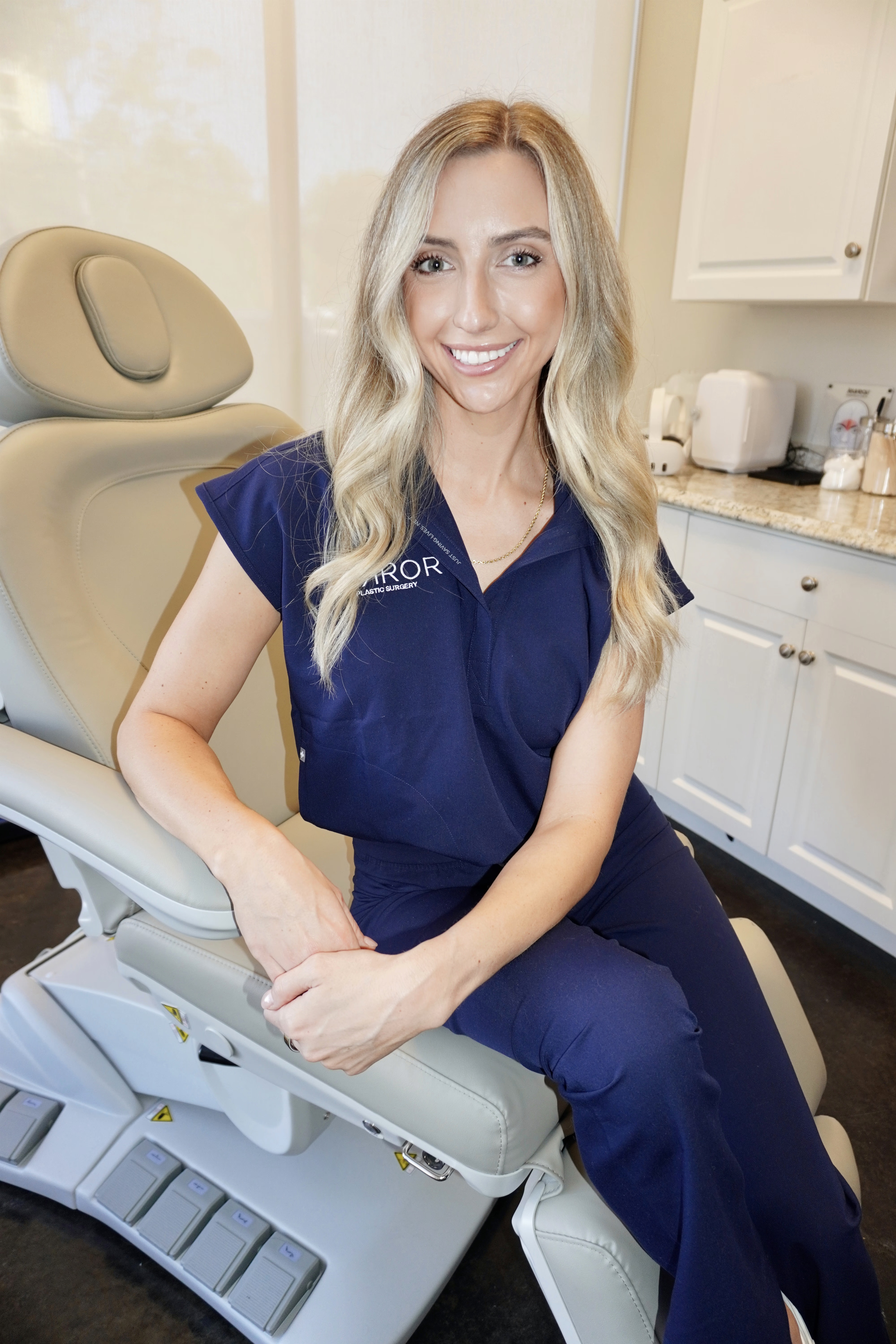
Ellie Pranckevicius conducts a comprehensive top-to-bottom facial assessment during each initial consultation, which can extend up to an hour. The assessment maps muscle activity, skin quality, volume distribution, and structural asymmetries across the upper, middle, and lower face before any treatment is recommended. Comprehensive training programs for aesthetic providers emphasize thorough consultations to set realistic expectations and develop personalized treatment plans for both cosmetic and therapeutic applications.
This full-face approach prevents the common problem of isolated, single-area injections that improve one region but create imbalances elsewhere. Ellie’s dual background in esthetics and advanced nursing, including four years in a Neuroscience ICU, provides a deep physiological understanding that shapes both her injection technique and her patient communication.
Maintenance timelines are discussed at the outset. Most neuromodulator patients return on a three-to-four-month schedule to sustain results. Providers are trained to take before-and-after photos to document outcomes and guide future maintenance strategies for patients receiving repeated treatments. Over time, consistent treatment can reduce the muscle activity that drives dynamic line formation, which may allow longer intervals between sessions for some patients.
Begin your full-face assessment at Mirror Plastic Surgery’s St. Petersburg location, where Ellie’s comprehensive evaluation establishes a treatment plan grounded in your anatomy and long-term goals.
Frequently Asked Questions
Am I a good candidate for Botox?
Most healthy adults with dynamic facial lines, meaning wrinkles that appear during expression and soften at rest, are candidates for neuromodulator treatment. Botox is not appropriate for individuals with a known allergy to botulinum toxin, active neuromuscular disorders such as myasthenia gravis or ALS, or those who are pregnant or breastfeeding. A thorough medical history review during consultation identifies any contraindications before treatment is planned.
How long do results last, and how often should I return?
Results from most FDA-approved neuromodulators last three to four months for the majority of patients, and Daxxify may extend this to about six months.1 Individual factors such as muscle mass, metabolism, and the specific area treated influence duration.1 Most patients establish a maintenance schedule of three to four sessions per year. Over time, consistent treatment can gradually reduce the intensity of muscle contractions, which may allow some patients to extend their intervals.
Is there a risk of looking “frozen” or unnatural?
An unnatural, frozen appearance usually results from over-dosing or incorrect placement rather than from the product itself. When units are calibrated to the individual’s muscle activity and injected at the correct anatomical depth, the outcome is softened movement instead of eliminated expression. Ellie’s approach at Mirror Plastic Surgery prioritizes natural balance and harmonization, and she will not recommend a dose or technique that compromises expressive range. Patients concerned about this outcome are encouraged to discuss it openly during their consultation.
What is the difference between neuromodulators and dermal fillers?
Neuromodulators such as Botox, Dysport, Xeomin, Daxxify, Jeuveau, and Letybo work by temporarily blocking nerve signals to specific muscles, which reduces the contractions that cause dynamic wrinkles. Dermal fillers add physical volume to areas affected by fat loss, bone resorption, or collagen depletion, and they address static lines, hollow contours, and structural deflation. The two modalities are complementary and are frequently combined in a full-face treatment plan. Neither replaces the other, and the appropriate choice depends on the underlying cause of the concern being treated.
What should I expect during my first consultation at Mirror Plastic Surgery?
The initial consultation with Ellie is a comprehensive, up-to-one-hour assessment. It begins with a conversation about your aesthetic goals, emotional motivations, and medical history. Ellie then conducts a structured top-to-bottom facial evaluation, mapping muscle activity, skin quality, volume distribution, and symmetry. She explains her findings in plain language, outlines which treatments are indicated and why, and is transparent when a procedure is not yet necessary. You leave with a personalized, evidence-based treatment plan rather than a generic package. Pricing is discussed individually based on your specific plan, because each patient’s needs differ.
Final Note
Disclaimer: Results may vary from person to person. Editorial content, before and after images, and patient testimonials do not constitute a guarantee of specific results.
1 Results may vary from person to person. Editorial content, before and after images, and patient testimonials do not constitute a guarantee of specific results.