
Written by: Dr. Akash Chandawarkar, Board Certified Plastic Surgeon, Mirror Plastic Surgery | Last updated: September 9, 2026
Key Takeaways
- Most patients need Botox touch-ups every 3 to 4 months, with timing shaped by metabolism, treatment area, muscle strength, and age.1
- Botox results follow a predictable timeline: visible smoothing peaks at 7–14 days and gradually fades as new nerve connections form around 14–16 weeks.1
- Key factors that influence duration include metabolic rate, treatment area, age-related skin changes, muscle strength, and the specific neuromodulator used.
- The FDA recommends a minimum 3-month interval between sessions to reduce the risk of neutralizing antibodies and to support natural-looking results.
Ready to create a personalized Botox maintenance plan? Schedule your consultation at Mirror Plastic Surgery.
The Standard Botox Schedule: What To Expect
This guide explains how long Botox typically lasts, why it wears off, and how to plan a schedule that fits your goals. A typical Botox treatment cycle follows a predictable biological arc. The pharmacological cycle of botulinum toxin unfolds in distinct phases:
- Days 1–3: The toxin binds to neuromuscular junctions, and no visible effect is present yet.
- Days 7–14: Muscle relaxation peaks and full smoothing becomes visible.
- Weeks 2–8: Results are stable and at their optimal level.
- Weeks 8–14: New nerve connections gradually form, and movement and wrinkles begin to return.
- Weeks 14–16: The effect has largely worn off and muscle activity returns to baseline.
This schedule serves as a general guideline. First-time Botox patients often report their initial treatment wears off faster, closer to 2 to 3 months, because the muscles have been at full strength for years and are more resistant to the neurotoxin’s effects initially.1 Long-term patients often stretch intervals to 4–5 months as muscles adapt over time.1
Why Botox Wears Off: The Science Behind The Timeline
Botox temporarily blocks nerve signals that tell facial muscles to contract. Botox works by temporarily blocking nerve signals at the neuromuscular junction, preventing targeted facial muscles from contracting; a review in the Journal of Clinical Medicine confirms that botulinum toxin inhibits acetylcholine release at the presynaptic nerve terminal.
Critically, nerve regeneration, rather than drug clearance, determines how long results last. A 2026 review by Dr. Ahmed Haq of the Harley Street Institute explains that the clinical duration of botulinum toxin type A is governed by nerve regeneration processes, specifically axonal sprouting and terminal remodelling, rather than by drug clearance or the toxin “wearing off.” This process makes the effect temporary. Consistent treatment can then train muscles to contract less aggressively over time.
Factors That Affect How Long Botox Lasts
Individual biology shifts the standard Botox timeline. No two patients metabolize Botox identically, and several variables shape how long results hold:
- Metabolism: A faster metabolic rate breaks down Botox more quickly, shortening its duration; intense exercise may also accelerate metabolism of Botox, though evidence remains inconclusive.
- Treatment Area: Forehead and glabellar lines typically last about 4 months.1 Crow’s feet may last slightly shorter due to constant orbicularis muscle activity. Masseter injections can last 6 to 9 months because the muscle is large and treatment causes some atrophy.1
- Age And Skin Quality: Hormonal shifts, such as those during perimenopause and menopause, can affect how long Botox results hold, as fluctuating estrogen affects muscle tone, skin quality, and overall metabolism.
- Muscle Strength: Men typically have stronger facial muscles than women, so male patients often require higher doses and may experience slightly shorter duration.
- Product Type: Newer neuromodulators like Daxxify may last up to 6 months, while Jeuveau is comparable to Botox at 3–4 months.1 Daxxify’s extended duration stems from its peptide-linker formulation, which delays clearance of the toxin-SNARE complex. Botox remains the most studied and clinically reliable option with over three decades of post-marketing data.
Choosing among these options benefits from expert guidance. At Mirror Plastic Surgery, Dr. Akash Chandawarkar selects the right neuromodulator based on your anatomy, goals, and treatment history. Get a personalized assessment with Ellie.
How Long Should You Wait Between Botox Sessions?
The minimum safe interval between Botox sessions is 3 months, or 12 weeks. Two distinct clinical reasons support this standard.
First, safety and immunogenicity matter. A literature review by Lee et al. (2024) in the journal Life, pooling data across 24 studies, found that the incidence of neutralizing antibody formation was significantly higher in patients receiving repeated botulinum toxin injections (14.5%) compared to those receiving fewer treatments (4.5%), with total cumulative dose and number of treatment cycles identified as critical risk factors. Injecting more frequently increases the risk of developing neutralizing antibodies that can make future treatments less effective.
Second, treating too often can over-relax muscles, leading to a “frozen” appearance and wasting product. Treating botulinum toxin too frequently provides no benefit, wastes product, increases the risk of antibody formation, risks an unnatural “frozen” appearance, and costs more without commensurate benefit.
The FDA guidance on dosing supports this approach. The FDA Prescribing Information for Botox Cosmetic states that the safety and effectiveness of dosing botulinum toxin more frequently than every 3 months have not been clinically evaluated, and retreatment before 3 months is not recommended. Clinicians often refer to this as the rule of 3, meaning a minimum of 3 months should elapse between full sessions to protect both safety and aesthetics.
Botox Schedule By Age: What Works At Different Stages
Age shapes the goals, dosing, and frequency of Botox treatment. The table below provides evidence-based starting points, not prescriptions. Notice how intervals shorten with age as prevention shifts into active maintenance and correction. Every plan is ultimately built during a one-on-one consultation.
| Age Group | Typical Interval | Primary Goal |
|---|---|---|
| 20s | Every 6 Months | Preventative, Low-Dose |
| 30s | Every 4–6 Months | Early Intervention |
| 40s | Every 3–4 Months | Active Maintenance |
| 50s+ | Every 3 Months | Corrective + Maintenance |
In their 20s, most patients need fewer, lower-dose Botox treatments every 4 to 6 months, with a focus on prevention and natural movement.1 A 2025 meta-analysis published in ScienceDirect found that collagen synthesis declines by 1 to 1.5 percent annually after the mid-20s, so early, conservative intervention can slow the formation of static lines.
In their 30s, Botox intervals may shorten to every 3 to 5 months as muscle memory builds and early static lines require more consistent attention.1 By the 40s, deeper lines and slower collagen production typically require more consistent 3–4 month intervals. For patients in their 40s and beyond, Botox treatments every three months are often recommended, with dosages typically increased to address deeper wrinkles.1
In your 50s and beyond, Botox often becomes one component of a multi-modal plan that may include dermal fillers or skin resurfacing. The 2024 Journal of Clinical and Aesthetic Dermatology found that personalized multi-modal treatment plans improved patient satisfaction by 37 percent compared to single-modality approaches.
Common Myths About Botox Frequency
Several persistent myths cause unnecessary anxiety for patients considering long-term Botox maintenance. Current evidence addresses each one directly.
“You’ll Age Faster After Stopping Botox.” This claim is not supported by evidence. Stopping Botox does not cause accelerated aging or rebound wrinkling; as the product wears off over roughly three to four months, treated muscles gradually return to their normal, pre-treatment activity level, and wrinkles reappear at the rate they would have without treatment. A 2006 study published in the Journal of Dermatologic Surgery followed identical twins over 13 years and found that the twin who received Botox consistently showed significantly fewer and shallower wrinkles than the untreated twin. When treatment stops, the baseline simply resumes. Long-term use may actually slow wrinkle formation by reducing repetitive muscle movement.
“Botox Becomes Less Effective Over Time.” True immunologic resistance is rare at cosmetic doses. A meta-analysis of over 5,800 patients across multiple clinical trials found that only 0.5% developed neutralizing antibodies against Botox at any point during treatment. Most cases of perceived resistance stem from dose drift, untreated synergist muscles, anatomic compensation, or unrealistic expectations, which are far more common than true immunologic resistance.
“You’ll Look Frozen.” Too much Botox or injections that eliminate all movement cause the “frozen” look, and the product itself is not to blame. A skilled injector aims for natural results that preserve expression. At Mirror Plastic Surgery, Dr. Akash Chandawarkar’s surgical command of facial anatomy supports placement that relaxes targeted muscles while preserving natural movement.
How To Know It’s Time For A Touch-Up
Once you understand the myths, the next step is recognizing when your own results are fading. Tracking your biology, rather than following a fixed calendar, produces better outcomes. The signs that Botox is wearing off include:
- Movement returning in treated areas, such as the ability to frown or raise the forehead again.
- Wrinkles beginning to reappear at rest or during expression.
- Results that no longer meet your aesthetic goals.
Many providers recommend scheduling the next appointment when movement first returns rather than waiting until effects fully wear off, while still respecting the 12-week minimum. Noting when movement first returns helps your provider calibrate the next dose and interval. Over time, this data builds a precise, personalized maintenance plan.
Ready to stop guessing and start planning your schedule? Request your appointment at Mirror Plastic Surgery and let Dr. Akash Chandawarkar build a schedule around your anatomy.
Long-Term Maintenance Tips To Stretch Your Results
Daily habits can extend the duration and quality of Botox results between sessions. Some protect your skin from external damage, while others support your body’s natural recovery.
- Daily Sunscreen: Consistent daily sunscreen use and good skincare habits genuinely extend how long Botox results last, often by several weeks compared to skipping sun protection.
- Avoid Smoking: Smoking reduces how long Botox and other treatments last more than almost any other lifestyle factor, since nicotine restricts blood flow and accelerates how quickly treatment materials break down.
- Stay Hydrated: Adequate hydration supports skin quality and overall tissue health between sessions, helping results look smoother and more even.
- Follow Post-Treatment Instructions: Avoid intense exercise and facial massage for 24–48 hours after treatment so the toxin can bind properly where it was placed.
- Consider Complementary Treatments: Dermal fillers or skin resurfacing address volume loss and texture that Botox alone cannot correct, particularly in the 40s and beyond.
- Maintain Consistent Treatment: With consistent treatment over time, muscles gradually condition to remain more relaxed, and some patients extend their intervals to twice per year; this shift develops slowly and is not something to expect early on.1
Why Choose A Board-Certified Plastic Surgeon For Botox?
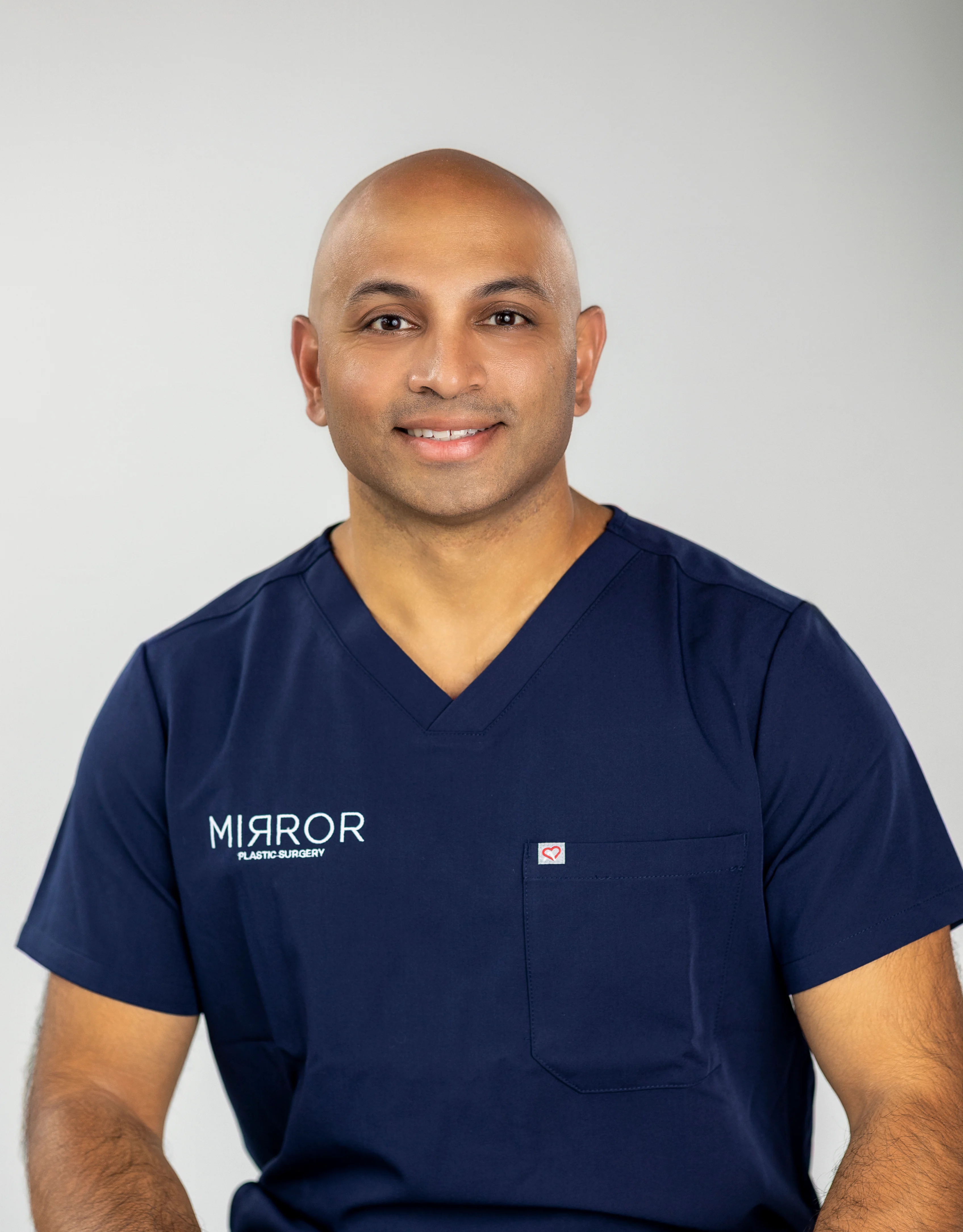
The provider performing your injections matters as much as the product being used. Dr. Akash Chandawarkar is a Harvard-educated, Johns Hopkins-trained, board-certified plastic surgeon who personally performs every injection at Mirror Plastic Surgery. His command of facial and subdermal anatomy supports safer, more precise placement than providers without equivalent training in three-dimensional facial structure.
Mirror Plastic Surgery’s approach stands apart from high-volume practices in several concrete ways:
- Hour-Long Consultations: Every new patient receives a comprehensive, top-to-bottom assessment, rather than a rushed, scripted appointment.
- Safety-First Philosophy: The practice prioritizes safety, then function, then aesthetics, in that order.
- Honest, Unbiased Recommendations: Dr. Akash will tell you directly if a treatment is not necessary for you yet. That transparency builds long-term trust rather than short-term revenue.
- Supplier-Neutral Practice: Recommendations are based on your anatomy and goals, not on manufacturer commissions or product quotas.
- Advisory-Level Expertise: Dr. Akash serves on advisory boards for companies including Merz Aesthetics, keeping him at the forefront of injectable innovation.
Your Botox schedule should feel clear and intentional. At Mirror Plastic Surgery, you will leave your consultation with a straightforward maintenance plan designed for natural, long-lasting results. Start your consultation today.
- Phone: 727-361-6515
- Email: hello@mirrorplasticsurgery.com
- Address: 780 4th Ave S, St. Petersburg, FL 33701
Frequently Asked Questions
How Often Should You Get Botox For The First Time?
First-time patients should plan for a 3–4 month interval between their initial treatment and their first maintenance session. A two-week follow-up appointment is standard practice. This visit assesses symmetry and efficacy and allows for small touch-up doses if any area is under-responding. This visit is a calibration, not a re-treatment. Your provider will use the information gathered at that two-week check to refine your dose and interval going forward.
First-time patients often find their initial results wear off closer to the 3-month mark, as muscles that have been at full strength for years are more resistant to the neurotoxin initially. Consistency over several sessions typically extends duration.
Can You Get Botox Every 2 Months?
The recommended answer is no. As noted earlier, the FDA has not evaluated the safety or effectiveness of Botox administered more frequently than every 3 months, and retreatment before 12 weeks is not recommended. Treating too frequently raises the risk of neutralizing antibody formation, which can reduce the effectiveness of future treatments. It also risks over-relaxing muscles and producing an unnatural appearance.
If results are wearing off before the 3-month mark, the appropriate clinical response is to adjust the dose or technique at the next 12-week appointment. Shortening the interval falls outside current safety guidance.
What Is The Rule Of 3 In Botox?
The rule of 3 refers to the minimum 3-month, or 12-week, interval that should elapse between full Botox sessions. This standard exists for two reasons. First, it functions as a safety protocol, since injecting more frequently increases the cumulative antigen load on the immune system and raises the risk of developing neutralizing antibodies that can make future treatments less effective or stop working altogether.
Second, it supports natural-looking results by allowing adequate time between sessions so facial muscles do not become over-relaxed. The 3-month minimum is a floor, not a target. Many patients maintain excellent results on 4–6 month intervals, particularly after several years of consistent treatment.
Does Botox Make You Age Faster When You Stop?
This concern is common, yet clinical evidence does not support it. When Botox is discontinued, the nerve connections that were temporarily blocked gradually regenerate over 3–4 months, and muscles return to their pre-treatment activity level. Wrinkles reappear at the rate they would have naturally.
There is no rebound effect, no withdrawal phenomenon, and no evidence that stopping treatment accelerates aging beyond the normal biological timeline. Patients who have used Botox consistently for several years may even find that their lines are less pronounced than they would have been without treatment, because years of reduced muscle movement slow the deepening of dynamic wrinkles into permanent static lines.
Can You Build Up A Tolerance To Botox?
True immunologic resistance to Botox, where the immune system produces neutralizing antibodies that block the toxin’s effect, is rare at cosmetic doses. The rate aligns with the 0.5% figure mentioned earlier in the myth section. Most cases where patients feel Botox “isn’t working as well” relate to non-immunologic factors such as dose drift over time, untreated synergist muscles compensating for treated ones, changes in injection technique, or unrealistic expectations.
Genuine resistance is more likely in patients who have received very high cumulative doses, very frequent injections, or routine booster sessions between appointments. The most practical prevention strategy is straightforward: use the lowest effective dose, maintain at least 12 weeks between sessions, and avoid unnecessary top-up injections.
Disclaimer: Results may vary from person to person. Editorial content, before and after images, and patient testimonials do not constitute a guarantee of specific results.
1 Results may vary from person to person. Editorial content, before and after images, and patient testimonials do not constitute a guarantee of specific results.