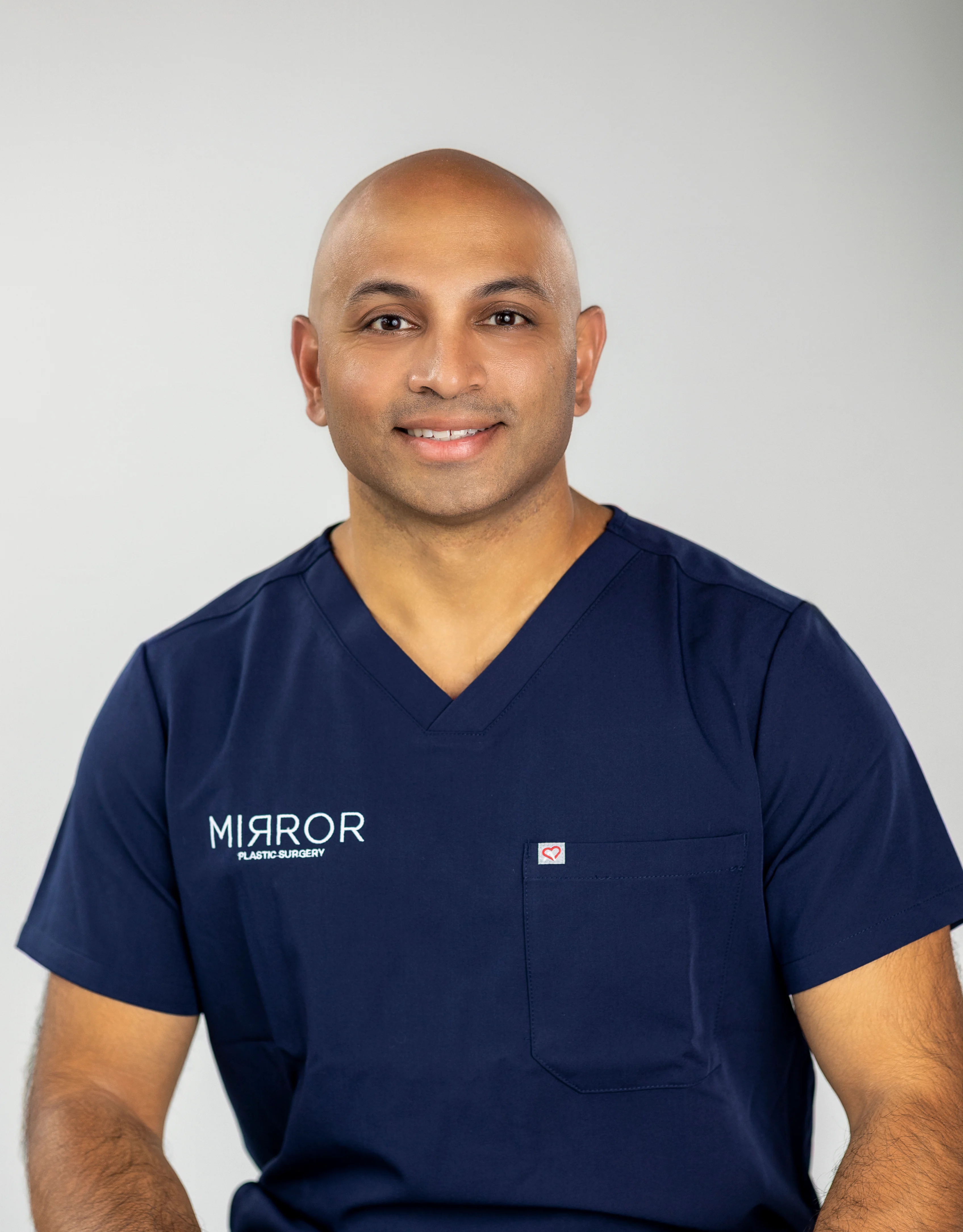
Written by: Dr. Akash Chandawarkar, Board Certified Plastic Surgeon, Mirror Plastic Surgery | Last updated: September 9, 2026
Key Takeaways
- Botox frequency is highly individual. The FDA sets a 3‑month minimum, but real-world intervals range from 6–8 weeks to 5–6 months.
- Muscle strength, exercise level, and sun exposure all affect how quickly Botox wears off, so personal tracking matters more than averages.
- Consistent treatment over 2–3 years often lets patients stretch visits to 14–16 weeks or longer as muscles weaken and the brain adapts.
- Rushed consults, fixed 3‑month schedules, and non-physician injectors signal poor maintenance plans and higher risk for disappointing results.
Ready to build a maintenance plan designed around your face? Start your personalized consultation at Mirror Plastic Surgery.
Why Botox Maintenance Is Not One-Size-Fits-All
Several biological and lifestyle factors determine how long your Botox results last. Knowing these factors helps you build a plan that fits your face.
Muscle strength and mass are major drivers of duration. Patients with stronger facial muscles, such as many men, very expressive people, or intense exercisers, often metabolize Botox faster, so the muscle pushes through the blockade sooner. Treatment area matters as well. Crow’s feet often last 2.5 to 3.5 months because the orbicularis oculi is thin and moves constantly, while masseter Botox for jaw slimming can last 4 to 6 months because higher doses create partial muscle atrophy.
Metabolic rate and exercise habits create wide variation between patients. A 2023 controlled clinical trial by Martins et al. followed 60 women with different activity levels who received standardized onabotulinumtoxinA treatments and found that highly active patients had less durable muscle suppression and aesthetic effect than low-activity patients. Regular cardio can shorten Botox duration by 2 to 4 weeks in very active patients.
Age and skin quality influence how long results look good on the surface. With age, collagen loss, thinning skin, reduced elasticity, and sun damage can make wrinkles visible even when the muscle underneath remains relaxed, so a visible line does not always mean the neuromodulator has worn off.
Treatment history also plays a key role. First-time Botox users often see results for 2 to 3 months, which is shorter than the 3 to 4 month average, because their muscles start at full strength. With continued treatments, longevity usually increases as those muscles weaken.
Dr. Akash evaluates these variables during a structured clinical assessment called the Maintenance Decision Matrix. This framework looks at anatomy, lifestyle, and timing together instead of as isolated data points. Every patient leaves with a tailored plan.
How To Build Your Personal Botox Maintenance Schedule: A 5-Step Checklist
Patients who track their own response between visits usually reach their ideal interval faster than those who follow a fixed calendar. Mirror Plastic Surgery uses the following framework to help you stay engaged with your results.
- Track When Muscle Movement Returns. Note the week when you first see movement in treated areas during expression, not at rest. Most patients see full effect by day 14 and notice fade between weeks 8 and 12.
- Document How Long Results Actually Last. Take photos in the same lighting and with the same expressions at regular intervals. Compare your personal fade timeline with the usual 3 to 4 month expectation. Your own data guides your plan better than any average.
- Evaluate Your Lifestyle Factors. High-intensity aerobic exercise, especially endurance training, can shorten duration significantly. Regular exposure to extreme heat, chronic stress, poor sleep, and low sun protection all affect skin quality and how long results appear smooth.
- Schedule Regular Assessments With An Experienced Provider. The FDA label recommends a 2‑week follow-up to check symmetry and perform touch-ups if needed. Plan your next treatment 2 to 3 weeks before you expect full wear-off. Treating a partially active muscle often requires fewer units for the same effect.
- Adjust Based On Observed Response. By the third or fourth appointment, your dose should match your specific muscle activity, with a target interval of 12 to 16 weeks. Dr. Akash reassesses at every visit and updates your plan based on your current response.
Ready to put this framework into practice with a physician who performs every treatment personally? Schedule your Botox maintenance visit at Mirror Plastic Surgery.
The Science Of Muscle Adaptation With Long-Term Botox
Long-term patients often ask how years of consistent Botox change their muscles. Current evidence offers useful guidance and strong reassurance.
Muscle atrophy remains temporary and reversible. A 2016 narrative review by Durand in Aesthetic Surgery Journal concluded that botulinum toxin type A-induced muscle atrophy is generally temporary and reversible after treatment stops, and reflects disuse rather than permanent damage at standard cosmetic doses.
Nerve recovery slows with repeated treatment cycles. Over time, the nerve-muscle junction recovers more slowly because nerve endings sprout new connections less efficiently, which extends the clinical duration of each treatment.
Brain pattern adaptation supports longer results. The brain gradually weakens the motor patterns that drive habitual frowning or squinting, so consistently treated patients often become less habitual frowners.
Long-term safety data remains reassuring. A 2025 retrospective study in Dermatologic Surgery followed 50 cosmetic patients for an average of 15.04 years across up to 67 treatment cycles and found no evidence of treatment failure or shorter duration of effect. Ninety-four percent of patients felt they looked at least 2 years younger than their actual age.
One clinical caveat deserves attention. A 2026 prospective observational study of chronic migraine patients receiving much higher doses than cosmetic patients found EMG changes suggesting cumulative chemodenervation. The authors did not show that standard cosmetic dosing causes meaningful permanent harm. Cosmetic dosing remains far lower than therapeutic dosing, with a different risk profile. This difference highlights why conservative, precise dosing by a physician with deep anatomical training, such as Dr. Akash, is a clinical priority.
Florida Lifestyle Factors That Shape Your Botox Results
The Tampa Bay area’s intense sun, heat, and outdoor lifestyle create unique challenges for Botox maintenance that generic guides rarely cover.
Sun exposure and skin quality strongly influence how long results look smooth. High UV exposure does not deactivate Botox, but UV damage speeds visible skin aging, so consistent SPF 30+ helps preserve the visible result even if it does not extend toxin duration. Sun-damaged skin shows lines earlier, which can make Botox seem worn off while the muscle remains partially inhibited.
Heat and activity matter in Florida’s climate. Frequent high heat exposure, such as saunas, hot yoga, and summer heat, can modestly shorten duration. The 2023 Martins trial showed that highly active patients had less durable muscle suppression than low-activity patients, which directly applies to Tampa Bay’s fitness-focused community.
Stress, sleep, and hydration complete the picture. Chronic high stress may reduce botulinum toxin duration by 1 to 2 months, while good sleep may support longer effects. Adequate hydration and nutrition support skin health and treatment longevity. Dr. Akash reviews these lifestyle factors during comprehensive assessments.
When To Adjust Your Botox Frequency Over Time
Your ideal Botox interval changes as your muscles adapt and you age. A schedule that worked in year one often needs adjustment by year three.
Clinical patterns usually follow a predictable arc:
- First-year patients often need treatment about every 12 weeks while dosing is calibrated to their anatomy. As noted earlier, first-time users often experience shorter duration, so early adjustments are common.
- Two- to three-year patients frequently extend to 14 to 16 week intervals. Patients who maintain Botox for two years or more often report longer-lasting treatments, and many extend from 12 weeks to 14 or 16 weeks at the same dose by year three.
- Long-term patients (3+ years) sometimes reach 5 to 6 month intervals. After 2 to 3 years of consistent treatment, some patients extend to every 5 or 6 months as targeted muscles gradually weaken.
- After a long break, the next treatment behaves like a first treatment. Patients who pause for a year or more often see shorter duration and a return to baseline muscle activity because the muscle-memory benefit fades once the muscle fully reconditions.
Ongoing evaluation by a qualified provider keeps these adjustments safe. Your face changes over time, and your maintenance plan should evolve with it.
Red Flags Of Poor Botox Maintenance Plans
High-volume clinics that focus on speed instead of individualized care often create predictable, suboptimal outcomes. Recognizing warning signs helps you protect both safety and investment.
- Rushed consultations under 15 minutes with no real facial exam or history review.
- One-size-fits-all intervals such as “come back in 3 months” without assessing your individual response or anatomy.
- Pressure to treat regardless of need, including scheduling your next appointment before anyone checks whether you are ready.
- Upselling tactics that push more units or extra products without a clear clinical reason tied to your goals.
- No follow-up assessment and no 2‑week symmetry check, even though the FDA label specifically recommends it.
- Non-physician injectors who lack the deep anatomical training that makes injectable treatment safer and more precise.
Mirror Plastic Surgery operates as the direct alternative to this model. Dr. Akash will tell you clearly when you do not need treatment yet. That level of honesty builds a long-term clinical relationship based on trust.
Frequently Asked Questions About Botox Maintenance
Disclaimer: Results may vary from person to person. Editorial content, before and after images, and patient testimonials do not constitute a guarantee of specific results.
How Long Does Botox Actually Last?
Most patients see results for 3 to 4 months, although the range is wide.1 Some patients need treatment at 8 to 10 weeks, while others maintain results for 5 to 6 months.1 Duration depends on muscle strength, metabolism, treatment area, dose, and technique.1 Your personal fade timeline, tracked with consistent photos and movement checks, guides your schedule more accurately than any generic rule. At Mirror Plastic Surgery, Dr. Akash sets your interval based on your documented response.
Can I Extend The Time Between Botox Treatments?
Many patients extend their intervals naturally with consistent care.1 Patients who maintain regular treatment for 2 to 3 years often move from 12 weeks to 14 to 16 weeks, and some long-term patients reach 5 to 6 month intervals.1 Treated muscles weaken over time, nerve recovery slows, and the brain adapts to reduced frowning patterns. Safe extension requires ongoing assessment by a qualified provider rather than simply waiting longer between visits.
What Happens If I Stop Botox?
Your muscles gradually return to their pre-treatment activity over 3 to 6 months, and wrinkles return to where they would have been without treatment.1 No rebound effect or accelerated aging occurs when you stop. If you restart after a long break, expect your first treatment to behave like a first-time treatment until your muscles re-adapt.
Is Botox Maintenance Safe Long-Term?
Cosmetic Botox at standard doses has a strong long-term safety record. A 2025 retrospective study in Dermatologic Surgery followed patients for an average of 15 years with no evidence of treatment failure, diminished effect, or cumulative toxicity.1 Muscle atrophy from repeated use remains temporary and reversible. The long-term safety data, including the 15‑year study mentioned earlier, supports ongoing maintenance when guided by a qualified physician. Patients with neuromuscular conditions should review their full medical history before treatment.
How Do I Know When To Get My Next Botox Treatment?
The ideal timing usually falls 2 to 3 weeks before full wear-off, when the muscle is still partially inhibited. Treating from this baseline lets your next session build on the previous result and often requires fewer units. Track when movement first returns during expression, which is typically weeks 8 to 12 for most upper-face areas, and schedule around that point. Your provider should review your response at every visit and adjust your interval accordingly.
Conclusion: Start Your Personalized Botox Maintenance Plan
Botox maintenance works best as a personalized medical protocol. Expert assessment of your muscle anatomy, lifestyle, and long-term adaptation patterns is essential. Generic “every 3 to 4 months” advice offers a rough starting point, not a full plan. An effective plan evolves with your face, reflects Florida’s lifestyle demands, and relies on a physician who knows when to treat and when to wait.
Mirror Plastic Surgery provides this level of care. Dr. Akash Chandawarkar, a Harvard-educated, Johns Hopkins-trained, board-certified plastic surgeon with fellowship training at MEETH/Lenox Hill, personally performs every neuromodulator treatment and conducts in-depth consultations. He serves on advisory boards for Merz Aesthetics and Tiger Aesthetics, which keeps him current on neuromodulator advances. The practice offers Botox, Dysport, Xeomin, Daxxify, and Jeuveau and selects the product that best fits your anatomy and goals, without commission-driven upselling. As a supplier-neutral practice, recommendations follow evidence and your needs rather than financial incentives.
The concierge model at Mirror Plastic Surgery gives patients direct access by phone, text, or email, with support that extends beyond office hours. This level of access and attention reflects the standard of care that discerning patients in St. Petersburg and the greater Tampa Bay area expect.
Request your appointment at Mirror Plastic Surgery and build a Botox maintenance plan designed around your face.
- Phone: 727-361-6515
- Email: hello@mirrorplasticsurgery.com
- Address: 780 4th Ave S, St. Petersburg, FL 33701
- Instagram: @mirrorplasticsurgery, @dr.akashplasticsurgery, @perfectlyplastics
Disclaimer: Results may vary from person to person. Editorial content, before and after images, and patient testimonials do not constitute a guarantee of specific results.
1 Results may vary from person to person. Editorial content, before and after images, and patient testimonials do not constitute a guarantee of specific results.