

Written by: Dr. Akash Chandawarkar, Board Certified Plastic Surgeon, Mirror Plastic Surgery | Last updated: September 9, 2026
Key Takeaways From Temple Filler Reviews
- Temple hollowing is a visible sign of aging that sits over dense nerves and blood vessels, so it demands precise anatomical expertise.
- Patient reviews repeatedly highlight natural-looking results, thorough consultations, and a conservative staged approach as the main satisfaction drivers.
- Board-certified plastic surgeons with surgical training and clear complication-management protocols deliver the safest, most precise temple filler outcomes.
- Evidence-based options such as hyaluronic acid fillers, biostimulators, or fat transfer should be tailored to anatomy, goals, and reversibility preferences.
Schedule your personalized consultation at Mirror Plastic Surgery to receive expert temple filler treatment from Dr. Akash Chandawarkar.
What Patients Look For In Temple Filler Results
- Natural-Looking Results Drive Satisfaction. Ninety percent of consumers who received filler treatments were satisfied with their outcome, with “natural-looking results” as the top satisfaction point1. In clinical trials of Juvéderm Voluma for temple hollowing, about 90% of patients felt the temple area looked and felt naturally improved at 3 months1. Reviews praise injectors who favor subtle enhancement over dramatic change and criticize results that look obvious or overfilled.
- Thorough Consultations Build Confidence. Patients describe their best experiences as starting with a detailed, unhurried assessment. Seventy percent of patients say they are more likely to book when the consultation focuses on overall facial balance instead of isolated spots1. Patients who feel educated about their anatomy and options report higher satisfaction than those who feel rushed through a treatment.
- Minimal Pain And Downtime Support, But Do Not Define, Satisfaction. Comfort matters, yet patients care most about visible improvement and a manageable recovery. A 2026 meta-analysis of 544 patients linked satisfaction to clear aesthetic gains with expected, short-lived side effects1. Common effects such as swelling, tenderness, redness, and bruising usually resolve within 1–7 days1.
- Safety Concerns Center On Vascular Occlusion. Many reviews mention fear of blindness or skin loss. A 2026 systematic review confirmed that these concerns are anatomically justified, calling the anterior half of the inferior temporal chamber the “zone of caution” because of vital structures and temporal branches of the facial nerve. The same review reported no consistent severe or irreversible adverse events in the included studies, underscoring how expert technique reduces risk.
- Conservative, Staged Treatment Builds Trust. Patients value injectors who start with modest volumes and offer touch-ups instead of filling aggressively in one visit. Expert consensus supports gradual volumization over two sessions for more natural results1. Lower volumes may be needed on repeat treatment because residual filler can remain for two years or longer1.
Discuss your temple hollowing with Dr. Chandawarkar to explore a conservative, natural-looking plan tailored to your face.
How To Evaluate An Injector’s Credentials For Temple Filler
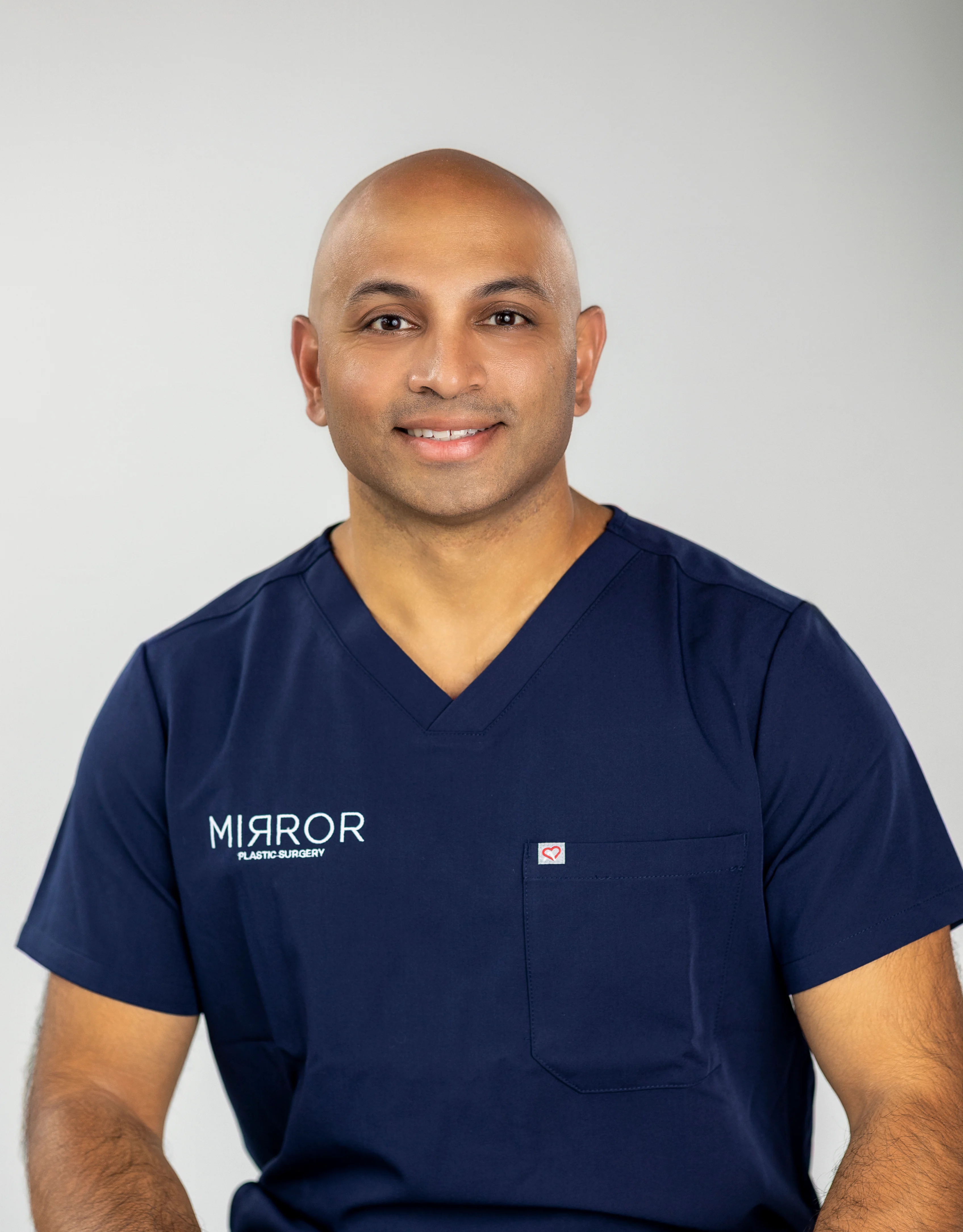
Temple injections demand a surgeon’s command of vascular anatomy rather than basic familiarity with a syringe. Dr. Akash Chandawarkar, a Harvard-educated, Johns Hopkins-trained, fellowship-trained aesthetic plastic surgeon from Manhattan Eye Ear & Throat Hospital (MEETH)/Lenox Hill Hospital, personally performs every injectable treatment at Mirror Plastic Surgery. His advisory roles with Merz Aesthetics and Tiger Aesthetics keep him current on product advances.
These three questions help patients assess any potential injector:
- “What Is Your Experience With Temple Filler Specifically?” The temporal fossa requires detailed knowledge of the superficial temporal artery and the zone of caution. A 2026 anatomical study in Aesthetic Surgery Journal recommends blunt cannulas with low-pressure, slow-speed, low-volume injections in the temporal region. This level of expertise comes from years of surgical training, far beyond what a short certification course provides.
- “How Do You Avoid Blood Vessels?” A strong answer includes aspiration before injection, use of the deep supraperiosteal plane, and ultrasound guidance when appropriate. The WFUMB 2025 position paper standardizes ultrasound use for filler placement, biostimulators, and complication management such as hyaluronidase injection. An injector who cannot explain this in anatomical terms is not an ideal choice for temple work.
- “What Is Your Plan If A Complication Occurs?” Expert injectors prepare for rare events like vascular occlusion, which occur in a small minority of syringes. They keep hyaluronidase on site and follow the ASDS Task Force protocol, which includes stopping injection at the first sign of blanching or severe pain, injecting hyaluronidase, and arranging urgent evaluation for vision changes. Board-certified plastic surgeons add another layer of safety because they can manage complications surgically when needed.
Product Choices Patients Discuss In Temple Filler Reviews
- Biostimulatory Fillers (Sculptra, Radiesse). These products stimulate the body’s collagen production over 2–3 months, and results can last up to 2 years. They are not reversible, so they suit patients who understand the delayed timeline and want longer-lasting correction. A randomized, evaluator-blinded, multicenter study of poly-L-lactic acid for temporal augmentation reported high satisfaction, no therapy-related adverse events, and aesthetic improvement lasting up to 12 months1.
- Fat Transfer. This surgical option uses the patient’s own fat and requires downtime and a surgeon’s skill. It works best for patients already planning surgery or seeking more permanent correction. Dr. Akash’s surgical training allows him to offer fat transfer alongside non-surgical options in St. Petersburg.
- Hyaluronic Acid Fillers (Juvéderm, Restylane). HA fillers provide immediate volume and can be dissolved with hyaluronidase if needed. They appeal to patients who want flexibility and reversibility. A 2026 meta-analysis found no significant difference in effectiveness between HA and calcium hydroxyapatite fillers for temporal augmentation, so product choice should match anatomy, goals, and comfort with reversibility.
Dr. Akash uses a range of FDA-approved products, including Juvéderm, Restylane, and Radiesse, and selects each one based on your facial structure and priorities rather than brand loyalty.
What To Expect During Temple Filler At Mirror Plastic Surgery
Every visit begins with a comprehensive consultation of up to one hour. Dr. Akash performs a full facial assessment, looking at temple hollowing together with the upper, middle, and lower face. This approach keeps volume restoration balanced instead of treating the temples in isolation.
The treatment philosophy follows a clear order: safety first, function second, aesthetics third. The injection technique focuses on deep supraperiosteal placement, aspiration before each injection, conservative volumes, and staged sessions when appropriate. The medial hairline and the intersection of the temporal line are recommended cannula entry points for safe, effective temporal filler. Recovery is usually brief. Most patients notice swelling or bruising for 1–7 days. Results appear immediately with HA fillers and build gradually over 2–3 months with biostimulators.1
Experience the Mirror Plastic Surgery consultation process to see how a detailed assessment and staged plan can support your goals.
How Mirror Plastic Surgery Prioritizes Temple Filler Safety
Temple filler remains low-risk when a board-certified plastic surgeon with deep anatomical knowledge performs the injections. Serious complications such as vascular occlusion are rare, and proper technique, aspiration, and immediate access to hyaluronidase further reduce that risk.
The main concerns include vascular occlusion, skin necrosis, and vision loss. Mirror Plastic Surgery addresses these risks with a layered safety strategy:
Safety begins with deep knowledge of the zone of caution and the medial temporal artery pathway, supported by a 2026 anatomical study that mapped the high-risk area linked to the medial temporal artery. Technique then reinforces safety through aspiration before every injection and use of blunt cannulas. Ultrasound guidance is added when needed, following WFUMB 2025 consensus recommendations. Hyaluronidase remains on site with a clear vascular occlusion protocol, and conservative dosing with staged treatment helps prevent overfilling.
As detailed earlier, Dr. Akash’s training at Harvard, Johns Hopkins, and MEETH gives him a surgeon’s view of vascular anatomy, which provides a meaningful safety advantage for St. Petersburg patients.
How Patients Think About Temple Filler Cost In St. Petersburg
Mirror Plastic Surgery offers personalized quotes during consultation because anatomy, product choice, and goals vary from person to person. Several factors shape the overall investment.
- Product Type. HA fillers often last 12–18 months, while Sculptra can last up to 2–3 years after a full series. Longevity affects both upfront cost and long-term value.
- Volume Required. Meaningful correction commonly needs 0.5 ml to 1 ml of filler per side, sometimes over two sessions.
- Number Of Sessions. Biostimulatory fillers usually require several visits spaced weeks apart. HA fillers often reach the desired effect in a single appointment.
- Injector Expertise. Board-certified plastic surgeons and master injectors typically charge more per syringe than nurse injectors at general med spas. This premium reflects anatomical precision, safety infrastructure, and the ability to manage complications. Guidelines recommend that temple filler be performed only by board-certified plastic surgeons, dermatologists, or oculoplastic surgeons with documented temporal fossa experience.
Patients in reviews often describe value in terms of natural results and avoided complications rather than the lowest price per syringe.
Why Patients Choose Mirror Plastic Surgery For Temple Filler
Reviews of Mirror Plastic Surgery frequently mention three themes: natural-looking results, unhurried consultations, and a strong focus on safety. The practice delivers on these priorities through surgical expertise, a concierge-style experience, and clear, unbiased education.
Dr. Akash is board-certified by the American Board of Plastic Surgery and personally performs every injection. Each temple filler treatment is placed by a physician with a surgeon’s understanding of subdermal anatomy. His advisory roles with Merz Aesthetics and Tiger Aesthetics keep him current on product innovation without tying him to a single brand.
The concierge model gives patients up to an hour of one-on-one consultation, a full facial assessment, and a treatment plan tailored to their anatomy and long-term goals, without sales pressure. One patient shared, “I felt completely safe and informed. Dr. Akash explained everything, from the anatomy and risks to the product options, and the results look completely natural. No one could tell I had anything done; they just said I looked rested.”
Mirror Plastic Surgery is located at 780 4th Ave S, St. Petersburg, FL 33701. You can reach the team at 727-361-6515, by email at hello@mirrorplasticsurgery.com, or on Instagram at @mirrorplasticsurgery and @dr.akashplasticsurgery.
Start your journey to natural-looking temple restoration with one of St. Petersburg’s most credentialed injectors.
Frequently Asked Questions
How Long Do Temple Fillers Last?
Biostimulatory fillers such as Sculptra can last up to 2 years or more after a full treatment course.1 Results vary based on metabolism, product choice, injection technique, and how much volume loss is being corrected. Patients who start earlier and maintain results with smaller touch-ups often achieve the most natural long-term outcomes.
Is Temple Filler Painful?
Most patients describe temple filler as mildly uncomfortable. Numbing cream is applied before treatment, and many fillers contain lidocaine to reduce sensation during injection. Bruising is common because the temple area is vascular and usually resolves within 7–10 days. Swelling and tenderness at the injection sites are the most frequent side effects and tend to fade quickly.
Can Temple Filler Be Reversed?
Biostimulatory fillers such as Sculptra cannot be reversed because they work by stimulating your own collagen over time. This makes product selection and injector expertise crucial decisions. At Mirror Plastic Surgery, Dr. Akash discusses reversibility and product options during every consultation so you can choose confidently.
How Do I Know If My Injector Is Experienced Enough For The Temple Area?
Ask how many temple treatments they have personally performed, which injection plane they use and why, and whether they keep hyaluronidase on site with a documented vascular occlusion protocol. Board certification in plastic surgery and formal surgical training are strong indicators of anatomical expertise for this higher-risk area. A provider who cannot clearly explain the zone of caution, the superficial temporal artery, or their complication plan is not an ideal choice.
What Is The Recovery Time After Temple Filler?
Most patients return to normal activities the same day or within 24 hours.1 Swelling and bruising usually resolve within 1–7 days, although bruising can occasionally last up to 10 days because of the area’s vascularity.1 Results appear immediately with hyaluronic acid fillers and develop over 2–3 months with biostimulatory fillers. Warning signs that need prompt medical attention include sudden severe pain, skin blanching, vision changes, or swelling that does not improve within the expected window.
Disclaimer: Results may vary from person to person. Editorial content, before and after images, and patient testimonials do not constitute a guarantee of specific results.
1 Results may vary from person to person. Editorial content, before and after images, and patient testimonials do not constitute a guarantee of specific results.


