
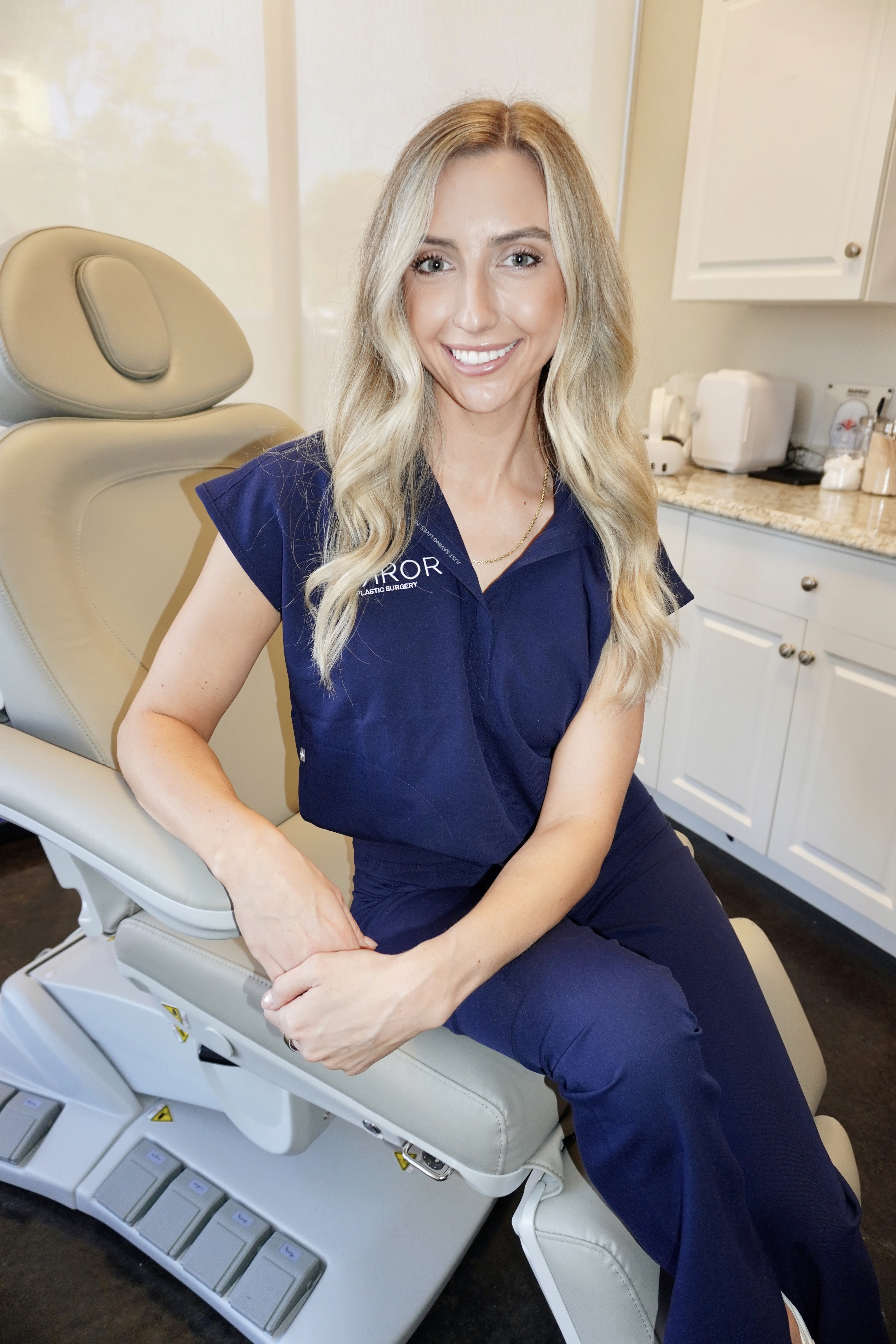
Written by: Ellie Pranckevicius, FNP-BC, Aesthetic Nurse Practitioner & Aesthetic Injector | Facial Restoration & Regenerative Injectable Specialist, Mirror Plastic Surgery | Last updated: August 31, 2026
Key Takeaways
- Hollow temples disrupt facial harmony, narrow the upper face, and require specialized injector expertise because of complex vascular anatomy.
- Five-star temple filler reviews consistently highlight natural-looking results, unhurried consultations, honest guidance, and clear safety protocols.
- Expert injectors combine advanced anatomical training, clinical experience, documented temple filler volume, and immediate access to hyaluronidase.
- Product selection, whether Voluma, Restylane Contour, Sculptra, or fat transfer, should match your anatomy, goals, and timeline instead of brand loyalty.
- Schedule your personalized temple filler consultation with expert injector Ellie Pranckevicius at Mirror Plastic Surgery to experience the safety, honesty, and natural results patients describe in their reviews.
Understanding Hollow Temples: Causes and Impact
Temple hollowing, the sunken appearance at the sides of the forehead, develops from several overlapping causes. Age-related fat pad atrophy, genetic predisposition, and significant weight loss all contribute to volume loss in the temporal region. Galderma notes that temple volume loss can be accelerated in people undergoing medication-driven weight loss, a trend that has grown rapidly in recent years, creating a growing area of aesthetic need.
The temples play a central role in facial balance. They frame the eyes, support the lateral brow, and create a smooth transition between the forehead and midface. When temples hollow, the face can appear narrower, the brow loses support, and the overall expression can look tired or drawn. Because the temple area contains complex vascular structures, restoring volume safely requires specialized expertise, which is why patient reviews consistently emphasize injector skill above all else.
What Patient Reviews Reveal About Temple Filler in St. Petersburg
Patient reviews across Google, RealSelf, and Reddit show clear patterns in what defines a great temple filler experience. The strongest themes in five-star reviews focus on results, communication, and safety.
- Natural-looking results: Many patients say that no one can tell they had anything done. They value subtle restoration that refreshes the face instead of dramatic volume changes.
- Thorough consultation: Reviews often mention injectors who took their time, explained every step, and never rushed the visit.
- Honest communication: Patients praise injectors who say no when needed, recommend conservative volumes, and set realistic expectations.
- Safety-first approach: Top-rated experiences describe injectors who discuss vascular risks, use cannulas when appropriate, and maintain clear emergency protocols.
Negative reviews tell a different story. Patients describe rushed appointments, pressure to buy more syringes, unnatural results, and little explanation of anatomy. Signs of an expert consultation include assessing the whole face, pushing back when appropriate, explaining what the injector will not do and why, and clearly describing the anatomy behind the concern. Concerning patterns include agreeing to everything without discussion, consultations under five minutes, and quoting a total package price before any real assessment.
Mirror Plastic Surgery aligns closely with what patients say they want. Reviews frequently mention Ellie Pranckevicius’s thorough consultations, honest recommendations, and natural-looking temple restoration. One patient shared, “For the first time, I felt like someone actually understood my face, not just my temples, but how everything works together. Ellie explained why my temples were hollowing, what she could realistically achieve, and what she wouldn’t do. That honesty is why I’ll never go anywhere else.”
Schedule your temple filler consultation with Ellie.
Choosing the Right Injector for Temple Filler
Injector credentials matter more than the clinic’s branding when you treat hollow temples. The temple is one of the highest-risk injection sites for dermal fillers because of its dense vascular network, variable anatomy, and proximity to critical neurovascular structures. The superficial temporal artery and its branches lie near the injection field and connect to the ophthalmic circulation, so accidental intravascular injection can cause skin necrosis, stroke, or permanent blindness.
The following criteria separate expert injectors from the rest.
- Advanced anatomical training: Injectors need formal education in facial anatomy beyond basic licensure. Temple filler requires detailed understanding of the superficial temporal artery, sentinel vein, and fascial planes.
- Clinical or critical care experience: Providers with ICU or emergency medicine backgrounds bring clinical judgment that supports complication recognition and management.
- Specific temple filler experience: A dedicated NP who performs 500 filler cases per year is more qualified than a physician who performs 10. Higher documented case volume correlates with consistent technique.
- Hyaluronidase on-site: Any clinic that performs filler injections must have hyaluronidase immediately available.
Key questions to ask during your consultation include the following.
- What is your specific experience with temple filler?
- How do you minimize risks like vascular occlusion?
- Can I see before-and-after photos of your temple work?
- What products do you use for temples, and why?
- What is your emergency protocol if complications occur?
Ellie Pranckevicius meets these benchmarks. Her dual background in esthetics and nursing gives her rare depth in both surface anatomy and subdermal vascular structures. This training includes 600 hours of hands-on aesthetic education and four years in the Neuroscience ICU at Tampa General Hospital. In Florida, injectable dermal fillers are limited to licensed medical professionals including NPs. What separates a working injector from a struggling one is volume of documented cases, disciplined consultations, a medical-director relationship with case reviews, and consistent follow-up. Ellie’s specialization in full-face harmonization means temple filler is always planned as part of a cohesive aesthetic approach, within Mirror Plastic Surgery’s physician-directed structure led by Harvard-educated, Johns Hopkins-trained plastic surgeon Dr. Akash Chandawarkar.
Product Options: Voluma, Restylane Contour, Sculptra, and Fat Transfer
Product choice for temple hollowing should match your anatomy, goals, and timeline. The table below compares the main options across key metrics. Dermal fillers provide immediate, reversible results, while Sculptra and fat transfer offer longer-lasting but non-reversible outcomes.
| Option | Onset | Duration | Reversible |
|---|---|---|---|
| Juvederm Voluma XC (dermal filler, FDA-approved for temples March 2024) | Immediate | Up to ~13 months per FDA clinical trial data | Yes, with hyaluronidase within 24–48 hours |
| Restylane Contour (dermal filler, FDA-approved for temples March 2026) | Immediate | Over 85% of patients remained responders at 18 months1 | Yes, with hyaluronidase |
| Sculptra (PLLA biostimulator) | Gradual, over 3–6 months | 18–24+ months | No |
| Fat transfer (surgical) | Immediate, with gradual settling | Variable; volume retention 33–65% at follow-up periods of 6–96 months1 | No |
Board-certified dermatologists report that dermal fillers are the most commonly used option for mild to moderate hollowing. They can be precisely placed within both the deep and superficial compartments of the temple for relatively immediate correction, while biostimulatory fillers stimulate the body’s own collagen production for more gradual and potentially longer-lasting improvement. Because biostimulatory filler effects build over time, patients often need a series of treatments to reach their goals. Collagen biostimulators are not reversible. Once collagen builds, the volume is the patient’s own tissue, which is why biostimulators call for experienced injectors and conservative dosing at the first session.
Mirror Plastic Surgery maintains a supplier-neutral philosophy. Ellie selects the product that best fits your anatomy and goals instead of defaulting to a single brand.
Safety and Risks: How to Minimize Complications
Temple filler can be performed safely by an experienced injector, yet it carries higher vascular risk than many other facial areas. A 2021 JAMA Dermatology retrospective cohort study found that microcannulas were associated with 77.1% lower odds of vascular occlusion than needles for facial filler injections, with vascular occlusion rates of 1 in 6,410 syringes for needles versus 1 in 40,882 syringes for microcannulas1.
An experienced injector reduces these risks with specific techniques.
- Deep plane injection: The supraperiosteal and deep temporal fat techniques show the most favorable safety profiles among the injection planes studied. Deep temporal fat compartments are structurally stable, less vascular, and capable of supporting the lateral brow.
- Cannula use: Blunt-tip cannulas lower the risk of vessel puncture in the zone of caution compared to needle-based approaches.
- Slow, low-pressure technique: High injection pressure raises the risk of intravascular placement and retrograde embolic spread. Slow, low-pressure technique with small boluses of 0.1–0.2 mL is essential in the temple.
- Conservative volumes: Overfilling the temples can overwhelm tissue capacity and increase displacement risk. Because the temple is a confined area, staged treatment with lower volumes is safer.
- Emergency protocol: Every filler injector should maintain immediate access to a vascular-occlusion protocol, hyaluronidase, an emergency kit, photographic documentation, and a clear pathway for visual symptoms.
Warning signs of vascular compromise after temple filler include sudden severe pain, skin blanching, vision changes, prolonged swelling beyond 7–10 days, and nodules that do not resolve. If you experience any of these, seek immediate treatment. Delay is the variable most strongly associated with permanent deficit. Choosing an injector with deep anatomical knowledge and clinical emergency experience, such as Ellie Pranckevicius, significantly reduces this risk.
Discuss your temple filler safety questions with Ellie during a dedicated consultation.
The Procedure: What to Expect and Recovery
A temple filler appointment at Mirror Plastic Surgery starts with a comprehensive top-to-bottom assessment. Ellie evaluates your entire face to understand how temple volume relates to brow position, cheek structure, and overall facial harmony. Temple fillers are in-office, non-surgical procedures typically completed in 15 to 30 minutes, with minimal downtime of 1–3 days.
Dermal fillers provide immediate improvement, although early swelling can temporarily blur the final result. Initial settling of temple fillers occurs within 1–2 weeks, and full integration with resolution of swelling may take about 4 weeks. Post-procedure care includes the following steps.
- Avoid strenuous exercise for 48–72 hours.
- Avoid sleeping on your side or pressing on the treated area for the first few days.
- Avoid high heat exposure, vigorous massage, and tight headwear for 48–72 hours.
Sculptra behaves differently. Results develop gradually over 3–6 months as collagen production increases, and a series of sessions may be recommended to reach your desired outcome.
Why Mirror Plastic Surgery Stands Out for Temple Filler in St. Petersburg
Mirror Plastic Surgery reflects what patients say they want from temple filler care. The practice’s concierge medicine philosophy allows consultations of up to an hour, which supports thorough assessment and the kind of honest communication highlighted in reviews. The safety-first framework, summarized as safety, function, aesthetics, keeps your well-being at the center of every plan.
Ellie Pranckevicius’s combination of esthetician training and Neuroscience ICU nursing experience provides the anatomical depth and clinical judgment that temple filler demands. Injector qualification is the strongest predictor of safety. Ellie’s credentials, including FNP-BC, a Bachelor’s in Health Science from Boston University, Bachelor’s and Master’s degrees in Nursing from the University of South Florida, and four years in the Neuroscience ICU at Tampa General Hospital, match the level of expertise sophisticated patients seek.
Mirror Plastic Surgery also maintains a supplier-neutral approach. Ellie selects the product that fits your anatomy and goals, whether that is Juvederm Voluma XC, the newly FDA-approved Restylane Contour, or Sculptra. If your goals eventually call for surgical intervention, Dr. Akash Chandawarkar’s Harvard and Johns Hopkins training provides a seamless continuum of care within the same practice.
Arrange a consultation with Ellie to plan your personalized temple filler treatment.
Frequently Asked Questions
How long do temple fillers last?
Duration depends on the product selected and your individual response. As mentioned earlier, dermal fillers like Juvederm Voluma XC last approximately 12–13 months1. Restylane Contour has shown that over 85% of patients remained responders at 18 months1. Biostimulatory fillers like Sculptra can provide results lasting 18–24 months or longer as collagen builds over time1. Anatomy, lifestyle, and the volume used all influence longevity.
Is temple filler painful?
Most patients describe temple filler as mildly uncomfortable rather than painful. Topical numbing cream is applied before the procedure, and blunt-tip cannulas reduce tissue trauma compared to sharp needles. The procedure usually finishes in under 30 minutes. Mild tenderness, swelling, or bruising at the injection site is common and typically resolves within a few days.
Can temple filler be reversed?
As discussed in the product comparison, dermal fillers can be reversed with hyaluronidase, while Sculptra is not reversible. This difference is one reason dermal fillers are often recommended for first-time temple patients. Conservative dosing and an experienced injector are especially important with biostimulators.
How risky is temple filler compared to other facial filler areas?
The temple is considered a high-risk injection zone because of the superficial temporal artery, sentinel vein, and their connections to the ophthalmic circulation. Vascular occlusion remains rare, estimated at approximately 1 in 6,600 procedures across all facial filler sites, but consequences can be serious if not recognized and treated quickly. An injector with deep anatomical knowledge, strong cannula technique, slow low-pressure delivery, and an on-site hyaluronidase emergency protocol reduces this risk significantly. Ellie Pranckevicius’s ICU background and full-face assessment approach directly support this risk profile.
What is the difference between Sculptra and Voluma for temples?
Juvederm Voluma XC is a dermal filler that provides immediate volumization and carries specific FDA approval for temple hollowing. Results appear the same day, last about 12–13 months, and can be reversed with hyaluronidase. Sculptra is a poly-L-lactic acid biostimulator that works by triggering your body’s own collagen production over 3–6 months. Results build gradually, often last 18–24 months or longer, and are not reversible. Voluma often suits patients who want immediate, predictable correction, while Sculptra fits those who prefer progressive improvement and longer-lasting collagen support. Ellie reviews your anatomy, degree of volume loss, and timeline to guide this choice during your consultation.
Conclusion: Start Your Temple Filler Journey with Confidence
Selecting an injector for hollow temples deserves careful, informed research. Patient reviews show that the best outcomes come from injectors who prioritize safety, communicate clearly, and treat the face as an integrated whole. Mirror Plastic Surgery, with expert injector Ellie Pranckevicius, offers deep anatomical expertise, a concierge-level experience, and natural-looking results that restore facial harmony.
Mirror Plastic Surgery is located at 780 4th Ave S, St. Petersburg, FL 33701. You can reach the practice by phone or text at 727-361-6515, by email at hello@mirrorplasticsurgery.com, or on Instagram at @mirrorplasticsurgery.
Schedule your temple filler consultation with Ellie and experience expert care in St. Petersburg.
Disclaimer: Results may vary from person to person. Editorial content, before and after images, and patient testimonials do not constitute a guarantee of specific results.
1 Results may vary from person to person. Editorial content, before and after images, and patient testimonials do not constitute a guarantee of specific results.