
Written by: Dr. Akash Chandawarkar, Board Certified Plastic Surgeon, Mirror Plastic Surgery | Last updated: September 9, 2026
Understanding Temple Hollowing: Causes and Visual Signs
Temple hollowing changes the shape of your upper face and often appears earlier than many people expect. The temple region is anatomically layered, containing superficial and deep temporal fat pads, the temporalis muscle, overlying skin, and a complex network of vessels and nerves. Temple hollowing results from progressive decline across multiple tissue layers: superficial and deep fat pad atrophy, loss of dermal collagen and elasticity, temporalis muscle thinning, and gradual bone resorption. This layered structure explains why volume loss here affects the entire upper face.
Beyond aging, several factors can accelerate temple hollowing:
- Genetics – some individuals have a naturally deeper temporal fossa unrelated to aging, which may go unnoticed in youth but becomes more apparent after age 30.
- Significant or rapid weight loss – including from GLP-1 medications like semaglutide, which can cause facial fat loss that often becomes apparent first in the temples, among other areas.
- Prior surgery or trauma in the temporal region.
- Very low body fat – athletes and individuals with significant body recomposition can develop temple hollowing as early as their 20s or 30s.
The visual consequences are distinctive and often show up in photos before you notice them in the mirror. Temple volume loss causes the tail of the brow to drop because the temple fat pad acts as a structural cushion supporting the outer eyebrow. Concavities in the temple area absorb light rather than reflecting it, casting persistent shadows that make the face look tired. The upper face narrows, shifting from a youthful oval to what clinicians describe as a “peanut” contour.
Temple hollowing affects both men and women, but in men the temporalis muscle is more prominent relative to overlying fat, so temporal muscle atrophy may be a more significant contributor, whereas in women fat pad reduction is typically the primary driver. Understanding which tissues are changing helps guide the right treatment plan.
What Hollow Temple Filler Can and Cannot Achieve
Temple filler restores lost volume in the temporal region using carefully placed dermal filler. The goal is to smooth the concavity, soften shadows, and create a seamless transition from forehead to cheekbone. Two main categories of filler are used:
- Biostimulatory fillers (e.g., Sculptra, Radiesse): These stimulate the body’s own collagen production over weeks to months. Sculptra lasts 2–3 years.1 These products are not reversible with hyaluronidase.
Filler has limits: it cannot lift significantly drooping brows, replace severely atrophied temporalis muscle, or correct true skin laxity. Dr. Akash performs a full-face assessment to decide whether temple filler alone will meet a patient’s goals or whether complementary treatments make more sense.
The temple is a high-risk injection zone. The temporal region contains the superficial temporal artery, middle temporal vein, deep temporal arteries, and branches of the facial nerve, and safe injection depends on selecting a precise anatomical plane. Injector expertise is the single most important factor in both safety and outcome.
The Before-and-After Journey: What to Expect at Each Stage
Before Treatment: Your Consultation and Assessment
At Mirror Plastic Surgery, your journey starts with an hour-long consultation that reflects the practice’s concierge philosophy. Dr. Akash performs a top-to-bottom facial assessment, evaluating the temples in relation to the forehead, cheeks, and brow position. He also explores the emotional reasons behind your interest in treatment and sets clear, realistic expectations. Before photos are taken for medical records and to track your progress.
During this visit, Dr. Akash reviews product options, including HA and biostimulatory fillers, and recommends a choice based on your anatomy, skin quality, and goals. He explains what filler can achieve and when another approach may serve you better. The practice remains supplier neutral, so recommendations focus on outcomes rather than product incentives.
The Procedure: What Happens During Treatment
Temple filler treatment usually takes 20–30 minutes. Topical numbing cream is applied to reduce discomfort. Injecting the temple with a blunt-tip cannula rather than a sharp needle meaningfully improves safety and accuracy in this vascular area. The filler is placed in precise micro-droplets within the chosen anatomical plane.
Most patients need 1–2 mL of filler per side for meaningful improvement, while those with severe hollowing may need more, often staged over two sessions.1 Dr. Akash’s surgical training gives him a detailed command of subdermal anatomy, which supports safer and more exact injections. His approach emphasizes restraint so the temples look naturally restored rather than overfilled.
Immediately After: Early Results and Normal Reactions
Right after treatment, you see an initial improvement, although swelling can temporarily exaggerate fullness. The temples may look slightly rounder than the final outcome. Mild swelling, redness, and bruising at injection sites are common and usually resolve within a few days. Some patients experience a mild headache or tightness when chewing, since the temporalis is a chewing muscle. Before you leave, you receive clear aftercare instructions tailored to your treatment.
Weeks 1–2: Settling and Final Results
Most swelling subsides within the first week, and bruising, if present, fades over 7–10 days. The filler takes 1–2 weeks to fully integrate with the surrounding tissue. At that point, final results become visible: a smoother, softer upper facial frame with better balance between the forehead, temples, and cheeks. Many patients notice a gentle lift at the brow tail and softer shadows around the eyes.1
For biostimulatory fillers like Sculptra, results build gradually over 6–12 weeks as collagen production increases. Final outcomes typically appear around the three-month mark.
Long-Term: Duration of Results and Maintenance Planning
HA fillers in the temple typically last 18–24 months, while Sculptra lasts 2–3 years.1 Duration depends on the specific product, the amount used, and your individual metabolism. Some clinical evidence suggests that repeated filler treatments may require less product over time due to collagen remodeling. Follow-up visits with Dr. Akash help determine when a touch-up will maintain your preferred look.
Real Results in St. Petersburg: Why Local Expertise Matters
Mirror Plastic Surgery is led by Dr. Akash Chandawarkar, a Harvard-educated, Johns Hopkins-trained plastic surgeon with fellowship training in aesthetic surgery at the Manhattan Eye Ear & Throat Hospital. He personally performs all injectable treatments, bringing a surgeon’s precision and deep understanding of facial anatomy to every case. His advisory roles with leading aesthetic companies, including Merz Aesthetics (Radiesse) and Tiger Aesthetics, keep him closely involved with advances in injectable techniques and products.
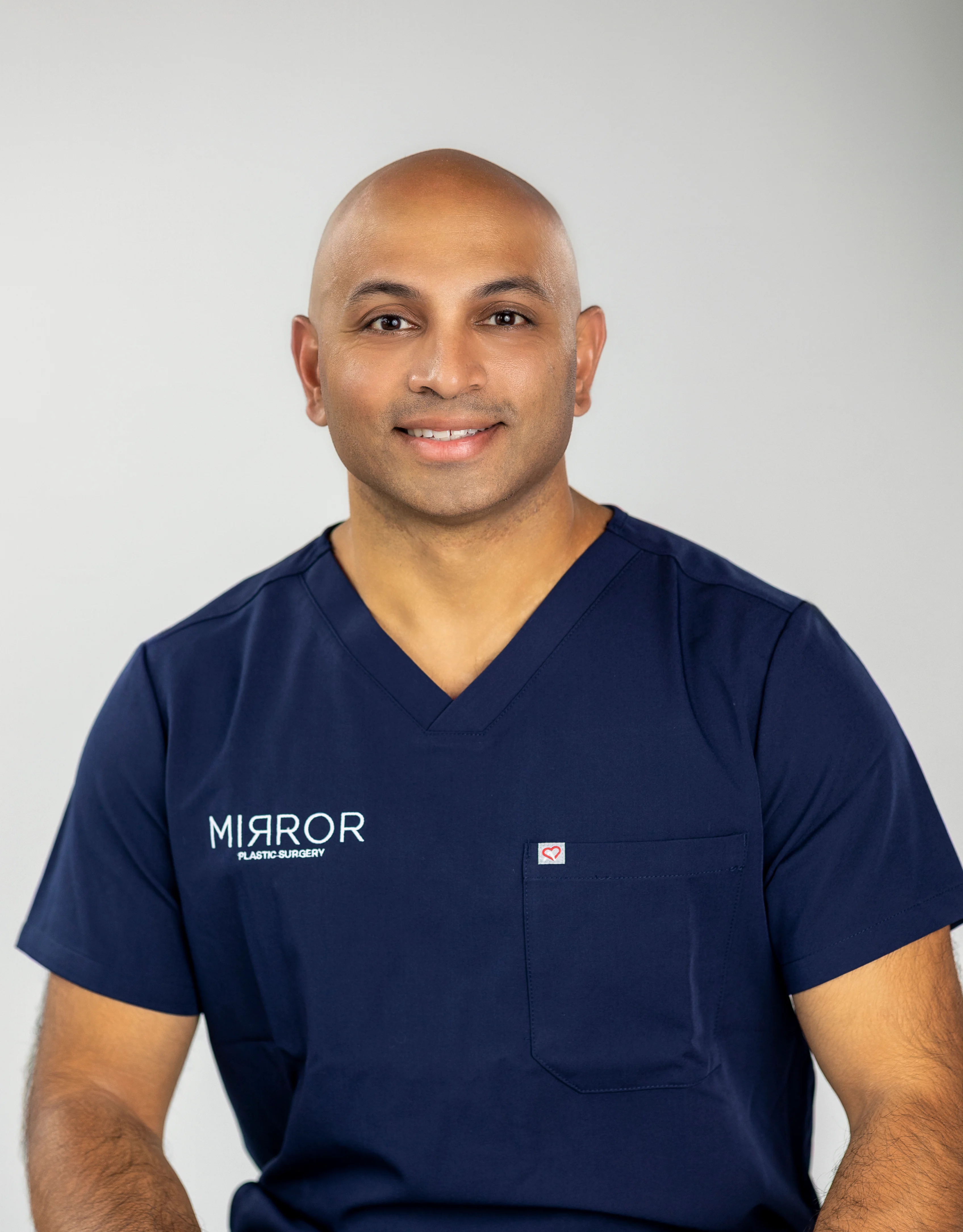
The practice’s concierge approach supports longer consultations, thoughtful treatment planning, and candid, unbiased guidance. Mirror Plastic Surgery focuses on using the right amount of the right product for each patient’s anatomy and goals. This attention to detail helps create natural, harmonious results.
Schedule a consultation with Ellie to experience surgeon-led injectable care in St. Petersburg.
How to Evaluate Before-and-After Photos for Temple Filler
Before-and-after galleries become more useful when you know what to look for. Key factors include:
- Consistency: Photos should use the same lighting, angle, and camera settings. Inconsistent photography can exaggerate or hide changes.
- Natural outcomes: Patients should look refreshed rather than “done.” Excessive filler can distort the outer face and make the result look heavy; natural rejuvenation depends on proportion, not quantity.
- Full-face context: Results should be shown in the context of the whole face, not only tight crops of the temple. Temple filler should harmonize with surrounding features.
- Realistic timelines: Photos should represent settled results, usually 1–2 weeks after HA fillers and around 3 months after biostimulatory fillers.
- Provider transparency: Look for notes on what was done, approximate product amounts, and the patient’s goals.
Galleries that show only dramatic transformations or that do not clarify whether other treatments were performed at the same time deserve a closer look. A reputable provider explains what temple filler alone can achieve.
Safety, Risks, and How to Minimize Them
Temple filler is generally safe in experienced hands, but it remains a medical procedure with real risks. Common side effects include bruising, swelling, redness, and tenderness at injection sites, which usually resolve within 1–7 days. More serious complications, while rare, include vascular occlusion that can cause skin necrosis or, in extremely rare cases, vision loss.
The temple, glabella, and nose account for a disproportionate share of filler-related vascular complications. This pattern occurs because the temporal arterial network connects through the orbital vessels to the blood supply of the eye. A 2026 systematic review and meta-analysis published in the Journal of Cosmetic Dermatology, analyzing 14 studies with 544 patients, confirmed that the anterior half of the inferior temporal chamber is a “zone of caution” containing vital structures and temporal branches of the facial nerve.
Dr. Akash’s surgical background supports early recognition and management of complications. Hyaluronidase is kept on-site for immediate reversal of HA fillers when needed. The same 2026 meta-analysis reported an overall pooled Global Aesthetic Improvement Scale responder rate of 86.3% for temporal filler injections, with no significant difference in safety between HA and calcium hydroxyapatite fillers.1 These findings highlight the importance of technique and expertise.
Recovery and Aftercare: Your Week-by-Week Guide
Thoughtful aftercare protects your results and reduces the chance of complications. Here is a general timeline:
- Day of treatment: Apply cold compresses gently for 10–15 minutes at a time to limit swelling. Avoid touching or massaging the area so the filler stays where it was placed. Sleep with your head elevated to reduce fluid buildup.
- Days 1–3: Swelling peaks and then begins to improve. Bruising may become more visible and can track toward the forehead or eye area. Avoid strenuous exercise, alcohol, and excessive heat such as saunas or hot yoga to keep inflammation down.
- Days 4–7: Most swelling resolves and bruising fades. Avoid tight headbands, hats, or anything that presses on the temples, and pause active skincare ingredients like retinoids or AHAs over the treated area to protect the skin barrier.
- Weeks 2–4: The treated area continues to soften as the filler integrates fully. Any residual firmness improves and final results become clear.
- Weeks 6–8: The area has stabilized. A follow-up visit allows assessment of volume, symmetry, and overall contour.
Contact your provider promptly if you notice increasing swelling after day two, persistent headache, signs of infection, or a firm lump that does not improve after two weeks. Seek urgent care immediately for vision changes, severe pain, or skin blanching that does not return to normal color, as these symptoms may signal a vascular event that needs emergency treatment.
Value of Temple Filler for St. Petersburg Patients
The true value of hollow temple filler lies in safe technique, natural-looking results, and long-term satisfaction. Outcomes depend on careful planning, precise injection, and honest guidance about what the treatment can achieve. At Mirror Plastic Surgery, recommendations remain supplier neutral and focus on what best serves each patient’s anatomy and goals.
Alternatives and Complementary Options for Temple Hollowing
Some patients prefer surgical or longer-lasting solutions. Fat grafting transfers your own fat to the temporal region, with volume retention rates of 33–65% at follow-up periods ranging from 6 to 96 months. These results are not easily reversible, unlike HA fillers. Temporal implants, which are silicone implants placed beneath the temporalis fascia, offer a permanent structural change but require surgery with associated downtime and risks.
Dr. Akash may also suggest complementary non-surgical treatments such as neuromodulators for brow positioning or energy-based skin tightening as part of a full-face plan. The shared goal is a natural, balanced result that respects your unique features.
Frequently Asked Questions
How Long Does Temple Filler Last?
As noted earlier, HA fillers in the temple typically last 18–24 months, while Sculptra can last 2–3 years. Duration varies based on product choice, injection volume, and individual metabolism. Because the temple moves less than areas like the lips, filler often lasts longer here than in more dynamic regions.
How Long Does It Take for Temple Fillers to Settle?
Most swelling improves within a few days, but HA filler usually needs up to two weeks to fully integrate with surrounding tissue. Final results become clearly visible once this settling period ends. For biostimulatory fillers such as Sculptra, collagen production builds over 6–12 weeks, with final outcomes around three months.
Is Temple Filler Worth It?
Many patients feel temple filler is worthwhile because it addresses a subtle but impactful sign of aging that makes the face look tired or gaunt. RealSelf satisfaction data shows around 83% of patients rate temple filler as “Worth It.”1 Candidacy still depends on your anatomy, goals, and expectations, so a thorough consultation with a qualified provider remains essential. A board-certified plastic surgeon like Dr. Akash can advise whether this treatment fits your specific situation.
What Is the Riskiest Place for Fillers?
The temple ranks among the highest-risk injection zones due to the superficial temporal artery and its connections to the ophthalmic arterial system. The glabella and nose also carry elevated risk. Vascular complications are rare but can be serious, including skin necrosis and, in extremely rare cases, vision loss. As noted in the safety section, injector expertise and anatomical knowledge are crucial, and choosing a board-certified plastic surgeon for temple filler is a meaningful safety decision.
Can Temple Filler Be Reversed?
Yes. Hyaluronic acid fillers can be dissolved with hyaluronidase, an enzyme that breaks down HA, usually within 24–48 hours. This reversibility offers an important safety advantage in a high-risk area like the temple. Biostimulatory fillers such as Sculptra and Radiesse are not reversible with hyaluronidase. At Mirror Plastic Surgery, hyaluronidase is kept on-site for immediate use when needed.
Why Choose Mirror Plastic Surgery for Hollow Temple Filler in St. Petersburg?
Dr. Akash Chandawarkar is a board-certified plastic surgeon with training from Harvard and Johns Hopkins, plus fellowship experience in aesthetic surgery at the Manhattan Eye Ear & Throat Hospital. He personally performs every injectable treatment at Mirror Plastic Surgery, bringing a deep, layered understanding of facial anatomy to each patient.
His advisory roles with Merz Aesthetics (Radiesse) and Tiger Aesthetics keep him engaged with current injectable research and innovation. The practice’s concierge philosophy provides up to an hour of consultation time, personalized treatment planning, and honest communication, including clear guidance when a patient does not yet need a particular procedure. Mirror Plastic Surgery prioritizes safety first, function second, and aesthetics third, and limits daily procedures to maintain focus on each individual.
Patients who notice temple hollowing and want a straightforward, surgeon-led opinion often start their decision-making process here.
Book a Consultation
Mirror Plastic Surgery is located at 780 4th Ave S, St. Petersburg, FL 33701. You can reach the practice by phone at 727-361-6515 or by email at hello@mirrorplasticsurgery.com. Follow Dr. Akash and the team on Instagram at @mirrorplasticsurgery, @dr.akashplasticsurgery, and @perfectlyplastics.
Book a consultation to learn whether hollow temple filler fits your goals. Every treatment plan at Mirror Plastic Surgery begins with your anatomy, your priorities, and your long-term well-being.
Disclaimer: Results may vary from person to person. Editorial content, before and after images, and patient testimonials do not constitute a guarantee of specific results.
1 Results may vary from person to person. Editorial content, before and after images, and patient testimonials do not constitute a guarantee of specific results.