
Written by: Dr. Akash Chandawarkar, Board Certified Plastic Surgeon, Mirror Plastic Surgery | Last updated: September 9, 2026
Key Takeaways
- BBL mortality drops to about 1 in 15,000 when surgeons use subcutaneous-only injection with real-time ultrasound guidance, so provider selection is the key safety factor.1
- Florida law now requires ultrasound guidance, subcutaneous-only injection, and surgeon-performed procedures for every BBL, and every Tampa Bay patient should confirm these safeguards.
- Non-surgical BBL using biostimulatory fillers like Radiesse and AlloClae offers a lower-risk option with no fat embolism risk, no general anesthesia, and minimal downtime for modest enhancement.
- Choosing a board-certified plastic surgeon who limits daily cases, operates in an accredited facility, and offers unhurried consultations supports safer, more personalized care.
- Patients ready to explore safe BBL options in Tampa Bay can schedule a consultation at Mirror Plastic Surgery to review both surgical and non-surgical approaches with Dr. Akash Chandawarkar.
BBL Options In Tampa Bay: Surgical And Non-Surgical
A Brazilian butt lift refers to two distinct approaches, surgical fat transfer and non-surgical filler-based enhancement.
Surgical BBL uses liposuction to harvest fat from areas such as the abdomen, flanks, and thighs. The surgeon purifies that fat and reinjects it into the buttocks to add volume and reshape contour. This approach requires general anesthesia, an accredited surgical facility, and a recovery period when patients must avoid direct pressure on the buttocks.
Non-surgical BBL, sometimes called a liquid BBL, uses biostimulatory injectable fillers to enhance shape, correct hip dips, smooth cellulite, and soften the look of stretch marks without surgery. Dr. Akash specializes in non-surgical BBL using Radiesse and AlloClae, fillers that stimulate collagen production for gradual, natural-looking enhancement. This method carries no fat embolism risk, avoids general anesthesia, and involves minimal downtime.
The right choice depends on goals, anatomy, available donor fat, and risk tolerance. Non-surgical BBL works well for patients who are not surgical candidates, prefer a less invasive approach, or want modest enhancement before committing to surgery. A detailed consultation with a qualified provider offers the clearest guidance.
Book a consultation with Ellie to discuss which BBL approach fits your anatomy and goals.
Florida BBL Safety Rules: Ultrasound And Legal Requirements
Florida House Bill 1471, effective July 1, 2023, was the first law in the United States to mandate specific BBL safety techniques. These requirements are legal obligations for every surgeon performing gluteal fat grafting in Florida.
HB 1471 mandates the following:
- Real-time ultrasound guidance during the fat injection phase, so the surgeon can see the cannula tip and confirm fat remains in the safe subcutaneous plane
- Fat injection restricted to the subcutaneous space only, with intramuscular and submuscular placement prohibited
- The operating surgeon must personally perform both fat extraction and injection, without delegating these steps to staff
- An in-person patient examination must occur no later than one day before surgery, and a video visit does not meet this standard
- An ultrasound video recording must be maintained as part of the patient’s medical record with time and date stamps
The legislature acted because the prior standard of care caused preventable deaths. A 2023 study by Pazmino and Garcia in the Aesthetic Surgery Journal reviewed medical examiner records and identified 25 fatal pulmonary fat embolism cases from BBL in South Florida between 2010 and 2022, with over 90% occurring at high-volume, corporate-owned budget clinics where post-mortem histopathology revealed fat injected deep into the gluteus maximus muscle. Ultrasound guidance helps prevent this outcome by making the fascia boundary visible in real time.
Mirror Plastic Surgery follows these protocols and extends them further. Dr. Akash limits surgeries to one or two per day so his full focus stays on each patient. High-volume practices may schedule five to ten procedures daily, a volume that the 2022 multi-society task force associated with fatigue-related errors.
How To Choose A BBL Surgeon In Tampa Bay
Evaluating a BBL provider requires a structured process, not just online reviews. The following framework helps Tampa Bay patients vet any surgeon or clinic.
Step 1: Verify Board Certification. The American Board of Plastic Surgery (ABPS) is the only board recognized by the American Board of Medical Specialties (ABMS) for plastic surgery, requiring at least six years of surgical training with a minimum of three years dedicated exclusively to plastic surgery, plus comprehensive written and oral examinations. The title “cosmetic surgeon” is not protected, and any licensed physician may legally use it. Confirm ABPS certification directly through the ABPS public registry.
Step 2: Confirm Ultrasound-Guided Technique. Florida law requires real-time ultrasound during BBL fat injection. Patients should receive a clear confirmation that the surgeon uses ultrasound guidance for every BBL procedure.
Step 3: Check Facility Accreditation. The surgical facility should be accredited by AAAASF, AAAHC, or The Joint Commission, which signals hospital-grade standards for sterility, emergency readiness, and monitoring.
Step 4: Assess Surgeon Experience And Philosophy. Ask how many BBL procedures the surgeon performs annually, whether they offer both surgical and non-surgical options, and how they manage complications. At Mirror Plastic Surgery, Dr. Akash spends up to an hour with each patient, performs a top-to-bottom assessment, and provides honest recommendations, including advising against a procedure when it is not yet appropriate.
How To Compare BBL Providers Across Tampa Bay
Patients gain the most clarity by applying consistent criteria to every clinic they consider. When evaluating a BBL provider in Tampa Bay, review the following points.
- ABPS board certification status, verified through the ABPS public registry
- Documented use of real-time ultrasound guidance during fat injection
- Facility accreditation by AAAASF, AAAHC, or The Joint Commission
- Surgeon-to-patient ratio and the number of surgeries performed per day
- Availability of both surgical and non-surgical BBL options
- Patient review patterns and transparency about before-and-after results
Mirror Plastic Surgery performs strongly across each of these criteria. Dr. Akash is Harvard-educated, Johns Hopkins-trained, ABPS board-certified, and fellowship-trained in aesthetic surgery at the Manhattan Eye Ear & Throat Hospital (MEETH)/Lenox Hill Hospital. He serves on advisory boards for Merz Aesthetics (Radiesse) and Tiger Aesthetics (AlloClae), which reflects his depth of expertise in biostimulatory fillers. The practice’s concierge model, with a maximum of one to two surgeries per day, supports personalized attention that high-volume practices cannot match structurally.
BBL Pricing In Tampa: Surgical And Non-Surgical
BBL cost varies based on surgeon expertise, facility fees, anesthesia, and procedure complexity. Every patient at Mirror Plastic Surgery receives a personalized quote during consultation rather than a flat price.
For surgical BBL, the all-in cost in most U.S. markets ranges from $8,000 to $18,000. The surgeon’s fee usually accounts for roughly 40–55% of the total, with the remainder covering anesthesia, facility fees, pre-operative labs, compression garments, and follow-up care. Quotes far below that range often signal compromises in training, facility standards, or operative protocol.
For non-surgical BBL, pricing depends on the filler product, the number of vials, and the number of sessions. A complete non-surgical BBL treatment plan in the U.S. typically ranges from $4,000 to $9,000. Results require maintenance sessions over time, which patients should weigh against the lower upfront cost and reduced risk profile.
Mirror Plastic Surgery remains supplier-neutral, so recommendations reflect the patient’s anatomy and goals rather than commissions or product quotas.
Non-Surgical BBL In Tampa Bay: Who It Helps Most
Most online BBL discussions focus on surgical fat transfer, yet non-surgical BBL offers a valuable option for many Tampa Bay patients.
Biostimulatory fillers like Radiesse, which contains calcium hydroxylapatite, and AlloClae, an adipose-derived filler, provide immediate volume and stimulate collagen production. Patients see gradual, natural-looking improvement over several months. Dr. Akash integrates regenerative medicine principles into his non-surgical BBL approach and applies a surgeon’s understanding of gluteal anatomy to every injection.
Non-surgical BBL offers several advantages, including no surgery, no general anesthesia, no fat embolism risk, minimal downtime, and a lower overall risk profile. Radiesse results typically last 12–18 months, with collagen stimulation extending visible improvement.1
This approach works especially well for patients who lack sufficient donor fat for surgery, have medical contraindications to general anesthesia, prefer a less invasive option, or want to target hip dips, cellulite, or stretch marks without surgery. It does not replace surgical BBL for patients seeking major reshaping, yet for the right candidate it delivers meaningful, natural-looking results with far less recovery time.
Book a consultation with Ellie to explore whether non-surgical BBL with Radiesse or AlloClae fits your goals.
BBL Results And Risks Over Time
BBL results change over time, and the pattern differs between surgical and non-surgical approaches.
For surgical BBL, about 60–80% of transferred fat survives long term in well-executed cases.1 The final shape usually stabilizes around six to twelve months after surgery, once swelling and fat resorption settle.1 Surviving fat behaves like normal body fat, growing with weight gain and shrinking with weight loss, so weight stability becomes the key factor in preserving results. Ten years after a BBL, patients who maintain a stable weight and worked with a skilled, board-certified surgeon typically retain most of their result, although aging, gravity, and skin laxity still affect contour.
For non-surgical BBL, biostimulatory fillers provide results that last about 12–18 months, with collagen stimulation extending visible improvement beyond the filler’s presence. Maintenance sessions with smaller volumes help maintain the outcome.
Both approaches carry risks. For surgical BBL, risks include fat embolism, infection, seroma, asymmetry, and contour irregularities. In a large clinical series, complication rates included seroma at about 23%, anemia at about 6.6%, fat necrosis at about 1.9%, infection at about 0.43%, and asymmetry requiring revision at about 0.21%.1 For non-surgical BBL, risks include granuloma formation, asymmetry, and the need for touch-up treatments. Choosing a board-certified provider like Dr. Akash helps reduce these risks and supports a higher standard of care.
Consultation Checklist For Tampa Bay BBL Patients
Arriving at a BBL consultation with clear questions helps you evaluate a provider’s training and philosophy. Use the following checklist as a starting point.
- Are you board-certified by the American Board of Plastic Surgery (ABPS)? This credential reflects rigorous training and examination. Verify the answer independently through the ABPS public registry.
- Do you use real-time ultrasound guidance for surgical BBL fat injection? Florida law requires this technique, and it is the most important safety measure for reducing fatal fat embolism risk.
- What is your experience with non-surgical BBL using biostimulatory fillers? Patients considering a liquid BBL benefit from a provider with deep anatomical expertise, not just high injection volume.
- Can you show me before-and-after photos of your patients? Reviewing actual results from that surgeon helps set expectations and confirm aesthetic alignment.
- What is your approach to managing complications? A qualified surgeon should describe a clear protocol and have hospital admitting privileges.
- How do you personalize treatment plans? Every patient’s anatomy and goals differ, so a one-size-fits-all approach signals concern.
- What is your philosophy on safety and natural results? The answer should place safety first, function second, and aesthetics third.
Mirror Plastic Surgery welcomes each of these questions. Dr. Akash’s concierge consultations, which can last up to an hour, help patients leave with confidence in their treatment plan and a clear understanding of the anatomy and reasoning behind every recommendation.
Why Mirror Plastic Surgery Stands Out In Tampa Bay
Dr. Akash Chandawarkar’s training places him among the most rigorously prepared plastic surgeons in the Tampa Bay region. He is Harvard-educated, Johns Hopkins-trained, ABPS board-certified, and fellowship-trained in aesthetic surgery at the Manhattan Eye Ear & Throat Hospital (MEETH)/Lenox Hill Hospital. His medical innovation training at Stanford University reflects a commitment to evidence-based, advanced techniques. He also serves on advisory boards for Merz Aesthetics (Radiesse) and Tiger Aesthetics (AlloClae), giving him direct insight into the fillers he uses for non-surgical BBL.
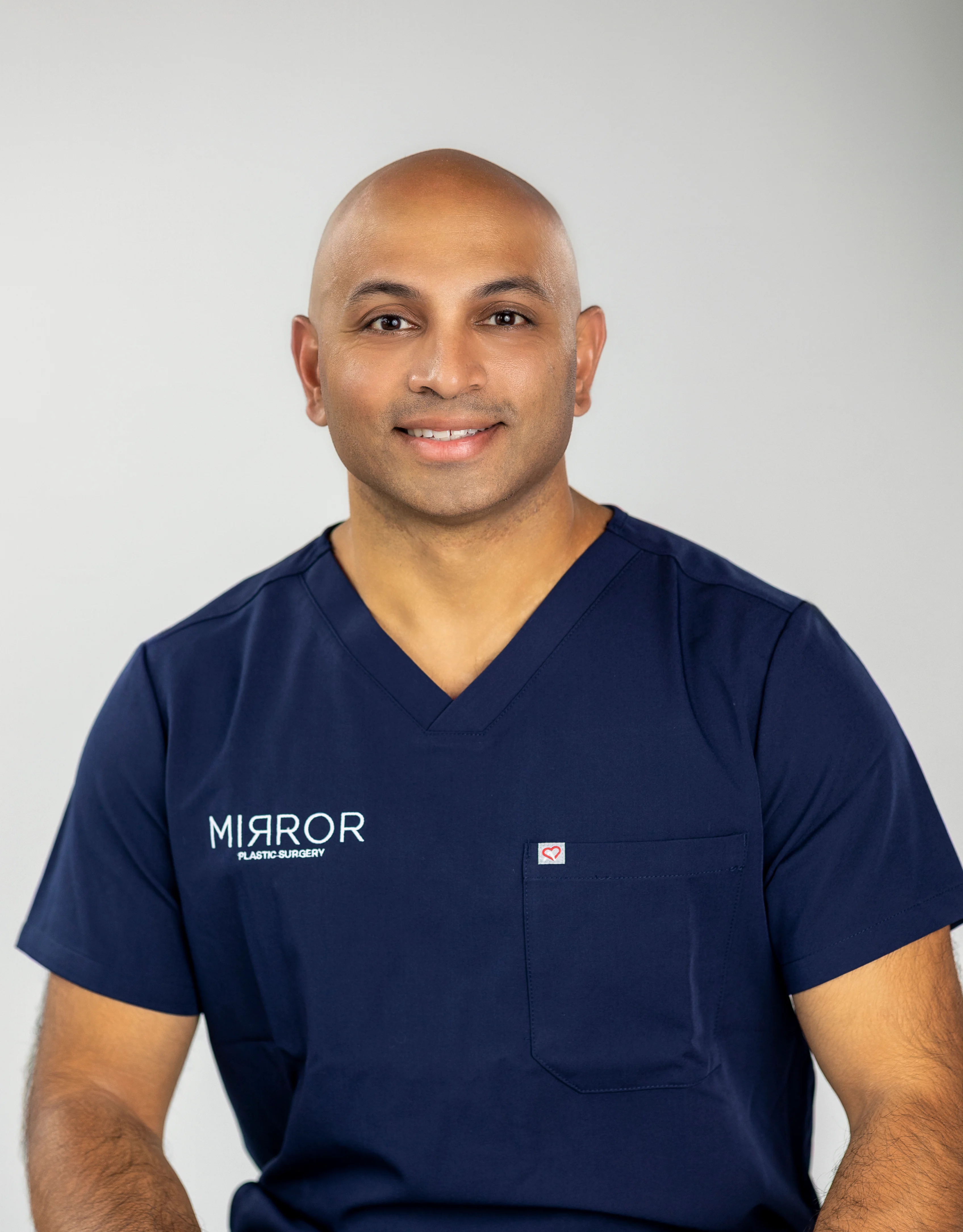
The practice’s concierge model reflects an operational choice. Limiting surgeries to one or two per day keeps Dr. Akash’s full attention, and the full attention of his team, on each patient before, during, and after every procedure. Patients who have experienced rushed, transactional consultations elsewhere often describe Mirror Plastic Surgery as a different experience, one that feels comprehensive, unhurried, and focused on long-term well-being rather than quick scheduling.
Dr. Akash maintains a reputation for transparency. He sometimes advises patients that an expensive procedure is not yet necessary, which builds long-term trust and reflects the practice’s core philosophy of safety first, function second, and aesthetics third.
Book a consultation with Ellie and experience the Mirror Plastic Surgery approach in person.
Frequently Asked Questions About BBL In Tampa Bay
What Is The Safest BBL Technique?
The safest BBL technique uses subcutaneous-only fat injection with real-time ultrasound guidance during the injection phase. This method keeps fat in the subcutaneous plane above the gluteal muscle fascia, where venous density is much lower than in muscle tissue. When an ABPS board-certified plastic surgeon performs this technique in an accredited facility, mortality risk drops to about 1 in 15,000, which is comparable to a tummy tuck. Florida’s HB 1471 requires this technique for all surgeons performing gluteal fat grafting in the state, so compliance represents a legal baseline.
How Long Does A Non-Surgical BBL Last?
Non-surgical BBL results using biostimulatory fillers like Radiesse usually last 12–18 months.1 The calcium hydroxylapatite microspheres in Radiesse stimulate collagen production, which extends visible improvement beyond the filler’s presence. AlloClae, an adipose-derived filler used by Dr. Akash, applies regenerative medicine principles for patients seeking a more natural alternative. Most patients maintain results with periodic touch-up sessions using smaller volumes.
Is A Non-Surgical BBL Right For Me?
Non-surgical BBL works well for patients seeking modest enhancement, hip dip correction, cellulite smoothing, or improved skin texture without surgery. It also suits patients who are not surgical candidates because of limited donor fat, medical contraindications to general anesthesia, or a preference for a less invasive approach. It does not replace surgical BBL for patients seeking major reshaping or dramatic volume. A thorough consultation with Dr. Akash, including a top-to-bottom anatomical assessment, offers the most reliable way to determine candidacy.
What Should I Look For In A BBL Surgeon?
Start by verifying ABPS board certification through the ABPS public registry. Confirm that the surgeon uses real-time ultrasound guidance during fat injection, which Florida law requires and which represents the most important safety measure. Check that the surgical facility holds accreditation from AAAASF, AAAHC, or The Joint Commission. Review the surgeon’s experience with both surgical and non-surgical BBL, and look for unhurried consultations, personalized treatment plans, and clear communication about risks and realistic outcomes. Remain cautious with practices that schedule many procedures per day, rely on high-pressure sales tactics, or cannot clearly explain their injection technique.
What Are The Risks Of A BBL?
For surgical BBL, the primary serious risk is pulmonary fat embolism, which occurs when fat enters the venous circulation and travels to the lungs. Subcutaneous-only injection with real-time ultrasound guidance greatly reduces this risk. Additional surgical risks include infection, seroma, asymmetry, fat necrosis, and contour irregularities at liposuction donor sites. For non-surgical BBL, risks include granuloma formation, asymmetry, and the need for maintenance treatments. Choosing a board-certified plastic surgeon who follows current safety protocols and operates in an accredited facility helps keep risk as low as possible.
Your Next Step Toward A Safer BBL In Tampa Bay
Choosing a BBL provider first protects your safety and then shapes your aesthetic result. In Tampa Bay, where options range from high-volume budget clinics to boutique concierge practices, patients benefit from a clear framework that includes ABPS board certification, real-time ultrasound-guided technique, facility accreditation, and a realistic daily surgery volume.
Tampa Bay patients can access both surgical and non-surgical BBL. The right choice depends on anatomy, goals, and risk tolerance. Non-surgical BBL with biostimulatory fillers like Radiesse and AlloClae offers a meaningful lower-risk alternative that many resources overlook.
Mirror Plastic Surgery, led by Dr. Akash Chandawarkar, delivers a concierge, safety-focused approach that aligns with this framework. The practice limits surgeries to one to two per day, offers up to an hour per consultation, and provides honest recommendations grounded in deep anatomical expertise. The guiding philosophy remains consistent, with safety first, function second, and aesthetics third.
Ready To Take The Next Step?
Contact Mirror Plastic Surgery today to schedule your personalized consultation. Call 727-361-6515, email hello@mirrorplasticsurgery.com, or visit the practice at 780 4th Ave S, St. Petersburg, FL 33701. Book a consultation with Ellie and take the first step toward safe, natural-looking results.
Disclaimer: Results may vary from person to person. Editorial content, before and after images, and patient testimonials do not constitute a guarantee of specific results.
1 Results may vary from person to person. Editorial content, before and after images, and patient testimonials do not constitute a guarantee of specific results.