Written by: Dr. Akash Chandawarkar, Board Certified Plastic Surgeon, Mirror Plastic Surgery | Last updated: September 9, 2026
Key Takeaways
- Non-surgical BBL offers a less invasive alternative to surgery, using injectables or devices to enhance shape and contour.
- All injectable buttock augmentation uses fillers off-label, so informed consent and clear risk discussion matter for every patient.
- Provider expertise is the main safety factor, and board-certified plastic surgeons bring surgical-level anatomical knowledge.
- This guide explains the main options, outlines key risks, and walks you through how to choose a qualified provider.
Why This Guide Exists
Patients in the Tampa Bay and St. Petersburg area often see conflicting claims about non-surgical BBL, from bold promises to alarming headlines. This guide offers clear, evidence-based, safety-first information so you can make a confident decision.
You will first see what a non-surgical BBL is and how it differs from surgery. Then you will review the main options, compare them side by side, learn about safety and FDA warnings, and finish with a checklist for choosing a provider and maintaining your results.
At Mirror Plastic Surgery in St. Petersburg, Dr. Akash Chandawarkar follows a simple philosophy: safety first, function second, aesthetics third. Every recommendation in this guide reflects that standard.
Schedule a consultation with Ellie at Mirror Plastic Surgery to discuss whether a non-surgical BBL fits your goals and health history.
What Is a Non-Surgical BBL?
A non-surgical BBL, sometimes called a liquid BBL or injectable butt lift, uses biostimulatory injectables or processed donor fat to enhance buttock shape, volume, and contour. A surgical BBL uses liposuction to harvest your own fat and transfers it to the buttocks under general anesthesia. A non-surgical approach avoids incisions and general anesthesia and usually involves minimal downtime.
Non-surgical BBL can soften hip dips, improve projection, smooth the look of cellulite, and reduce the appearance of stretch marks.1 The FDA has not approved any dermal filler specifically for buttock augmentation, so all injectable use in this area is off-label. Off-label use is legal and common when qualified physicians perform it, and your consent forms should clearly explain this.
The Main Non-Surgical BBL Options: A Detailed Breakdown
Sculptra (Poly-L-Lactic Acid)
Sculptra is a biostimulatory filler made of poly-L-lactic acid (PLLA), a synthetic biocompatible compound that triggers your own collagen production. Sculptra works gradually, unlike traditional fillers that provide immediate volume. Results develop over two to three months as new collagen forms, with peak results around five to six months after the final session.1
A typical plan includes two to four sessions spaced four to six weeks apart, with multiple vials per session. FDA clinical data indicate results may last up to 24 months, and one pivotal study showed 76.9% of patients maintained meaningful improvement at 24 months.1 Some patients report results lasting two to three years with maintenance.1
Key considerations for Sculptra: while it offers natural-looking, long-lasting results, it requires patience and multiple visits. Here is a quick breakdown:
- Pros: Natural-looking, gradual results; long-lasting; non-permanent, which gives patients flexibility over time.
- Cons: Requires multiple sessions; results appear over several months; the product cannot be dissolved if you dislike the outcome.
- Nodule risk: Nodules occur in approximately 7–9% of cases and are managed with diligent post-treatment massage using the “5-5-5 rule”: massage for 5 minutes, 5 times daily, for 5 days after each session.
Radiesse (Calcium Hydroxylapatite)
Radiesse contains calcium hydroxylapatite (CaHA) microspheres in a gel carrier. It offers a dual action: immediate volume from the gel carrier, plus long-term collagen stimulation from the CaHA microspheres.1 These microspheres stimulate collagen types I and III, as well as elastin and proteoglycans. Many patients choose Radiesse when they want faster visible change than Sculptra provides.
Most patients need one to three sessions, and results commonly last 12–18 months, with some reporting up to 24 months depending on area and individual response.1
Key considerations for Radiesse: it delivers quick impact but with a shorter typical lifespan than Sculptra. Keep these points in mind:
- Pros: Immediate visible results; ongoing collagen stimulation; appealing for patients who want quicker improvement.
- Cons: Results usually do not last as long as Sculptra; its thicker consistency makes intravascular injection more dangerous because the material can form obstructive emboli; it cannot be dissolved.
Dr. Chandawarkar has received payments from Merz Aesthetics, Radiesse’s manufacturer, and has published research on Radiesse, which reflects his familiarity with the product.
AlloClae (Donor Fat Matrix)
AlloClae uses processed, purified donor adipose tissue to add structural volume. A surgical BBL requires liposuction, while AlloClae uses lab-processed donor fat that is rigorously screened for safety. Many patients who want more noticeable volume than biostimulators alone can provide consider this option.
Key considerations for AlloClae:
- Pros: Natural feel and composition; can create more substantial volume; does not require a donor site on your own body.
- Cons: Requires specialized training and expertise; your body may absorb part of the product over time; results vary based on individual response.
Dr. Chandawarkar is associated with Tiger Aesthetics, the manufacturer of AlloClae, as shown in Tiger Aesthetics’ LinkedIn post. The available evidence does not specify his exact role or confirm that he is the most knowledgeable provider of this technique in the Tampa Bay region.
Energy-Based Devices (Emsculpt Neo)
Emsculpt Neo combines high-intensity focused electromagnetic energy (HIFEM) with radiofrequency to build gluteal muscle and reduce overlying fat. A standard protocol includes four sessions over two weeks, with results visible at four to eight weeks and lasting six to twelve months with maintenance.1
This treatment works best as a complement to injectables rather than a full replacement for a BBL. It builds muscle and tightens skin but does not add significant volume or correct major sagging. Patients who want to support their injectable results with better muscle tone often include it in a broader plan.
Non-Surgical BBL Options at a Glance
Here is a quick comparison of the main options, showing how each works, how long results last, and how many sessions you might need.
| Method | How It Works | Longevity | Sessions Typically Needed |
|---|---|---|---|
| Sculptra (PLLA) | Stimulates collagen production gradually via PLLA microparticles | Up to 2 years (some patients 2–3 years) | 2–4 sessions, 4–6 weeks apart |
| Radiesse (CaHA) | Immediate volume from gel carrier plus collagen biostimulation | 12–18 months, up to 24 months | 1–2 sessions per area |
| AlloClae (Donor Fat) | Processed donor adipose tissue adds structural volume | Varies by individual response; discussed at consultation | Determined at consultation |
| Emsculpt Neo | Builds muscle and reduces fat via HIFEM + radiofrequency | 6–12 months with maintenance | 4 sessions over 2 weeks |
Sessions and longevity reflect published clinical ranges. Individual results vary based on anatomy, goals, and treatment plan. Mirror Plastic Surgery provides personalized assessments for every patient.
Safety First: Understanding the Risks and FDA Warnings
The FDA has issued strong warnings about injectable fillers used for body contouring, citing risks of vascular occlusion, tissue necrosis, embolism, and death. Injectable silicone, sometimes offered illegally for body augmentation, is not approved for any aesthetic procedure and has been linked to migration, stroke, permanent disfigurement, and death.
The buttocks contain large blood vessels, and accidental intravascular injection can send material to the lungs or brain, causing a catastrophic complication. Provider choice becomes critical in this context. A board-certified plastic surgeon like Dr. Chandawarkar has surgical-level understanding of gluteal anatomy, which meaningfully reduces these risks compared with providers who lack that training.
Florida’s HB 1471 created specific regulations for surgical gluteal fat grafting, including ultrasound guidance, physician-only performance, and strict facility standards. These rules apply to surgical BBL, yet they highlight how seriously the state views gluteal procedures and reinforce the value of high safety standards for any buttock treatment.
Serious warning signs after any buttock injection that require urgent medical care include:
- Severe or rapidly worsening pain
- Pale, gray, blue, purple, or mottled skin near the injection area
- Rapidly increasing swelling
- Chest pain or shortness of breath
- Sudden weakness, confusion, or vision changes
- High fever with spreading redness, pus, or drainage
How To Choose a Qualified Provider: A Checklist
Provider selection shapes both your safety and your results. Use this checklist when you evaluate any practice:
- Verify board certification. The American Board of Plastic Surgery (ABPS) and the American Society of Plastic Surgeons recommend verifying plastic-surgery certification through the ABPS. Confirm the specific board rather than accepting “board-certified” at face value.
- Ask about specific non-surgical BBL experience. Ask how many procedures the provider has performed and request before-and-after photos with consistent lighting and angles.
- Confirm the products used. Your provider should use established, FDA-approved products and show you sealed, labeled vials. Avoid any provider who offers unnamed or “proprietary” substances.
- Expect a thorough consultation. A qualified provider spends time assessing your anatomy, discussing your goals, and explaining risks and benefits clearly. A rushed consultation signals poor fit.
- Ask about complication management. Ask about emergency protocols, hospital privileges, and how the provider would manage a vascular complication.
- Review before-and-after photos critically. Look for consistent photography standards and realistic outcomes, rather than dramatic changes from minimal product.
- Trust your instincts. Walk away if a provider pressures you into same-day treatment, refuses to name the product, or offers prices that seem far below the cost of the materials.
Mirror Plastic Surgery meets each of these criteria. Dr. Chandawarkar is board-certified by the American Board of Plastic Surgery and, as founder and owner of Mirror Plastic Surgery, focuses on aesthetic procedures including injectables, though available evidence does not confirm that he personally performs every injectable treatment without any delegation to nurses or physician assistants. Consultations are detailed and unhurried.
Non-Surgical BBL vs. Surgical BBL: Making the Right Choice
Surgical BBL fat transfer can create more dramatic, longer-lasting changes but requires general anesthesia and significant downtime. It also carries the highest mortality rate of any cosmetic procedure when performed with poor technique. The 2017 ASERF Task Force study reported an annual BBL mortality rate of 1 in 3,448, which improved to approximately 1 in 14,921 by 2019 with standardized techniques and subcutaneous-only injection protocols.
Non-surgical BBL is less invasive and usually involves minimal downtime, yet results are subtler and require maintenance. Your goals, anatomy, and risk tolerance guide the decision. For additional context, explore Mirror Plastic Surgery’s resources on surgical BBL and safety comparisons, or discuss both paths during a consultation.
Lifestyle and Maintenance: Protecting Your Results
Healthy habits help you maintain non-surgical BBL results. Strength training that targets the gluteal muscles builds a stronger foundation under injectable volume and can enhance your overall shape.
Patients using GLP-1 medications should wait until their weight has been stable for two to three months before treatment, because ongoing weight loss can reduce final Sculptra results as volume builds over 12–16 weeks. Most patients need maintenance sessions every 12–24 months to sustain the effect, and maintenance often requires fewer vials than the initial series.
Many patients also pair injectable BBL with cellulite treatment using Avéli or energy-based skin tightening for a more comprehensive outcome. Dr. Chandawarkar can design a tailored combination plan during your visit.
Why Mirror Plastic Surgery Is Tampa Bay’s Premier Choice for Non-Surgical BBL
Dr. Akash Chandawarkar is a Harvard-educated, Johns Hopkins-trained plastic surgeon with fellowship training in aesthetic surgery at Manhattan Eye Ear & Throat Hospital (MEETH)/Lenox Hill Hospital and medical innovation training at Stanford University. He is board-certified by the American Board of Plastic Surgery and, as founder and owner of Mirror Plastic Surgery, focuses on aesthetic procedures including injectables, though current evidence does not confirm that he personally performs every injectable treatment without any delegation to nurses or physician assistants.
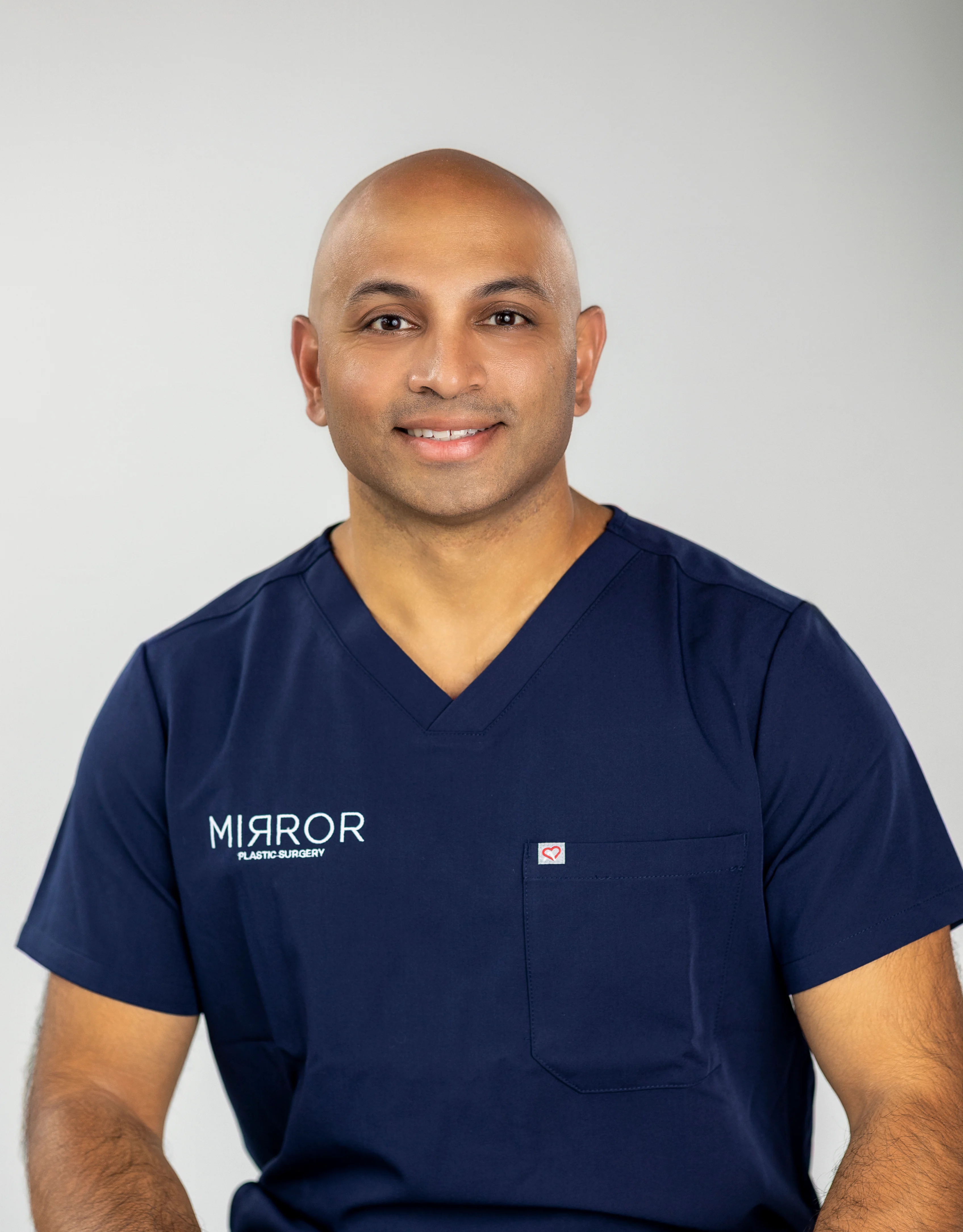
His involvement with Merz Aesthetics (Radiesse) and Tiger Aesthetics (AlloClae, Avéli) gives him direct exposure to current products, safety data, and injection protocols, which supports precise and safety-focused treatment planning.
Mirror Plastic Surgery follows a concierge model that emphasizes personalized care and generous appointment time. Consultations are comprehensive, and Dr. Chandawarkar is known for transparent recommendations, including advising patients to delay or skip procedures when they are not yet needed.
Mirror Plastic Surgery is located at 780 4th Ave S, St. Petersburg, FL 33701. You can reach the team by phone or text at 727-361-6515 or by email at hello@mirrorplasticsurgery.com.
Arrange a consultation with Ellie to discuss safe, natural-looking non-surgical BBL options tailored to your body and goals.
Frequently Asked Questions
Is a Non-Surgical BBL Safe?
When a board-certified plastic surgeon with deep anatomical knowledge performs the procedure using established FDA-approved products in a licensed medical setting, the risk profile is significantly lower than that of surgical fat transfer. All injectable procedures still carry real risks, including bruising, swelling, nodule formation, and, in rare cases, vascular complications. Because fillers for buttock augmentation are used off-label, patients should understand that status, as discussed earlier, before consenting. Provider selection remains the most important safety variable.
What Is the Best Non-Surgical BBL Option?
The best option depends on your goals, anatomy, and timeline. Sculptra offers gradual, long-lasting collagen stimulation, with results that can persist for two years or more. Radiesse provides faster visible improvement through immediate volume plus biostimulation, with results typically lasting 12–18 months. AlloClae can create more structural volume using processed donor fat without liposuction. A detailed consultation with Dr. Chandawarkar helps determine the most appropriate approach for your body and preferences.
How Long Do Non-Surgical BBL Results Last?
Longevity varies by method and individual response. Sculptra results typically last up to two years, with some patients reporting two to three years with maintenance.1 Radiesse results usually last 12–18 months, with some patients reaching up to 24 months.1 AlloClae duration depends on tissue response and volume used. Maintenance sessions extend results over time, and most patients need less product for maintenance than for the initial series.
Is There Downtime After a Non-Surgical BBL?
Downtime is usually brief. Most patients return to normal activity the same day or the next day. Temporary swelling, bruising, and tenderness at injection sites are common and typically resolve within one to two weeks. Patients receiving Sculptra should follow the 5-5-5 massage rule described earlier to reduce nodule risk. Avoiding prolonged direct pressure on the treated area for the first few days also helps.
How Do I Know If I Am a Good Candidate for a Non-Surgical BBL?
Good candidates usually want modest-to-moderate enhancement, have adequate skin elasticity, and are in good overall health. Patients with significant skin laxity or those seeking dramatic volume changes may benefit more from surgical options. Non-surgical BBL does not suit patients who are pregnant or breastfeeding, have active skin infections in the treatment area, known allergies to filler components, a history of keloid or hypertrophic scarring, or certain autoimmune conditions. A comprehensive consultation with Dr. Chandawarkar, including a full anatomical assessment, provides the most reliable candidacy evaluation.
Ready To Explore Your Non-Surgical BBL Options in Tampa Bay?
Your next step toward natural, safe, and attractive results starts with a conversation. Schedule a consultation with Ellie at Mirror Plastic Surgery and experience how concierge care and surgical-grade anatomical expertise support a safety-first approach.
- Address: 780 4th Ave S, St. Petersburg, FL 33701
- Phone/Text: 727-361-6515
- Email: hello@mirrorplasticsurgery.com
Disclaimer: Results may vary from person to person. Editorial content, before and after images, and patient testimonials do not constitute a guarantee of specific results.
1 Results may vary from person to person. Editorial content, before and after images, and patient testimonials do not constitute a guarantee of specific results.