
Written by: Dr. Akash Chandawarkar, Board Certified Plastic Surgeon, Mirror Plastic Surgery | Last updated: September 9, 2026
Key Takeaways
- Radiofrequency (RF) skin tightening is a non-surgical treatment that heats the deep skin layers to stimulate collagen, creating firmer, tighter skin over time without incisions or downtime.
- Results build gradually and are clinically validated. Early changes appear within weeks, peak around 3–6 months, and can last 8 months to 3 years with maintenance.1
- RF works well for mild-to-moderate facial and neck laxity. It does not match surgical facelift results, and outcomes depend heavily on device choice and provider expertise.
- Most side effects are mild and short-lived, such as redness and swelling. Serious complications are uncommon and usually linked to poor candidate selection or undertrained providers.
- Patients who want personalized, physician-led care can schedule a consultation at Mirror Plastic Surgery for an individualized RF treatment plan.
How Radiofrequency Skin Tightening Works In Your Skin
RF energy heats the dermis to approximately 50–75°C. The exact target varies by device type and energy setting. Noninvasive devices typically reach 50–70°C, and some protocols cite ranges as low as 45–65°C. This controlled heating triggers two key biological responses.
First, existing collagen fibers contract right away, which creates a subtle tightening effect on the day of treatment. Second, the thermal injury activates a wound-healing cascade that stimulates new collagen and elastin over the following weeks and months. A 2026 systematic review of 41 studies in Aesthetic Plastic Surgery showed histologic increases in collagen and elastin after RF microneedling, which matches what patients see clinically.
Results unfold over time.1 Many patients notice early changes within several weeks to a few months. Peak improvement usually appears between 3 and 6 months after treatment, although timelines vary by device and treatment plan.1 RF works as a gradual remodeling tool rather than an instant fix.
Three broad categories of RF devices are used in clinical practice, and each has a distinct role in treatment planning:
- Monopolar RF (e.g., Thermage FLX): Energy travels from a single active electrode through tissue to a grounding pad, creating deep volumetric heating. Many practices position it as a single-session annual treatment, with results building over 2–6 months and often lasting 12–24 months. In reality, multiple sessions, such as 3–6 for the face, are frequently recommended for cumulative improvement depending on the person and area treated. Monopolar RF works best for mild-to-moderate laxity across the full face and neck.
- Bipolar/Multipolar RF (e.g., Forma, Exilis): Energy is confined between electrodes in the handpiece, which produces more controlled, shallower heating. These platforms are gentler than monopolar systems and typically require 4–6 sessions. They are well suited for maintenance and for delicate areas.
- Fractional RF Microneedling (e.g., Morpheus8, Potenza): Fine needles deliver RF energy directly into the dermis. This approach combines mechanical injury with targeted thermal stimulation. It is particularly effective for skin texture, acne scars, and lower-face and neck tightening. Treatment usually involves a series of sessions spaced 4–6 weeks apart. Many patients need 1–3 sessions for facial rejuvenation, 3–4 for general skin quality, and 4–6 for acne scars or deeper wrinkles.
A 2026 comparative study of 84 patients found that multipolar RF produced greater elasticity gains than monopolar RF at 3 months. Gross elasticity (R2) improved by 32.7% with multipolar RF and 21.5% with monopolar RF. Even with this data, device choice still depends on your anatomy, skin quality, degree of laxity, and goals. A physician’s assessment, not a device menu, should guide that decision.
Does Radiofrequency Skin Tightening Actually Work?
RF skin tightening works well for mild-to-moderate skin laxity. RF cannot replicate the results of a surgical facelift, yet it offers meaningful improvement for the right candidate.1
The 2026 systematic review in Aesthetic Plastic Surgery reported that RF microneedling improved skin laxity, wrinkle scores, dermal density, and submental volume, with histologic confirmation of increased collagen and elastin across varied skin types. A 2026 prospective study of unipolar RF found that 88.5% of participants improved on the Global Aesthetic Improvement Scale at Week 20, with significantly higher patient satisfaction scores compared to baseline.
A 2026 systematic review in the Journal of Cosmetic Dermatology synthesized 20 studies with 558 participants. More than 90% of patients showed improvement in rejuvenation outcomes, satisfaction exceeded 90%, and 94%–100% of patients said they would recommend the procedure.
RF is particularly helpful for early jowling, loose neck skin, crepey texture, and subtle facial sagging. It does not correct significant skin excess, deep nasolabial folds, or heavy upper eyelid hooding, which require surgery. A 2026 meta-analysis found that fractional CO2 laser outperformed RF microneedling for acne scars in raw efficacy, while RF offered better tolerability and a more than fourfold lower risk of post-inflammatory hyperpigmentation.
“If a provider tells you RF will give you the same result as a facelift, find another provider.”
Schedule a personalized RF evaluation to see whether RF skin tightening matches your anatomy and goals.
What To Expect From RF: Timeline And Number Of Sessions
Most patients follow a series-based plan and see their results build gradually over several months. Here is what a typical RF skin tightening journey looks like:
- Most patients need an initial series of 3–6 sessions, spaced 3–6 weeks apart, depending on the device and degree of laxity.
- Early results appear over 2–3 months as collagen remodeling begins.1
- Peak results usually become visible between 3 and 6 months after the final treatment.1
- Results often last 8 months to 3 years, depending on the device, number of sessions, and individual factors. Maintenance treatments every 3 to 18 months help extend benefits.1
- Most patients return to normal activities within a day. Redness typically fades within 24–48 hours.
The 2026 systematic review in the Journal of Cosmetic Dermatology noted that most studies reported outcomes up to 6 months, and only three followed patients beyond one year. Long-term durability data is still evolving, so realistic plans include periodic maintenance.
How Much Does RF Skin Tightening Cost?
RF pricing varies because each treatment plan is tailored to the individual. Mirror Plastic Surgery provides custom quotes during consultation rather than posting fixed prices. Understanding the main cost drivers helps you interpret any estimate.
Key factors that influence cost include:
- Treatment Area: Face, neck, or both. Body areas usually cost more because they cover larger surfaces and thicker tissue.
- Device Type: Single-session platforms such as Thermage, multi-session platforms such as Forma or Exilis, and RF microneedling systems such as Morpheus8 all have different per-session and total-course costs.
- Number Of Sessions: Determined by your degree of laxity and the device chosen.
- Provider Expertise And Location: Board-certified plastic surgeons in premium markets price for expertise, safety, and accountability.
- Scope Of The Quote: Some quotes cover a single session, while others include a full treatment series and maintenance. Always ask for the total projected cost.
Request a customized RF quote based on your anatomy and treatment goals.
What Are The Dangers And Side Effects Of RF Skin Tightening?
Concerns about RF causing burns, fat loss, or contour changes are understandable and deserve a clear explanation.
On October 15, 2025, the FDA issued a safety communication noting reports of burns, scarring, fat loss, disfigurement, and nerve damage with certain dermatologic and aesthetic uses of RF microneedling. A cross-sectional analysis of FDA MAUDE reports from 2020 to 2025, published in Dermatologic Surgery, analyzed 148 unique reports. However, these reports involved flexible ureteroscopes, not cosmetic RF procedures.
That context matters. The 2026 systematic review in Aesthetic Plastic Surgery mentioned earlier, which covered thousands of RF microneedling treatments across diverse geographies and skin types, found that most adverse events were mild and transient. Erythema, edema, and pain were the main issues, and long-term complications such as scarring or dyspigmentation were consistently absent. The FDA notice did not include incidence rates or device-level breakdowns, so it does not allow calculation of overall cosmetic RF risk.
Serious complications tend to cluster in specific situations. These include poor candidate selection, overly aggressive energy settings, undertrained providers, and lack of real-time temperature monitoring. The technology itself can be used safely when applied under appropriate conditions.
Common side effects when RF is performed correctly include:
- Temporary redness that resolves within 24–48 hours
- Mild swelling that usually settles within 24 hours
- Short-lived tenderness or warmth during and after treatment
- Rare blistering, pigment changes, or textural irregularities, which occur more often with inexperienced providers or inappropriate settings
RF skin tightening does not suit every patient. People who are generally poor candidates include those with:
- Severe skin laxity that responds better to surgery
- Very thin facial fat, where further fat reduction could cause hollowing
- Active skin infections or open wounds in the treatment area
- Pregnancy
- Implanted electronic devices such as pacemakers, cochlear implants, or defibrillators
- A history of keloid scarring
“The key safety question is whether the chosen device, settings, and operator are appropriate for your tissue. Provider expertise matters more than the machine.”
At-Home RF Devices Compared To Professional Treatments
At-home RF devices such as NuFace or TriPollar use lower energy than clinical systems and create more subtle changes that require consistent, long-term use. A 2024 systematic review of 18 studies on home beauty devices found that these tools can improve skin texture and firmness to a modest degree. The evidence base remains limited by small sample sizes and short follow-up, so results are not directly comparable to in-office treatments.
Several differences between home and professional RF matter for outcomes:
- At-home RF devices usually limit dermal temperatures to 40–43°C. Clinical literature cites 50–75°C as the range associated with significant collagen contraction, and consumer devices are engineered with safety caps that prevent the higher levels.
- Professional devices include real-time temperature monitoring and epidermal cooling, which protect the surface while effectively heating the dermis.
- Home devices often require 2–3 sessions per week for 8–12 weeks, and some protocols call for 3–5 sessions weekly for 6–8 weeks. Professional treatments typically achieve visible improvement in 1–3 sessions.
For noticeable tightening in mild-to-moderate laxity, professional RF remains the evidence-based choice. At-home devices can play a role in maintenance between office visits but do not replace clinical-grade treatment.
How RF Skin Tightening Compares To Other Non-Surgical Options
Ultrasound (e.g., Ultherapy/HIFU): Focused ultrasound targets deeper structural layers, including the SMAS, which surgeons address during a facelift. A 2025 comparative trial found that HIFU produced stronger lifting in the mid-face and lower face at one month, while RF performed similarly in other regions. Ultrasound carries a small risk of nerve injury and fat atrophy. RF is generally safer for darker skin types because it does not interact with melanin. Many providers combine RF and ultrasound to balance lift and safety. For more detail, see our Ultrasound Skin Tightening Expert Guide.
Laser Resurfacing (e.g., Fractional CO2): Fractional CO2 laser is more powerful for surface texture and acne scars but requires 3–7 days of downtime and carries higher pigmentary risk, especially in darker skin. As noted earlier, a 2026 meta-analysis found fractional CO2 laser superior to RF microneedling for post-acne scarring, with more than fourfold higher risk of post-inflammatory hyperpigmentation and significantly greater pain.
Surgical Facelift: A facelift remains the gold standard for significant skin laxity. Results often last seven to ten years and create the most dramatic lifting. The procedure still preserves your fundamental appearance. It requires anesthesia and incisions, and recovery involves about 2–3 weeks of bruising and swelling. RF cannot replicate surgical outcomes, and any provider who claims otherwise is misleading you.
RF offers the strongest non-surgical option for patients with mild-to-moderate laxity who want no downtime, low pigmentary risk, and gradual, natural-looking change.1 Patients with more advanced laxity usually achieve better and longer-lasting results with surgery.
Why Mirror Plastic Surgery Is A Strong Choice For RF Skin Tightening
At Mirror Plastic Surgery, RF skin tightening is performed by a board-certified plastic surgeon who is Harvard-educated, Johns Hopkins-trained, fellowship-trained in aesthetic surgery at MEETH/Lenox Hill Hospital, and trained in medical innovation at Stanford University. He offers radiofrequency, ultrasound, and laser treatments, which allows him to design a plan around your anatomy instead of fitting you into a single device.
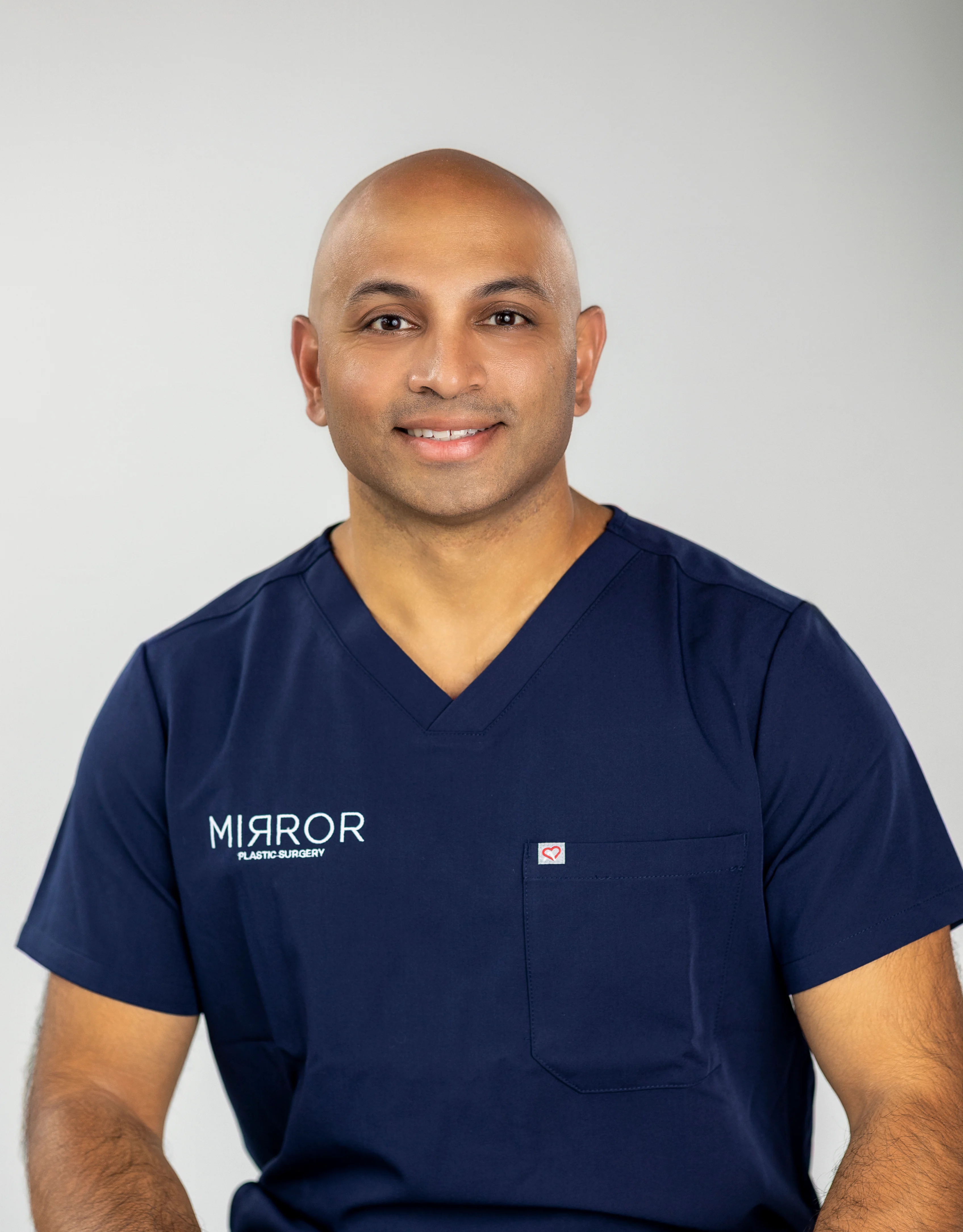
Mirror Plastic Surgery follows a concierge medicine model that emphasizes:
- Hour-long consultations that allow time to understand your anatomy, goals, and concerns
- A safety-first philosophy that prioritizes function and then aesthetics for every recommendation
- Direct, honest guidance, including clear explanations when RF is not the right option
- A schedule limited to 1–2 procedures per day so you receive focused attention before, during, and after treatment
- Recommendations based on anatomy and evidence rather than quotas or commissions
Many women who choose Mirror Plastic Surgery have experienced rushed, high-volume consultations elsewhere. They want a physician who explains what is happening in their tissue, why a specific treatment is recommended, and what realistic results look like. They also value a candid discussion when another approach would serve them better.
Arrange a one-on-one RF consultation to learn whether RF skin tightening fits your anatomy and to receive an honest, personalized assessment.
Frequently Asked Questions
Is RF Skin Tightening Painful?
Most patients describe RF as a sensation of warmth with mild pressure. Noninvasive monopolar and multipolar platforms are usually well tolerated without anesthesia, and reported pain scores are low. RF microneedling creates more sensation because of the needles, so providers apply topical anesthetic 30–45 minutes before treatment. Most patients describe the experience as moderate and manageable. Sensitivity varies by area, with the eyelids and bony regions feeling more tender than the cheeks or neck.
How Long Do RF Skin Tightening Results Last?
As noted earlier, results typically last 8 months to 3 years, with maintenance sessions every 3 to 18 months. Durability varies by device. Comparative studies suggest that multipolar RF maintains improvement better than monopolar RF at 12 months. Younger patients with stronger baseline collagen production often enjoy longer-lasting results than older patients.
Can RF Skin Tightening Be Used On Any Skin Type?
In clinical use, RF energy does not rely on melanin absorption, unlike many lasers. That feature reduces pigmentary risk compared with laser treatments. Laboratory studies still show that RF electromagnetic fields can influence melanin synthesis through non-thermal pathways. In practice, RF and RF microneedling are generally safe across Fitzpatrick skin types I–VI and carry a lower risk of post-inflammatory hyperpigmentation than ablative lasers. PIH can still occur in darker skin, and several studies report transient cases. This safety profile makes RF a valuable option for patients with medium to dark complexions.
What Is The Difference Between RF And Ultrasound Skin Tightening?
RF heats the dermis to stimulate collagen contraction and remodeling. Focused ultrasound (HIFU) targets deeper structural layers, including the SMAS, which surgeons lift during a facelift. Ultrasound may create a more pronounced lifting effect in the mid-face and lower face in a single session. RF offers broader dermal remodeling with a gentler side-effect profile and lower risk of nerve injury. Many patients benefit from a combination of both, which Dr. Chandawarkar can design during consultation.
Can RF Skin Tightening Be Combined With Other Treatments?
Combination treatment often enhances results. RF microneedling with poly-L-lactic acid has been shown to increase dermal thickness without fat loss. RF paired with topical antioxidant serums has demonstrated better improvement in neck wrinkles and elasticity than RF alone. RF can also be sequenced with other energy-based devices or injectables as part of a broader rejuvenation plan. Dr. Chandawarkar builds individualized protocols based on your anatomy and goals rather than relying on a standard package.
How Many RF Sessions Will I Need?
The number of sessions depends on the device and your degree of laxity. Thermage FLX usually involves a single treatment, with measurable results appearing over the next 2–6 months. Bipolar and multipolar platforms such as Forma and Exilis often require 4–6 sessions, although exact numbers vary by area and goal. RF microneedling systems such as Morpheus8 typically involve 1–3 sessions spaced 4–6 weeks apart, with many facial protocols using three sessions. Some patients need fewer sessions for mild concerns and more for body areas or severe issues. During consultation, Dr. Chandawarkar recommends a specific plan based on your tissue assessment.
Conclusion: Make An Informed Choice About RF
Radiofrequency skin tightening offers a safe, effective non-surgical option for mild-to-moderate facial and neck laxity when performed by a qualified provider who selects the right device and settings for your tissue. Results develop gradually, look natural, and require realistic expectations. For the right patient, they are clinically validated and meaningful.
The difference between a smooth, confident outcome and a complication usually lies in expertise, judgment, and honesty rather than in the machine itself. Your face benefits most from a physician with deep anatomic knowledge, not a technician following a preset protocol.
Contact Mirror Plastic Surgery to plan your RF treatment. Call or text 727-361-6515, email hello@mirrorplasticsurgery.com, or visit 780 4th Ave S, St. Petersburg, FL 33701. Follow us on Instagram at @mirrorplasticsurgery and @dr.akashplasticsurgery.
Disclaimer: Results may vary from person to person. Editorial content, before and after images, and patient testimonials do not constitute a guarantee of specific results.
1 Results may vary from person to person. Editorial content, before and after images, and patient testimonials do not constitute a guarantee of specific results.