
Written by: Dr. Akash Chandawarkar, Board Certified Plastic Surgeon, Mirror Plastic Surgery | Last updated: September 9, 2026
Key Takeaways
- PRF is a regenerative treatment made from your own blood that steadily delivers growth factors to improve skin quality, under-eye concerns, and hair density.
- Compared with PRP, PRF uses no chemical additives and releases growth factors gradually, creating a longer-lasting regenerative effect with minimal stinging.
- PRF can soften under-eye hollows, refine skin texture, and support hair restoration by stimulating collagen and prolonging the hair growth phase, with results building over several months.1
- Facial rejuvenation results often last 12–18 months, and many patients schedule maintenance sessions every 6–12 months, especially for hair restoration.1
- Schedule your PRF consultation with Ellie at Mirror Plastic Surgery to see whether this treatment fits your goals.
Understanding how PRF works and where it fits among other aesthetic treatments helps you decide whether it matches your priorities. This guide compares PRF with PRP, explains facial and hair benefits, outlines cost and longevity, and walks you through the treatment experience at Mirror Plastic Surgery.
PRF vs. PRP: Key Differences That Shape Your Results
To understand what makes PRF different from its predecessor PRP, focus on three factors: preparation, structure, and clinical impact. These differences influence comfort, safety, and which treatment suits each concern.
- Preparation: PRP requires an anticoagulant and a fast, high-speed centrifuge spin, while PRF uses no additives and a slower, gentler spin. This protocol difference matters in practice. PRP’s chemical anticoagulants lower plasma pH to about 6.5–6.8, which often causes stinging with injection, while PRF maintains a physiological pH of around 7.4 with minimal discomfort.
- Structure And Release: PRF forms a fibrin scaffold that releases growth factors gradually over time, providing a more sustained regenerative signal, while PRP delivers a single burst that fades within hours.
- Composition: PRF prepared using the Low-Speed Centrifugation Concept captures up to 10-fold higher concentrations of viable leukocytes, monocytes, and CD34+ mesenchymal stem cells compared with high-speed PRP, which packs and discards many of these cells.
- Clinical Implications: The evidence does not identify a single universal winner. A 2025 systematic review found no evidence that PRF is categorically superior to PRP. Instead, the data point to an indication-dependent trade-off. PRF may be favored for some texture and wrinkle outcomes, while PRP may perform better for certain pigmentation concerns. A 2026 randomized split-face trial in the Journal of Cosmetic Dermatology reported that PRF produced a more stable reduction in melanin and erythema, with improvements beginning around Month 3, while PRP showed a temporary increase at Month 3 before improving. PRF also showed earlier gains in some elasticity measures.
How PRF Helps Your Face Look Smoother And More Rested
PRF supports several facial concerns through one core mechanism. It delivers a sustained signal that activates fibroblasts, boosts collagen, and encourages gradual tissue remodeling.
Under-Eye Hollows And Dark Circles: The under-eye area is structurally unique. Its skin averages about half a millimeter in thickness, less than half the thickness of cheek skin, which makes it particularly suited to regenerative approaches. PRF works well for under-eye hollowness and dark circles because it improves skin thickness and quality without the risks of synthetic fillers such as lumpiness or the Tyndall effect. However, this regenerative benefit has limits. The 2026 split-face trial found that neither PRP nor PRF adequately corrected severe hollowness in the periorbital area.
Overall Skin Quality: PRF injections and PRF combined with microneedling can refine texture, tone, elasticity, and fine lines by stimulating fibroblasts and collagen production. A 2023 study documented a 5.08-fold increase in skin density after the third PRF session, with continued improvement over subsequent treatments.1 In solid PRF preparations, TGF-beta1 peaks around day 7 at high concentrations, directly signaling fibroblasts to build new collagen.
Hair Restoration: PRF injections into the scalp can stimulate dormant follicles by extending the anagen, or growth, phase. A 2026 systematic review in Stem Cell Research & Therapy that evaluated 20 clinical studies and 724 patients found that PRF showed one of the fastest and most consistent responses among regenerative therapies for androgenetic alopecia, with hair density gains of 62–97% within 3–6 months and early responses in 1–2 months.1
How Much Does PRF Cost?
PRF is an out-of-pocket cosmetic procedure and does not receive insurance coverage. Most insurers classify PRF as experimental or investigational for common aesthetic uses, so patients typically pay the full cost themselves.
At Mirror Plastic Surgery, each patient receives a customized quote after a detailed consultation. The team recommends treatments that match your anatomy and goals rather than defaulting to the highest-priced option. Get a personalized PRF quote from Ellie and review pricing that fits your specific plan.
How Long Do PRF Results Last?
PRF results develop gradually because the treatment triggers a biological cascade that unfolds over weeks. Many patients notice visible changes at 4–8 weeks, with peak results around 3–6 months after injection.1
For facial and under-eye rejuvenation, the regenerative effects of PRF injectable facials often last 12–18 months after a full series, and yearly maintenance sessions are common.1 For hair restoration, improvements in density and shedding usually appear by 3–6 months, but without maintenance, these gains often fade within 6–12 months, so many patients schedule semi-annual sessions.1
Age, smoking, sun exposure, and treatment area all influence longevity. The 2026 split-face trial suggested that periorbital results may require repeat PRF sessions every 3–4 months for ongoing maintenance.
What To Expect During And After PRF Treatment
The PRF visit follows a simple three-step process.
- A standard blood draw, similar to a routine lab test.
- Processing the blood in a specialized centrifuge for about 10–15 minutes to create the PRF concentrate.
- Injecting the PRF into the target area with fine needles or a blunt-tipped cannula.
Most appointments take 45–60 minutes from start to finish.
Recovery Tips: These post-treatment steps help your body respond effectively.
- Avoid NSAIDs such as ibuprofen and aspirin and avoid alcohol for at least 24–48 hours. These substances can dampen the natural inflammatory response that PRF relies on to trigger healing.
- Avoid strenuous exercise and excessive heat for 48 hours to limit swelling and bruising.
- Do not touch or apply makeup to the treated area for at least 6 hours so the tiny injection sites can close.
- Use cool compresses to ease swelling and discomfort.
- Sleep with your head elevated for at least a week after under-eye treatments to reduce puffiness.
Safety: Because PRF comes from your own blood, the risk of allergy or disease transmission is extremely low. The most common side effects include temporary bruising and swelling. The injector’s knowledge of facial anatomy plays the largest role in safety. A 2026 systematic review in the Journal of Cosmetic Dermatology identified 10 cases of unilateral visual impairment after platelet-rich plasma injections between 2017 and 2025 and found that more than half involved non-physicians or inadequately trained practitioners, which highlights the importance of proper credentials and training.
Is PRF Worth It? Comparing Your Options
PRF vs. Fillers: PRF and dermal fillers serve different purposes. Fillers create immediate, noticeable volume correction, which suits significant volume loss. PRF focuses on gradual, natural tissue regeneration and skin quality improvement, which appeals to patients who want subtle, long-term changes or prefer to avoid synthetic materials. PRF EZ-Gel is sometimes chosen for the under-eye area because filler near thin lower-eyelid skin carries higher risks of the Tyndall effect, puffiness, and lumpiness. Being fully autologous, PRF EZ-Gel avoids that risk category, though it offers gradual and more modest volume correction.
PRF vs. Botox/Neuromodulators: These treatments often work best together. Neuromodulators relax dynamic wrinkles such as crow’s feet and forehead lines. PRF improves skin quality, texture, and static wrinkles by building collagen. Many patients combine them as part of a comprehensive rejuvenation plan.
PRF vs. Microneedling: Microneedling creates controlled micro-injuries that stimulate collagen. PRF can be applied topically during microneedling or injected to enhance the healing response. A 2023 split-face study reported that PRF with microneedling achieved “excellent” results for acne scarring in 46.7% of patients, compared with 20% for PRP with microneedling, and patient satisfaction was significantly higher in the PRF group (P = 0.03).
The Verdict: PRF offers a natural, regenerative option for patients who want long-term skin and hair health. PRF acts as a biological investment rather than a quick fix and delivers gradual, lasting results. Its value depends on your goals, anatomy, and the skill and anatomical expertise of the provider who performs the treatment.
Why Mirror Plastic Surgery Is A Strong Choice For PRF In St. Petersburg
Mirror Plastic Surgery is led by Dr. Akash Chandawarkar, MD, a Harvard-educated physician, Johns Hopkins–trained plastic surgeon, and fellowship-trained aesthetic surgeon from the Manhattan Eye Ear & Throat Hospital (MEETH)/Lenox Hill Hospital. He is board-certified by the American Board of Plastic Surgery and has additional medical innovation training from Stanford University.
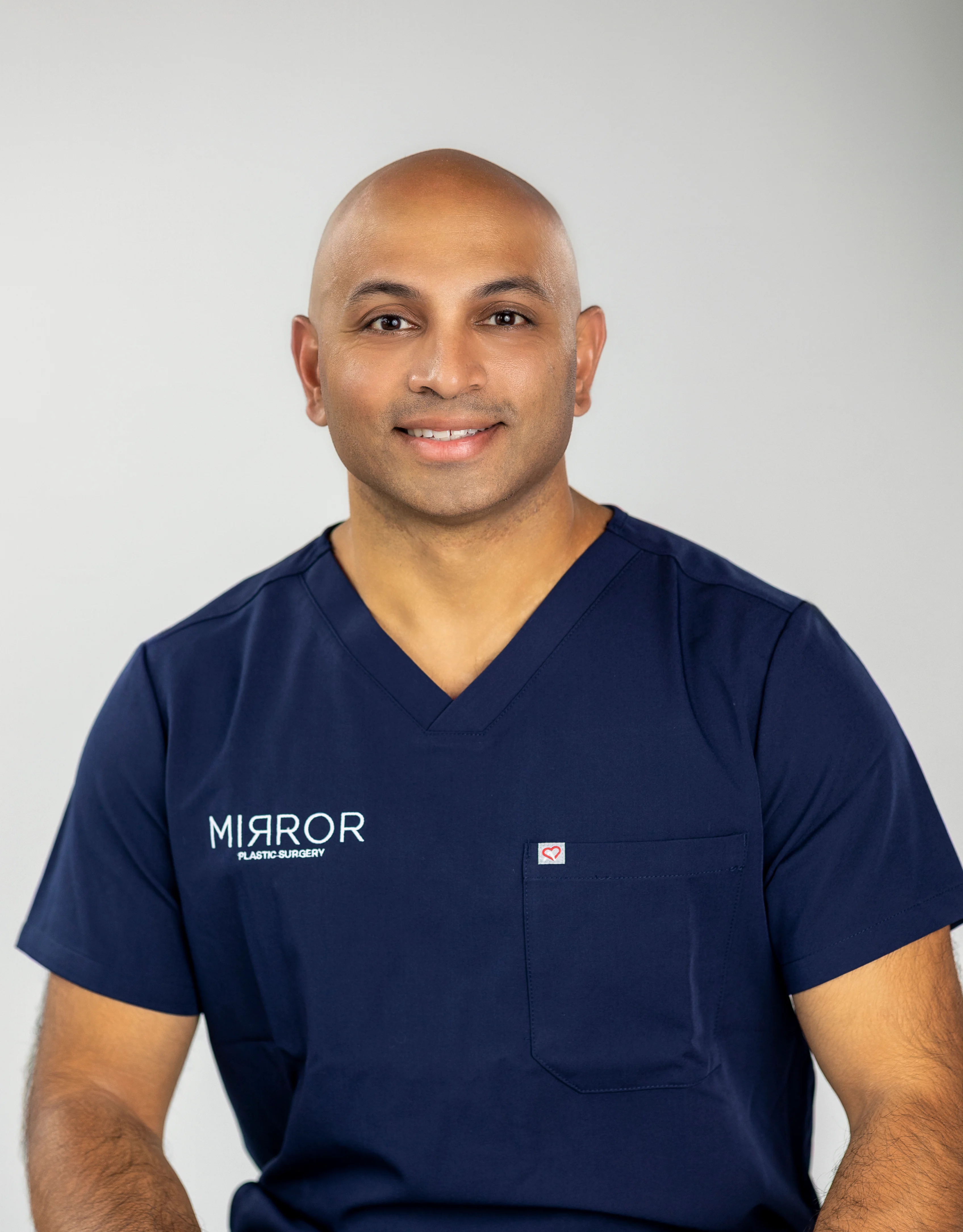
At Mirror Plastic Surgery, Dr. Akash personally performs all injectable and non-surgical treatments listed in the practice’s offerings. Every treatment is placed by a physician with a surgeon’s command of facial and subdermal anatomy, which supports both safety and precision. This level of expertise stands out in a market where many PRF providers do not have equivalent anatomical training.
The practice follows a concierge medicine model. Consultations can last up to an hour and include a thorough assessment of your anatomy, goals, and the emotions behind your interest in treatment. The guiding principle is safety first, function second, and aesthetics third. Dr. Akash often tells patients when a treatment is not yet necessary for them, which builds long-term trust instead of one-time transactions.
Patients in the St. Petersburg and Tampa Bay area who feel rushed or pressured at high-volume practices often find a different experience at Mirror Plastic Surgery. The team emphasizes evidence-based recommendations, surgical-level anatomical expertise, and a commitment to natural, durable results.
Ask Ellie if PRF is right for you at Mirror Plastic Surgery and explore a tailored plan for your aesthetic goals.
Frequently Asked Questions
What Does PRF Do For Your Face?
PRF stimulates your skin’s own repair processes by delivering a steady release of growth factors such as PDGF, TGF-β, and VEGF after injection. On the face, this can improve texture, tone, and elasticity, soften fine lines and crepiness, and offer subtle improvement in mild hollowness, especially under the eyes. Results build over several months as new collagen forms. PRF does not create instant volume and does not replace structural treatments when volume loss is significant.
Is PRF Better Than PRP?
Neither treatment works better for every concern. Current evidence supports an indication-dependent trade-off. PRF may be preferred for improving skin texture and fine wrinkles because of its sustained growth factor release and higher leukocyte content, while PRP may offer advantages for some hyperpigmentation concerns. For hair restoration, PRP has a longer track record, and recent reviews show PRF also producing strong, consistent results. The right choice depends on your anatomy, priorities, and medical history, which a qualified provider can assess during a consultation.
How Long Do PRF Injections Last?
As noted earlier, facial and under-eye PRF results often last 12–18 months after a complete initial series, and some patients maintain improvements for up to two years with consistent maintenance. For hair restoration, gains from an initial series usually appear at 3–6 months, but without maintenance every 6–12 months, results tend to fade because the underlying genetic and hormonal drivers of hair loss remain. Age, lifestyle, and total number of sessions all influence longevity.
Is PRF Good For Under Eyes?
PRF can work very well for the right under-eye candidate. It suits patients with mild to moderate tear trough hollowing, skin thinning, crepiness, or fine wrinkles in the periorbital area. PRF improves skin thickness and quality without introducing synthetic material, which avoids risks such as the Tyndall effect. Patients with severe hollows or significant fat herniation usually need a structural or surgical approach such as lower blepharoplasty. A detailed exam with a qualified provider helps determine whether PRF, another treatment, or a combination will serve you best.
How Many Times Should I Do PRF?
Most patients start with a series of 3–4 sessions spaced 4–6 weeks apart. Results build across this series, and collagen continues to develop for 3–6 months after the final session. Maintenance visits every 6–12 months help preserve results. For hair restoration, semi-annual maintenance is especially helpful because androgenetic alopecia progresses over time. The ideal number of sessions depends on your anatomy, treatment area, and the severity of your concerns.
What Should I Avoid After PRF?
For the first 24–48 hours after PRF, avoid NSAIDs such as ibuprofen and aspirin, alcohol, strenuous exercise, and excessive heat exposure. Do not touch or apply makeup to the treated area for at least 6 hours. For under-eye treatments, sleep with your head slightly elevated during the first week. Avoid blood-thinning supplements such as fish oil and vitamin E for several days. Apply a broad-spectrum SPF 30 or higher daily to protect treated skin and support longer-lasting results.
Can PRF Under-Eye Treatment Go Wrong?
PRF ranks among the safer injectable options because it comes entirely from your own blood, which removes the risk of allergy or foreign body reaction. The most common side effects, including bruising and swelling, are usually mild and resolve within a few days to a week. Serious complications remain rare but can occur with any injectable treatment near the eyes. The injector’s command of facial and vascular anatomy is the key safety factor. Choosing a provider with surgical-level anatomical knowledge and extensive injectable experience helps reduce risk. Mirror Plastic Surgery’s model, with Dr. Akash personally performing all injections, reflects this safety focus.
Book A Consultation
Mirror Plastic Surgery serves patients throughout the St. Petersburg and Tampa Bay area. To schedule your personalized PRF consultation and learn whether this regenerative treatment aligns with your goals, reach out through any of the following channels:
- Address: 780 4th Ave S, St. Petersburg, FL 33701
- Phone: 727-361-6515
- Email: hello@mirrorplasticsurgery.com
- Instagram: @mirrorplasticsurgery | @dr.akashplasticsurgery | @perfectlyplastics
Start your PRF journey with a consultation and take the first step toward natural, lasting rejuvenation with a board-certified plastic surgeon who prioritizes your safety and long-term results.
Disclaimer: Results may vary from person to person. Editorial content, before and after images, and patient testimonials do not constitute a guarantee of specific results.
1 Results may vary from person to person. Editorial content, before and after images, and patient testimonials do not constitute a guarantee of specific results.