

Written by: Dr. Akash Chandawarkar, Board Certified Plastic Surgeon, Mirror Plastic Surgery | Last updated: September 9, 2026
Key Takeaways
- PRP for hair loss is a regenerative treatment that concentrates platelets from your own blood and injects them into the scalp to stimulate dormant follicles, with the strongest results for early-to-moderate androgenetic alopecia.
- Clinical evidence from 2024–2026 reviews shows PRP increases hair density by 25–35 hairs/cm² within 3–6 months, with 64% of patients reporting improved density and average satisfaction of 7.3/10.1
- PRP works faster than minoxidil or finasteride and has no systemic side effects, and it performs best when combined with these treatments rather than used alone.1
- Results require an initial series of 3–4 sessions plus maintenance every 4–6 months, and density gains usually decline within 12–18 months without ongoing treatment.1
- At Mirror Plastic Surgery, board-certified plastic surgeon Dr. Akash Chandawarkar personally performs all PRP injections with precise technique, and you can book a consultation with Ellie to see if PRP matches your hair loss pattern.
Is PRP For Hair Loss Worth It?
PRP hair loss treatment can be worth it for the right candidate with realistic expectations. Androgenetic alopecia affects more than 50% of men and up to 40% of women over a lifetime, and PRP is one of the most evidence-supported non-surgical options available. It is not a miracle cure, and results depend heavily on candidacy, protocol, and provider expertise. In one study, 64% of patients reported improved hair density, clinicians confirmed new growth in 68% of cases, and patient satisfaction averaged 7.3 out of 10.1
Those numbers show meaningful benefit for many patients, and they also show that PRP does not help everyone. The financial commitment is significant, so a clear understanding of who benefits, how the treatment works, and how it compares with proven alternatives supports a confident decision.
How PRP For Hair Loss Works
PRP therapy comes entirely from your own blood. A small volume is drawn, processed in a centrifuge to concentrate the platelet-rich fraction, and then injected into the scalp at the level of the hair follicles.
Platelets release growth factors including PDGF, VEGF, TGF-β, and IGF-1, which influence angiogenesis, cell proliferation, and the follicular cycle. In everyday terms, these growth factors stimulate follicular stem cells and extend the anagen (active growth) phase of the hair cycle. They also improve microvascular blood supply to follicles and calm the follicular inflammation that speeds miniaturization in androgenetic alopecia. Randomized trials have shown hair-density increases of about 10–30 hairs/cm² with PRP treatment.1
Step-By-Step PRP Hair Procedure
A standard PRP hair restoration session usually follows this sequence:
- Blood draw of 20–30 mL from the arm
- Centrifugation to concentrate platelets, targeting 3–5× baseline concentration
- Scalp injections at 1.5–2.0 mm depth, targeting the hair bulb region
- Total session time of about 45–90 minutes
- No downtime, with most patients returning to normal activities the same day
Injection depth matters significantly, because superficial administration at less than 1.0 mm reduces efficacy by 38–45% due to inadequate follicular penetration. This finding highlights why provider expertise and technique directly affect outcomes.
What 2026 Research Shows About PRP Hair Regrowth
Current evidence supports PRP as a real option for regrowing hair in the right setting. A 2024 systematic review and meta-analysis of randomized trials found that PRP significantly improved hair density and hair thickness in androgenetic alopecia compared with controls, with a favorable safety profile and mostly mild, transient adverse events. A 2026 systematic review in the Journal of Cosmetic Dermatology reported moderate improvements of +25–35 hairs/cm² within 3–6 months.1
PRP works best for early-to-moderate androgenetic alopecia, such as Norwood I–III in men and Ludwig I–II in women, where follicles remain present and biologically active. It cannot regrow hair on completely bald areas where follicles have been destroyed or replaced by fibrous tissue. Visible results usually appear at 3–6 months, with peak results at 6–12 months.
Book a consultation with Ellie to learn whether PRP matches your specific pattern of hair loss.
Comparing PRP, Minoxidil, And Finasteride
PRP, minoxidil, and finasteride work in different ways and often perform best together. Each option carries its own balance of cost, convenience, side effects, and strength of evidence.
Minoxidil (Rogaine) comes in topical and oral forms, extends the anagen phase mainly through vasodilation, and holds FDA approval for both men and women. It requires daily use for life. Topical minoxidil costs about $97 per six months, which makes it the most affordable long-term option. Results are modest and often take six or more months to appear. Topical use has no systemic side effects, while oral minoxidil needs medical supervision because of cardiovascular considerations.
Finasteride (Propecia) is an oral DHT blocker for men. It is FDA-approved and effective, and it can cause sexual side effects such as reduced libido, erectile dysfunction, and decreased ejaculate volume in a minority of users. Some patients develop post-finasteride syndrome with persistent adverse effects after discontinuation, which can contribute to depression and suicidal ideation. Women who are or may become pregnant must avoid handling crushed or broken finasteride tablets.
PRP delivers growth factors directly to the follicle through scalp injections, has no systemic side effects, and usually shows an onset of action at 3–6 months, which is faster than the 6+ months typical for minoxidil and finasteride. Patient satisfaction rates for PRP run 78–92%, compared to 60–70% for minoxidil and 65–75% for finasteride.1
On long-term cost, the difference is large. A cost-effectiveness analysis in Cureus estimated PRP monotherapy at about $13,100 over 35 years, compared with roughly $1,460 for topical minoxidil over the same period.
Recent evidence shows that combination therapy outperforms single treatments. A randomized controlled trial found that PRP combined with 5% topical minoxidil increased hair density by 32% and hair shaft diameter by 26%, while reducing vellus hair by 30% and telogen hair by 39%.1
A meta-analysis confirmed that PRP plus minoxidil produced significantly greater hair density improvements than minoxidil alone, with weighted mean differences of 11.07 hairs/cm² at one month, 21.81 at three months, and 17.80 at five to six months.
Who Makes A Strong PRP Candidate?
Good candidacy for PRP depends on a thorough in-person evaluation of follicular viability, disease stage, and overall health. Evidence points clearly to the patients who benefit most.
Strong candidates include:
- Early-to-moderate androgenetic alopecia (Norwood I–III in men, Ludwig I–II in women)
- Visible miniaturization with viable follicles still present
- Younger patients with shorter disease duration, who generally respond better due to higher follicular activity
- Patients already stabilized on minoxidil or finasteride who want additional density
Poor candidates include:
- Advanced baldness (Norwood V–VII) with no viable follicles remaining
- Scarring alopecias such as lichen planopilaris or frontal fibrosing alopecia, where follicles have been destroyed
- Active scalp infections
- Patients with hematologic disorders or low platelet counts, because PRP requires sufficient baseline platelet concentration to produce therapeutic growth factor levels
- Patients on anticoagulants that cannot be paused
PRP shows early evidence for alopecia areata and telogen effluvium, and the strongest and most consistent data supports androgenetic alopecia. A structured scalp assessment remains essential, and photos or phone calls alone cannot determine candidacy.
Real PRP Costs For Hair Treatment In 2026
Clear pricing helps you plan realistically. A single PRP session in the U.S. ranges from $400 to $1,500, with most patients paying $600–$900. The national average per session is about $718.
A full initial series of three to four sessions runs $1,500–$4,500, and first-year costs including maintenance usually fall between $2,300 and $5,700. Annual maintenance, typically two visits every four to six months, costs $800–$2,400.
Pricing varies with geography, provider credentials, and preparation method. Double-spin centrifugation achieves a platelet recovery rate of 97.4% compared to 87.7% for single-spin centrifugation, which represents a meaningful difference in treatment quality and often in cost. PRP counts as a cosmetic treatment and is not covered by insurance. At Mirror Plastic Surgery, you receive a personalized quote during consultation based on your treatment plan and the number of sessions recommended.
PRP Side Effects And Drawbacks
An umbrella review pooling multiple studies found injection-site pain as the most frequent side effect, present in about 87% of cases, with swelling in over 50%, headache in nearly 50%, and redness in around 40%. Bruising, itching, and pinpoint bleeding also occur. Most side effects resolve within 24–72 hours.
Temporary shedding, called telogen effluvium, appears in 10–20% of patients, usually 2–6 weeks after treatment. PRP growth factors speed follicle cycling and push resting-phase hairs into a new anagen phase, which requires the old hair shaft to shed first. This response signals that follicles are cycling, and it resolves with thicker regrowth.
Beyond side effects, PRP has several practical disadvantages:
- Significant upfront cost and ongoing maintenance expense
- Time commitment, with three to four initial sessions plus maintenance every four to six months
- Non-permanent results, as density gains decline over 12–18 months without maintenance
- Off-label use, because PRP is not FDA-approved for hair loss, even though the preparation devices are FDA-cleared
- Limited long-term data, since most studies follow patients for six months or less
- Minimal response in 15–25% of patients
Choosing A PRP Provider You Can Trust
The provider performing PRP injections strongly influences your results. Injection depth, platelet concentration, preparation protocol, and coverage pattern all depend on technique. Before you commit, ask any prospective provider:
- What results you can realistically expect based on your specific pattern of hair loss
- How many sessions you will need and what the maintenance schedule looks like
- Who performs the injections, such as a physician or a technician
- Which PRP preparation method they use and what platelet concentration they target
- Whether they can show before-and-after photos of patients with similar hair loss patterns
- What the total cost is, including consultation, preparation, and follow-up
Board certification in dermatology or plastic surgery, deep anatomical knowledge of the scalp, and a personalized approach instead of one-size-fits-all packages signal a provider worth trusting. At Mirror Plastic Surgery, Dr. Akash Chandawarkar personally performs all PRP injections, which supports the anatomical precision and injection depth that drive treatment efficacy.
Book a consultation with Ellie for a thorough, physician-led evaluation of your hair loss pattern and PRP candidacy.
Why Mirror Plastic Surgery For PRP Hair Restoration
Mirror Plastic Surgery serves as a focused destination for PRP hair restoration in the St. Petersburg and Tampa Bay area. Dr. Akash Chandawarkar is a Harvard-educated, Johns Hopkins-trained plastic surgeon with fellowship training in aesthetic surgery at the Manhattan Eye Ear & Throat Hospital (MEETH)/Lenox Hill Hospital, and he is board-certified by the American Board of Plastic Surgery. He personally performs every PRP injection at the practice, which means your treatment benefits from a surgeon’s command of scalp anatomy and the precise 1.5–2.0 mm injection depth supported by current evidence.
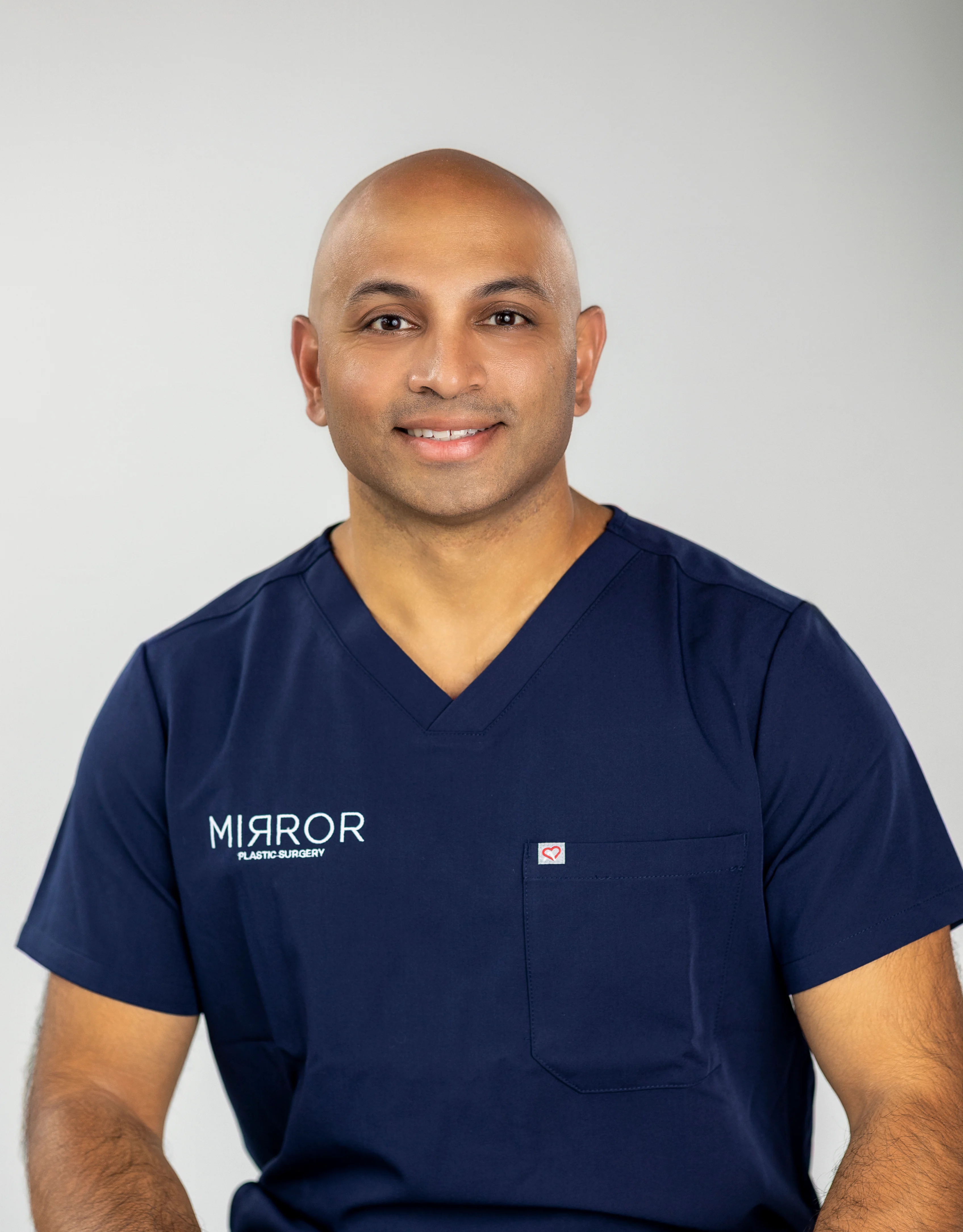
Mirror Plastic Surgery follows a concierge medicine philosophy of safety first, function second, and aesthetics third. Consultations can run up to an hour and cover the emotional drivers behind your concerns, a structured top-to-bottom scalp assessment, and an honest, evidence-based treatment plan. If PRP is not the right fit, or if minoxidil or finasteride would serve you better, Dr. Akash will explain that clearly. The practice avoids upselling, does not work on quotas, and remains supplier-neutral.
This approach differs from high-volume clinics where non-physician staff administer PRP using standardized packages regardless of individual candidacy. Patients who want a board-certified plastic surgeon’s honest evaluation of whether PRP is worth their investment often choose Mirror Plastic Surgery.
Mirror Plastic Surgery is located at 780 4th Ave S, St. Petersburg, FL 33701. You can reach the practice by phone or text at 727-361-6515, or by email at hello@mirrorplasticsurgery.com.
Ready to see if PRP fits your hair goals? Book a consultation with Ellie.
Frequently Asked Questions About PRP For Hair Loss
Is PRP For Hair Loss Worth It?
PRP can be worth it for patients with early-to-moderate androgenetic alopecia who still have viable follicles. Studies show that 64% of patients report improved density, with satisfaction averaging 7.3 out of 10. The treatment requires a meaningful financial commitment for the initial series plus ongoing maintenance. The strongest candidates usually combine PRP with minoxidil or finasteride for better results. Whether PRP is worthwhile for you depends on your stage of hair loss, follicular health, and long-term goals, which a thorough in-person assessment can clarify.
Can PRP Regrow Hair?
PRP can regrow hair in patients with early-to-moderate androgenetic alopecia where follicles remain present and biologically active. A 2024 meta-analysis confirmed significant improvements in hair density and thickness versus controls. A 2026 systematic review reported moderate improvements of +25–35 hairs/cm² within 3–6 months. PRP cannot regrow hair on completely bald areas where follicles no longer exist, because it stimulates existing follicles rather than creating new ones. Earlier intervention consistently produces better outcomes than waiting until hair loss becomes advanced.
Is PRP Better Than Minoxidil?
PRP and minoxidil work through different mechanisms and often complement each other. Minoxidil is FDA-approved, less expensive, and requires daily application. PRP delivers growth factors directly to follicles, has no systemic side effects, and shows higher patient satisfaction in clinical data. The strongest evidence supports combining both treatments, because PRP with minoxidil produces significantly greater hair density improvements than minoxidil alone. For most patients, the practical question is how to use them together most effectively.
Can PRP Cause Hair Shedding?
PRP can cause temporary shedding in 10–20% of patients, usually 2–6 weeks after treatment. This response, called telogen effluvium, occurs when PRP growth factors accelerate follicle cycling and cause resting-phase hairs to shed before the new anagen growth cycle begins. The follicle resets rather than dies. Shedding is temporary and resolves with thicker regrowth, and patients should contact their provider if shedding is severe or persists beyond four to six weeks.
What Is The Main Disadvantage Of PRP?
The main disadvantages of PRP include cost, time commitment, and the temporary nature of results. The initial series requires multiple sessions, and maintenance injections every four to six months are needed to sustain density gains, because results usually decline over 12–18 months without them. PRP is not FDA-approved specifically for hair loss, and 15–25% of patients respond minimally. Patients with advanced baldness or scarring alopecia rarely see meaningful benefit.
How Long Do PRP Results Last?
PRP results typically last 12–18 months without maintenance. Most protocols recommend maintenance sessions every four to six months to maintain density gains. Without maintenance, results gradually decline as the underlying genetic and hormonal drivers of androgenetic alopecia continue to affect follicles. PRP does not permanently change DHT sensitivity, and it instead creates a more favorable biological environment for follicles that still have residual function.
How Many PRP Sessions Are Needed For Hair Loss?
Most evidence-based protocols involve three to four initial sessions spaced four to six weeks apart, followed by maintenance every four to six months. A single session does not provide enough time to judge effectiveness, because hair growth biology requires at least three months for a dormant follicle to produce a visible hair shaft. The cumulative growth factor stimulation from multiple sessions drives meaningful results. Visible improvement usually appears at three to six months, with peak results at six to twelve months.
Conclusion: Choosing The Right Path For Your Hair
PRP is a legitimate, evidence-backed treatment for early-to-moderate hair loss, and it does not act as a universal cure. The difference between wasted money and real results depends on candidacy, protocol precision, and provider expertise. The best outcomes usually come from a personalized, physician-led plan that combines PRP with proven treatments like minoxidil or finasteride when appropriate, delivered by a provider with the anatomical knowledge to perform injections correctly.
At Mirror Plastic Surgery, Dr. Akash Chandawarkar brings board-certified plastic surgery training and a concierge medicine philosophy to every PRP consultation. The goal is to give you an honest, evidence-based answer about whether PRP is the right investment for your specific situation.
Book a consultation with Ellie or call 727-361-6515 to schedule your evaluation at Mirror Plastic Surgery in St. Petersburg, FL.
Disclaimer: Results may vary from person to person. Editorial content, before and after images, and patient testimonials do not constitute a guarantee of specific results.
1 Results may vary from person to person. Editorial content, before and after images, and patient testimonials do not constitute a guarantee of specific results.


