Written by: Dr. Akash Chandawarkar, Board Certified Plastic Surgeon, Mirror Plastic Surgery | Last updated: September 9, 2026
Key Takeaways
- Surgical BBL mortality dropped from 1 in 3,448 in 2017 to 1 in 14,952 in 2019 when surgeons followed subcutaneous-only injection with real-time ultrasound guidance.1
- Non-surgical BBL using biostimulatory fillers like Sculptra and Radiesse removes general anesthesia and fat embolism risks, while safety still depends heavily on provider qualifications.
- The 2026 UK House of Commons report documented 479 complaints from liquid BBL procedures performed by non-medical practitioners, and 91% of those patients required hospital treatment.
- Board-certified plastic surgeons who follow 2022 safety protocols achieved zero deaths in large studies, while unqualified providers remain the main safety concern for every procedure type.
- Schedule your personalized consultation with a board-certified plastic surgeon at Mirror Plastic Surgery to review the safest plan for your anatomy and goals.
Choosing Between Surgical And Non-Surgical BBL
You face two very different procedures when you compare surgical and non-surgical BBL. Surgical BBL (fat transfer) uses liposuction to harvest fat from donor areas, processes that fat, and re-injects it into the buttocks. The procedure requires general anesthesia, incisions, and a significant recovery period. Non-surgical BBL uses injectable biostimulatory fillers, primarily Sculptra (poly-L-lactic acid) and Radiesse (calcium hydroxylapatite), to add volume and stimulate collagen production without surgery, general anesthesia, or incisions.
Non-surgical options have grown in popularity as surgical BBL safety data evolved. Non-surgical BBL is not a single standardized procedure. It spans a wide quality and safety spectrum that depends on the product used and, most critically, the credentials of the provider performing the injections.
Safety Comparison: Surgical Vs. Non-Surgical BBL
Surgical BBL Mortality Data
A 2017 ASERF survey led by Dr. Peter Rubin analyzed 198,857 cases and found an annual BBL mortality rate of 1 in 3,448, which made BBL the deadliest elective cosmetic procedure on record at that time. It was roughly 10 to 20 times more dangerous than the average cosmetic surgery. Deep muscle injection was associated with a higher risk of fatal and nonfatal pulmonary fat embolism.
In April 2022, ASPS, ASAPS, and ISAPS jointly issued a Practice Advisory that recommended subcutaneous-only fat injection, real-time ultrasound guidance, cannulas of 4 mm or larger, and a maximum of three BBL cases per surgeon per day to reduce fatigue-related errors. A 2024 study reported zero deaths among 12,800 BBL procedures where 96% of surgeons followed the subcutaneous-only protocol. The 2022 multidisciplinary survey of 100 surgeons (86 respondents) reported a pulmonary fat embolism fatality rate of 1:23,878 among surgeons following updated guidelines, which represents about an eight-fold improvement over the 2017 baseline.
Board certification alone does not guarantee protocol adherence. South Florida documented 25 fat embolism deaths between 2010 and 2022, and 68% involved ABPS-certified surgeons, most at high-volume, budget clinics. Florida HB 1471, effective July 1, 2023, mandates that fat extraction and gluteal fat injections be performed by the physician, requires ultrasound guidance (or board-approved equivalent) during cannula placement and navigation for subcutaneous-only injection, and prohibits intramuscular or submuscular injections.
Non-Surgical BBL Risk Profile With Provider Caveat
Non-surgical BBL removes the three deadliest elements of surgical BBL: general anesthesia, incisions, and fat embolism. A 498-subject safety study on biostimulatory fillers for buttock treatments found bruising as the most common side effect at approximately 5%, and nodule incidence at just 0.2%.1 Common side effects such as swelling, redness, and temporary tenderness resolve within days.
Provider qualification remains the critical caveat. The 2026 UK House of Commons Women and Equalities Committee report cited Save Face data documenting 479 complaints between 2022 and 2024 from liquid BBL procedures performed by non-medical practitioners. Of these cases, 91% required hospital treatment, 77% were hospitalized for more than 48 hours, and 39% needed surgical intervention. The committee cited evidence of procedures taking place in Airbnbs, hotel rooms, and garden sheds, performed by people with no medical training. Unqualified providers injecting large volumes into a region with dense vasculature create the greatest risk, regardless of procedure type.
The FDA does not approve any injectable filler for buttock augmentation. Sculptra and Radiesse are FDA-approved for facial use and applied off-label in the buttocks. Clinical data supports this practice when board-certified physicians with deep anatomical knowledge perform the injections.
Head-To-Head Safety Comparison
| Safety Factor | Surgical BBL (Fat Transfer) | Non-Surgical BBL (Biostimulatory Fillers) |
|---|---|---|
| Mortality Risk | 1 in 23,818 with 2022 protocol compliance | No documented mortality with licensed medical providers |
| Anesthesia Requirement | General anesthesia required | None, topical anesthetic only |
| Most Serious Complication | Pulmonary fat embolism (1 in 3,448 pre-2022 protocol, see above) | Vascular occlusion and skin necrosis, rare and linked to injector skill |
| Common Side Effects | Infection (2–13%), seroma, contour irregularities, scarring | Bruising (~5%), swelling, temporary tenderness, nodules (0.2%) |
Schedule A Safety-Focused BBL Consultation at Mirror Plastic Surgery to review your risk profile and goals with a board-certified plastic surgeon.
Non-Surgical BBL Filler Options And Safety
Sculptra (poly-L-lactic acid) is FDA-approved for facial volume restoration and used off-label for buttock contouring. It stimulates collagen production gradually, and visible results typically appear within a few weeks to a few months. Full effect develops over three to six months, and results generally last up to about two years (24–25 months), not two to three years. A full protocol requires multiple sessions. Unlike fillers that can be dissolved, Sculptra technique errors are harder to reverse because it stimulates a biological response, which makes provider experience especially critical.
Radiesse (calcium hydroxylapatite) provides immediate volume and stimulates collagen production, with results for buttock augmentation typically lasting approximately 12 to 18 months. Some patients experience results lasting up to 24 months or more depending on individual factors and maintenance. For body applications, providers typically dilute Radiesse to enhance collagen stimulation.
At Mirror Plastic Surgery, Dr. Akash Chandawarkar personally performs all non-surgical BBL procedures using biostimulatory fillers, including AlloClae, and maintains an affiliation with Radiesse’s manufacturer. He tailors each plan to the patient’s anatomy and goals. As a board-certified plastic surgeon, he places every injection with a surgeon’s command of subdermal anatomy, which supports both safety and precision beyond what non-physician injectors can provide.
Surgical BBL Safety Protocols To Require
Some patients still choose surgical BBL for larger volume changes, and strict safety protocols then become essential. The 2022 multi-society Practice Advisory codified 10 key principles for gluteal fat grafting. When you evaluate a surgical BBL provider, confirm each of the following:
- Board certification by the American Board of Plastic Surgery (not only “cosmetic surgery”)
- Real-time ultrasound guidance during fat injection, with video documentation
- Subcutaneous-only injection, never into the muscle
- Accredited surgical facility
- Surgeon personally performing both fat extraction and injection
- Maximum of three BBL cases per surgeon per day
- In-person patient examination no later than one day before surgery, as required by Florida law
Even with full protocol adherence, surgical BBL carries higher risk than non-surgical options because of general anesthesia and the invasiveness of liposuction and fat transfer.
Recovery And Downtime For Each Option
Surgical BBL recovery typically takes two to three months (about 8–12 weeks) for full healing. During this period, patients wear compression garments for at least one month and avoid sitting directly on the buttocks for approximately eight weeks. Most patients with desk-based or sedentary jobs take about one to two weeks off work, while those in physically demanding roles may need up to six weeks or more.
Non-surgical BBL offers minimal downtime. Most patients return to normal activities the same day and can sit and drive right away. They should avoid strenuous activities for at least 24 hours and avoid prolonged pressure on hard surfaces for the first couple of days.
Cost And Longevity For Surgical And Non-Surgical BBL
Surgical BBL Cost And Longevity
The all-in cost of a surgical BBL performed safely by a board-certified plastic surgeon in an accredited U.S. facility typically ranges from $5,000 to $18,000. Lower costs are possible in certain regions. The ASPS average surgeon’s fee for a Brazilian butt lift (buttock augmentation with fat grafting) was $7,264 in 2023, excluding anesthesia, facility, and other related expenses, and ASPS projected a surgeon fee range of $7,000–$11,500 for 2024.
Surgical BBL results are semi-permanent and typically last 5 to 10+ years when weight remains stable.1 Most patients retain 60–80% of transferred fat long-term. A subset of patients, typically 15–25%, pursue a touch-up procedure between years two and four.
Non-Surgical BBL Cost And Longevity
Sculptra is typically priced at $800–$1,000 per vial nationally. A full facial rejuvenation protocol (three sessions, 2–4 vials per session) totals $5,000–$12,000, while a Sculptra BBL (10–20 vials) totals $10,000–$20,000. Results typically last up to two years after completing a full treatment protocol, though some studies report effects lasting up to three years.1 with maintenance sessions every 18–24 months.
Radiesse is a non-surgical alternative to traditional butt augmentation, with results typically lasting 12 to 18 months and sometimes up to 24 months or longer.1 Per-syringe costs vary widely, and total treatment costs can be substantial because most patients need multiple sessions. Total non-surgical BBL cost typically ranges from $3,000 to $13,000, depending on product, volume, and number of sessions.
Exact pricing at Mirror Plastic Surgery is discussed during your personal consultation. Dr. Akash builds a protocol tailored to your anatomy and goals rather than a one-size-fits-all package.
Plan Your Personalized BBL Treatment And Pricing Review with Dr. Akash Chandawarkar.
How To Choose Safely Between BBL Options
Your ideal procedure depends on body composition, goals, and risk tolerance. Three primary scenarios often guide the decision:
- Low Body Fat (BMI Below 23): For very lean patients lacking sufficient donor fat, non-surgical BBL is one of several viable alternatives, including buttock implants, hybrid BBL, and AlloClae donor fat grafting.
- Desire For Dramatic Volume Increase: Surgical BBL can achieve more significant structural changes and projection, and patients must accept higher risk and a longer recovery.
- Priority On Safety And Minimal Downtime: Non-surgical BBL offers a safer profile and faster recovery when a board-certified physician injector performs the procedure.
Before booking with any provider, ask these questions:
- Are you board-certified by the American Board of Plastic Surgery?
- Do you personally perform all injections, or does a nurse or non-physician injector?
- What is your specific experience with non-surgical BBL?
- What safety protocols do you follow to avoid vascular complications?
- What are the potential complications, and how do you manage them?
- How many sessions and vials will my protocol require?
- What results can I realistically expect, and how long will they last?
Long-Term Results And Aging After BBL
What Happens 10 Years After A BBL?
Grafted fat that successfully integrates behaves like native fat. It enlarges with weight gain, shrinks with weight loss, and skin laxity can gradually soften the contour over time. Weight stability is the single biggest long-term factor in BBL longevity, and patients who maintain their weight within 10 lb of their surgical weight report the most durable results. Non-surgical fillers are temporary and require maintenance, and they can be adjusted over time as your body and preferences change.
Will A BBL Eventually Sag?
Surgical BBL does not prevent natural aging, and the buttocks descend slightly with age regardless of prior surgery. Non-surgical biostimulatory fillers like Sculptra stimulate collagen production, which can improve skin quality and mild laxity over time.
Does A BBL Smell Years Later?
This rare complication of surgical BBL comes from fat necrosis, which involves dying fat cells. Non-surgical options using biostimulatory fillers avoid this specific risk entirely.
Why Mirror Plastic Surgery For Non-Surgical BBL
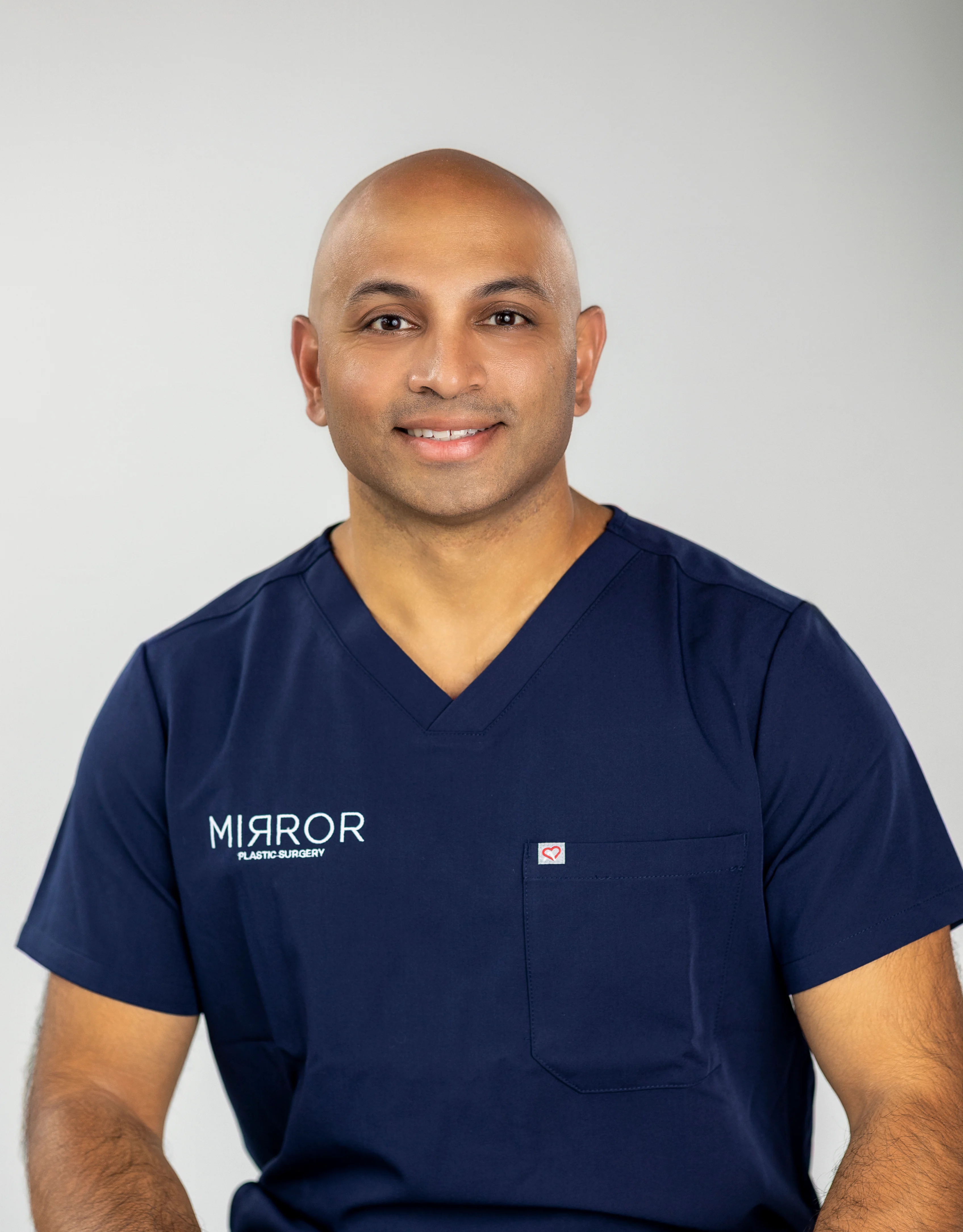
Mirror Plastic Surgery is a premier aesthetic medicine and plastic surgery practice in St. Petersburg, Florida, led by Dr. Akash Chandawarkar, a Harvard-educated physician and Johns Hopkins-trained, board-certified plastic surgeon. He completed fellowship training in aesthetic surgery at Manhattan Eye Ear & Throat Hospital and medical innovation training at Stanford University.
Dr. Akash personally performs every non-surgical BBL at Mirror Plastic Surgery using biostimulatory fillers, including AlloClae, and he is affiliated with Radiesse’s manufacturer. As an advisory board member for Merz Aesthetics (Radiesse) and Tiger Aesthetics (AlloClae), he works at the forefront of biostimulatory filler innovation. His surgeon-level understanding of subdermal anatomy supports precise and safe injection placement that non-physician injectors cannot match.
The practice follows a concierge medicine philosophy. Patients receive up to an hour per consultation, safety takes priority over function and aesthetics, and the team limits the schedule to one to two procedures per day. This model contrasts sharply with high-volume clinics that account for many documented BBL complications. Dr. Akash’s approach centers on honest, unbiased communication, and he will clearly explain when a procedure does not fit your needs or timing.
Request A Non-Surgical BBL Consultation at Mirror Plastic Surgery to see whether this approach matches your anatomy, goals, and safety priorities.
Frequently Asked Questions
Is There A Safer Alternative To BBL?
Yes. Non-surgical BBL using biostimulatory fillers like Sculptra or Radiesse removes the two deadliest risk factors of surgical BBL, general anesthesia and pulmonary fat embolism. When a board-certified plastic surgeon with deep anatomical expertise performs the procedure, non-surgical BBL offers a dramatically safer risk profile with minimal downtime and no incisions. Provider credentials strongly influence safety, and a non-surgical BBL performed by an unqualified practitioner still carries serious risks, as documented by the 2026 UK parliamentary report on liquid BBL complications.
What Is The Safest Buttock Enhancement?
The safest buttock enhancement uses non-surgical injectable treatment performed by a board-certified plastic surgeon using FDA-approved biostimulatory fillers in a clinical setting. Provider qualifications, anatomical knowledge, injection technique, and adherence to safety protocols shape the risk profile as much as the procedure category. At Mirror Plastic Surgery, Dr. Akash Chandawarkar personally performs all non-surgical BBL procedures and applies a surgeon’s precision to every treatment.
How Long Does A Non-Surgical BBL Last?
Sculptra results typically last up to two years after completing a full treatment protocol, though some studies report effects lasting up to three years.1 Radiesse results typically last 12 to 18 months, and the manufacturer notes that results can last up to two years, with duration varying by treatment area and individual factors.1 For Sculptra-based non-surgical BBL, providers typically recommend maintenance touch-up sessions every 18 to 24 months to preserve and build on results. Patients who maintain consistent treatment over years develop a progressively stronger collagen framework that may require fewer maintenance vials over time. Results develop gradually over three to six months as collagen production increases, and peak improvement usually appears around three to six months after the last treatment session.
What Is The Cost Difference Between Non-Surgical And Surgical BBL?
The typical total upfront cost of a surgical BBL in the U.S., including surgeon, anesthesia, and facility fees, generally ranges from about $6,000 to $18,000. This range varies widely by geographic location, surgeon experience, and procedure complexity, with some areas like Miami costing less and premium markets like Los Angeles exceeding $18,000. In the U.S., a full non-surgical BBL protocol typically costs between $3,000 and $13,000, often $2,000–$6,000 per session, with many plans falling in the $4,000–$10,000 range. Maintenance sessions are generally recommended every one to two years to preserve results. Over a five-year horizon, costs can converge, and non-surgical BBL avoids anesthesia fees, facility fees, and many recovery-related costs such as extended time off work, compression garments, and some medications. At Mirror Plastic Surgery, exact pricing is discussed during your personal consultation, and Dr. Akash builds a protocol based on your anatomy and goals rather than a standardized package.
Can I Get A Non-Surgical BBL If I Am Very Lean?
Yes. For lean patients, non-surgical BBL may be the only realistic option. Surgical BBL requires sufficient donor fat for liposuction, and patients with a BMI below approximately 23 often lack enough donor fat to achieve meaningful results through a traditional Brazilian butt lift, though some may still qualify for smaller-volume transfers or alternative procedures. Biostimulatory fillers like Radiesse and AlloClae do not depend on body fat. They work by stimulating the body’s own collagen production and adding targeted volume, which makes them effective regardless of body fat percentage. Dr. Akash will assess your anatomy during consultation and provide an honest recommendation on what is achievable for your specific body composition.
Conclusion: A Safety-First BBL Decision
Non-surgical BBL offers the safest path for women seeking buttock enhancement without surgery when a board-certified physician with deep anatomical knowledge performs the treatment. Surgical BBL has become dramatically safer under 2022 protocols, yet it still carries inherent risks from anesthesia and fat embolism that non-surgical options remove. The 2026 UK liquid BBL crisis reinforces that provider training and setting matter as much as procedure type. Whichever path you choose, place credentials, safety protocols, and honest counseling ahead of price.
Disclaimer: Results may vary from person to person. Editorial content, before and after images, and patient testimonials do not constitute a guarantee of specific results.
1 Results may vary from person to person. Editorial content, before and after images, and patient testimonials do not constitute a guarantee of specific results.