

Written by: Dr. Akash Chandawarkar, Board Certified Plastic Surgeon, Mirror Plastic Surgery | Last updated: September 9, 2026
Key Takeaways
Before you choose a filler, keep these core safety points in mind:
- HA-based fillers like Juvéderm and Restylane are the safest choice for most facial areas because they are biocompatible and fully reversible with hyaluronidase.
- Safety depends on matching the right product to the right facial zone, such as soft, flexible HA fillers for lips and under-eyes, structural HA for cheeks, and biostimulatory fillers only for non-surgical BBL.
- Injector expertise is the most critical safety factor, and board-certified plastic surgeons understand vascular anatomy and danger zones that less-trained providers may miss.
- Non-HA fillers like Radiesse and Sculptra offer longevity and collagen stimulation but lack enzymatic reversal, which makes them unsuitable for high-risk facial areas.
- For the safest experience, choose a board-certified plastic surgeon who personally performs every injection.
What Makes A Dermal Filler “Safe”? Three Pillars Of Filler Safety
Filler safety rests on three pillars: biocompatibility, reversibility, and injector expertise. All three pillars are required for true safety.
Biocompatibility refers to how well the body tolerates the injected material. HA is a sugar molecule naturally present in human skin, joints, and connective tissue. Because the body recognizes it, BDDE-cross-linked HA gels are not associated with toxicity at clinically used concentrations, and allergic reactions are extremely rare.
Reversibility is the single most important safety feature of HA fillers. HA fillers can be enzymatically degraded by hyaluronidase, which underpins established treatment algorithms for complications such as vascular occlusion, Tyndall effect, chronic edema, and nodules. Non-HA fillers do not offer an equivalent escape route.
Injector expertise is the variable most patients underestimate. The risks of vascular occlusion and visual loss are driven by regional anatomy, such as proximity of infraorbital and angular arteries, rather than product alone, which emphasizes the need for injector expertise. A board-certified plastic surgeon understands the facial vascular network, tissue planes, and danger zones that less-trained injectors may miss.
HA Fillers: The Gold Standard For Safety
FDA-approved HA filler families include Juvéderm, Restylane, Belotero, RHA, and Versa. Each uses a distinct cross-linking technology that determines its firmness, flexibility, and tissue integration behavior. Dr. Akash carries a full range, including Juvéderm, Restylane, RHA, and Versa, and selects products based on individual anatomy and goals rather than brand preference or commercial incentive.
Three properties make HA the gold standard for safety:
- HA attracts water and integrates naturally into tissue, mimicking the body’s own extracellular matrix.
- Temporary HA fillers are the global gold standard for three reasons: they are reversible with hyaluronidase, have an extensive post-market safety record, and are FDA and EMA approved for multiple indications.
- HA-based soft-tissue fillers were the most used injectable aesthetic products in 2023, with more than 5.5 million procedures performed globally.
The table below compares HA and non-HA fillers across four key safety attributes.
| Attribute | HA Fillers (Juvéderm, Restylane, RHA, Versa) | Non-HA Fillers (Radiesse, Sculptra) |
|---|---|---|
| Reversibility | Fully reversible with hyaluronidase | Not immediately reversible, and complications rely on prevention, supportive care, and sometimes surgical removal |
| Biocompatibility | Naturally occurring molecule with low allergy risk and no toxicity at clinically used concentrations | Biocompatible and stimulates collagen over time, but no enzymatic reversal is available |
| Common Uses | Lips, cheeks, under-eyes, nasolabial folds, hands | Cheeks, jawline, hands, and biostimulatory body contouring |
| Risk Profile | Low, with most adverse events mild and transient and complications manageable with hyaluronidase | Higher, with no enzymatic reversal option and complications that are harder to correct |
Non-HA Fillers: When Are They Safe?
Biostimulatory fillers such as Radiesse (calcium hydroxylapatite) and Sculptra (poly-L-lactic acid) offer meaningful benefits, including collagen stimulation and longevity of 12–18 months or longer.1 Their main limitation is the absence of enzymatic reversal. For non-HA fillers such as CaHA, PMMA, and PLLA, there is no enzymatic reversal option, which is the primary pharmacological safety argument for favoring HA products in most aesthetic indications.
Dr. Akash serves on the advisory board for Merz Aesthetics (Radiesse) and Tiger Aesthetics (AlloClae) and uses these biostimulatory fillers for specific, well-matched indications, most notably non-surgical BBL, where their collagen-stimulating properties are ideal and the anatomical risk profile differs from delicate facial zones where reversibility is critical. For lips, under-eyes, and other high-movement, high-vascularity areas, HA fillers are the preferred option.
Safest Fillers By Facial Area: A Zone-By-Zone Guide
Safety depends on the area you treat, not a single “best” product. The same filler that works beautifully in the cheeks can be inappropriate in the lips. Each facial zone has distinct tissue thickness, vascular anatomy, and movement demands that determine which product is safest there.
Safest Filler For Lips
Soft, flexible HA fillers are the standard of care for lips. Restylane Silk received FDA approval in June 2014 for lip augmentation and correction of perioral rhytids in adults over 21. Juvéderm Volbella XC, FDA-approved in 2016 using Vycross technology with low relative firmness, is similarly suited to delicate lip tissue. Permanent or semi-permanent fillers carry a disproportionate risk of migration and irreversible distortion in this high-movement area and are inappropriate here.
Safest Filler For Cheeks
Structural HA fillers provide lift and volume in the midface. Restylane Lyft was approved by the FDA in July 2015 for cheek augmentation and age-related midface contour deficiencies. Juvéderm Voluma XC is the comparable Allergan option. Biostimulatory fillers like Radiesse can also be used in the cheeks, but they require expert placement near the periosteum to avoid complications, and their non-reversible nature means prevention is the primary safety strategy.
Safest Filler For Under-Eyes (Tear Trough)
The under-eye area demands the softest, most precisely placed HA fillers available. Restylane Eyelight received FDA approval in 2023 for improvement of infraorbital hollowing in adults over 21, and its FDA trial was the first filler study to formally monitor vision, finding that over 97% of treated participants had no worsening of visual acuity. Belotero Balance, with its Cohesive Polydensified Matrix technology approved for infraorbital hollowing in 2023, is another appropriate option. This is a high-risk zone, and malar edema occurred in 11% of patients and blue-grey dyschromia in 31.3% in a long-term follow-up study of periorbital HA filler treatment, which underscores that only experienced injectors should treat this area.
Safest Filler For Nasolabial Folds
Mid-range HA fillers with dynamic flexibility are well-suited to nasolabial folds. Restylane Refyne and Defyne were both FDA-approved in December 2016 for moderate to severe facial wrinkles and folds. The RHA Collection, designed specifically for dynamic facial wrinkles and folds and lasting up to 15 months, is another strong option.1 Overfilling in this zone is the primary aesthetic risk and is avoided through conservative, anatomy-guided technique.
Safest Filler For Buttocks (Non-Surgical BBL)
While facial zones demand reversible HA fillers, one area stands apart: the buttocks. For non-surgical BBL, the safety calculus changes entirely. For buttocks contouring, biostimulatory fillers such as Radiesse and AlloClae are the most effective and safe methods for nonsurgical BBL when used by an expert. HA-based fillers are not considered safe practice for butt fillers.
Dr. Akash’s advisory roles with Merz Aesthetics and Tiger Aesthetics give him unique expertise in this area, where collagen stimulation and structural support are the treatment goals. His approach integrates regenerative medicine principles to achieve refined shape, smooth cellulite, reduce the appearance of stretch marks, and support symmetry.1
The Injector Matters More Than The Product
The injector’s anatomical knowledge is the most critical safety variable. An international consensus published in the Journal of Cosmetic Dermatology concludes that technique is as important as the choice of filler, and that clinicians providing HA fillers should have proper training, strong knowledge of facial anatomy, and an understanding of the aging process.
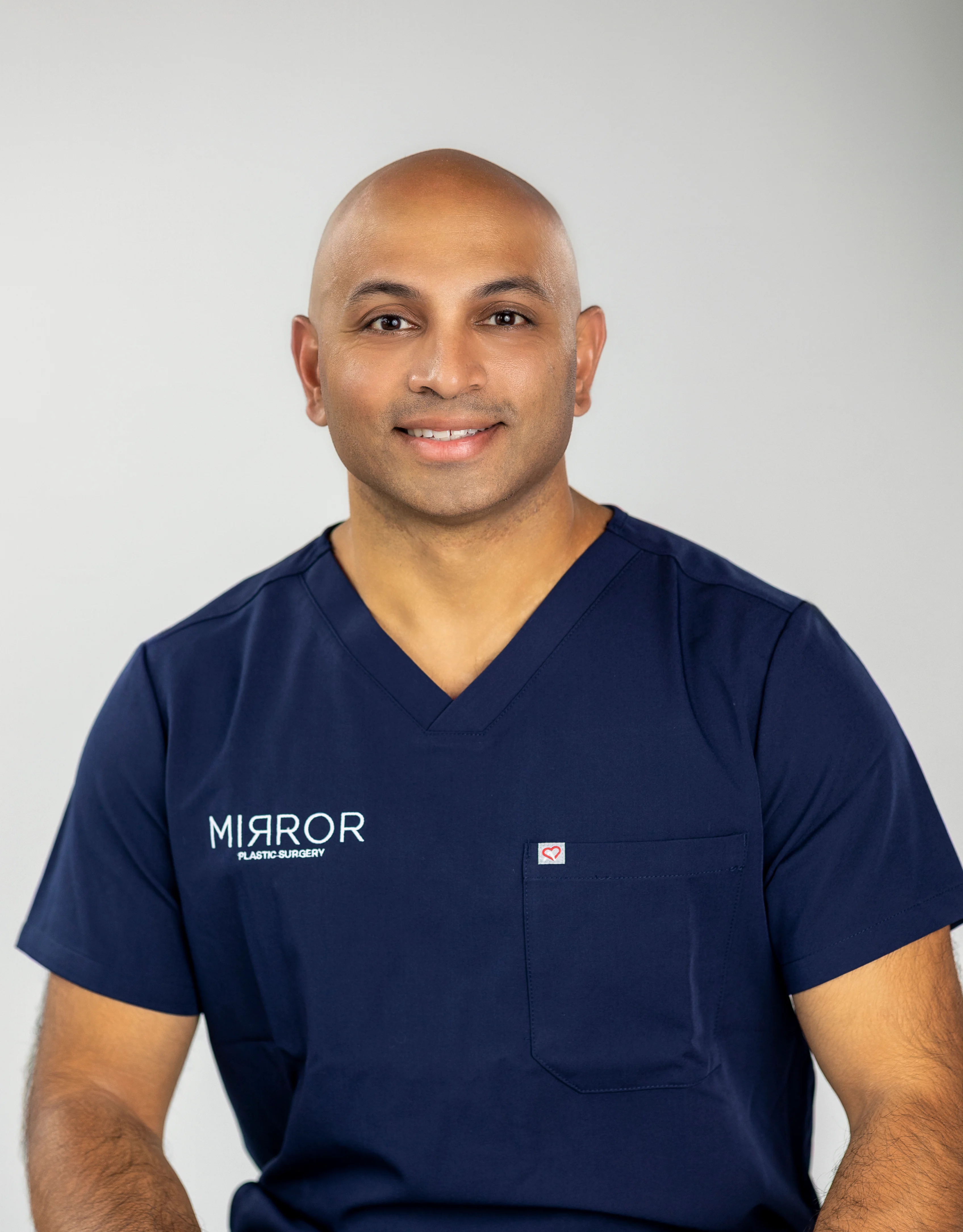
Dr. Akash Chandawarkar’s credentials represent the highest standard of injector qualification available:
- Harvard-educated physician and Johns Hopkins-trained plastic surgeon
- Fellowship in aesthetic surgery at Manhattan Eye Ear & Throat Hospital / Lenox Hill Hospital
- Medical innovation training at Stanford University
- Board certified by the American Board of Plastic Surgery
- Advisory board member for Merz Aesthetics (Radiesse) and Tiger Aesthetics (AlloClae)
- Personally performs every injection at Mirror Plastic Surgery, with no delegation to less-experienced providers
As Dr. Akash puts it: “The safest filler is the one placed by a surgeon who knows exactly where to inject, and where to avoid.”
This approach contrasts sharply with high-volume “mill” clinics where injections may be delegated to less-experienced providers and consultations are measured in minutes rather than the hour Mirror Plastic Surgery dedicates to each patient.
Schedule your consultation with Ellie and experience the difference that board-certified surgical expertise makes from the very first appointment.
Potential Risks And How To Mitigate Them
Even with the best injector, no filler is risk-free. Here is what you should know about potential complications and how they are managed. Honest communication about risks is a core part of Mirror Plastic Surgery’s philosophy. Common minor adverse events include bruising and swelling, and bruising is particularly frequent in highly vascularized regions such as the perioral and periorbital areas, while swelling is amplified by HA’s hydrophilic nature.
The most serious complication is vascular occlusion, which occurs when filler inadvertently enters or compresses a blood vessel. A large US retrospective cohort study found vascular occlusion rates of 1 in 6,410 syringes with needles versus 1 in 40,882 syringes with cannulas, with cannulas associated with 77.1% lower odds of occlusion. The risk is markedly higher in the glabella, forehead, and nose due to anastomoses with the ophthalmic artery, which can lead to skin necrosis or permanent vision loss.
For HA fillers, vascular occlusion has a treatment protocol that relies on immediate high-dose hyaluronidase, as noted earlier. For non-HA fillers, no such antidote exists. Mirror Plastic Surgery maintains comprehensive emergency protocols, keeps in-date hyaluronidase on premises, and documents escalation pathways. This infrastructure separates a prepared clinical environment from an unprepared one.
The risk of gel migration or facial overfill syndrome is not inherent to HA filler products but is linked to inadequate anatomical knowledge, suboptimal injection technique, or inappropriate patient selection and counseling. At Mirror Plastic Surgery, the safety-first philosophy of safety, then function, then aesthetics means these risks are addressed before a single syringe is opened.
Questions To Ask Before Getting Fillers
Use this checklist in any consultation, including your first appointment with Dr. Akash:
- Are you a board-certified plastic surgeon or dermatologist?
- How many filler injections have you performed, and in which areas?
- What type of filler do you recommend for my specific area and why?
- What are the risks, and how do you manage complications on-site?
- Do you have hyaluronidase on premises and a written vascular occlusion protocol?
- Can you show me before-and-after photos of similar cases?
- What is your approach to natural-looking results, and how do you avoid overfilling?
Frequently Asked Questions
What Is The Least Toxic Dermal Filler?
Hyaluronic acid fillers are considered the safest and least toxic category of dermal fillers. HA is a molecule naturally produced by the body, so the immune system recognizes it and allergic reactions are extremely rare. As noted earlier, HA fillers are also fully reversible with hyaluronidase, which allows direct management of complications. Non-HA fillers like calcium hydroxylapatite and poly-L-lactic acid are biocompatible but cannot be dissolved, which makes complication management more complex. Permanent fillers carry the highest long-term risk profile and are generally not recommended for most facial aesthetic indications.
Are Dermal Fillers Safer Than Botox?
Both dermal fillers and Botox (a neuromodulator) are safe when a qualified, experienced provider administers them, but they carry different risk profiles because they work differently. Botox temporarily relaxes muscles to reduce dynamic wrinkles, and its risks include bruising, headache, and temporary asymmetry. Dermal fillers add volume and structure, and their most serious risk is vascular occlusion, which is rare but requires immediate management. The two treatments are often complementary rather than competing, and a board-certified plastic surgeon can advise which is appropriate for your specific concerns.
What Is The Safest Filler For Lips?
Soft, flexible hyaluronic acid fillers are the safest choice for lips. Products like Restylane Silk, Restylane Kysse, and Juvéderm Volbella XC are specifically FDA-approved for lip augmentation and are formulated with lower firmness to move naturally with the lips. Permanent or semi-permanent fillers are inappropriate for the lip area due to the high risk of migration and irreversible distortion. The injector’s technique, including conservative volume, precise placement, and a natural-looking goal, is equally important to product selection.
What Is The Safest Filler For Under-Eyes?
The under-eye (tear trough) area requires the softest, most precisely placed HA fillers available. Restylane Eyelight, the only filler with an FDA approval specifically for infraorbital hollowing that included formal vision monitoring in its clinical trial, and Belotero Balance, approved for the same indication, are the most appropriate options. This is one of the highest-risk facial zones due to thin skin, complex vascularity, and proximity to the eye. Treatment should only be performed by an injector with deep anatomical expertise and a clear complication management protocol.
Can Dermal Fillers Be Reversed?
Hyaluronic acid fillers can be dissolved with hyaluronidase, an enzyme that breaks down HA. This reversibility is the defining safety advantage of HA fillers over all other filler categories and can address unsatisfactory results, migration, nodules, the Tyndall effect, and, most critically, vascular occlusion. Non-HA fillers such as Radiesse (calcium hydroxylapatite) and Sculptra (poly-L-lactic acid) are not reversible with an enzyme and must biodegrade naturally over time. Permanent fillers are not reversible at all, which is why they carry the highest long-term risk profile.
Choose Safety First With Mirror Plastic Surgery
The safest dermal filler is usually an HA filler, but that is only the first part of the equation. Safety also depends on matching the right product to the right facial zone and, above all, on the expertise of the injector placing it. At Mirror Plastic Surgery, Dr. Akash Chandawarkar brings board-certified surgical training, advisory-board-level product knowledge, and a safety-first philosophy to every injection. Every consultation is comprehensive, every treatment plan is personalized, and every procedure is performed by Dr. Akash himself.
Mirror Plastic Surgery is located at 780 4th Ave S, St. Petersburg, FL 33701. Reach the team by phone or text at 727-361-6515 or by email at hello@mirrorplasticsurgery.com.
Start your journey with a consultation at Mirror Plastic Surgery and take the first step toward results that are safe, natural, and built to last.
Disclaimer: Results may vary from person to person. Editorial content, before and after images, and patient testimonials do not constitute a guarantee of specific results.
1 Results may vary from person to person. Editorial content, before and after images, and patient testimonials do not constitute a guarantee of specific results.


