
Written by: Dr. Akash Chandawarkar, Board Certified Plastic Surgeon, Mirror Plastic Surgery | Last updated: September 9, 2026
Key Takeaways
Here are the core points to keep in mind as you compare lip implants, fat transfer, and fillers.
- Surgical lip augmentation with implants or fat transfer delivers results lasting from five years to a lifetime, far outlasting temporary fillers that dissolve within 6–18 months.1
- Lip implants provide permanent, predictable volume in a single procedure, while fat transfer offers natural results using your own tissue with 50–70% long-term survival.1
- Recovery is quick for implants, with 1–2 days of swelling, and slightly longer for fat transfer at 1–2 weeks, and both procedures involve minimal pain managed by anesthesia.1
- Cost-per-year analysis favors surgical options over repeated filler sessions, so implants and fat transfer often become more economical for patients seeking lasting enhancement.
- Scheduling a consultation with Ellie at Mirror Plastic Surgery connects you with Dr. Akash Chandawarkar’s personalized assessment to determine which lip augmentation approach best fits your goals.
Why Surgical Lip Augmentation Outlasts Fillers
The main difference between surgery and fillers comes down to biology. Lip filler lasts 6 to 18 months as a cosmetic effect, with the median patient noticing meaningful fade between months 9 and 14. The lips move constantly from speaking, eating, and smiling, and this motion accelerates filler breakdown compared to less dynamic facial regions like the cheeks or jawline.
Surgical options behave differently. Lip implants are permanent devices that remain in place unless surgically removed. Fat transfer uses your own harvested fat, which becomes a permanent part of the facial structure once it establishes its own blood supply.
| Factor | Lip Implants | Fat Transfer | Fillers |
|---|---|---|---|
| Longevity | Permanent | 5+ years | 6–18 months |
| Procedure Time | ~30 minutes | 60–90 minutes | 15–30 minutes |
| Recovery | 1–2 days swelling | 1–2 weeks | Minimal downtime |
| Reversibility | Removable | Not reversible | Dissolvable |
Given these longevity differences, the next step is to look more closely at each surgical option, starting with lip implants.
Lip Implants: A One-Time, Permanent Volume Boost
Modern lip implants are made of soft, ultrasoft silicone, hand-carved to fit each patient’s anatomy, and placed through small incisions at the corners of the mouth under local anesthesia. The implant rests in a snug pocket, allowing patients to eat and talk the same day.
The value of lip implants centers on permanence, predictability, and cost spread over many years. The case for implants is strong on longevity and cost-per-year value, while still requiring thoughtful consideration of surgery and recovery.
Lip implants offer several advantages for patients who want a one-time solution. They provide permanent results with no ongoing maintenance and deliver predictable, consistent volume. The cost is concentrated in a single procedure rather than indefinite filler spending, and they are removable or modifiable through the same small incisions if needed.
Implants also involve trade-offs. They require surgery under anesthesia and carry a small risk of asymmetry or displacement. There is off-label use of silicone material for the lip specifically, as the FDA cleared silicone implants for chin, cheek, and nose, not the lip.
In a peer-reviewed series of 100 lip-augmentation patients, with 192 implants placed over roughly a decade, Dr. Robert J. Troell reported 97% patient satisfaction and an 8% overall complication rate, with implant asymmetry being the most common issue.1 Choosing an experienced, board-certified surgeon like Dr. Akash Chandawarkar plays a major role in keeping these risks low.
Fat Transfer (Lipofilling): A Soft, Natural-Feeling Option
Fat transfer harvests your own fat via gentle liposuction from the abdomen, thighs, or flanks, purifies it, and micro-injects it into the lips. Lip augmentation with fat transfer typically takes 60–90 minutes and is usually performed under local anesthesia. General anesthesia may be used when combined with other procedures. Some surgeons report shorter durations of 30–60 minutes, depending on the extent of treatment.
Typically 50–70% of injected fat survives long-term, with the remaining 30–50% naturally resorbed within the first 3 months.1 Once surviving fat establishes a blood supply, it behaves like permanent tissue. The lips are highly mobile structures with minimal deep tissue support, and constant movement can disrupt fragile new blood vessels growing into the graft, which contributes to higher resorption rates than in less mobile facial zones. Fat transfer results can last five years or more, and some patients choose touch-up grafting after 5–10 years as the face continues to age, although fat survival remains variable.1
Fat transfer appeals to patients who want a natural look and feel using their own tissue. It avoids foreign material, creates soft, blended volume, and offers a secondary benefit because liposuction contours the donor area. Comparative studies also show lower revision rates than injectable fillers.
There are also important considerations. Fat survival rates range from 15% to 83% across studies, so outcomes are less predictable than implants.1 The procedure requires two surgical sites, both donor and recipient. Results can change with significant weight fluctuations, and about 15% of facial fat grafting patients need a minor touch-up session at 6 months.1
Pain and Recovery: What to Expect After Each Option
Pain levels for surgical lip augmentation are usually mild to moderate, and anesthesia keeps you comfortable during the procedure. Most patients describe soreness rather than sharp pain.
For lip implants, recovery involves about 1–2 days of minor swelling or discomfort, and bruising is uncommon. Most patients can eat and talk the same day, and the final settled result appears over the next few weeks.
For fat transfer, swelling and bruising are most pronounced in the first 72 hours, and the initial recovery period commonly lasts 1–2 weeks. Desk-based workers usually return to work by the end of week one. The donor liposuction site sometimes bothers patients as much as the lip injection sites.
For fillers, downtime is minimal. Most patients resume normal activities right away, and swelling usually settles within 1–2 weeks.
Beyond recovery, the next priority is how natural your lips look once healing is complete.
Achieving Natural Results and Avoiding an Overfilled Look
Natural-looking lip augmentation depends more on the surgeon’s eye and technique than on the specific method. Fat grafting often feels and looks very natural because it uses the patient’s own tissue, although skilled implant placement can also look subtle and harmonious when matched to your anatomy and goals.
A balanced lip result follows the golden ratio of roughly 1:1.62, with the lower lip slightly fuller than the upper, to create a youthful and natural appearance instead of an overfilled look. Dr. Akash applies this principle within a holistic, full-face assessment so your lips harmonize with surrounding features rather than dominate them. His hour-long consultations support a detailed, top-to-bottom evaluation that high-volume practices rarely provide.
Schedule a consultation with Ellie to receive Dr. Akash’s personalized guidance on which approach best fits your facial anatomy.
Cost Considerations: Weighing Upfront Price Against Longevity
Surgical lip augmentation usually costs more upfront than fillers, yet its longevity changes the cost-per-year picture. Exact pricing depends on your anatomy and treatment plan and is reviewed during your consultation, but the comparison remains straightforward.
- Fillers: Patients who need multiple syringes each year can spend thousands of dollars annually. Over five years, that often means 5–10 separate treatment sessions.
- Lip implants: A one-time cost for permanent results. Even when you factor in the 8% revision rate reported in published series, the cost-per-year drops significantly over time.
- Fat transfer: A single procedure typically provides results for 5 or more years, with around 15% of patients needing a minor touch-up at 6 months.
The best financial choice aligns with your anatomy, lifestyle, and long-term goals rather than focusing only on the lowest initial price.
Why Choose Mirror Plastic Surgery for Lip Augmentation
Dr. Akash Chandawarkar is a Harvard-educated, Johns Hopkins-trained, board-certified plastic surgeon with fellowship training in aesthetic surgery at Manhattan Eye Ear & Throat Hospital (MEETH)/Lenox Hill Hospital and medical innovation training at Stanford University. He serves on the advisory boards of Merz Aesthetics and Tiger Aesthetics, which helps keep his recommendations evidence-based and supplier-neutral.
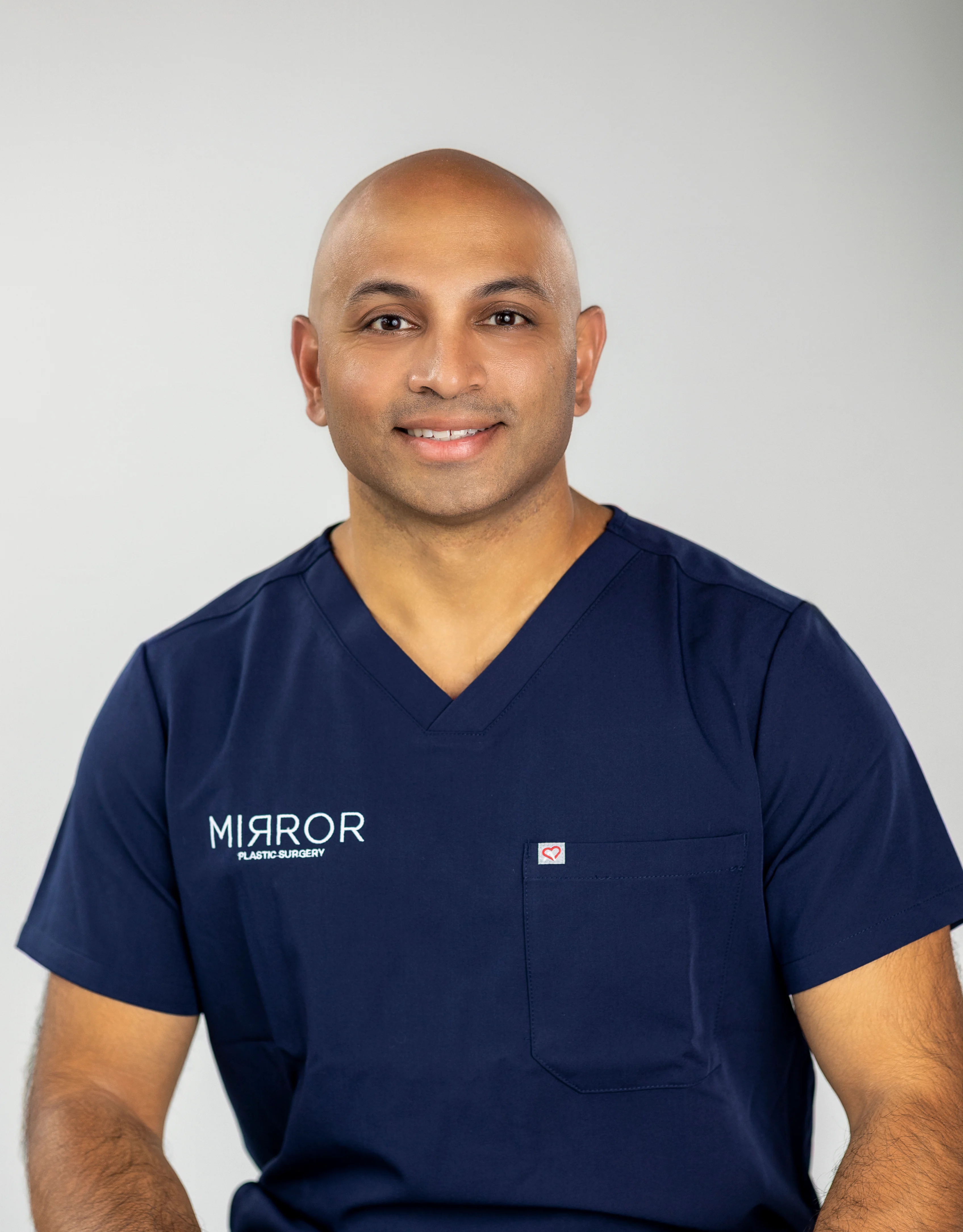
Mirror Plastic Surgery limits itself to one to two surgeries per day, and consultations can run up to an hour. The practice’s guiding principle, safety first, function second, aesthetics third, means Dr. Akash will advise against a procedure when it does not serve your best interest, even when that means recommending patience over surgery. Mirror Plastic Surgery dedicates the time needed to understand your goals, assess your anatomy, and recommend the right procedure for your situation, which sets the practice apart from high-volume clinics.
Start your journey with a consultation at Mirror Plastic Surgery to explore lasting, natural-looking lip enhancement with a surgeon who prioritizes your well-being.
Frequently Asked Questions
How Long Do Lip Implants Last?
Lip implants are permanent. Made of soft, biocompatible silicone and hand-carved to fit individual anatomy, they remain in place unless surgically removed or exchanged. Published data report high patient satisfaction, with a small percentage of patients requiring revision for asymmetry or displacement. Unlike ePTFE-based implants that integrate with tissue, silicone lip implants do not grow into surrounding tissue, which keeps them repositionable or fully removable through the original small incisions if needed.
Is Fat Transfer to the Lips Permanent?
Fat transfer results are long-lasting but not permanent in the same way as implants. A portion of the injected fat survives once it establishes a blood supply and then behaves like natural tissue, while the rest is reabsorbed in the first few months. Because some resorption is unpredictable, especially in the highly mobile lip area, results often last five years or more, and some patients benefit from a touch-up session around the 6-month mark. Results can also shift with significant weight changes, since surviving fat responds to the body’s overall fat metabolism.
What Is the Recovery Time for Lip Augmentation Surgery?
Lip implant recovery typically involves 1–2 days of minor swelling, with final results settling over a few weeks. Return-to-work timing varies by patient and job demands. Fat transfer recovery is longer, with swelling and bruising peaking in the first 72 hours, most patients returning to desk work within 5–7 days, and final results stabilizing at about 6 months as surviving fat settles and swelling resolves. Both procedures use anesthesia during the operation, so discomfort is managed from the start.
How Painful Is Lip Augmentation?
Pain is usually mild to moderate for both surgical options. Lip implant placement involves 1–2 days of minor discomfort that most patients control with over-the-counter pain relief, and bruising is uncommon. Fat transfer causes mild discomfort at both the donor liposuction site and the lips, and many patients notice the donor area more. Anesthesia keeps you comfortable during the procedure itself. Fillers involve brief injection discomfort, with mild swelling and bruising that usually resolve within a few days.
Will Lip Augmentation Look Natural?
Lip augmentation can look very natural when performed by an experienced surgeon who prioritizes facial harmony over sheer volume. Fat transfer often feels most natural because it uses your own tissue and blends with surrounding structures. Skilled implant placement can also look subtle when the surgeon respects anatomical proportions, including the golden ratio of approximately 1:1.62, where the lower lip is slightly fuller than the upper. Dr. Akash’s holistic, full-face approach evaluates the lips within the entire facial profile, which helps prevent the overdone appearance that comes from isolated, high-volume augmentation.
How Does Lip Augmentation Surgery Compare to Fillers?
Surgical options, including implants and fat transfer, offer results lasting from five years to a lifetime, while fillers require maintenance every 6–18 months. Surgery involves higher upfront costs and longer recovery but often becomes cost-effective over time compared with the cumulative expense of repeated filler treatments. Fillers provide reversibility and minimal downtime, which makes them a lower-commitment starting point. Many patients use fillers first to preview their desired result before committing to a surgical option, and Dr. Akash supports this approach as part of an informed, patient-led decision.
Conclusion: Choosing the Right Path for Your Lips
The choice between implants, fat transfer, and fillers comes down to how you balance permanence, flexibility, recovery, and cost over time. Lip implants suit patients who want predictable, one-time volume with permanent results. Fat transfer appeals to those who value a soft, natural feel using their own tissue and accept some variability. Fillers remain a reversible, low-commitment option that works well for testing a look or maintaining subtle changes with periodic visits.
Mirror Plastic Surgery combines surgical expertise, concierge-level care, and evidence-based guidance to support this decision. Dr. Akash offers an honest, unbiased assessment and will recommend against surgery when it does not align with your needs.
Contact Mirror Plastic Surgery today to schedule your consultation and take the first step toward lasting, natural-looking lip enhancement.
- Phone: 727-361-6515
- Email: hello@mirrorplasticsurgery.com
- Address: 780 4th Ave S, St. Petersburg, FL 33701
- Instagram: @mirrorplasticsurgery | @dr.akashplasticsurgery | @perfectlyplastics
Arrange a consultation with Ellie and take the first step toward a decision you can feel confident about for years.
Disclaimer: Results may vary from person to person. Editorial content, before and after images, and patient testimonials do not constitute a guarantee of specific results.
1 Results may vary from person to person. Editorial content, before and after images, and patient testimonials do not constitute a guarantee of specific results.