

Written by: Dr. Akash Chandawarkar, Board Certified Plastic Surgeon, Mirror Plastic Surgery | Last updated: September 9, 2026
Key Takeaways
- Overfilled results usually come from the wrong filler choice, dosing, or provider, rather than from fillers themselves.
- Knowing the two main filler categories, hyaluronic acid and biostimulatory, plus G-prime, helps match products to each facial area.
- Conservative starting volumes vary by zone: 0.5–1 syringe for lips, 1–2 per side for cheeks, and 0.25–0.5 per side for tear troughs.
- Board-certified plastic surgeons with deep anatomical expertise, such as Dr. Akash at Mirror Plastic Surgery, greatly reduce the risk of migration or an overfilled look.
- Schedule a personalized consultation at Mirror Plastic Surgery to receive a safe, anatomy-driven filler plan tailored to your goals.
Step 1: Learn the Two Main Categories of Dermal Fillers
Different fillers behave differently in tissue, so category choice affects safety, reversibility, and results. Hyaluronic acid (HA) fillers are the most commonly used and can be dissolved if needed. They suit patients who want flexibility and a reversible starting point.
Biostimulatory fillers (brands include Radiesse and Evolysse) work differently. They provide immediate structural support and also stimulate your own collagen production over time.1 Calcium hydroxylapatite (CaHA/Radiesse) fillers are not dissolvable with any readily available enzyme such as hyaluronidase, so CaHA-related complications rely more heavily on prevention, supportive care, and, in select cases, mechanical removal. This difference becomes especially important for first-time treatments.
Within each category, a property called G-prime (G′) describes how firm or soft a filler feels and how it behaves in motion. Higher G′ indicates a firmer, more structural gel suited to deeper placement and stronger lift, while lower G′ indicates a softer, more deformable gel better suited to superficial areas.1 The table below shows how filler category and G-prime relate to common treatment areas so you can see which products typically fit each zone.
| Product Category | Example Brands | Key Property | Typical Use |
|---|---|---|---|
| Hyaluronic Acid — High G′ | Juvederm Voluma, Restylane Lyft | Firm, structural, resists deformation | Deep cheek lift, chin, jawline definition |
| Hyaluronic Acid — Low G′ | RHA 2, Restylane Silk, Versa | Soft, malleable, adapts to dynamic movement | Lips, superficial lines, tear troughs |
| Biostimulatory — CaHA | Radiesse, Evolysse | Structural support plus collagen stimulation, not enzymatically reversible | Cheeks, jawline, non-surgical body contouring |
Step 2: Use Typical Starting Amounts by Facial Area
Most patients want to know how many syringes they will need. The answer depends on your anatomy, age, skin quality, tissue depth, and goals. Dermal fillers are the most commonly performed aesthetic procedure in the United States, with over 4.3 million treatments recorded annually, yet volume needs still vary dramatically from person to person.
The ranges below give conservative starting points for first-time patients. They guide planning rather than set a fixed amount for one visit.
- Lips: 0.5–1 syringe of soft HA filler, with new patients rarely receiving more than one syringe in a single visit.
- Cheeks: 1–2 syringes per side of thicker HA or biostimulatory filler, often built over several sessions.
- Under-Eyes (Tear Troughs): 0.25–0.5 syringe per side, with a very cautious approach because this area shows even small changes.
- Jawline/Chin: 1–2 syringes of firm HA or biostimulatory filler, adjusted to the projection you want.
- Nasolabial Folds: 0.5–1 syringe per area, although cheek support often softens folds more effectively than direct filling.
Two syringes of filler represent a moderate amount. When placed thoughtfully across several facial zones, two syringes can create a subtle, refreshed change. When placed in a single area, especially lips or cheeks, that same volume becomes significant and calls for careful planning. A staged approach that spreads treatment across two visits allows swelling to settle and helps avoid overcorrection. At Mirror Plastic Surgery, Dr. Akash usually builds full-face results over two or three sessions for new patients and reassesses at each step.
Step 3: Match Filler Type to Your Specific Anatomy
Filler choice should follow your anatomy and movement patterns, not brand popularity. Dermal fillers vary in rheology, integration, projection capacity, and intended use. A filler chosen for deep structural support, for example, is not automatically right for a mobile, superficial area like the lips.
Use this area-by-area guide to think about consistency and placement.
- Lips: Soft, low-G′ HA that moves naturally with speech and expression and avoids stiffness or visible product.
- Cheeks: Firm, high-G′ HA or biostimulatory filler placed deep against bone to create lift and projection.
- Under-Eyes: Very thin, low-G′ HA to reduce the risk of the Tyndall effect, a bluish hue that appears when filler sits too close to the surface.
- Jawline: High-G′ filler that holds shape and stands up to chewing and frequent movement.
A strong chin can make a nose appear smaller without touching the nose, and lateral cheek support can smooth the lower-face transition more effectively than filling nasolabial folds directly.1 During consultation, Dr. Akash evaluates the entire face and selects products for each zone before opening any syringes.
Step 4: Choose a Provider With Deep Anatomical Expertise
The injector’s anatomical training plays the biggest role in avoiding an overfilled or distorted look. The risk of gel migration or facial overfilled syndrome relates to mismatched product choice, poor technique, or inappropriate patient selection and counseling. Thoughtful planning and precise placement protect your result.
Board-certified plastic surgeons understand tissue planes, blood vessels, and three-dimensional facial structure at a surgical level. Dr. Akash Chandawarkar is Harvard-educated, Johns Hopkins-trained, and completed a fellowship in aesthetic surgery at the Manhattan Eye Ear & Throat Hospital (MEETH)/Lenox Hill Hospital. He serves on advisory boards for Merz Aesthetics (Radiesse) and Tiger Aesthetics (AlloClae), which keeps him closely involved with injectable advances. At Mirror Plastic Surgery, he personally performs every injection.
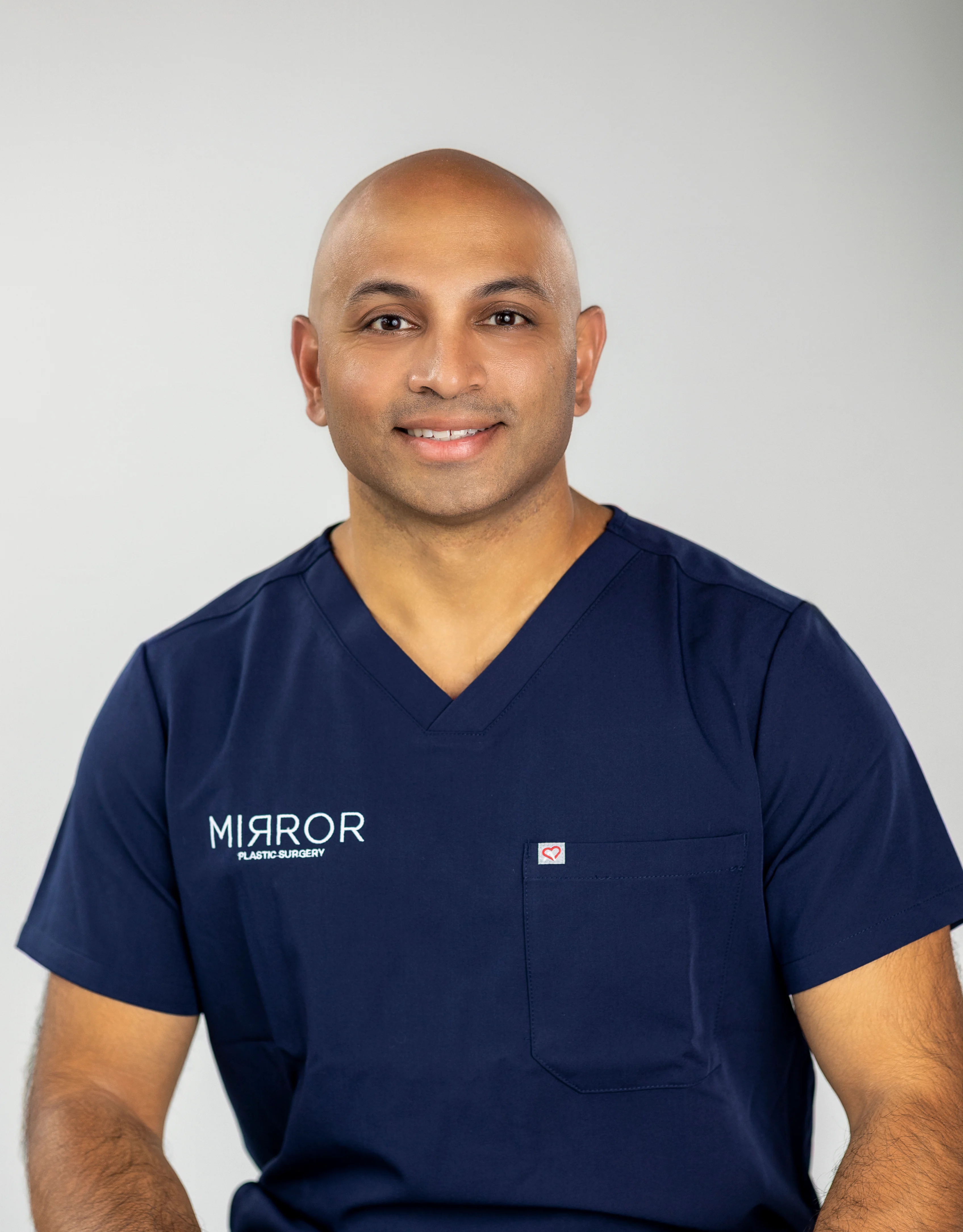
Consultations at Mirror Plastic Surgery often last up to an hour so patients can discuss goals, options, and alternatives in detail. Dr. Akash frequently advises patients to delay or skip an expensive service when it does not serve their long-term outcome, an honesty that builds lasting trust. The most elegant filler results usually look like better sleep, balanced proportions, and quiet refinement rather than obvious “work.”
Schedule a consultation with Ellie at Mirror Plastic Surgery to review your filler options in person. You can also reach the practice by phone at 727-361-6515 or by email at hello@mirrorplasticsurgery.com.
Essential Safety, Reversibility, and Misconceptions
“Pillow face” and migration usually follow specific, preventable errors in planning or technique. Facial overfilled syndrome often involves mismatched filler properties, practitioner misjudgment, and patient body image concerns amplified by social media. Knowing how reversibility works helps you choose products confidently.
HA fillers are reversible. Hyaluronic acid fillers can be reversed almost instantly by injecting hyaluronidase, with visible reduction often seen within minutes and full effect within 24–48 hours. This feature makes HA an excellent starting point for patients exploring new proportions.
Biostimulatory fillers are not enzymatically reversible. CaHA-related complications rely more on prevention, supportive care, and, in select cases, mechanical removal through surgery, because no enzyme can dissolve these particles. Careful product selection and conservative dosing become especially important when using them.
Anatomy, technique, indication, and patient selection drive long-term safety more than brand names. Every patient at Mirror Plastic Surgery receives FDA-approved products placed by a board-certified plastic surgeon, with emergency protocols and reversal agents available on-site.
Frequently Asked Questions
Is 2 Syringes of Filler a Lot?
The impact of two syringes depends on where they go, which product you use, and your starting anatomy. Two syringes spread across areas such as cheeks and jawline can look subtle and refreshed. The same amount placed only in the lips during one visit, especially for a first-time patient, usually feels excessive to experienced injectors. At Mirror Plastic Surgery, Dr. Akash prefers to build volume gradually and reassess between sessions.
What Type of Dermal Filler Is Best for My Area?
The ideal filler varies by area and tissue behavior. Lips do best with soft, low-G′ HA that moves with expression. Cheeks and jawline benefit from firmer, higher-G′ HA or biostimulatory fillers placed deep for structure. Tear troughs require very thin, low-G′ HA to reduce visibility and discoloration. Biostimulatory fillers such as Radiesse suit areas where longer-lasting support and collagen stimulation are priorities. A full-face assessment that considers tissue depth, mobility, and skin quality determines the right product for you.
Can Too Much Filler Make You Look Older?
Excess filler can age the face by distorting natural contours. Youthful faces show defined cheekbones, a smooth lid-cheek transition, and a balanced jawline. Overfilling the cheeks can flatten the midface, push tissue downward, and create heaviness that reads as older rather than younger. Facial overfilled syndrome often includes puffiness, hollow temples, and reduced mobility, which all add apparent age. Thoughtful filler treatment aims to restore lost structure instead of simply adding volume.
How Long Does Filler Last?
Longevity depends on product type, placement depth, and your metabolism. HA fillers usually last 6–18 months.1 Softer gels in high-movement areas like lips fade faster than firmer products placed deep in the cheeks. Biostimulatory fillers such as Radiesse often last 12–18 months, and some patients notice collagen benefits that outlast the filler itself.1 No FDA-approved filler is permanent, so a maintenance plan discussed during consultation keeps results consistent.
Can Filler Be Reversed If I Do Not Like It?
As noted earlier, HA fillers are reversible with hyaluronidase and usually show improvement within a day or two. Highly cross-linked structural HA may need more than one session to fully dissolve. Biostimulatory fillers such as Radiesse do not dissolve with enzymes, and the body clears them gradually over 12–18 months. Many patients new to filler start with reversible HA before considering longer-lasting options.
How Do I Know If My Injector Is Qualified?
Look for board certification in plastic surgery, not just a medical license. A board-certified plastic surgeon brings advanced knowledge of tissue planes, vascular anatomy, and facial structure to every injection. Ask for before-and-after photos of patients with similar features and concerns. Confirm that the practice keeps hyaluronidase on-site and follows written emergency protocols. A qualified provider explains product choices clearly and will recommend against treatment when it does not serve your best interest.
Your Roadmap to Natural, Balanced Results
Safe filler treatment rests on a few key choices: understanding filler categories and properties, using conservative starting ranges by area, matching product consistency to your anatomy, and working with a provider who has deep anatomical expertise and welcomes detailed questions.
Mirror Plastic Surgery follows the same rigor used in surgical care, with safety first, function second, and aesthetics third. Dr. Akash Chandawarkar brings Harvard and Johns Hopkins training, a MEETH aesthetic fellowship, and advisory roles with leading filler manufacturers to every consultation. He performs all injections himself, spends up to an hour with each patient, and will tell you honestly when a treatment can wait.
If you are ready to find out what your face truly needs, schedule a consultation with Ellie at Mirror Plastic Surgery. Call or text 727-361-6515 or email hello@mirrorplasticsurgery.com for more information.
*Disclaimer: Results may vary from person to person. Editorial content, before and after images, and patient testimonials do not constitute a guarantee of specific results.
1 Results may vary from person to person. Editorial content, before and after images, and patient testimonials do not constitute a guarantee of specific results.


