Written by: Dr. Akash Chandawarkar, Board Certified Plastic Surgeon, Mirror Plastic Surgery | Last updated: September 9, 2026
Why Patients Are Asking About Biostimulatory Fillers
More patients now want subtle, natural-looking rejuvenation instead of dramatic volume changes. Dermal biostimulatory fillers support that goal by encouraging your own collagen production rather than simply adding gel-based volume.
What Are Dermal Biostimulatory Fillers?
Dermal biostimulatory fillers are injectable treatments that prompt your body to create new collagen and improve skin quality over time. The process, called neocollagenesis, occurs when microscopic particles in the injectable trigger a controlled inflammatory response. This response recruits fibroblasts, which then build new collagen and elastin in the dermis. Extracellular matrix content can increase up to 1,000% by 60 days after treatment, with continued stabilization through 120 days.
Results appear gradually over weeks to months as your body builds new tissue.1 This differs from traditional fillers, which provide immediate volume. Biostimulatory fillers cannot be dissolved if you dislike the outcome. There is no antidote to dissolve poly-L-lactic acid, and no enzymatic reversal exists for calcium hydroxylapatite. That non-reversibility makes provider selection a clinical necessity and places a premium on experience and anatomical expertise.
Types Of Biostimulatory Fillers: Sculptra Vs. Radiesse
Two FDA-approved biostimulatory fillers are currently available in the United States. The table below compares them across key clinical features.
Sculptra often works well for diffuse volume loss and skin quality improvement across larger facial areas such as the cheeks and temples. Radiesse offers immediate structural support combined with collagen stimulation. This makes it well-suited for deeper wrinkles, jawline definition, and hand rejuvenation. Dr. Akash serves as an advisory board member for Merz Aesthetics, the manufacturer of Radiesse, which gives him direct insight into product safety data and evolving clinical protocols.
Polycaprolactone (PCL) fillers represent an emerging category internationally. PCL-based fillers can stimulate type I and III collagen and may provide aesthetic improvements lasting up to 4 years in some contexts, potentially exceeding both Sculptra and Radiesse in longevity. PCL fillers are not yet FDA-approved for aesthetic use in the United States, and their use here remains off-label.
Biostimulatory Fillers Vs. Traditional Fillers
Traditional fillers are best suited for immediate, reversible, contour-specific structural changes, especially when precise correction, deep support, or reversibility matter clinically. They can be dissolved with hyaluronidase if a correction is needed. Most last 6–18 months, depending on the product and treatment area. Patients who want targeted, immediate results or feel unsure about long-term commitment often do well with traditional fillers.
Biostimulators such as CaHA and PLLA are more appropriate when diffuse tissue quality deterioration, skin thinning, or generalized laxity are the main concerns. They work through delayed collagen-mediated remodeling and provide the longer longevity described earlier, without reversibility. Patients who care most about overall skin quality and gradual, natural change often prefer this category.
Some patients benefit from a combination approach. Traditional fillers can refine specific contours, while biostimulators rebuild the underlying tissue framework. Determining the right strategy requires individualized assessment. Dr. Akash’s philosophy focuses on restoring foundational facial structure first, then considering volume augmentation. This sequence helps avoid an overfilled appearance from isolated, single-area injections.
What To Expect During Treatment, Recovery, And Results
At Mirror Plastic Surgery, every biostimulatory filler treatment starts with a comprehensive top-to-bottom consultation that can last up to an hour. During this visit, Dr. Akash evaluates facial anatomy, skin quality, volume distribution, and long-term aesthetic goals. He personally performs all injections and applies a board-certified plastic surgeon’s understanding of subdermal anatomy to each treatment.
The treatment process follows a clear sequence:
- Comprehensive facial assessment and personalized treatment planning
- Topical numbing for comfort
- Precise injection using technique appropriate to the product and area
- Detailed aftercare instructions, including the post-treatment massage protocol for PLLA
Most patients require 2–3 sessions spaced 4–6 weeks apart for optimal collagen stimulation.1 Recovery is minimal, and swelling, redness, and bruising at injection sites usually resolve within a few days. Once recovery settles, results develop gradually, with early changes at 6–8 weeks and full results at 3–6 months.1 Maintenance sessions help sustain the effect over time.
Plan your treatment timeline with a personalized, anatomy-based consultation.
Cost And Value Of Biostimulatory Fillers
Biostimulator treatment costs depend on the number of sessions, product volume, treatment areas, and provider qualifications. Mirror Plastic Surgery provides personalized quotes during consultation. Each plan reflects the actual scope of care rather than a preset package.
Biostimulators often carry higher upfront costs than traditional fillers. Their extended longevity can make them comparable or more economical over time when viewed on a cost-per-month basis. On a cost-per-month-of-result basis, Sculptra is often comparable to or less expensive than traditional filler maintenance over a multi-year period.
Mirror Plastic Surgery is a supplier-neutral practice. Recommendations reflect what is clinically appropriate for each patient, not product quotas or commissions. Providers who under-treat with fewer vials than indicated to reduce cost can create disappointing results and higher long-term expense through extra touch-up sessions. Honest, anatomy-driven planning helps avoid that pattern.
Safety, Side Effects, And Risks
Biostimulatory fillers have predictable, short-term side effects and a small risk of more serious complications. Common effects include swelling, bruising, redness, and tenderness at injection sites. These usually resolve within a few days to a week.
Rare but serious complications include nodule formation, granulomas, and vascular occlusion:
- Nodule formation: In the FDA approval study for Sculptra Aesthetic, 17.2% of Sculptra-treated subjects developed nodules and/or papules. Modern high-dilution, long-hydration protocols and correct injection depth have significantly reduced this rate. For Radiesse, clinical studies of hand augmentation reported nodules in 12% of patients, which can last up to 1 year.
- Granulomas: True inflammatory granulomas from PLLA are rare, with incidence around 0.01% to 0.1%. Management usually involves staged treatment with intralesional corticosteroids and, in resistant cases, combination therapy.
- Vascular occlusion: Vascular occlusion is a recognized severe complication of facial fillers, with reported incidences below 0.1%, and requires urgent treatment. Because biostimulators cannot be reversed with hyaluronidase, prevention through precise anatomical technique is the main safeguard.
Before choosing any provider for biostimulatory fillers, patients can ask targeted questions:
- What specific training and experience do you have with biostimulatory fillers?
- What protocols do you use to manage complications, including vascular occlusion?
- How do you prioritize safety when a treatment cannot be reversed?
Dr. Akash’s surgical background and advisory board roles support expertise in both prevention and management of complications that many generic med spa providers do not offer.
Who Is A Good Candidate For Biostimulatory Fillers?
Good candidates typically have mild to moderate volume loss, skin laxity, or thinning skin and want gradual, natural-looking improvement. They are comfortable committing to a series of treatments to support long-term results. Biostimulators can work very well for older patients, but plans must match skin quality, overall health, and aesthetic goals.
Biostimulators are not appropriate for patients who are pregnant or breastfeeding, have active skin infections or open wounds in the treatment area, have known hypersensitivity to product components, or have autoimmune conditions or take immunosuppressive medications without individual assessment. In addition, Radiesse is contraindicated in patients with severe allergies, a history of anaphylaxis, or bleeding disorders.
Mirror Plastic Surgery’s comprehensive top-to-bottom evaluation is designed to determine candidacy with precision. Dr. Akash focuses first on restoring foundational facial structure so that any volume augmentation builds on a stable anatomical base rather than masking underlying issues.
Request a candidacy evaluation with a board-certified plastic surgeon.
Why Choose Mirror Plastic Surgery For Biostimulatory Fillers?
Mirror Plastic Surgery is a concierge medicine practice serving the St. Petersburg and Tampa Bay area. Its approach follows a clear hierarchy: safety first, function second, aesthetics third. Dr. Akash Chandawarkar is a Harvard-educated physician, a Johns Hopkins-trained plastic surgeon, fellowship-trained in aesthetic surgery at the Manhattan Eye Ear & Throat Hospital and Lenox Hill Hospital, and board-certified by the American Board of Plastic Surgery. He holds advisory board positions with Merz Aesthetics (Radiesse) and Tiger Aesthetics, which provides direct access to product safety data and emerging clinical evidence.
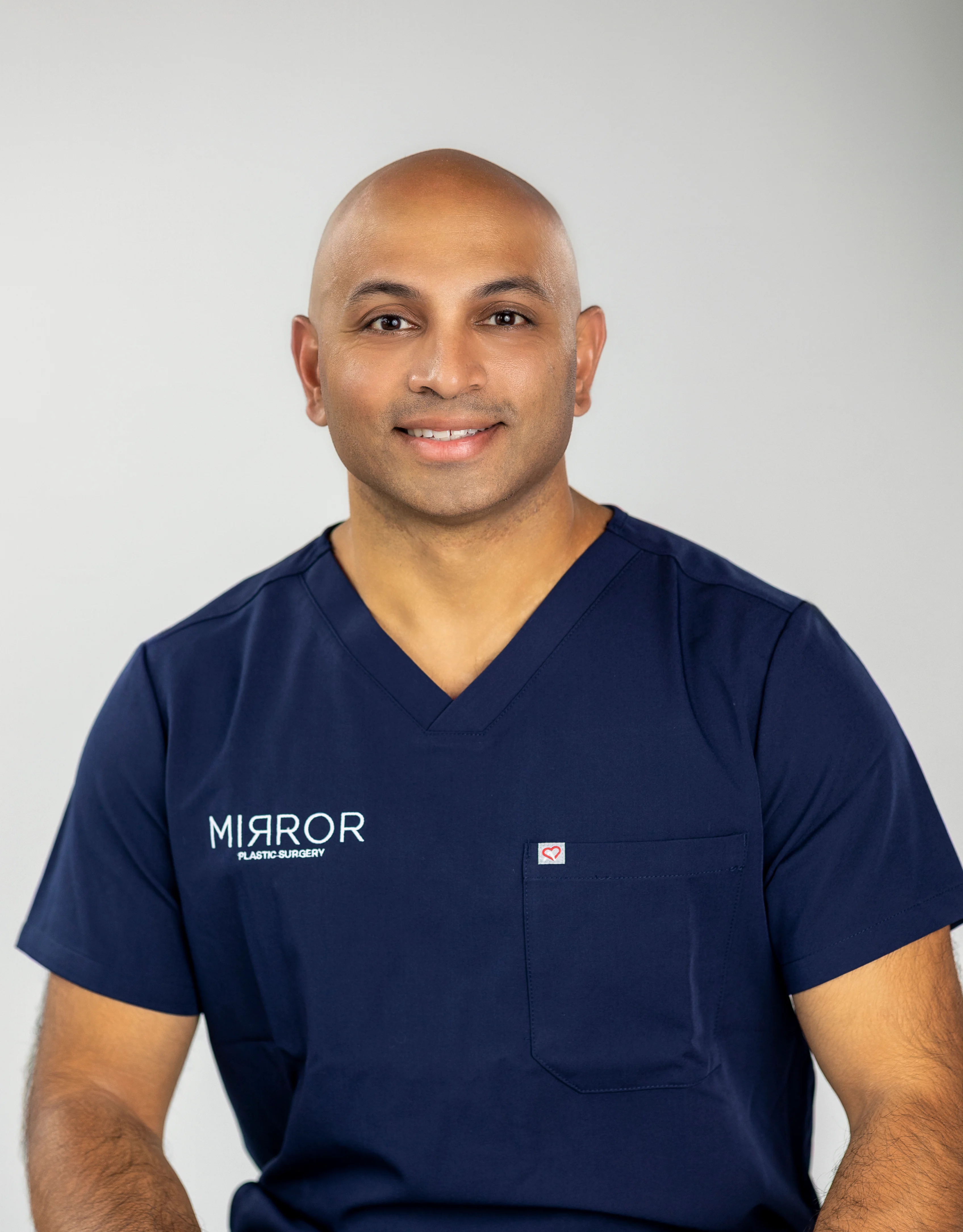
Every injectable treatment at Mirror Plastic Surgery is performed personally by Dr. Akash, not delegated to a nurse injector or aesthetician. This ensures that each biostimulatory filler is placed by a physician with a surgeon’s command of facial and subdermal anatomy. Consultations can run up to an hour, and treatment plans are built around each patient’s unique anatomy and long-term goals. To protect that standard, the practice limits itself to one to two surgical procedures per day, which helps ensure that no patient’s care feels rushed.
Mirror Plastic Surgery favors thoughtful, low-volume care over high-throughput models that emphasize speed and quotas. Recommendations focus on what is right for the patient, including advising that a treatment is not yet necessary when that aligns best with long-term aesthetic health.
Mirror Plastic Surgery is located at 780 4th Ave S, St. Petersburg, FL 33701. Patients can call or text 727-361-6515 or email hello@mirrorplasticsurgery.com to begin the process.
Frequently Asked Questions
How Long Do Biostimulatory Fillers Last?
Results typically last 18–24 months or longer, depending on the product, treatment area, and individual collagen response.1 Sculptra results can persist up to 2 years or more after a complete treatment series, while Radiesse usually lasts 12–18 months.1 Maintenance sessions, often one to two vials annually, can extend results. Because collagen remodeling is gradual, results continue to improve for several months after the final session before stabilizing.
Are Biostimulatory Fillers Safe?
When performed by a qualified, experienced provider, biostimulatory fillers have a well-established safety profile. Sculptra and Radiesse are FDA-approved for aesthetic use and supported by decades of clinical data. Common side effects such as swelling, bruising, and redness are temporary. Rare complications, including nodule formation and vascular occlusion, are significantly reduced by proper technique, appropriate product dilution, and deep anatomical knowledge. Because these treatments are not reversible, the injector’s expertise becomes the most important safety factor.
What Is The Difference Between Sculptra And Radiesse?
Sculptra (poly-L-lactic acid, PLLA) works purely by stimulating collagen production without immediate volume. Results build over 3–6 months, which suits diffuse volume loss, skin thinning, and overall skin quality improvement across larger facial areas. Radiesse (calcium hydroxylapatite, CaHA) provides immediate structural lift through its gel carrier and also stimulates collagen. This profile makes it better for deeper wrinkles, jawline definition, and areas where visible improvement is desired right away. Both products usually require multiple sessions for best results.
Can Biostimulatory Fillers Be Dissolved If I Do Not Like The Results?
Biostimulatory fillers cannot be dissolved with hyaluronidase. Sculptra’s PLLA microparticles are slowly hydrolyzed and absorbed over roughly two to five years. Radiesse’s calcium hydroxylapatite particles also lack enzymatic reversal. Provider selection and a thorough pre-treatment consultation therefore play a central role. A board-certified plastic surgeon with surgical anatomical expertise and a conservative, patient-first philosophy is the appropriate choice for any non-reversible injectable treatment.
Are Biostimulatory Fillers Better Than Traditional Fillers?
Biostimulatory and traditional fillers serve different purposes. Biostimulators suit patients who want long-term skin quality improvement, gradual collagen rebuilding, and natural-looking results that develop over months. Traditional fillers work better for immediate, targeted volume correction in specific areas and for patients who value reversibility. Many patients benefit from a coordinated plan that uses both modalities. The right choice depends on individual anatomy, skin quality, goals, and candidacy, which requires comprehensive assessment by a qualified provider.
Conclusion: Build A Strong Foundation For Long-Term Skin Health
Dermal biostimulatory fillers offer a science-backed way to rejuvenate the face by working with your own biology instead of relying solely on added volume. Their gradual, collagen-building mechanism distinguishes them from traditional fillers and supports patients who prefer subtle, long-lasting change.
Their non-reversibility means injector expertise forms the foundation of a safe, satisfying outcome. Mirror Plastic Surgery’s concierge model, surgical-grade anatomical knowledge, supplier-neutral recommendations, and commitment to clear communication make it a trusted choice for patients in the Tampa Bay area who take long-term aesthetic health seriously.
Disclaimer: Results may vary from person to person. Editorial content, before and after images, and patient testimonials do not constitute a guarantee of specific results.
1 Results may vary from person to person. Editorial content, before and after images, and patient testimonials do not constitute a guarantee of specific results.