Written by: Dr. Akash Chandawarkar, Board Certified Plastic Surgeon, Mirror Plastic Surgery | Last updated: September 9, 2026
Key Takeaways
- Biostimulatory fillers like Sculptra and Radiesse stimulate your own collagen to gradually improve hip dip contour and skin quality. Sculptra gives no immediate volume, while Radiesse offers partial instant correction.1
- Results build over 3–6 months and usually last 12–24 months, depending on the product.1 Most patients need several sessions spaced weeks apart.
- The 2026 multicenter study of nearly 500 patients shows a strong safety profile when experienced clinicians follow modern protocols, with a 6.6% mild-to-moderate side effect rate and no serious adverse events.1
- Your anatomy, dip depth, and goals determine how many vials and sessions you need. Typical plans range from 4–12 or more vials across 2–3 sessions, so a personalized consultation is essential.
- Choosing a board-certified plastic surgeon with body-contouring experience is the key safety decision, because injector skill directly affects both safety and results.
How Biostimulatory Fillers Work For Hip Dips
Two biostimulatory fillers dominate clinical practice for hip dip correction: poly-L-lactic acid (PLLA), sold as Sculptra, and calcium hydroxylapatite (CaHA), sold as Radiesse. Both trigger neocollagenesis, the formation of new collagen, which leads to gradual volume and measurable improvements in skin quality and texture.
Sculptra works exclusively through collagen stimulation. Its PLLA microparticles are metabolized over 18–24 months and activate fibroblasts to produce new collagen, without any immediate volumizing effect. Radiesse provides a dual mechanism. Its carboxymethyl cellulose gel carrier delivers immediate structural volume, and its CaHA microspheres stimulate collagen and elastin production over the following months.
Off-Label Use Notice: Sculptra is FDA-approved (PMA P030050) for facial aesthetic use, and Radiesse is FDA-approved under PMA P050037 for correction of moderate-to-severe facial wrinkles and folds. Their use in hip dips is off-label in the United States. Off-label use is legal when performed by a licensed clinician and places full responsibility for patient selection, informed consent, and technique on the injector, which makes board-certified plastic surgeon oversight especially important.
Biostimulatory fillers are widely used for hip dip correction because they can improve contour, smooth cellulite, and soften the look of stretch marks. This popularity is backed by recent clinical evidence: a 2026 multicenter retrospective study in Aesthetic Surgery Journal Open Forum evaluated 498 subjects treated with PLLA across 9 US aesthetic clinics and found that the gluteal region was the most commonly treated nonfacial area, accounting for 60.3% of sessions, with hip dips representing 8.8% of all treatment sessions. These data show that hip dip treatment with PLLA is an established clinical practice.
Sculptra Vs. Radiesse For Hip Dips: How They Compare
The choice between Sculptra and Radiesse depends on your anatomy, your goals, and your injector’s clinical judgment. The table below outlines how they differ on key points.
Sculptra is often preferred for broader, diffuse volume improvement and overall skin quality enhancement across the lateral hip. Radiesse is often chosen when you want some immediate structural correction along with a collagen boost over time. At Mirror Plastic Surgery, Dr. Akash Chandawarkar evaluates each patient’s anatomy before recommending a product or combination protocol, because every hip dip pattern is different.
How Many Vials Of Sculptra For Hip Dips? A Range, Not A Number
Vial counts for hip dip fillers vary widely, and that variation reflects real anatomical differences between patients. The honest answer is that the number depends on several factors: the size and depth of the depression, the degree of asymmetry, the product chosen, and the outcome you want.
The 2026 multicenter retrospective study reported an average of 4.0 vials per treatment session, with a mean of 3.2 sessions per subject for nonfacial PLLA treatment. Hip dip treatments specifically used reconstitution volumes of 10–15 mL in 87.7% of sessions and 15 mL or more in 12.3%. These numbers show that most patients need several sessions rather than a single appointment.
Multiple sessions spaced several weeks apart are now the clinical standard. Trying to achieve full correction in one visit raises the risk of overcorrection and nodule formation. Modern Sculptra protocols for body contouring cap per-session volume and place product in the deep subcutaneous layer to reduce migration. A thorough consultation, not a fixed number from a blog post, is the only reliable way to plan your treatment.
Hip Dip Filler Results And Longevity
Sculptra does not create an immediate visible change after treatment. Most patients see early improvement at about 6–8 weeks, with full results settling 3–6 months after the final session1. Radiesse gives some instant structural correction from its gel carrier, and its collagen-stimulating effect builds over the same 3–6 month window.1
Longevity varies by product and by individual biology. The longevity figures noted earlier are typical, and maintenance sessions help sustain the outcome.1 Realistic expectations matter. Biostimulatory fillers can soften dips and improve skin quality, but they do not change your bone structure, so complete elimination of hip dips is not always possible.1
Safety Profile, Risks, And Side Effects
Safety sits at the center of any decision about hip dip fillers. You are choosing a non-reversible treatment that depends heavily on technique and anatomical knowledge.
The 2026 multicenter retrospective study of 498 subjects found that treatment-related adverse events were mild or moderate in only 6.6% of subjects1. The most common issue was injection-site bruising at 5.0%. Nodule occurrence was 0.2%, and there were no serious adverse events or late-onset treatment-related events.
Common side effects are usually mild and self-limited. They include:
- Swelling that typically resolves within 2–5 days
- Bruising that resolves within 5–10 days
- Redness and tenderness at the injection site
Rare but serious complications require careful consideration and prevention-focused technique:
- Nodule formation: With modern dilution protocols and the 5-5-5 massage protocol (5 minutes, 5 times per day, for 5 days), Sculptra nodule rates have fallen from 10–44% in early studies to about 1–5% in current series. This improvement highlights the importance of updated technique and aftercare.
- Vascular occlusion: Reported incidences are below 0.1%, and risk is higher in areas such as the glabella, forehead, and nose. The hip dip region has a more favorable vascular profile than those facial zones, but careful injection technique still matters.
- Non-reversibility: CaHA and PLLA fillers cannot be dissolved enzymatically, so complications rely on prevention, supportive care, and, in select cases, surgical intervention. This reality makes injector selection the single most consequential safety decision.
Hip dip filler is placed in the subcutaneous fat plane of the lateral trochanteric depression, an area with only tiny vessels, away from the large gluteal veins that cause fatal fat embolisms in surgery. Even in this safer zone, proper technique and deep anatomical knowledge remain essential.
Alternatives To Hip Dip Fillers
Several options can address hip dips, and each carries its own tradeoffs in downtime, risk, and durability.
- Surgical fat transfer (BBL): This procedure transfers your own fat to the gluteal region, including the lateral hip, and results are long-lasting once the fat integrates. The risk of death from surgical fat transfer is estimated at about 1 in 3,000 cases, primarily from fat embolism. Total costs often range from $8,000–$14,000, and the procedure requires general anesthesia and 2–4 weeks of recovery. It does not suit patients with low body fat.
- AlloClae adipose filler: Mirror Plastic Surgery offers AlloClae, an adipose-based injectable for hip dips and buttock contouring, as part of Dr. Akash’s non-surgical BBL approach. Candidacy is discussed during consultation.
- Exercise: Exercise cannot remove hip dips because the lateral trochanteric depression is defined by skeletal structure and naturally thin fat in that zone. Building muscle can sometimes make the dip look more defined, even though overall shape improves.
The right choice depends on how much correction you want, your tolerance for downtime, your surgical risk profile, and your long-term goals. Dr. Akash reviews all options during consultation, including when no procedure is needed yet.
Cost Of Biostimulatory Fillers For Hip Dips
Costs vary because every patient’s anatomy and treatment plan are different. Mirror Plastic Surgery creates personalized plans during consultation, and general ranges simply offer planning context.
Sculptra often costs $800–$1,200 per vial, with total treatment costs of about $1,600–$7,200 for 2–6 vials. Radiesse often costs $600–$900 per vial, with totals of about $1,200–$4,500 for 2–5 vials. Complete plans for more significant correction can reach $4,000–$9,000 or more.
Per-vial pricing can be misleading because most hip dips need multiple vials across several sessions, so you should always ask for a total treatment estimate rather than focusing on a single vial price. That total should also reflect the cost of expertise and safety. Board-certified plastic surgeons and dermatologists usually charge more than non-specialist injectors, and that higher fee reflects lower risks of vascular complications and nodules.
How To Choose A Qualified Injector For Hip Dips
The injector’s expertise is the main driver of both safety and outcome. Because biostimulatory fillers are non-reversible, you need a provider who understands anatomy, technique, and complication management in depth. Look for:
- Board certification by the American Board of Plastic Surgery or American Board of Dermatology
- Specific experience using biostimulatory fillers for body contouring, not just facial injections
- Clear knowledge of complication prevention and management protocols
- Transparency about off-label status, risks, and realistic outcomes
- A consultation process that centers your anatomy and goals instead of volume-based upselling
At Mirror Plastic Surgery, Dr. Akash Chandawarkar personally performs every injection. As a Harvard-educated, Johns Hopkins-trained plastic surgeon with fellowship training in aesthetic surgery at Manhattan Eye Ear & Throat Hospital (MEETH)/Lenox Hill Hospital, he brings a surgeon’s command of subdermal anatomy to each treatment. He also serves on the advisory board for Merz Aesthetics, the manufacturer of Radiesse, which reflects his depth of experience with biostimulatory fillers.
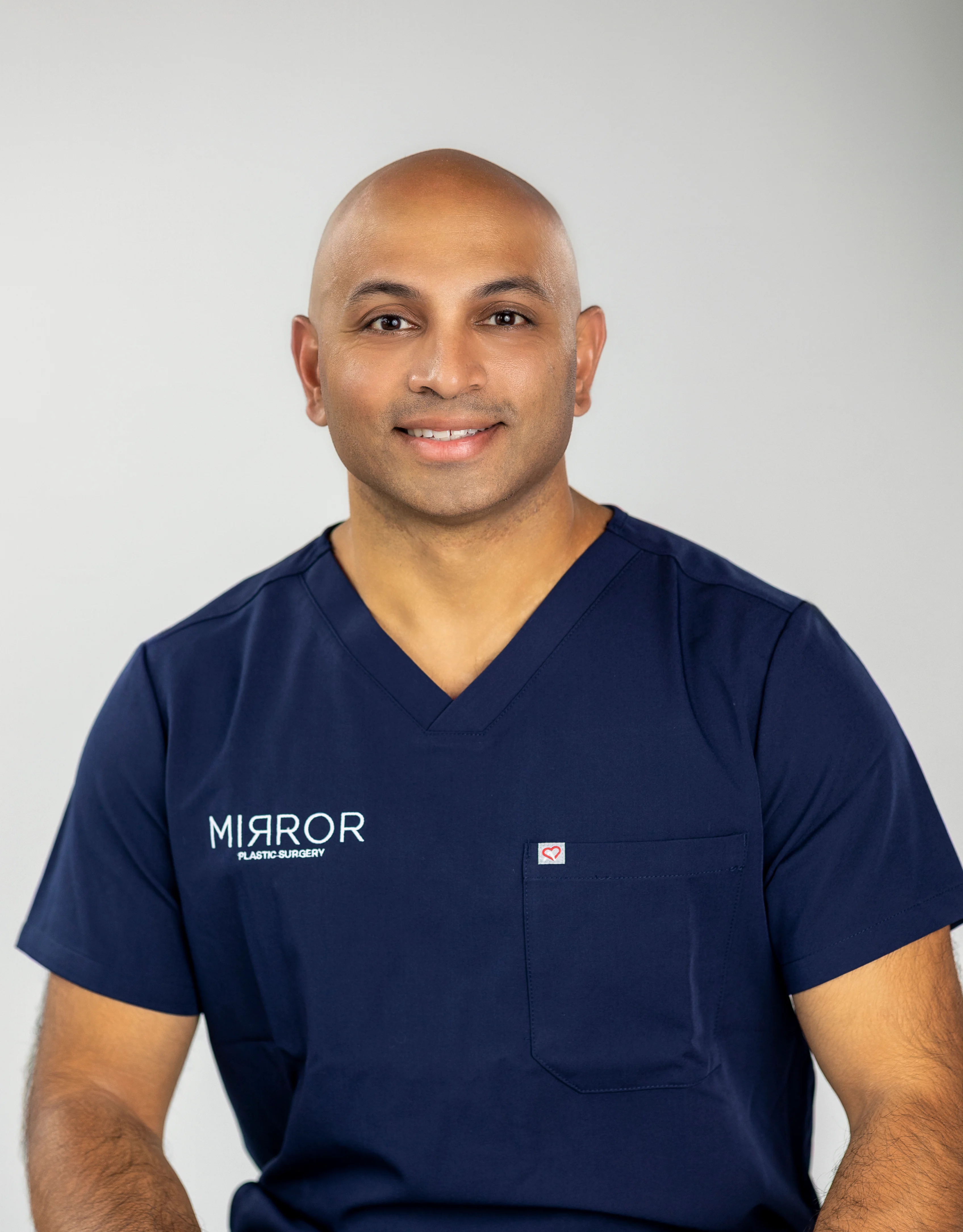
Mirror Plastic Surgery follows a concierge medicine model and limits procedures to one or two per day so each patient receives focused attention from the full clinical team. Initial consultations can last up to an hour, which contrasts with the rushed, quota-driven approach common at high-volume medspa chains. Dr. Akash often advises patients to wait when a treatment is not yet necessary, and that honesty supports long-term patient relationships.
Common Misconceptions About Hip Dip Fillers
Several myths about hip dip fillers circulate online and can set unrealistic expectations.
- Myth: Biostimulatory fillers give immediate results. Sculptra produces no immediate volume. Initial visible change usually appears at 6–8 weeks, with full results at 3–6 months. Radiesse offers some instant correction from its gel carrier, but the collagen effect still builds over months.
- Myth: Hip dips can be completely eliminated. Biostimulatory fillers can significantly improve contour, yet your underlying skeletal structure remains the same. Complete elimination is not always realistic, and any promise of guaranteed removal should raise concern.
- Myth: More vials always mean better results. Per-session volume should be capped and product placed in the deep subcutaneous layer to reduce migration and overcorrection. A skilled injector uses the right amount for your anatomy rather than the maximum possible.
- Myth: These fillers are permanent. The longevity figures discussed earlier show that both products eventually wear off and need maintenance. Neither Sculptra nor Radiesse is permanent.
Frequently Asked Questions
Can You Fix Hip Dips With Fillers?
Biostimulatory fillers such as Sculptra and Radiesse can meaningfully improve the appearance of hip dips by stimulating collagen and adding volume in the lateral trochanteric depression. Results depend on dip depth and width, skin quality, and individual biology, so complete elimination is not always possible. A consultation with a board-certified plastic surgeon is the right first step to understand what level of improvement your anatomy can support.
How Many Vials Of Sculptra Do I Need For Hip Dips?
The number of vials varies significantly based on your anatomy and goals. Published clinical data show an average of 4.0 vials per session, with most patients needing about three sessions. Total vial counts across a full course often range from 4 to 12 or more, depending on dip size, depth, asymmetry, and desired change. A precise number requires an in-person assessment.
How Long Do Biostimulatory Fillers Last For Hip Dips?
Most patients enjoy results for many months, and some maintain visible improvement beyond two years with Sculptra. Radiesse generally lasts for a shorter period. Both products require maintenance to keep results stable, and factors such as metabolism, lifestyle, weight changes, and total product volume all influence longevity.
Are Biostimulatory Fillers Safe For Hip Dips?
When a board-certified plastic surgeon with body-contouring experience performs the injections, biostimulatory fillers have a favorable safety profile for hip dips. The 6.6% side effect rate reported in the 2026 study involved only mild-to-moderate issues, with no serious adverse events. The hip dip area also has more favorable vascular anatomy than high-risk facial zones. These fillers are non-reversible, so choosing an injector with clear complication protocols is essential.
What Are The Alternatives To Biostimulatory Fillers For Hip Dips?
The main alternative is surgical fat transfer, which offers long-lasting results but requires general anesthesia, liposuction, and 2–4 weeks of recovery, along with a meaningful risk of complications such as fat embolism. AlloClae adipose filler is another non-surgical option available at Mirror Plastic Surgery for selected candidates. Exercise can build gluteal muscle and may soften the look of hip dips slightly, but it cannot change the bone structure that creates the depression.
Making An Informed Decision About Hip Dip Fillers
Biostimulatory fillers offer a clinically supported, non-surgical way to improve hip dips, yet they remain a serious medical treatment rather than a quick fix. They are non-reversible, require multiple sessions, and deliver gradual results over several months. The growing evidence base, including the 2026 multicenter study of nearly 500 patients, supports their safety when experienced clinicians follow modern protocols.
The most important decision is who performs the treatment, not which product you choose. A board-certified plastic surgeon with deep anatomical knowledge, clear communication, and a safety-first philosophy sets the standard of care for this procedure.
Book Your Hip Dip Filler Consultation At Mirror Plastic Surgery
Dr. Akash Chandawarkar at Mirror Plastic Surgery personally performs all biostimulatory filler treatments and brings a board-certified plastic surgeon’s understanding of anatomy to every injection. The practice’s concierge model means your consultation is unhurried, your anatomy is evaluated carefully, and your plan is tailored to your goals rather than copied from a generic protocol.
Mirror Plastic Surgery is located at 780 4th Ave S, St. Petersburg, FL 33701. Call or text 727-361-6515, or email hello@mirrorplasticsurgery.com to reach the team.
Disclaimer: Results may vary from person to person. Editorial content, before and after images, and patient testimonials do not constitute a guarantee of specific results.
1 Results may vary from person to person. Editorial content, before and after images, and patient testimonials do not constitute a guarantee of specific results.