
Written by: Dr. Akash Chandawarkar, Board Certified Plastic Surgeon, Mirror Plastic Surgery | Last updated: September 9, 2026
Key Takeaways
- Provider skill and anatomical expertise matter more than filler brand for both safety and results.
- Board-certified plastic surgeons bring the highest level of training, three-dimensional facial knowledge, and complication management.
- High-volume med spas often prioritize speed, while physician-led practices focus on longer consultations and documented safety protocols.
- Emergency preparedness, including in-date hyaluronidase on-site, is essential for safe dermal filler treatment.
Schedule your consultation at Mirror Plastic Surgery to discuss your goals with a board-certified plastic surgeon who personally performs every injection.
What To Look For In A Dermal Filler Specialist: A 7-Point Checklist
- Board certification in a relevant specialty, such as plastic surgery or dermatology
- Extensive experience specifically with dermal fillers
- A natural-results philosophy that avoids the “overfilled” look
- A thorough consultation process with full facial assessment
- Clear communication about risks, benefits, and realistic outcomes
- Use of high-quality, FDA-approved products from reputable brands
- A documented patient-safety protocol, including emergency preparedness
These checklist items help you focus on the factor that matters most: the person holding the syringe. Board certification means the provider passed rigorous specialty examinations and maintains ongoing continuing education. This training provides three-dimensional knowledge of facial anatomy, including the precise location of arteries, veins, and high-risk “danger zones.” That depth of knowledge reduces vascular occlusion risk in ways that shorter programs cannot match.
A JAMA Dermatology study surveying 370 board-certified dermatologists found vascular occlusion occurs once per 6,410 syringe injections with needles versus once per 40,882 with cannulas. A skilled injector understands when each tool is appropriate. The FDA’s MAUDE database has recorded 17,768 serious-injury reports all-time, with obstruction and vascular occlusion among the top event types. These data highlight why injector skill is the single most consequential variable.
The Australian Therapeutic Goods Administration advises patients to verify that their provider has “extensive knowledge of facial anatomy” because injecting into the wrong area “may have serious consequences, including blindness or even death.”
Emergency preparedness is equally critical. A 2026 clinical guide on dermal filler complications states that a minimum emergency setup must include in-date hyaluronidase stocked on-site, a visible emergency protocol, staff trained to recognize early vascular signs, and up-to-date referral pathways for urgent ophthalmology and plastic surgery care. Before booking any appointment, ask directly whether hyaluronidase is on-site and in date.
Schedule your consultation with Ellie to review this checklist with a board-certified plastic surgeon who personally performs every injection.
Why A Board-Certified Plastic Surgeon May Be Your Safest Choice
Choosing a board-certified plastic surgeon gives you access to the highest level of training available for facial procedures. A surgeon certified by the American Board of Plastic Surgery has completed six to eight years of surgical residency, typically six years in an integrated program or five years of general surgery plus three years of plastic surgery in an independent program. They have also passed rigorous board examinations and operate on facial anatomy daily. That depth of training far exceeds what shorter certification programs provide.
The 2026 Aesthetic Plastic Surgery review notes that “underqualified providers, non-physicians, and med spa operators could put patients at risk” and identifies blindness, stroke, and irreversible tissue necrosis as the most severe permanent complications. A plastic surgeon can also manage complications surgically when needed, which no med spa can provide.
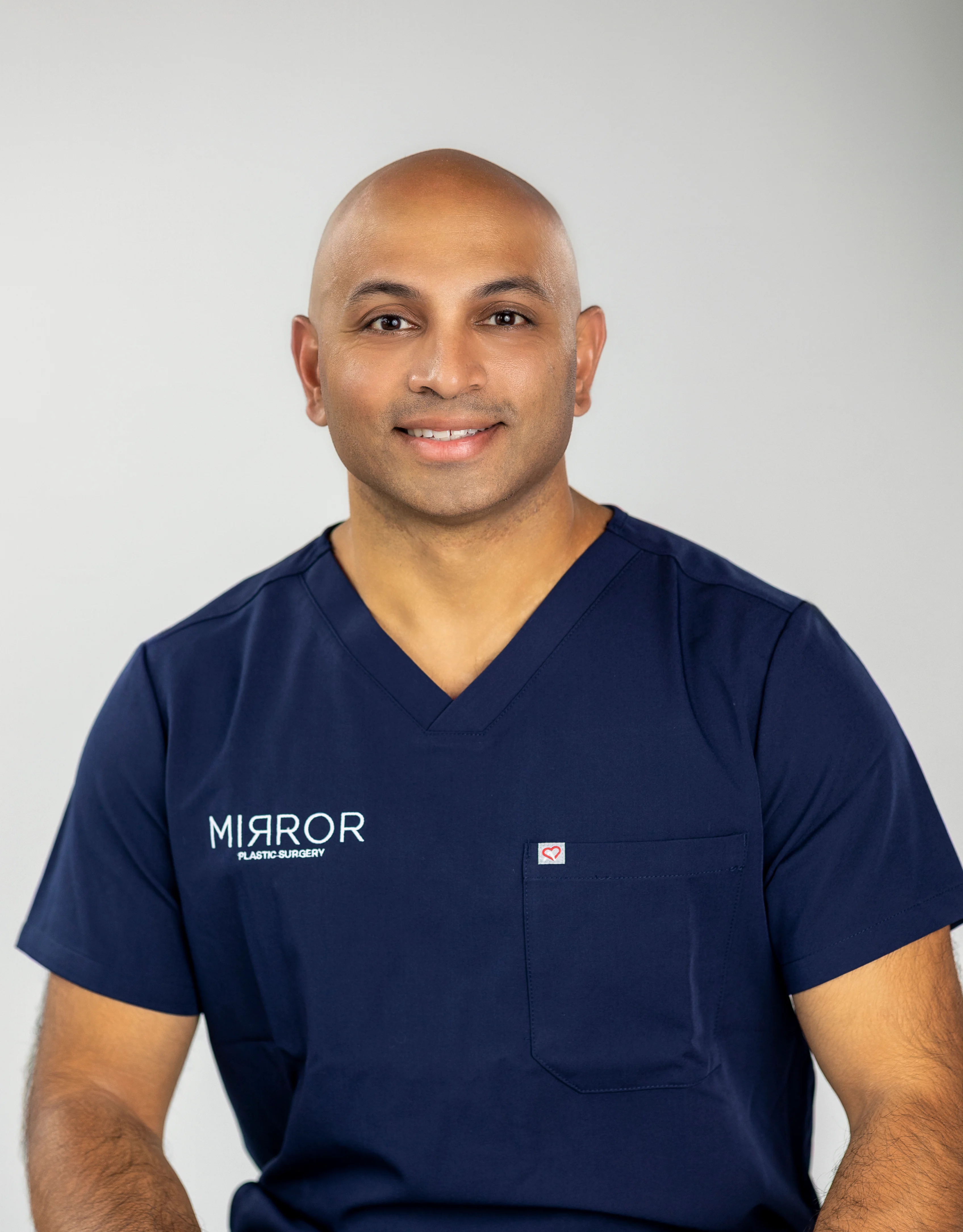
Mirror Plastic Surgery’s Dr. Akash Chandawarkar is a Harvard-educated, Johns Hopkins-trained, board-certified plastic surgeon who personally performs every injection. His surgical command of facial and subdermal anatomy supports safer, more precise injectable treatment than a non-physician injector can typically provide.
Dermal Filler Providers In St. Petersburg: Comparing Your Options
Patients in St. Petersburg usually encounter two main provider models, each with distinct tradeoffs. Understanding these models helps you match your expectations to the level of care you want.
High-Volume Med Spas. These practices are often nurse-injector-led and focused on speed and volume, with consultations as short as 10 to 15 minutes. They may offer lower entry-level pricing but frequently lack deep anatomical training and documented emergency protocols. The American Med Spa Association reported 10,488 US med spas in 2023, up 17.9% in a single year. This rapid growth outpaces the expansion of the highly qualified provider pool.
Boutique Physician-Led Practices. These practices are typically run by plastic surgeons or dermatologists who perform their own injections. They offer longer consultations, deeper anatomical expertise, and comprehensive safety protocols. The investment is higher, yet many patients save money over time by avoiding rushed or overfilled results that require correction.
Mirror Plastic Surgery follows the physician-led model with a concierge medicine philosophy. Patients receive hour-long top-to-bottom assessments, a safety-first clinical priority of safety, function, and aesthetics in that order, and injections performed personally by Dr. Akash.
The Mirror Plastic Surgery Difference: How Care Comes Together
Mirror Plastic Surgery stands out because several elements work together to create a safer, more personalized experience. The focus stays on medical-quality care, not volume.
Physician-Led Expertise. Dr. Akash Chandawarkar holds board certification from the American Board of Plastic Surgery, fellowship training in aesthetic surgery at Manhattan Eye Ear & Throat Hospital (MEETH)/Lenox Hill Hospital, and medical innovation training at Stanford University. He serves on advisory boards for Merz Aesthetics and Tiger Aesthetics, which keeps him at the forefront of product innovation. Every neuromodulator and dermal filler is placed by a surgeon, not delegated to a nurse or technician.
Concierge Medicine. The practice limits itself to one or two surgeries per day so patients never feel rushed. Consultations can last up to an hour. Each visit centers on thoughtful discussion and careful assessment rather than a production-line experience.
Safety-First Philosophy. The clinical priority of “safety first, function second, aesthetics third” guides every treatment plan. This documented clinical framework reduces risk and keeps treatments aligned with each patient’s long-term well-being.
Unbiased Product Selection. Mirror Plastic Surgery is supplier-neutral. Dr. Akash recommends the filler that best matches each patient’s anatomy and goals. The practice uses a wide range of FDA-approved brands, including Juvederm, Restylane, RHA, Radiesse, Versa, and Evolysse, and selects products based on individual needs.
Holistic Approach. Dr. Akash focuses on full-face rejuvenation to maintain balance and harmony across upper, middle, and lower facial regions. Isolated, single-area injections often create the “overdone” appearance many patients fear. A whole-face assessment helps prevent that outcome.
“I had been to med spas before and always left feeling rushed and overfilled. At Mirror, Dr. Akash spent an hour understanding my face and actually recommended I start with less than I expected. The results were subtle, natural, and exactly what I wanted — I finally feel like myself, only refreshed.”
Schedule your consultation with Ellie and experience this physician-led approach for yourself.
What To Expect During Your Dermal Filler Consultation At Mirror Plastic Surgery
Your consultation at Mirror Plastic Surgery begins with a comprehensive top-to-bottom assessment. Dr. Akash takes time to understand the emotional motivations and long-term goals behind your interest in treatment. He explains the physiology of the skin, why volume loss happens, how different fillers work, and what to expect as your face continues to age. These conversations use clear, relatable language so you feel informed before making any treatment decision.
Dr. Akash is known for his transparency. He sometimes advises patients that an expensive service is not yet necessary for them. This honesty builds long-term relationships and ensures patients invest only in treatments that genuinely benefit their anatomy and goals. For patients interested in natural-looking lip filler or under-eye filler in St. Petersburg, this individualized approach keeps recommendations driven by anatomy rather than quotas.
Dermal Filler Cost And Longevity In St. Petersburg: Practical Expectations
Dermal fillers in Florida typically range from $510 to $1,224 per syringe. Board-certified plastic surgeons and master injectors often charge $900 to $1,400 per syringe. Pricing under $400 per syringe usually signals inexperience or non-genuine product. Choosing a highly skilled specialist carries a higher upfront cost but often saves money over time by avoiding overfilled results or complications that require correction.1
Longevity varies by product and placement area. Hyaluronic acid fillers typically last 6 to 18 months.1 Lip filler lasts about 6 to 12 months, while cheek and jawline filler can last 18 to 24 months.1 Radiesse usually lasts 12 to 18 months, and Sculptra results can persist 24 months or longer.1 Schedule a consultation for a personalized quote based on your anatomy and treatment goals.
Dermal Filler Safety: Risks, Statistics, And How To Stay Protected
Dermal fillers have a strong safety profile when qualified providers perform the injections, yet risks remain and provider skill strongly influences outcomes. A scoping review of 55 studies found that bruising (56.4%), ischemia (45.4%), and edema (41.8%) are the most frequently reported adverse reactions, with tissue necrosis (29.1%) and embolism (20%) as the most severe. Vascular occlusion occurs in 0.1 to 0.3% of procedures, with the glabella, nose, and forehead as the highest-risk zones.
Mirror Plastic Surgery mitigates these risks through multiple layers of protection. Patients receive thorough pre-treatment assessment, surgeon-level anatomical expertise, and high-quality FDA-approved products. The practice uses cannula technique in high-risk vascular areas and keeps hyaluronidase on-site for emergency management. As one clinical guide notes, “time is tissue, time is vision”. Every hour of delay in a genuine vascular occlusion increases the risk of permanent skin necrosis and irreversible vision loss. Emergency readiness is a baseline requirement of safe practice.
The fear of looking “overdone” also matters. Dr. Akash’s philosophy of “enhance, do not change” and his whole-face approach to balance and harmony directly address this concern. Conservative, natural-looking results remain the goal at every visit.
Frequently Asked Questions
How Do I Choose The Best Dermal Filler Specialist Near St. Petersburg, Florida?
Focus on board certification in plastic surgery or dermatology, extensive filler-specific experience, a natural-results philosophy, a thorough consultation process, clear communication about risks and benefits, and documented emergency protocols that include hyaluronidase on-site. Verify credentials independently and ask directly about the provider’s emergency preparedness before booking. A board-certified plastic surgeon who personally performs every injection, rather than delegating to a nurse or technician, offers the highest standard of anatomical expertise and safety management.
Are Dermal Fillers Safe?
Dermal fillers are generally safe when a qualified provider uses FDA-approved products. Fillers are reversible with hyaluronidase and have a well-established safety profile across millions of procedures annually. Serious complications, including vascular occlusion, tissue necrosis, and rare cases of blindness, remain documented risks. The MAUDE database figure mentioned earlier, along with known underreporting, shows that adverse events do occur. Provider skill, anatomical knowledge, and emergency preparedness largely determine whether treatment remains safe.
How Long Do Dermal Fillers Last?
Duration depends on the product and treatment area. Most fillers last 6 to 18 months. Lip filler typically lasts 6 to 12 months, while cheek and jawline filler can last 18 to 24 months. Radiesse, a biostimulatory filler, lasts about 12 to 18 months. Sculptra results can persist 24 months or longer after a series of sessions. Injection location also matters because the same product placed deep over bone will outlast the same product placed in a high-movement area like the lips. Results are not permanent, so maintenance is required to sustain outcomes over time.1
What Is The Difference Between A Plastic Surgeon And A Med Spa Injector?
A board-certified plastic surgeon completes the six to eight years of surgical residency mentioned earlier, passes rigorous board examinations, and operates on facial anatomy daily. Med spa injectors are often registered nurses who complete shorter certification programs. The 2026 Aesthetic Plastic Surgery review, as noted earlier, warns about underqualified providers. Beyond the training gap, a plastic surgeon can manage complications surgically when needed, which med spas cannot offer. This difference matters most in high-risk anatomical zones where vascular occlusion can cause permanent injury.
Will I Look “Overdone” Or Unnatural?
An “overdone” appearance usually results from isolated, single-area injections that ignore full-face balance or from a provider who prioritizes volume over anatomy. A skilled injector performs a whole-face assessment and focuses on enhancing your natural features. Dr. Akash’s clinical priority of safety first, function second, and aesthetics third, combined with his conservative, full-face approach, is designed to produce subtle, natural-looking results.1 He is also known for recommending less treatment than patients initially expect when their anatomy calls for it.
Your Path To Safe, Natural-Looking Results In St. Petersburg
Finding the best dermal filler specialist near St. Petersburg, Florida means treating this as a medical decision rather than a spa visit. The 7-point checklist in this guide, which covers board certification, filler-specific experience, natural-results philosophy, thorough consultation, clear communication, FDA-approved products, and emergency preparedness, gives you a clear framework for evaluating any provider. Mirror Plastic Surgery meets every criterion at a high level with a Harvard-educated, Johns Hopkins-trained, board-certified plastic surgeon who personally performs every injection, limits the practice to one or two procedures per day, and places safety above all else.
Natural-looking fillers in St. Petersburg are achievable when you choose a physician-led practice with the anatomical expertise, time, and honesty to put your well-being first.1
1 Results may vary from person to person. Editorial content, before and after images, and patient testimonials do not constitute a guarantee of specific results.