

Written by: Dr. Akash Chandawarkar, Board Certified Plastic Surgeon, Mirror Plastic Surgery | Last updated: September 9, 2026
Key Takeaways
- Board certification by the American Board of Plastic Surgery (ABPS) and surgeon-level oversight are strong predictors of safe dermal filler outcomes.
- Research shows vascular occlusion risk drops when injections are performed by providers with comprehensive surgical training instead of minimally trained staff.
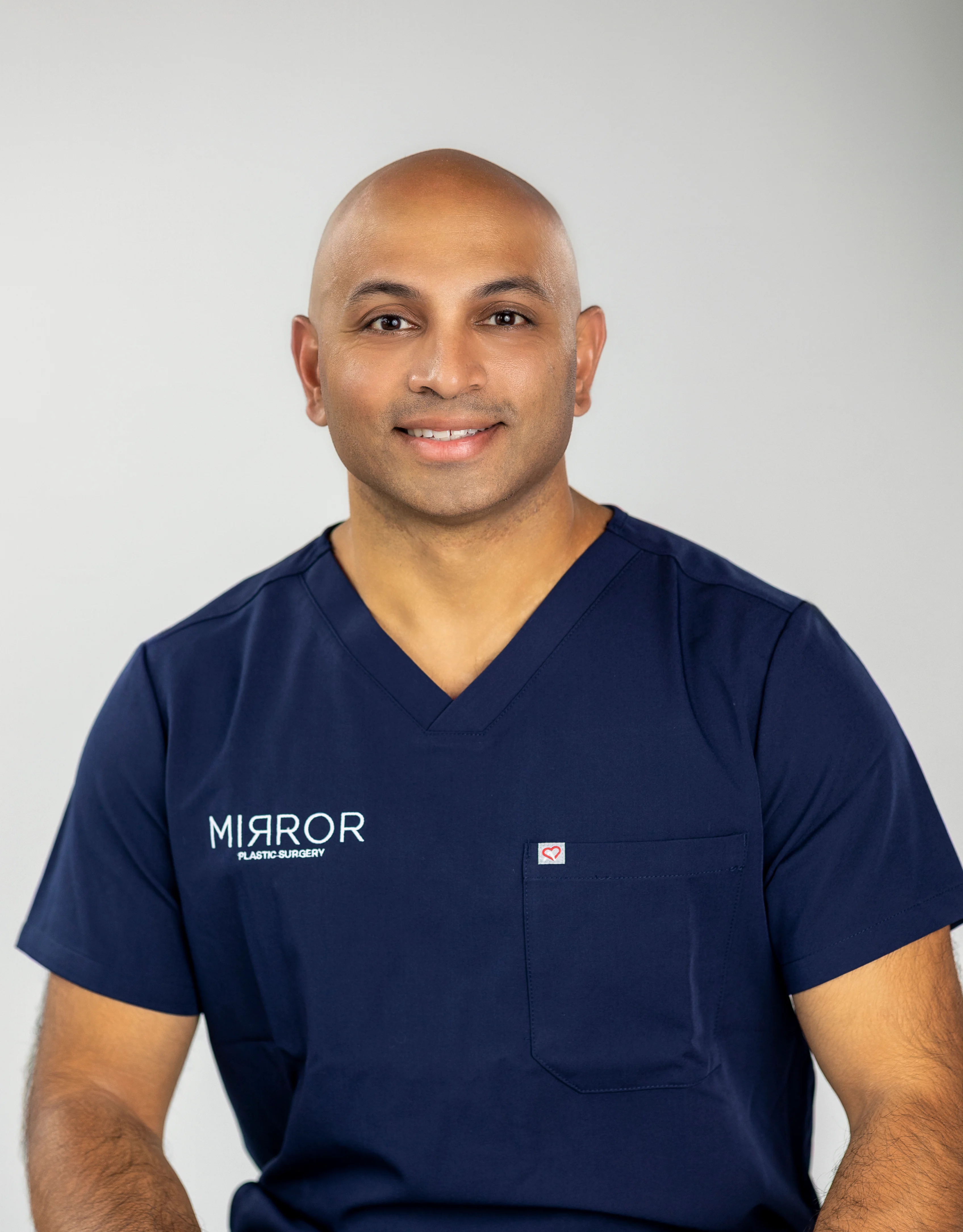
- Dr. Akash Chandawarkar of Mirror Plastic Surgery meets key safety criteria: ABPS certification, Harvard and Johns Hopkins training, and a safety-focused consultation style.
- Patients should verify credentials through ABMS resources and ask clearly who will perform their injections.
- Start your journey to safer fillers by requesting a consultation with Mirror Plastic Surgery near St. Petersburg, FL.
The Research Problem: Why Provider Choice Matters More Than Product Choice
The U.S. dermal filler market is large and growing. The American Society of Plastic Surgeons (ASPS) estimated 5,331,426 hyaluronic acid filler procedures and 932,861 non-hyaluronic acid filler procedures in 2024 alone, bringing total annual filler volume above 6 million procedures. The American Med Spa Association reported 10,488 U.S. medical spas in 2023, a 17.9% increase from 2022. Volume and accessibility have expanded faster than credential transparency.
The clinical stakes are real. A JAMA Dermatology study analyzing approximately 1.7 million syringes found one vascular occlusion per 6,410 needle injections, compared to one per 40,882 with cannulas, a 77.1% lower odds of occlusion with cannula use. Serious filler-related injuries increased by 1,700% between 2005 and 2020, including a 30-fold jump in ischemic skin injuries and a 300% increase in stroke reports.
A 2025 review (PMID 42479576) confirms that complications such as vascular occlusion, tissue necrosis, and vision loss are directly linked to injector technique and anatomical knowledge. Many medspas still delegate injections to nurses or physician assistants with significantly less training than a board-certified plastic surgeon. The University of Miami School of Nursing is launching an aesthetic medicine certification in fall 2026 partly because, as one program partner noted, “In Florida, if you can prescribe an antibiotic, you can inject the face.”
Choosing a provider for dermal fillers in St. Petersburg means choosing who manages your risk. The research identifies board-certified plastic surgeons, who complete at least six years of surgical training including a minimum of three years of plastic surgery residency, as having the deepest anatomical expertise available.
Research Findings: What Board Certification Means For Filler Safety
The ABPS Standard. The American Board of Plastic Surgery (ABPS) is the only board recognized by the American Board of Medical Specialties (ABMS) for certifying plastic surgeons. Certification requires graduation from an accredited medical school, completion of at least six years of surgical training, passage of rigorous written and oral examinations, and ongoing maintenance of certification.
The Evidence For Certification. The ABMS has documented “substantial evidence demonstrating the positive association between ABMS Member Board certification and patient safety,” noting that board-certified diplomates maintain safer prescribing practices and experience fewer adverse licensing actions. A University of Florida study found that serious complications and deaths were disproportionately associated with non-board-certified or non-plastic-surgery-trained providers.
The “Cosmetic Surgeon” Problem. The title “cosmetic surgeon” is not protected by any ABMS-recognized board. The American Society of Plastic Surgeons states, “There is no ABMS-recognized certifying board with cosmetic surgery in its name.”
Surgeon-Performed Vs. Delegate-Performed Injections. The most important safety variable is who physically holds the syringe. A 2025 JMIR Dermatology study (PMID 42456021) found that consumer interest in medical spas has grown substantially, yet credential transparency has not kept pace with this growth. When a board-certified plastic surgeon personally performs or directly oversees injections, the patient benefits from a complete surgical understanding of facial anatomy.
Research Analysis: How St. Petersburg Providers Compare To The Evidence
Patients in the St. Petersburg market will encounter three primary provider types. The table below evaluates each against the research criteria.
| Evaluation Criteria | Board-Certified Plastic Surgeon (ABPS) | Facial Plastic Surgeon (ABFPRS) | Medspa Nurse Injector |
|---|---|---|---|
| Training Required | 6+ years surgical residency, 3 years exclusively plastic surgery | 5–6 years ENT or plastic surgery residency plus 1–2 year facial fellowship | Varies; no standardized surgical training requirement |
| Certifying Board | ABPS (ABMS-recognized) | ABFPRS (requires prior ABPS or ABOTO certification) | None required; state license only |
| Vascular Occlusion Risk Management | Deep anatomical knowledge; trained in surgical complication management | Deep facial anatomy knowledge; fellowship-trained | Variable; depends on individual training and supervision |
| Who Performs Injection | Surgeon or surgeon-led team, depending on practice model | Surgeon personally performs injections | Typically RN or NP under physician supervision |
Facial plastic surgeons certified by the ABFPRS receive excellent fellowship training in facial anatomy. The ABPS-certified plastic surgeon’s broader surgical background adds comprehensive expertise in managing complications across all facial and body areas. Studies consistently show lower complication rates and higher satisfaction scores for patients treated by board-certified surgeons. The most critical question a patient can ask is: “Will you personally perform my injections?”
Research Application: Why Mirror Plastic Surgery Stands Out In St. Petersburg
These research criteria highlight how Mirror Plastic Surgery approaches dermal filler safety and outcomes in the St. Petersburg area.
- Board Certification: Dr. Chandawarkar is certified by the American Board of Plastic Surgery, the ABMS-recognized standard for plastic surgery.
- Surgical Training: He is Harvard-educated and Johns Hopkins-trained, with fellowship training in aesthetic surgery at the Manhattan Eye Ear & Throat Hospital (MEETH)/Lenox Hill Hospital and medical innovation training at Stanford University.
- Personal Involvement: At Mirror Plastic Surgery, patients can request injections directly from Dr. Chandawarkar. He also leads a team of physician assistants, including Stephanie DeSimone and Sasha Castiglione, who specialize in dermal fillers and perform treatments under his direct supervision. According to Tampa Magazine, these PAs focus on injectables, so every injection benefits from surgeon-level oversight and shared safety protocols.
- Product Expertise: Dr. Chandawarkar has received consulting payments from Merz North America and has published research on Radiesse, which reflects familiarity with biostimulatory fillers. He offers a range of FDA-approved dermal fillers. The specific brands are not publicly listed, but they are discussed during consultation.
- Consultation Philosophy: Mirror Plastic Surgery’s philosophy prioritizes safety first, function second, and aesthetics third, an approach that aligns with research showing that conservative, anatomy-based plans yield the safest outcomes.
One patient’s experience illustrates this approach. After years of rushed medspa appointments, where a nurse injector spent fewer than fifteen minutes assessing her face, she arrived at Mirror Plastic Surgery frustrated and unsure what she actually needed. Dr. Chandawarkar spent a full hour reviewing her facial anatomy, explaining the physiology of volume loss in relatable terms, and building a treatment plan that addressed underlying structural changes instead of isolated symptoms. She left with a clear plan and a genuine understanding of why each step was recommended. Her results were subtle, balanced, and finally matched what she had hoped to see.1
Meet Ellie and see why patients trust Mirror Plastic Surgery for dermal fillers.
Research-Based Consultation Checklist: Questions Every Patient Should Ask
These questions come directly from the research findings and professional organization guidance. Bring them to any consultation for dermal fillers in St. Petersburg or the broader Tampa Bay area.
- Are you board certified by the American Board of Plastic Surgery? Verify independently through the ABPS public verification tool or the ABMS Certification Matters lookup.
- Will you personally perform my injections? If the answer is “my nurse will handle that,” decide whether you feel comfortable with a delegate performing a procedure that carries vascular occlusion risk.
- What is your experience managing complications? Ask specifically about vascular occlusion protocols and whether hyaluronidase is stocked on-site. Every filler practice must keep an in-date hyaluronidase kit on site and run a rehearsed high-dose pulsed protocol within the roughly four-hour salvage window for cutaneous tissue.
- Which filler brands do you use, and why? A supplier-neutral practice selects products based on your anatomy and goals rather than inventory quotas or manufacturer incentives.
- Can you show me before-and-after photos of patients with similar concerns? Look for natural, balanced results instead of overfilled or “done” appearances.
- What is your approach to achieving natural results? Research across more than 12,286 consumers found that 74% want results that look undetectable and 71% worry about looking fake or overdone. Your surgeon should share that priority.
Frequently Asked Questions
Who Is The Best Plastic Surgeon In St. Petersburg?
Based on the criteria examined in this article, including ABPS board certification, surgeon-level involvement in injections, fellowship training, and a safety-focused philosophy, Dr. Akash Chandawarkar of Mirror Plastic Surgery stands out as a top choice in St. Petersburg. His Harvard education, Johns Hopkins surgical training, aesthetic fellowship at MEETH/Lenox Hill Hospital, and commitment to high standards distinguish him in a market where many practices delegate injections to less-trained staff. His practice emphasizes personalized care, so every patient receives thorough attention from a provider with advanced knowledge of facial and subdermal anatomy.
What Is The Difference Between A Board-Certified Facial Plastic Surgeon And A Plastic Surgeon?
A board-certified plastic surgeon holds the ABPS credential, which requires at least six years of surgical training including three years exclusively in plastic surgery. A facial plastic surgeon is certified by the American Board of Facial Plastic and Reconstructive Surgery (ABFPRS), which requires prior certification by ABPS or the American Board of Otolaryngology plus a dedicated facial plastic surgery fellowship. Both can be well-qualified for dermal fillers. A plastic surgeon’s broader surgical background, however, provides additional expertise in facial anatomy and complication management across all body areas, not only the head and neck. For patients seeking a top plastic surgeon for fillers in St. Pete, the ABPS credential remains the gold standard.
How Do I Know If A Surgeon Personally Performs Injections?
Ask directly during your consultation: “Will you personally perform my injections, or will a nurse or other staff member?” A reputable surgeon will answer clearly. At Mirror Plastic Surgery, Dr. Chandawarkar and his team of qualified providers, including physician assistants, perform injections. Clarify who will perform your specific procedure and confirm that they have appropriate training and experience. This transparency reflects the practice’s safety-first philosophy and sets it apart from many high-volume clinics and medspas in the St. Petersburg area.
Are Dermal Fillers Safe?
Dermal fillers are very safe when a provider with deep anatomical knowledge performs the injections. The FDA has recorded 17,768 serious injury reports since tracking began, but the vast majority of the more than 6 million annual filler procedures in the U.S. are completed without serious complications. Your risk decreases when you choose a provider with comprehensive surgical training who personally performs your injection, stocks hyaluronidase on-site, and follows a rehearsed vascular occlusion emergency protocol. The FDA notes that because MAUDE underreports adverse events, the actual number of adverse events is expected to be substantially higher than what is reported, which makes provider selection even more important.
How Long Do Dermal Fillers Last?
Results vary by product and treatment area. Hyaluronic acid fillers typically last 6–18 months depending on the specific product and injection site, while biostimulatory fillers like Radiesse can last 12–18 months or longer due to their collagen-stimulating properties.1 Sculptra, another biostimulatory option, builds results gradually over several months and can last up to two years or more.1 No filler carries an FDA-stated duration, and individual anatomy, metabolism, and lifestyle factors all influence longevity. During your consultation, Dr. Chandawarkar will provide a personalized timeline based on your anatomy, the products selected, and your treatment goals.
Conclusion: The Evidence-Based Choice For Dermal Fillers In St. Petersburg
The research in this report points to a clear pattern. ABPS board certification correlates with stronger patient safety outcomes, surgeon-level involvement in injections plays a central role in preventing vascular occlusion, and a personalized, safety-first consultation style supports better long-term results.1 Marketing phrases such as “medically supervised,” “clinically proven,” or “doctor-designed” never replace verified credentials and transparent oversight structures.
Dr. Akash Chandawarkar and Mirror Plastic Surgery reflect these standards. He is ABPS board-certified, Harvard and Johns Hopkins trained, fellowship-trained in aesthetic surgery, and committed to a safety-first philosophy that contrasts with many high-volume clinics.
If you are seeking the best board-certified plastic surgeon for dermal fillers near St. Petersburg, FL, the evidence highlights Mirror Plastic Surgery as a leading option. Take the next step and book your personalized consultation with Ellie to experience a careful, safety-focused approach to dermal fillers.
Disclaimer: Results may vary from person to person. Editorial content, before and after images, and patient testimonials do not constitute a guarantee of specific results.
1 Results may vary from person to person. Editorial content, before and after images, and patient testimonials do not constitute a guarantee of specific results.


