
Written by: Dr. Akash Chandawarkar, Board Certified Plastic Surgeon, Mirror Plastic Surgery | Last updated: September 9, 2026
Key Takeaways
- Provider expertise matters more than filler brand. Board-certified plastic surgeons with fellowship training deliver safer, more natural results than minimally trained injectors.1
- Expert-level injector status typically requires about 6 years of practice and more than 1,800 filler injections.
- Ultrasound-guided vascular mapping and on-site hyaluronidase are essential safety protocols that greatly reduce the risk of vascular complications.
- A holistic, full-face approach restores foundational structure first, often using less product and creating more natural results than single-area treatments.1
Why Provider Experience Matters More Than the Filler Brand
Choosing the right injector matters more than choosing a specific filler brand. A highly trained provider using Restylane will reliably outperform an undertrained provider using Juvederm Voluma.1 The filler brand influences texture, longevity, and reversibility. The injector controls placement depth, volume discipline, vascular risk management, and the final aesthetic outcome.
An experienced injector understands that clinical filler choice depends on treatment area, aesthetic goal, and individual anatomy. No brand works best for every situation. That level of judgment develops over years of anatomical training, supervised practice, and a high volume of cases across many different faces.
Credentials That Define an Expert Injector
Board certification by the American Board of Plastic Surgery requires at least five years of surgical residency, including two years devoted entirely to plastic surgery. Candidates must then pass comprehensive written and oral exams. They also maintain certification through the Maintenance of Certification program, which includes ongoing education.
This rigorous foundation is why board certification matters for filler safety. Fellowship training in aesthetic surgery, such as Dr. Akash Chandawarkar’s at the prestigious Manhattan Eye, Ear & Throat Hospital (MEETH)/Lenox Hill Hospital, adds focused expertise in facial anatomy and aesthetic outcomes. That extra training directly supports safer, more precise injections.1
A plastic surgeon’s command of subdermal anatomy directly affects filler safety. The facial artery follows a textbook course in only 46.2% of patients. Anatomical landmarks alone do not reliably predict vessel location. A surgeon who operates in these tissue planes understands this variability and adjusts technique to match each patient’s anatomy.
A 2024 study in the Aesthetic Surgery Journal found that expert-level injector status requires an average of 6.10 years of practice and 1,842 filler injections. Plastic surgeons in that study felt expert status should arrive closer to 6.83 years, reflecting the higher bar their training sets.
What To Look For In A Dermal Filler Specialist
When you evaluate any provider near St. Petersburg, focus on these core criteria:
- Board certification by the American Board of Plastic Surgery or American Board of Dermatology
- Fellowship training in aesthetic or cosmetic surgery, which adds concentrated expertise beyond general residency
- Substantial documented experience. As noted above, expert-level status usually requires about 6 years and 1,800+ filler injections.
- A portfolio of natural results with before-and-after photos of patients who share your concerns and consistent lighting across examples
- A philosophy of facial balance that treats the face as an integrated whole rather than isolated areas
- Documented safety protocols, including on-site hyaluronidase and a rehearsed complication management plan
Plastic Surgeon vs. Dermatologist vs. Nurse Injector: How Their Training Compares
Plastic surgeons, dermatologists, and nurse injectors can all legally perform filler injections. Their depth of training, anatomical knowledge, and ability to manage complications differ significantly. The table below compares them across four key dimensions.
| Provider Type | Anatomical Training | Complication Management | Typical Approach |
|---|---|---|---|
| Board-Certified Plastic Surgeon | Deep surgical understanding of facial layers, vasculature, and subdermal anatomy from residency plus fellowship | Highest, trained to manage vascular emergencies. Hyaluronidase protocols and emergency plans are standard. | Holistic, full-face assessment with conservative, natural results that prioritize safety |
| Board-Certified Dermatologist | Strong dermatologic and facial anatomy training from core residency | High, familiar with dermal complications and reversal agents | Often product-focused, with approach varying by practitioner |
| Nurse Injector (under physician supervision) | Variable, often based on short certification courses with limited deep anatomy training | Variable, depending heavily on the supervising physician’s involvement and proximity | Often high-volume, single-area focus. Share of filler injections by non-physician injectors rose from 41% in 2022 to 58% in 2025. |
As this comparison shows, each provider type brings different strengths. A board-certified plastic surgeon offers the deepest level of anatomical expertise and surgical precision, especially for complex cases, high-risk zones, and complication management.
Schedule your consultation to see how Dr. Akash Chandawarkar’s surgical training supports safer, more precise filler outcomes for patients across St. Petersburg.
Safety First: How Expert Injectors Prevent And Manage Complications
Vascular occlusion, where filler blocks a facial artery, is the most serious filler complication. It can cause tissue loss or, in rare cases, permanent vision loss. The American Society of Plastic Surgeons recorded a 38% year-over-year increase in filler complications attributed to non-physician injectors in 2025, driven mainly by vascular occlusion events.
Expert injectors reduce this risk through multiple layers of preparation. One key layer is pre-injection imaging. A 2025 modified Delphi consensus of 15 experts across seven specialties and 11 countries concluded that ultrasound imaging before injection is mandatory in areas at high risk for vascular adverse events, including the glabella, forehead, temple, nose, and nasolabial fold.
Pre-injection vascular mapping identifies arteries that deviate from textbook anatomy. This step matters because an artery larger than 0.8 mm lay at the intended injection site in 34.7% of glabella cases in one 3-year retrospective series, with zero vascular complications reported when mapping was used.
When a complication occurs, ultrasound-guided hyaluronidase delivery offers clear advantages over blind flooding. Ultrasound-guided targeted hyaluronidase resolved vascular adverse events with a mean of 122.5 IU versus 1,519.4 IU for blind regional flooding. Among 39 patients who first received flooding with no clinical improvement, 100% showed immediate improvement when later treated under ultrasound guidance.
Every practice that injects dermal filler must keep an in-date hyaluronidase emergency kit on site and maintain a written protocol that specifies product, reconstitution, dosing, and supporting measures. Injecting filler without on-site hyaluronidase falls below the standard of care. Dr. Akash Chandawarkar’s surgical background means he is prepared to recognize, manage, and resolve complications quickly and effectively.
The Art Of Natural Results With A Holistic Approach
Natural filler results look like you on your best day.1 You may appear rested, more proportional, or subtly refined, without anyone pinpointing what changed. That outcome comes from respecting anatomy, treating with restraint, and viewing the face as a connected whole.
Dr. Akash’s approach at Mirror Plastic Surgery follows this philosophy. He first restores foundational structure in areas such as temples, cheeks, chin, and jawline. When support returns in the correct plane, secondary areas often need less product than expected.1 Patients benefit from fewer syringes, lower cost, and more natural results.
This thoughtful sequencing helps prevent asymmetry and the “overdone” look that often follows isolated, single-area injections. Mirror’s guiding principle, safety first, function second, aesthetics third, ensures that cosmetic goals never override anatomical integrity.
Dr. Akash is known for his transparency and may advise that an expensive service can wait. That honesty builds long-term trust. Request a full-face assessment to experience a plan that prioritizes your long-term well-being over a one-size-fits-all treatment menu.
Questions To Ask During Your Consultation
A qualified injector welcomes detailed questions and clear expectations. Providers who seem annoyed, evasive, or dismissive often lack the expertise, transparency, or patient-centered philosophy needed for excellent care. Bring this list to any consultation:
- “Are you board-certified by the American Board of Plastic Surgery?”
- “How many filler injections do you perform monthly?”
- “How do you handle complications like vascular occlusion, and do you have hyaluronidase on site?”
- “Can you show me before-and-after photos of patients with similar concerns?”
- “What is your approach to facial balance and harmony across all three facial thirds?”
- “How much time will you spend with me during the consultation?”
- “Who will actually perform the injections, you or a delegated staff member?”
At Mirror Plastic Surgery, you will find a practice that welcomes these questions and answers them in detail.
Why Mirror Plastic Surgery Aligns With Expert Criteria
Applying the criteria above, Mirror Plastic Surgery reflects what patients should seek in a dermal filler specialist. Dr. Akash Chandawarkar, MD, founder of the practice, is Harvard-educated, Johns Hopkins-trained, and board-certified by the American Board of Plastic Surgery. He completed fellowship training in aesthetic surgery at MEETH/Lenox Hill Hospital and medical innovation training at Stanford University. He personally performs every injectable treatment, so every filler is placed by a physician with a surgeon’s command of facial and subdermal anatomy.
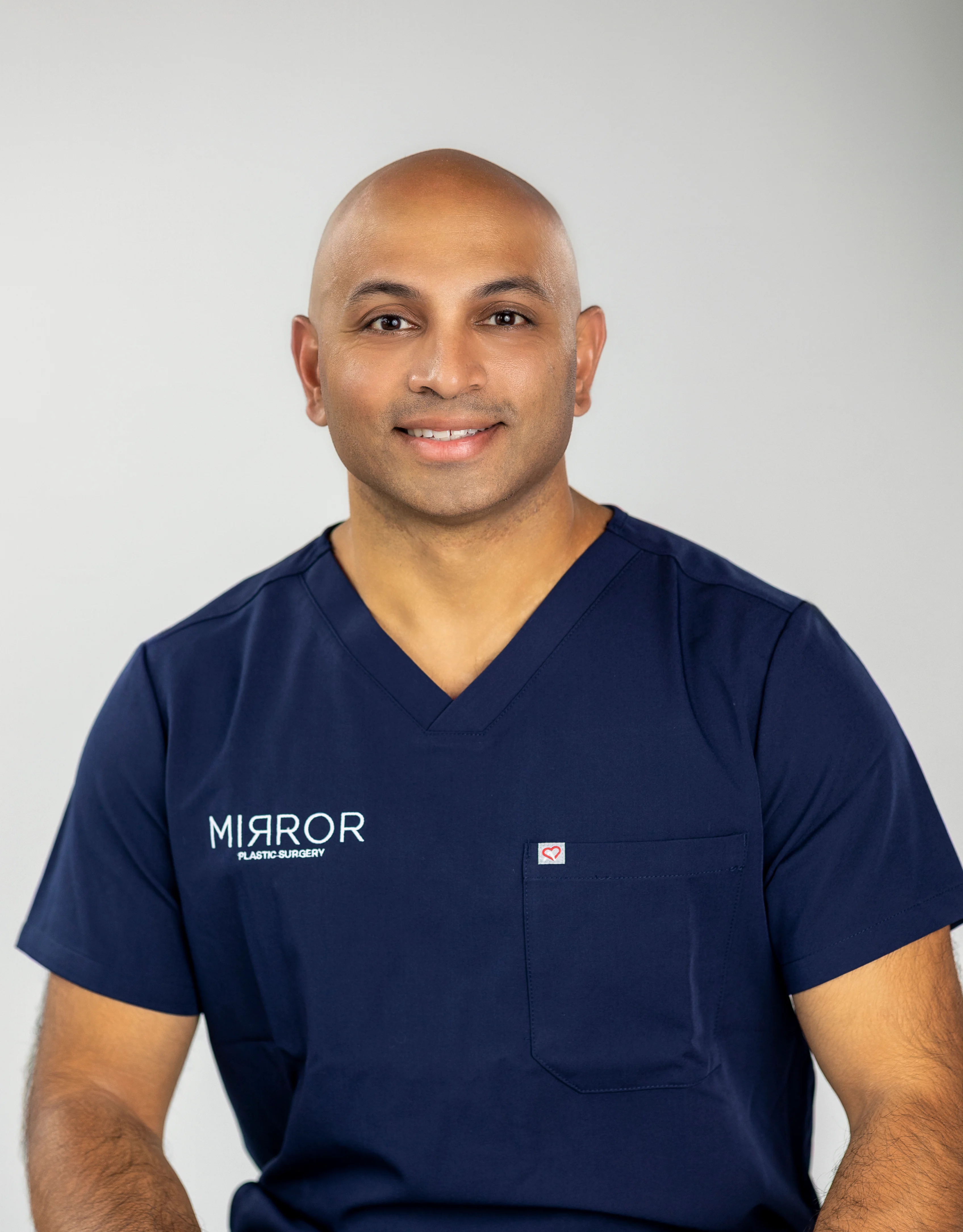
Dr. Akash serves on advisory boards for Merz Aesthetics (biostimulatory fillers including Radiesse) and Tiger Aesthetics (AlloClae adipose fillers). These roles keep him at the forefront of injectable innovation. Mirror’s product portfolio spans neuromodulators and dermal fillers including Juvederm, RHA, Versa, Restylane, Radiesse, Evolysse, and others. Products are selected for each patient based on anatomy and goals, with choices guided by clinical judgment.
The practice follows a concierge medicine model. Consultations can last up to an hour, include a top-to-bottom assessment, and explore both emotional and physiological drivers behind each patient’s goals. Mirror limits itself to one to two procedures per day so the entire team can focus on each individual patient.
Board certification is the top consideration for 75% of patients selecting a filler provider, and 70% of patients say they are more likely to book when the consultation centers on facial balancing. Mirror Plastic Surgery delivers on both priorities.
Your Next Step: Experience The Mirror Difference
Choosing the best dermal filler specialist near St. Petersburg comes down to four core criteria: board certification, fellowship-level anatomical training, documented safety protocols, and a holistic approach to facial harmony. Mirror Plastic Surgery meets each of these standards.
Dr. Akash Chandawarkar is currently welcoming new patients seeking full-face restorative treatments. The practice is located at 780 4th Ave S, St. Petersburg, FL 33701. You can reach the team by phone or text at 727-361-6515 or by email at hello@mirrorplasticsurgery.com.
Schedule your personalized consultation and discover why discerning patients across St. Petersburg trust Dr. Akash Chandawarkar for natural, safe, and beautiful results.1
Frequently Asked Questions
What Is The Difference Between A Board-Certified Plastic Surgeon And A Nurse Injector For Dermal Fillers?
A board-certified plastic surgeon completes five to seven years of surgical residency, passes rigorous national board examinations, and may pursue additional fellowship training in aesthetic surgery, as Dr. Akash Chandawarkar has done. This pathway builds a deep, operative understanding of facial layers, vasculature, and subdermal anatomy.
A nurse injector’s training varies widely. Some nurses gain extensive supervised experience, while others complete only short certification courses. The critical difference lies in complication management, which depends on the injector’s training and scope of practice. A plastic surgeon is trained to recognize and surgically address vascular emergencies. A nurse injector’s ability to respond depends heavily on the supervising physician’s proximity and involvement.
At Mirror Plastic Surgery, Dr. Akash personally performs every injection, so patients are never delegated to less-credentialed staff for filler treatments.
How Do I Know If A Dermal Filler Specialist Has Enough Experience?
Experience in aesthetics depends on years of practice and procedure-specific case volume. It does not simply equal years since graduation. Research in the Aesthetic Surgery Journal identifies expert-level injector status as requiring approximately 6 years of practice and more than 1,800 filler injections.
When you evaluate a provider, ask how many filler cases they perform per month, whether injectables are a primary focus of their practice, and whether they can show before-and-after photos of patients with concerns similar to yours. Red flags include providers who cannot name the specific product they plan to use, who recommend maximum syringe counts before examining you, or who cannot describe their vascular occlusion protocol. A qualified specialist answers these questions clearly and confidently.
What Safety Protocols Should My Filler Provider Have In Place?
Any practice performing filler injections should have hyaluronidase physically on site, a written and rehearsed vascular occlusion protocol, and a clear escalation pathway for ocular emergencies. These elements form the baseline for safe practice.
Beyond that baseline, expert injectors use pre-injection vascular mapping with ultrasound in high-risk areas such as the glabella, forehead, temple, nose, and nasolabial fold. Ultrasound guidance allows the injector to identify arterial positions that deviate from textbook anatomy before placing any product. As discussed in the safety section above, ultrasound-guided hyaluronidase is far more effective than blind flooding when a complication occurs.
Dr. Akash Chandawarkar’s surgical background means he is trained to recognize and manage vascular complications with a high level of clinical preparedness.
Why Does A Holistic, Full-Face Approach Produce Better Results Than Treating One Area At A Time?
The face functions as an integrated system of upper, middle, and lower thirds. Treating a single area in isolation, such as adding lip volume without addressing chin projection or midface support, can create imbalance, asymmetry, or an “overdone” appearance.
A holistic approach begins with foundational structural restoration in the temples, cheeks, chin, and jawline. Once that foundation is in place, secondary areas often require less product than patients expect, which produces more natural results at a lower overall volume.1
Dr. Akash’s philosophy at Mirror Plastic Surgery prioritizes restoring inherent facial characteristics before adding volume. Every treatment decision reflects the face as a whole rather than the stated concern alone.
Is It Safe To Get Fillers At A Med Spa Instead Of A Plastic Surgery Practice?
Safety depends on the injector’s credentials, the practice’s protocols, and the availability of emergency reversal agents. Facility type matters less than these factors. Med spas vary widely in oversight quality.
One common structural problem is a medical director who lends a name to the practice without meaningful involvement in patient care or complication response. At Mirror Plastic Surgery, Dr. Akash Chandawarkar remains directly involved. He performs every injectable treatment, conducts every consultation, and serves as the physician of record for every patient.
The practice’s concierge model, hour-long assessments, and commitment to honest communication create a standard of care that high-volume med spas rarely match.
Disclaimer: Results may vary from person to person. Editorial content, before and after images, and patient testimonials do not constitute a guarantee of specific results.
1 Results may vary from person to person. Editorial content, before and after images, and patient testimonials do not constitute a guarantee of specific results.