
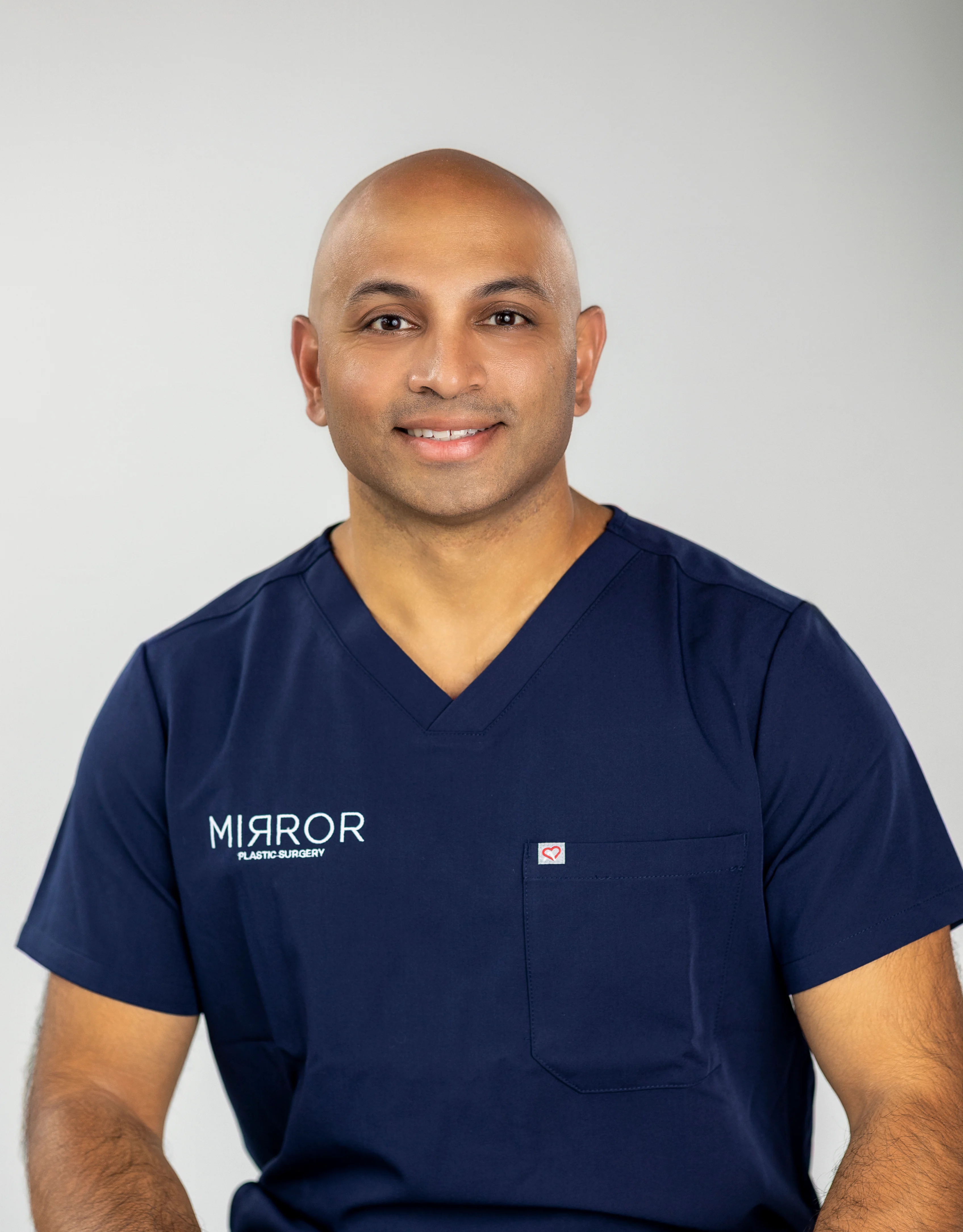
Written by: Dr. Akash Chandawarkar, Board Certified Plastic Surgeon, Mirror Plastic Surgery | Last updated: September 9, 2026
Key Takeaways
- Most turkey neck treatments fail because they do not match the real anatomical problem. Creams cannot tighten platysma bands, energy devices cannot remove fat pads, and injectables cannot remove loose skin.
- Turkey neck comes from three contributors: skin laxity, submental fat, and platysma muscle bands. Each one needs a different approach based on severity.
- Treatments are ranked from least to most invasive across seven tiers, with clear expectations for mild, moderate, and severe cases.
- Non-surgical options such as energy-based tightening, Kybella, and neuromodulators work best for mild to moderate concerns. Surgical neck lift remains the most powerful option for severe laxity and banding.
- If you are unsure which tier fits your neck, schedule a consultation with Mirror Plastic Surgery for an anatomy-first assessment from a board-certified plastic surgeon.
What Actually Causes a Turkey Neck
Turkey neck develops when specific structures in the neck age and change. Each structure responds to different treatments. A 2026 narrative review in the Journal of Cosmetic Dermatology by Ricardo, Jalali, and Yi groups these into three overlapping phenotypes:
- Skin laxity: Collagen and elastin decline with age, sun exposure, and genetics. The skin under your chin loses firmness and starts to drape.
- Submental fat: A localized fat pad beneath the chin creates fullness that hides the jawline and produces a double-chin look.
- Platysma muscle bands: The platysma muscle runs from collarbone to jaw. As it loses tone, its vertical bands show more, especially when you speak or swallow.
Most people have a mix of skin laxity, excess submental fat, and platysma banding. Mild laxity may respond to energy-based tightening. Significant fat often needs Kybella or liposuction. Prominent bands usually need neuromodulators or surgery. A board-certified plastic surgeon can map these factors and match you with the right tier.
Self-Assessment: How Your Neck Maps to the Treatment Tiers
Use this quick self-check to estimate your severity level before you review the tiers.
Mild (Tier 1–2):
- You see early crepey texture or fine lines on your neck.
- Skin snaps back quickly when gently pinched.
- No visible fat bulge under the chin.
- No vertical bands when you clench your jaw.
Moderate (Tier 3–4):
- You can pinch loose skin that takes a moment to rebound.
- A soft, compressible fullness under the chin stays in every head position.
- Vertical bands appear when you clench your jaw but disappear at rest.
Severe (Tier 5–7):
- Loose skin hangs in folds or drapes below the jawline.
- Skin feels thin and crepey and does not rebound when pinched.
- Vertical bands are visible even when your neck is relaxed.
- You see significant jowling that blends into the neck.
A professional assessment remains the only way to confirm your true severity and avoid paying for treatments that cannot correct your anatomy.
Tier 1: Topical Skincare and At-Home Devices
What It Is: Daily SPF 30+ protection, retinoid-based neck creams, and peptide formulas that support collagen and protect from UV damage.
What It Can Do: Improve texture and tone, slow collagen breakdown, and help with very early crepiness. Topical retinoids and antioxidants can smooth texture over months, but they do not reach the deeper tightening layers.
What It Cannot Do: Tighten meaningful laxity, reduce submental fat, or correct platysma bands. No cream reaches deep enough to change neck structure.
Bottom Line: Helpful for prevention and maintenance. Visible sagging needs higher tiers.
Tier 2: Energy-Based Skin Tightening (Radiofrequency and Ultrasound)
When skincare alone cannot keep up with early laxity, energy-based tightening targets deeper support layers.
What It Is: Devices such as Thermage (monopolar radiofrequency) and Ultherapy (microfocused ultrasound) heat deep skin layers to trigger collagen contraction and remodeling. Ultrasound can reach depths up to 5 mm, which matches the layer addressed in surgical neck lifts.
What It Can Do: Create gradual, modest improvement in mild to moderate laxity. The 2026 Journal of Cosmetic Dermatology review reports that radiofrequency approaches improve laxity and texture with an acceptable safety profile. Results build over 2–3 months and often last 1–2 years.1 A 2021 systematic review noted that a study by Alam et al. found about 86% of patients showed significant laxity improvement on blinded assessment after microfocused ultrasound.1
What It Cannot Do: Correct marked sagging, remove submental fat, or erase platysma bands. If you can pinch a thick fold of loose skin or see two clear vertical cords when clenching your jaw, non-surgical tightening usually falls short.
Typical Protocol: One to three sessions, minimal downtime, with results visible within 30–60 days.
Bottom Line: Strong choice for early laxity while skin still has good structure. This tier is insufficient for advanced cases.
Tier 3: Injectable Fat Reduction With Kybella
When a true fat pad dominates your profile, targeted fat reduction can sharpen the neck and jawline.
What It Is: Kybella (deoxycholic acid) is an FDA-approved injectable that permanently destroys fat cells beneath the chin. A systematic review and meta-analysis of randomized trials showed that deoxycholic acid significantly improved submental contour compared with placebo, giving it the strongest evidence base among injectable fat reducers.
What It Can Do: Reduce a soft, compressible submental fat pad in patients with good skin elasticity. Persistent fullness under the chin in every head position signals a true fat pad and ideal indication for injectable lipolytics. Treated fat cells are gone for good, which means contour improvement can be long lasting when weight stays stable.
What It Cannot Do: Tighten skin. Poor elasticity can reveal more laxity after fat removal. Kybella works best when fat is the main issue and skin quality remains strong.
Typical Protocol: Two to six sessions spaced weeks apart, with noticeable swelling for 1–2 weeks after each session. Final contour changes appear over several months.
Bottom Line: Powerful for fat-dominant necks with firm skin. It does not treat loose skin.
Tier 4: Neuromodulators for Platysma Bands
When vertical cords show mainly with movement, relaxing the platysma can soften the neck without surgery.
What It Is: Botox, Dysport, Xeomin, Daxxify, or Jeuveau injected into vertical platysma bands to relax the muscle and reduce band visibility. A phase 3 randomized, placebo-controlled trial of tailored onabotulinumtoxinA dosing found investigator-assessed improvement of at least one grade in about 76.7% of treated patients versus 21.2% on placebo, with benefit still present at day 120.
What It Can Do: Soften dynamic bands that appear when you clench your jaw or speak. Results usually last 3–4 months.1
What It Cannot Do: Improve skin laxity, remove fat, or correct static bands visible at rest. Static bands from excess skin or structural laxity do not respond to neuromodulators, so assessment at rest and with full contraction matters before treatment.
Bottom Line: Useful tool for band-dominant, movement-based concerns. Advanced turkey neck usually needs additional tiers.
Tier 5: Combination Non-Surgical Treatment Plans
Many real-world necks need a staged plan that addresses fat, skin, and muscle in a specific order.
What It Is: A multimodal plan that tackles the main anatomical driver first, then refines the others. The 2026 Journal of Cosmetic Dermatology framework recommends treating the dominant phenotype first, often fat reduction before tightening, with neuromodulators and structural support as add-ons.
An example sequence might include:
- Kybella for submental fat when present.
- Ultherapy or radiofrequency microneedling for tightening 6–8 weeks after fat reduction.
- Neuromodulators for remaining platysma bands.
- Jawline filler for support when chin projection is weak.
What It Can Do: Deliver noticeable improvement in mild to moderate mixed cases. Multimodal treatment can stabilize results for up to three years in patients who prefer a gradual nonsurgical path.1
What It Cannot Do: Replicate surgical correction for severe laxity or heavy banding. Heat and injectables alone cannot address thick platysmal bands, deep hanging skin, or post-weight-loss laxity.
Bottom Line: Strong option for the right candidate who accepts multiple sessions and maintenance every 1–2 years.
Tier 6: Neck Liposuction
When fat plays a major role and you want a single-session solution, surgical fat removal can reshape the neck quickly.
What It Is: A surgical procedure that removes submental fat through a small incision. Surgeons may combine it with chin augmentation when a recessed chin worsens the profile.
What It Can Do: Permanently remove larger fat deposits in one session. Most patients need only three to five days of social downtime, often less total downtime than a full Kybella series.
What It Cannot Do: Tighten skin or correct platysma bands. Removing too much superficial fat in someone with poor skin quality can highlight irregularity or make laxity more obvious.
Bottom Line: Best for fat-dominant necks with good elasticity in patients who prefer a one-time procedure.
Tier 7: Surgical Neck Lift (Platysmaplasty)
Severe laxity, heavy banding, and structural aging respond most reliably to a surgical neck lift.
What It Is: A surgical procedure that treats all three components of turkey neck. The surgeon removes excess skin, contours submental fat, and tightens platysma bands in the midline. A 2025 pooled analysis of platysma-based neck lifts (Cambiaso-Daniel et al.) reported a platysma band recurrence rate of 1.4% across 2,106 patients, which shows durable correction.
What It Can Do: Provide dramatic, long-lasting improvement for severe laxity, significant banding, and advanced neck aging. Results often last 10 to 15 years.1
What It Cannot Do: Stop aging altogether. It resets your neck’s structural baseline so you age from a much better starting point.
Safety: Serious complications remain uncommon. A 2025 meta-analysis of facelift nerve injury (Gandra et al.) that pooled 67 publications and 15,404 patients found permanent motor nerve damage in 0.047% of cases.
Bottom Line: Most complete option for advanced turkey neck and the only tier that delivers full surgical correction.
How Long Do Results Last? The Maintenance Reality
The table below compares who each treatment suits best, how quickly results appear, and how long they usually last so you can balance maintenance with durability.
| Treatment | Best For | Results Timeline | Longevity |
|---|---|---|---|
| Kybella | Submental fat with good skin elasticity | 2–6 sessions; final results in months | Permanent for treated fat cells |
| Ultherapy / Thermage | Mild to moderate skin laxity | 1–3 sessions; results in 2–3 months | 1–2 years |
| Neuromodulators | Dynamic platysma bands | 1 session; results in 5–14 days | 3–4 months |
| Neck Lift | Severe laxity, static bands, structural aging | Single procedure; final results over several months | 10–15+ years |
Non-surgical approaches usually need repeat sessions every 1–2 years. A surgical neck lift costs more upfront but often outlasts a decade of repeated non-surgical treatments in both durability and quality of correction.
Personalized Assessment and the Mirror Plastic Surgery Approach
Effective turkey neck treatment starts with matching the plan to your dominant anatomical driver. The 2026 clinical framework in the Journal of Cosmetic Dermatology stresses that results suffer when the main phenotype is misidentified. Mirror Plastic Surgery, led by board-certified plastic surgeon Dr. Akash Chandawarkar, begins each case with a detailed, top-to-bottom evaluation that can last up to an hour.
Key elements of the Mirror Plastic Surgery philosophy include:
- Surgical Expertise: Dr. Akash is Harvard-educated and Johns Hopkins-trained, with fellowship training in aesthetic surgery at Manhattan Eye Ear & Throat Hospital/Lenox Hill Hospital. He personally performs all injectable treatments.
- Concierge Priorities: Safety comes first, function second, aesthetics third. Recommendations stay honest and unbiased, even when that means delaying or skipping a procedure.
- Supplier-Neutral Choices: The practice does not follow product quotas, so treatment plans reflect your anatomy rather than sales targets.
- Focused Care: Mirror limits the schedule to 1–2 surgeries per day so each patient receives unhurried, individualized attention.
If you feel unsure which tier fits your neck, a consultation can clarify your anatomy and realistic options.
Schedule a Consultation with Mirror Plastic Surgery for an honest, anatomy-first neck evaluation.
Frequently Asked Questions
Can Turkey Neck Be Tightened Without Surgery?
Yes, in mild to moderate cases. Energy-based devices such as Ultherapy and radiofrequency can create modest tightening when skin still has enough structure to contract. Neuromodulators can soften dynamic platysma bands, and Kybella can reduce submental fat when elasticity is good. Significant loose skin that hangs in folds, visible bands at rest, or advanced structural laxity require surgery for meaningful correction. Matching treatment to the main anatomical problem makes professional assessment essential.
How Long Does a Neck Lift Last?
Most patients enjoy results for 10–15 years or longer.1 As noted earlier, neck lift outcomes are durable, with a very low rate of platysma band recurrence. Aging continues after surgery, yet the procedure resets your structural baseline so you start from a much younger-looking neck. Genetics, sun exposure, smoking, and skin quality at surgery all affect longevity. Patients who protect their skin and maintain a stable weight usually keep results the longest.
Is Kybella or a Neck Lift Better for Turkey Neck?
The better option depends on your main concern. Kybella works well for submental fat in patients with good elasticity and offers permanent fat reduction without surgery. It does not treat lax skin or platysma bands. A neck lift addresses skin, fat, and muscle together and suits moderate to advanced cases. Patients with mild fat and firm skin often do well with Kybella. Any meaningful laxity or banding calls for a surgical consultation to review the full range of choices.
Are There Turkey Neck Treatments for Men?
Men experience the same three anatomical drivers and benefit from the same tiered framework. Options range from energy-based tightening and Kybella for early changes to neuromodulators for dynamic bands and surgical neck lift for advanced aging. Surgeons may adjust technique to preserve a masculine neck contour and natural hairline, but the anatomy-first decision process stays the same. Men seeking clarity about their neck options can expect the same detailed assessment at Mirror Plastic Surgery.
What Is the Best Non-Surgical Treatment for Turkey Neck?
The best non-surgical treatment depends on your anatomy rather than a single universal choice. Fat-dominant necks with firm skin respond well to Kybella. Laxity-dominant necks with mild to moderate sagging benefit from microfocused ultrasound or radiofrequency. Band-dominant necks with dynamic cords improve with neuromodulators. Many patients need a combination plan that usually starts with fat reduction, then tightening, then muscle relaxation. A board-certified plastic surgeon can identify your dominant concern and design the right sequence.
Your Next Step
The right turkey neck solution exists for your anatomy and goals. You may need one non-surgical treatment, a staged combination plan, or a surgical neck lift. Every path starts with an accurate, personalized assessment from a board-certified plastic surgeon.
At Mirror Plastic Surgery in St. Petersburg, Dr. Akash Chandawarkar provides thorough evaluation and straightforward guidance so you can decide with confidence. The team prioritizes safety, long-term satisfaction, and a pressure-free experience. Reach the practice by phone at 727-361-6515, by email at hello@mirrorplasticsurgery.com, or visit the office at 780 4th Ave S, St. Petersburg, FL 33701.
Schedule Your Consultation to begin a personalized turkey neck treatment plan.
Disclaimer: Results may vary from person to person. Editorial content, before and after images, and patient testimonials do not constitute a guarantee of specific results.
1 Results may vary from person to person. Editorial content, before and after images, and patient testimonials do not constitute a guarantee of specific results.