Written by: Dr. Akash Chandawarkar, Board Certified Plastic Surgeon, Mirror Plastic Surgery | Last updated: September 9, 2026
Key Takeaways
- Nefertiti Botox uses targeted botulinum toxin injections into the platysma muscle to relax vertical neck bands and create a subtle, non-surgical lift along the jawline and lower face.
- The FDA recently approved Botox Cosmetic specifically for moderate to severe platysma bands, making it the first neurotoxin with an official indication for this treatment area.
- Ideal candidates are typically in their late 30s to early 60s with mild-to-moderate muscle-driven laxity, good skin elasticity, and neck cords that improve when the muscle relaxes.
- Results appear within 5–7 days, last about 3–4 months, require no downtime, and are maintained with repeat treatments every few months.1
- For a personalized assessment from a board-certified plastic surgeon who performs every injection himself, schedule your consultation.
How Nefertiti Botox Shapes the Neck and Jawline
The name comes from Queen Nefertiti of ancient Egypt, whose sculpted jawline and elongated neck have been an aesthetic ideal for over 3,000 years. The technique was first formally described by Dr. Philippe Levy in 2007 in the Aesthetic Surgery Journal.
The mechanism centers on the platysma, a broad, thin sheet of muscle that runs from the collarbone up over the jawline and acts as a depressor, constantly pulling the lower face downward. When botulinum toxin relaxes this downward pull, the natural lifting muscles of the face can work more effectively. The result is a subtle but visible lift. This treatment is temporary and non-surgical, and it requires ongoing maintenance. It does not replace a surgical facelift.
How Nefertiti Botox Works Step by Step
This treatment follows a structured process that moves from careful assessment to precise injection and follow-up.
- Consultation and Assessment: Your provider evaluates your platysmal bands, skin elasticity, and jawline anatomy. Many practitioners use the “Eeee” test, asking you to show your bottom teeth and say “eeee” so platysmal bands stand out and muscle strength can be measured for accurate dosing.
- Marking Injection Points: Precise points are marked along the inferior mandibular border and down the visible platysmal cords, usually 4–6 micro-doses per cord and 5–7 points along the jaw.
- The Injection Process: The procedure requires no anesthesia, takes under 30 minutes, and most patients experience only temporary redness and mild swelling.
- Results Timeline: Initial effects appear within 5–7 days, with full results visible at about 2 weeks.1
Dosage varies considerably by anatomy. The FDA-approved protocol for platysma bands specifies 26, 31, or 36 units depending on band count and severity, with 16 units allocated to jawline injections. Broader off-label Nefertiti protocols commonly use 20–50 units total, and some clinical settings report higher ranges when both the jawline and full neck bands are treated together. An experienced provider must determine the exact amount after assessing your individual anatomy.
Request a personalized assessment with Dr. Akash Chandawarkar, a board-certified plastic surgeon who performs every injectable treatment himself.
Who Is a Good Candidate for Nefertiti Botox?
Ideal candidates are typically in their late 30s to early 60s with mild to moderate lower-face aging, good skin elasticity, and concerns such as a softened jawline, visible vertical neck bands, or early jowling. The treatment works best when the platysma muscle primarily drives the concern rather than skin laxity or fat.
A simple self-test helps clarify candidacy: if neck cords vanish when the neck fully relaxes, muscle is the cause and Botox can help; if the neck looks the same relaxed as flexed, the problem is skin and Botox will not be effective. Beyond that self-test, certain anatomical features rule out the treatment entirely.
The following patients are generally not good candidates:
- Those with heavy submental fat, true skin redundancy, advanced jowling driven by bone resorption, or grade III–IV platysmal banding where the cord persists at rest
- Those with crepey, sun-damaged neck skin where collagen loss, rather than muscle activity, is the primary issue
- Those with static bands visible at rest, significant skin excess, or permanently stretched skin
- Those whose jowling is primarily driven by bone resorption or significant volume loss that requires structural restoration
Beyond the anatomical criteria, an honest provider will tell you when Nefertiti Botox is not the right tool and will explain what is. At Mirror Plastic Surgery, Dr. Chandawarkar’s anatomy-first approach means you receive a candid assessment, even if the recommendation is surgery or no treatment at all.
What to Expect: Procedure, Results, and Aftercare
The procedure involves minimal discomfort, no downtime, and a quick return to normal activities. Results include a more defined jawline, softened neck bands, and a subtle lift that looks natural. Results typically last 3–4 months, with some patients reporting sustained improvement for up to 6 months.1 Those results are not permanent, so maintenance treatments every 3–4 months are recommended. Many patients need slightly fewer units over time as the platysma weakens.
Follow these aftercare guidelines to protect your results:
- Remain upright for at least 4 hours after treatment
- Avoid rubbing or massaging the treated area for 24 hours
- Skip vigorous exercise, hot yoga, saunas, and facials for 24 hours
- Avoid blood-thinning supplements such as Vitamin E, fish oil, and ibuprofen for about a week before treatment
Risks and Side Effects
The most common side effects are minor and temporary, including bruising and swelling in about 10–15% of patients, tenderness, and redness at injection sites. Rare but serious risks include:
- Dysphagia (difficulty swallowing) if toxin diffuses into deeper neck strap muscles
- Asymmetric smile if injection drifts toward the depressor labii inferioris or marginal mandibular nerve territory
- Temporary neck weakness from over-treatment or incorrect depth
- Voice changes if deeper structures are affected
Both dysphagia and asymmetric smile are dose- and technique-dependent and resolve as the toxin wears off. All botulinum toxin products carry an FDA boxed warning that toxin effects may spread from the injection area, and swallowing or breathing difficulties should prompt urgent medical attention.
Contraindications include pregnancy, breastfeeding, neuromuscular disorders such as myasthenia gravis and Lambert-Eaton syndrome, active infection in the treatment area, and known allergy to botulinum toxin.
The margin for error along the marginal mandibular nerve is small, and this area’s proximity to structures involved in swallowing and speaking makes deep anatomical knowledge essential. Dr. Chandawarkar’s surgical training gives him a command of neck anatomy that goes beyond standard injector credentials.
Nefertiti Lift vs. Surgical Neck Lift: Which Is Right for You?
To help you weigh your options, the table below compares Nefertiti Botox and surgical neck lift across key factors such as longevity, downtime, what each can address, and scarring.
| Factor | Nefertiti Botox | Surgical Neck Lift |
|---|---|---|
| Results Duration | 3–4 months per session | 5–10 years |
| Downtime | None, return to normal activities immediately | 2–4 weeks recovery |
| Addresses Excess Skin or Submental Fat | No | Yes (with liposuction for fat) |
| Scarring | None | Incisions (typically hidden) |
Nefertiti Botox suits patients with mild-to-moderate muscle-driven laxity and good skin elasticity who prefer a non-surgical approach. Patients with significant skin laxity or extensive excess skin often achieve better results with surgical neck rejuvenation, because non-surgical treatments cannot remove large amounts of excess skin or reposition deeper structures. Nefertiti Botox can also serve as a maintenance tool after surgery, helping preserve results as muscle activity gradually returns.
Talk with Dr. Chandawarkar to determine whether Nefertiti Botox, a surgical approach, or a combination plan fits your anatomy and goals.
Is Nefertiti Botox Worth It?
For the right candidate, Nefertiti Botox offers meaningful, natural-looking improvement. The treatment is non-invasive, requires no downtime, and produces subtle refinement rather than dramatic change. It can also be combined with complementary treatments such as biostimulatory fillers or energy-based skin tightening for more comprehensive improvement. Because regular maintenance keeps the platysma relaxed, it may act as a preventative measure, potentially slowing the development of permanent jowls over time.1
The limitations matter just as much as the benefits. Results are temporary, require maintenance every 3–4 months, and depend heavily on provider skill. A 2024 study of 156 patients found that 94% reported significant improvement in platysmal bands and 87% noted better jawline definition.1 Only 0.8% experienced mild temporary difficulty swallowing. Patient satisfaction data from the FDA’s Phase III trials showed that 65% and 62% of Botox-treated patients reported being “Very Satisfied” or “Satisfied” with the appearance of their neck and jawline definition at day 14, compared with 12% in both placebo groups.1
As one provider summarizes it, “The Nefertiti Lift sharpens what’s there. It doesn’t manufacture what isn’t.” Clear, realistic expectations set the stage for a satisfying outcome.
Frequently Asked Questions
How Many Units of Botox Do I Need for a Nefertiti Lift?
Typical doses range from 20–50 units total for most patients, depending on muscle strength and the prominence of neck bands. As noted earlier, the FDA-approved protocol specifies 26, 31, or 36 units based on band count and severity, with 16 of those units allocated to jawline injection sites. Some broader treatment plans that include both the full neck and jawline may use higher doses. Your provider should assess your anatomy before determining your exact dose. Any injector who quotes a flat unit count without examining you first is not following best practice.
Does Nefertiti Botox Hurt?
Most patients describe the injections as tiny pinches. The procedure takes 15–30 minutes with no anesthesia required. Some providers use vibration or cooling to minimize discomfort. Many patients also notice an unexpected relief of physical tension in the neck once the neurotoxin takes effect.
How Long Does Nefertiti Botox Last?
Results typically last 3–4 months per session. Factors that influence longevity include muscle strength, metabolic rate, lifestyle habits such as high-intensity exercise, and treatment consistency. With regular maintenance over two or three cycles, the platysma muscle tends to become less overactive, and some patients find the interval between sessions gradually extends. A small percentage of patients with very active lifestyles or faster metabolisms may find results fade closer to the 10–12 week mark.
Can Nefertiti Botox Help with Jowls?
Yes, for mild-to-moderate jowling caused by platysma muscle pull. Relaxing the downward-pulling platysma makes the jawline appear more defined and gives the jowl area a subtle lift. However, Botox cannot address jowls caused by significant skin laxity, bone resorption, or substantial volume loss. When those factors drive your jowling, a surgical or combination approach usually produces more meaningful results.
Can Nefertiti Botox Get Rid of a Double Chin?
No. Nefertiti Botox targets muscle activity, not fat. Submental fat, or a “double chin,” requires fat-reduction treatments such as Kybella or liposuction. Some patients benefit from combining a Nefertiti lift with a fat-reduction treatment for more comprehensive lower-face improvement. Dr. Chandawarkar can assess which combination, if any, is appropriate for your anatomy during a consultation.
Why Choose Mirror Plastic Surgery for Nefertiti Botox?
The Nefertiti lift is an advanced injectable technique that demands precision. The margin for error along the marginal mandibular nerve is small, and the neck’s proximity to structures involved in swallowing and speaking demands a provider with genuine anatomical expertise, not merely injectable training.
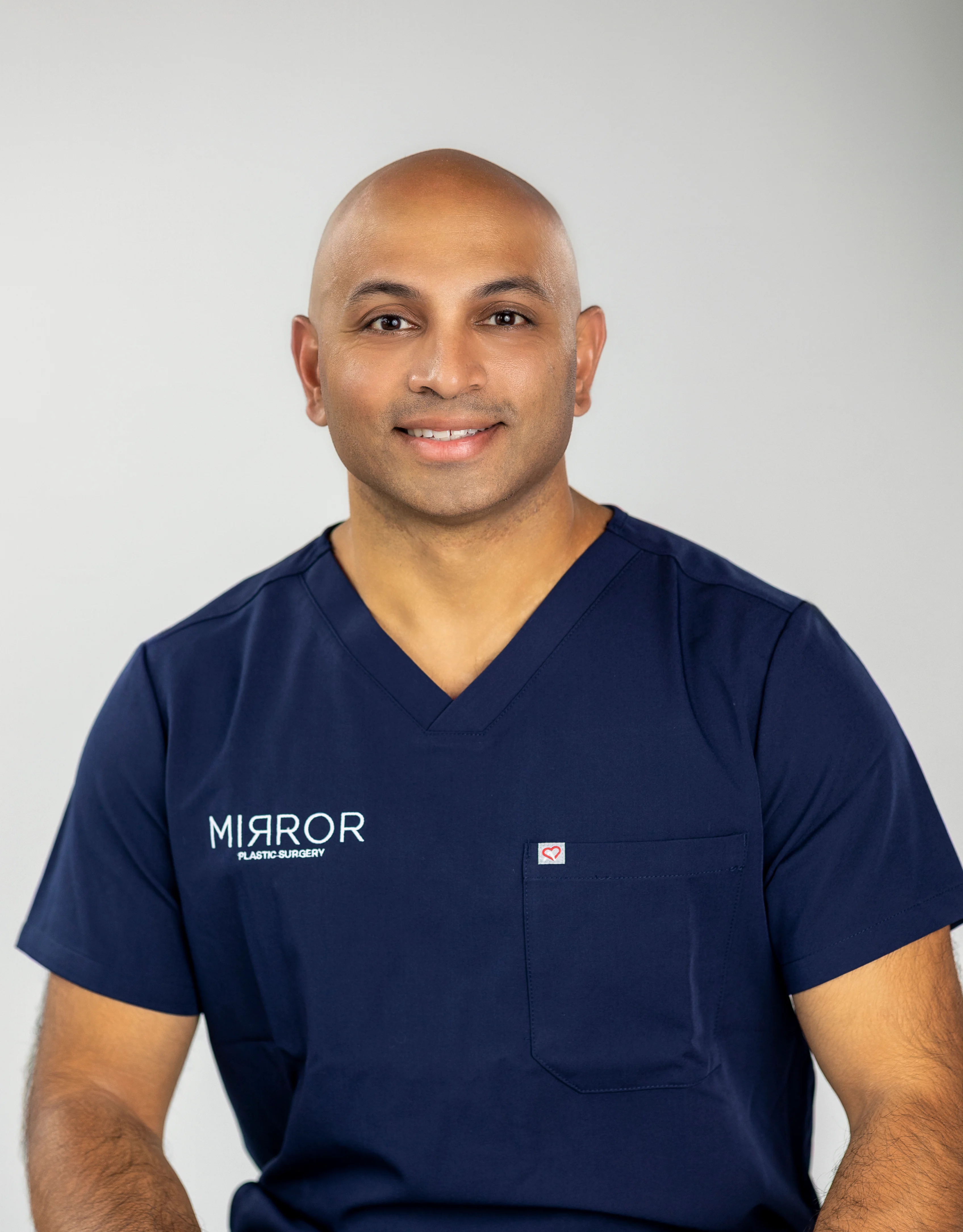
Dr. Akash Chandawarkar is a board-certified plastic surgeon. He was educated at Harvard and trained at Johns Hopkins, and he completed a fellowship in aesthetic surgery at Manhattan Eye Ear & Throat Hospital (MEETH)/Lenox Hill Hospital. He personally performs every neuromodulator and dermal filler treatment at Mirror Plastic Surgery, and patients are never delegated to a non-physician injector. His surgical command of facial and subdermal anatomy guides every injection decision.
Mirror Plastic Surgery operates on a concierge medicine model. Consultations run up to an hour, treatment plans are built around your specific anatomy and long-term goals, and the practice’s guiding philosophy, “safety first, function second, aesthetics third,” means you receive an honest assessment even if you are not yet a candidate or surgery is a better fit. This approach contrasts with high-volume practices that push treatments to fill appointment slots.
Dr. Chandawarkar also serves on advisory boards for Merz Aesthetics and Tiger Aesthetics, which keeps him at the forefront of injectable innovation. Mirror Plastic Surgery is supplier-neutral, so product recommendations are driven by your anatomy rather than quotas or commissions.
For a natural-looking result that respects your anatomy, explore related guides on natural-looking Botox before and after, the history of Queen Nefertiti and the Nefertiti lift, and the best Botox treatment areas explained.
Conclusion
Nefertiti Botox is a safe, clinically supported non-surgical option for patients with mild-to-moderate platysma-driven jawline softening and neck banding. It delivers a subtle, natural-looking lift with no downtime, no incisions, and a well-established safety profile when a qualified provider performs the injections. It does not replace surgery when skin laxity is significant, and it does not treat submental fat or static neck bands caused by collagen loss. Candidacy depends on anatomy, and the quality of the outcome depends heavily on the injector’s skill and anatomical knowledge.
If you are in the St. Petersburg or Tampa Bay area and want an honest, anatomy-first assessment from a board-certified plastic surgeon, Mirror Plastic Surgery can help you determine whether Nefertiti Botox is the right next step.
Disclaimer: Results may vary from person to person. Editorial content, before and after images, and patient testimonials do not constitute a guarantee of specific results.
Book a Consultation
Contact Mirror Plastic Surgery to book your consultation with Dr. Chandawarkar for a personalized assessment.
- Phone: 727-361-6515
- Email: hello@mirrorplasticsurgery.com
- Address: 780 4th Ave S, St. Petersburg, FL 33701
- Instagram: @mirrorplasticsurgery | @dr.akashplasticsurgery | @perfectlyplastics
1 Results may vary from person to person. Editorial content, before and after images, and patient testimonials do not constitute a guarantee of specific results.