
Written by: Ellie Pranckevicius, FNP-BC, Aesthetic Nurse Practitioner & Aesthetic Injector | Facial Restoration & Regenerative Injectable Specialist, Mirror Plastic Surgery | Last updated: August 30, 2026
Key Takeaways for Treating Turkey Neck
- Turkey neck usually stems from three anatomical factors: skin laxity, submental fat, and platysmal bands. Effective treatment targets the dominant cause instead of relying on generic non-surgical options.
- A simple self-assessment can classify neck aging as mild, moderate, or advanced by looking at skin looseness, band visibility, and loss of the cervicomental angle.
- Energy devices and medical-grade skincare can create visible change in mild cases. Moderate concerns often need neuromodulators, biostimulatory fillers, or carefully staged combination plans.
- Advanced changes such as marked skin redundancy, subplatysmal fat, or midline platysmal separation usually fall outside the reach of non-surgical treatments and often require surgery.
- Patients ready for a personalized, anatomy-first evaluation can schedule their assessment at Mirror Plastic Surgery to identify the most appropriate treatment tier.
The Three Anatomical Causes No Cream Can Fix
Turkey neck almost always reflects a mix of three anatomical factors. Skin laxity develops when the dermis thins, loses collagen, and no longer recoils after movement. Submental fat, either superficial or subplatysmal, builds under the chin and blunts the cervicomental angle. Platysmal bands appear as vertical cords when the platysma muscle separates at the midline with age. The combination of these findings, not any single factor, determines whether non-surgical options or surgery will produce a meaningful result. Treatment must match the dominant cause, because targeting the wrong layer wastes time, money, and tissue tolerance.
Quick Self-Assessment Checklist: Mild, Moderate, or Advanced?
Use this checklist in natural lighting with a handheld mirror. Focus on what you see at rest, not during exaggerated movement.
- Mild: Skin feels slightly looser than it did five years ago. Fine horizontal creases appear on downward gaze. The jawline is still defined. No visible vertical cords appear at rest.
- Moderate: Horizontal creases are visible at neutral gaze. One or two vertical bands appear when you tense the neck or turn your head. The jawline-to-neck boundary is softening. Submental fullness is present, but the skin still has some recoil when pinched.
- Advanced: A skin pinch in the submental area exceeds 2 cm and does not spring back. Vertical bands are visible at rest without any muscle contraction. The cervicomental angle is blunted or lost. Prior energy treatments created little lasting change.
Board-certified specialists classify neck aging across a five-grade scale, with Grade 0 representing no significant change and Grade 4 representing severe laxity requiring multi-modal or surgical management. This clinical grading system aligns with the mild, moderate, and advanced framework above, so three or more affirmative answers on a structured self-assessment signal visible neck aging that deserves a professional, layered diagnosis instead of continued at-home care.
Tier 1: Mild Laxity and What Topicals and Energy Devices Can Deliver
Mild presentations often respond well to evidence-based non-surgical treatments when expectations stay realistic. These options support collagen, tighten mild laxity, and slow further decline rather than creating a surgical-level change.
- High-Intensity Focused Ultrasound (HIFU / Ultherapy): A 2025 systematic review of 45 HIFU studies reported 18–30% improvements in skin laxity but did not quantify the percentage of patients improved or the typical duration of results.1 Ultherapy works best for mild-to-moderate laxity and typically produces at least a one-point improvement on a five-point clinical assessment scale for neck lifting, with peak results at six months.1
- Radiofrequency Microneedling (RF Microneedling): A critical review of 42 higher-quality studies found no significant safety signal and showed that dermal remodeling is slow and progressive, with improvement continuing for six months after treatment. Results fade over time as skin continues to age, so maintenance is part of any long-term plan.
- Monopolar Radiofrequency with Ligament-Focused Protocols: Prospective studies of monopolar RF protocols have shown improvements in skin laxity, wrinkles, texture, and contour.1
- Topical skincare: Daily SPF and collagen-supporting actives help slow further breakdown but cannot reverse established structural laxity. Non-surgical treatments cannot fully correct aesthetic problems that are primarily structural rather than superficial.
A rushed 15-minute consultation rarely reveals whether your skin has enough residual elasticity to respond to energy devices or whether subplatysmal fat is pushing bands forward and limiting what surface treatments can achieve. Mirror Plastic Surgery’s hour-long concierge assessment evaluates all anatomical layers before any modality is recommended, so you invest in treatments your tissue can actually respond to.
Schedule your energy-device assessment with Ellie to determine whether your skin has the residual elasticity to respond to HIFU or RF microneedling.
Tier 2: Moderate Concerns with Neuromodulators and Biostimulatory Fillers
As neck aging progresses beyond the mild stage, energy devices alone usually fall short. When horizontal creases are visible at rest and platysmal bands appear with minimal provocation, the treatment plan expands to include injectable options tailored to the dominant driver.
- Neuromodulators for platysmal bands (Nefertiti Lift): Phase 3 randomized, double-blind, placebo-controlled trials confirmed statistically significant improvement in platysma prominence with onabotulinumtoxinA at Day 14.1 Dynamic bands that appear prominently on platysma contraction respond best to neuromodulator treatment, while static bands visible at rest with little change on contraction suggest a structural laxity or fat component that neurotoxin cannot fully resolve. Effects typically last about three to four months.
- Biostimulatory fillers for volume and structural support: PMMA-collagen gel for pre-jowl sulcus correction shows 90% of patients rating improved or much improved on GAIS and 100% at least somewhat satisfied at 24 months.1 These fillers work well when volume loss creates contrast between the face and neck. They are not appropriate when skin redundancy is the main issue.
- Deoxycholic acid (Kybella) for submental fat: A 2026 systematic review found injectable lipolysis with ATX-101 achieved improvement in most patients, with satisfaction rates of 67–86%, and the strongest evidence supports fat reduction rather than true skin tightening.1 Submental fat reduction performed alone in patients with poor skin elasticity can make underlying laxity more visible by removing volume support that previously masked loose skin, so a full skin-laxity assessment must come first.
- Combination sequencing: A 2026 multimodal framework recommends staged combination protocols, such as initial lipolysis followed by RF microneedling or HIFU for residual laxity, then biostimulators or neuromodulators, because single-modality approaches often underperform when multiple anatomical layers contribute to neck aging.
High-volume practices often default to a single injectable per visit because time constraints limit the layered diagnostic work that moderate cases need. Ellie Pranckevicius’s dual background in esthetics and advanced nursing, combined with four years in a Neuroscience ICU, gives her a clinical lens that extends well beyond surface anatomy and helps her identify when several anatomical layers are driving neck aging. This diagnostic depth supports her holistic, full-face philosophy, so every neuromodulator placed in the neck is considered in the context of the entire facial structure and avoids the isolated-treatment asymmetries that create an “overdone” appearance.
Tier 3: Advanced Structural Changes That Call for Surgical Input
Advanced turkey neck reflects structural changes that injectables and energy devices cannot meaningfully correct. Recognizing this threshold early prevents repeated spending on treatments that will not deliver the desired change.
- Significant skin redundancy: A surgical neck lift is typically recommended when there is significant saggy neck skin, advanced muscle separation, large fat deposits, or skin redundancy that cannot retract on its own, because no laser or injectable can fully remove severe excess skin.
- Subplatysmal fat: Subplatysmal fat beneath the platysma contributes to neck fullness that superficial liposuction cannot remove, since the cannula operates above the platysma, and it requires direct surgical excision through a submental incision.
- Platysmal separation at the midline: The platysma muscle separates at the midline with age, creating visible vertical platysmal bands as a structural muscular change, and non-surgical treatments such as moisturizers, exercises, ultrasound, or radiofrequency cannot reunite the separated muscle edges.
- Descended submandibular glands or prominent digastric muscles: Prominent anterior digastric muscles or descended submandibular glands cause persistent submental fullness that does not respond to weight loss, non-surgical fat reduction, or superficial liposuction and requires direct surgical management.
- Failed energy treatment after two sessions: When two appropriately delivered energy-device sessions produce no measurable improvement in laxity, the structural burden has exceeded what thermal collagen remodeling can address.
Mirror Plastic Surgery follows a clear principle of safety first, function second, and aesthetics third. When Ellie’s assessment identifies advanced structural changes, the honest recommendation is a surgical consultation with Dr. Akash Chandawarkar instead of a continued cycle of non-surgical treatments that cannot create meaningful correction. That level of transparency is the practice standard.
Cost and Longevity Comparison Across Treatment Tiers
The table below compares treatment tiers by expected longevity, maintenance needs, and red-flag language to watch for from any provider. Pricing is not listed because anatomy, treatment volume, and session count vary by patient, and Mirror Plastic Surgery provides personalized quotes during consultation.
| Treatment Tier | Expected Longevity | Maintenance Required | Red Flags |
|---|---|---|---|
| Energy devices (HIFU, RF microneedling) | 12–18 months for HIFU; improvement builds for 6 months post-RF microneedling | Annual or biannual sessions, since results are not permanent and skin continues to age | Any provider claiming a single energy session produces permanent results |
| Neuromodulators (platysmal bands) | 3–4 months per treatment cycle | Ongoing sessions every 3–4 months for active banding, with reduced benefit as platysmal separation advances | Provider injecting bands without first assessing skin laxity and subplatysmal fat |
| Biostimulatory fillers | Over 90% patient satisfaction at 24 months for collagen-stimulating injectables | Touch-up sessions as the collagen scaffold matures, since fillers do not replace skin tightening | Volume added before skin laxity is assessed or filler used to mask structural ptosis |
| Injectable fat reduction (deoxycholic acid) | Clinician-assessed improvement sustained at 2–3 years in Phase 3 trials1; fat cells destroyed are not replaced1 | Multiple sessions, typically two to three, to complete a course, with separate management of skin laxity | Fat reduction recommended without a concurrent skin-laxity plan in patients with reduced elasticity |
| Surgical neck lift (platysmaplasty) | 10+ years with stable weight and sun protection1 | Complementary non-surgical maintenance as natural aging continues, since no procedure is a one-time permanent fix | Any provider guaranteeing permanent results without acknowledging ongoing aging |
Three Escalation Triggers That Call for a Concierge Consultation
Certain findings signal that self-triage has reached its limit and that a structured, top-to-bottom assessment is the right next step, regardless of what you have already tried.
- Skin pinch test exceeds 2 cm: A thorough pre-treatment assessment should include evaluating skin laxity by pinching to determine whether Botox alone will produce natural-looking results. When the pinched fold exceeds 2 cm and does not recoil, skin redundancy is the dominant driver and energy devices or injectables alone are unlikely to be enough.
- Visible anterior platysmal bands at rest: Static bands visible at rest with little change on contraction indicate a structural laxity or fat component that neurotoxin cannot fully resolve and may require fillers, energy-based tightening, or surgical referral.
- No meaningful improvement after two energy-device sessions: Non-surgical neck rejuvenation produces the strongest outcomes in patients with mild to moderate skin laxity, while severe laxity requires surgical intervention for meaningful correction. Two sessions with a properly calibrated device and no measurable change reliably signal that the structural burden exceeds what thermal remodeling can address.
If any of these three triggers apply, request Ellie’s hour-long assessment to identify which anatomical factors are driving your presentation and which treatment tier will deliver results.
Start Your Anatomy-First Consultation with Ellie
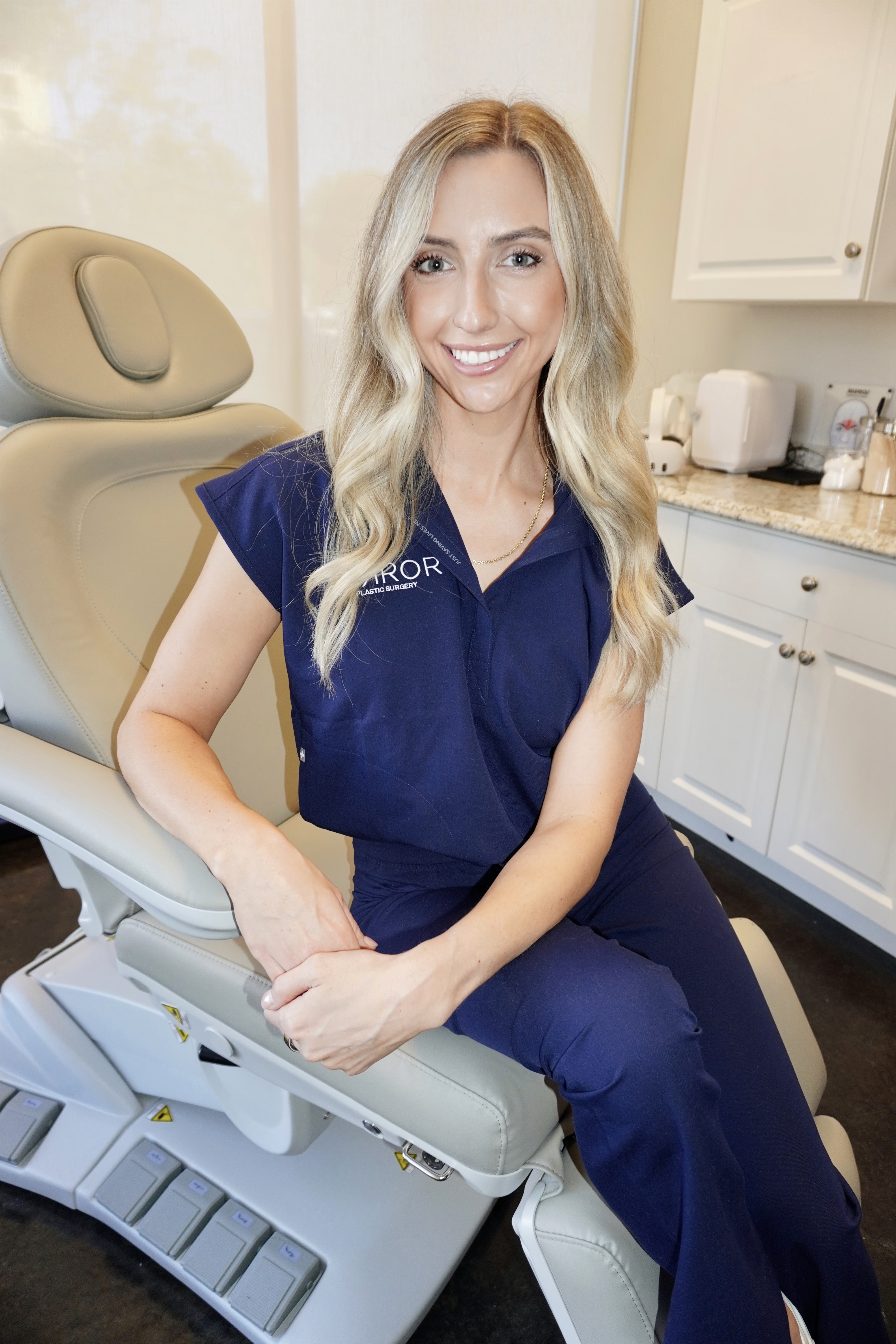
Ellie Pranckevicius, FNP-BC, leads non-surgical aesthetic treatments at Mirror Plastic Surgery. Her assessment process starts with a structured top-to-bottom evaluation of the face and neck that reviews skin quality, fat distribution, muscle dynamics, and structural descent before any treatment is discussed. When surgical correction is the better path, Dr. Akash Chandawarkar, a Harvard-educated, Johns Hopkins-trained plastic surgeon with fellowship training at Manhattan Eye Ear & Throat Hospital, continues care within the same practice.
Mirror Plastic Surgery is located at 780 4th Ave S, St. Petersburg, FL 33701. Reach the practice by phone or text at 727-361-6515, or by email at hello@mirrorplasticsurgery.com. Follow the team on Instagram at @mirrorplasticsurgery, @dr.akashplasticsurgery, and @perfectlyplastics.
Start your anatomy-first evaluation with Ellie and receive a full hour dedicated to your turkey neck concerns, with no upselling, no rushed conclusions, and no mismatched treatments.
Frequently Asked Questions
How do I know whether my turkey neck is caused by skin laxity, fat, or platysmal bands?
The three anatomical drivers create distinct visual and tactile signs. Skin laxity shows up as loose, crepey texture that does not recoil when pinched, and the skin fold exceeds 2 cm in moderate-to-advanced cases. Submental fat creates fullness beneath the chin that blunts the cervicomental angle and remains even when the neck is relaxed, often feeling soft and compressible. Platysmal bands appear as vertical cords running from the chin toward the collarbone, with dynamic bands becoming more prominent when you tense the neck and static bands remaining visible at rest, which suggests a structural component beyond muscle contraction alone. Most adults over 45 have a combination of all three, so a layered clinical assessment, not a quick visual inspection, is needed to identify the dominant driver and plan treatment in the right sequence.
Can Botox or Kybella fix my turkey neck without surgery?
Both treatments target specific anatomical components and have strong clinical evidence when used appropriately. Botox (onabotulinumtoxinA) injected into the platysma softens dynamic bands and provides mild lower-face elevation, with effects lasting the three to four months noted earlier, and works best when bands are dynamic rather than structural. Kybella (deoxycholic acid) destroys submental fat cells and produces sustained fat reduction, but it does not tighten skin or treat platysmal banding. As noted in the Tier 2 discussion, removing submental fat when skin elasticity is compromised can unmask laxity that volume was previously concealing. Neither treatment works as a standalone solution when skin redundancy, platysmal separation, or subplatysmal fat are the main contributors. The appropriate plan depends entirely on which anatomical factors are driving your presentation, which Ellie’s hour-long assessment is designed to clarify.
How many sessions of HIFU or RF microneedling will I need, and how long do results last?
Session count depends on the device protocol, the severity of laxity, and how your collagen responds. HIFU protocols for the neck usually involve one to two sessions, with improvement building over three to six months as neocollagenesis progresses and results typically lasting 12 to 18 months. RF microneedling protocols generally require three sessions spaced four to six weeks apart, with dermal remodeling continuing for up to six months after the final session. Neither modality produces permanent results because skin continues to age, so annual or biannual maintenance sessions form part of any realistic long-term plan. Patients with mild laxity and good baseline skin quality tend to respond best, those with moderate laxity often see noticeable improvement, and those with advanced laxity rarely achieve meaningful correction from energy devices alone regardless of session count.
What makes Mirror Plastic Surgery’s consultation different from a standard aesthetic clinic?
Time and diagnostic depth set the consultation apart. Mirror Plastic Surgery dedicates up to an hour to each initial visit and performs a structured top-to-bottom assessment that evaluates skin quality, fat distribution, muscle dynamics, and structural descent before any treatment is proposed. High-volume practices often limit consultation time and base recommendations on a brief visual scan. Ellie Pranckevicius brings a dual background in esthetics and advanced nursing, including four years in a Neuroscience ICU, which informs clinical judgment that extends beyond surface-level aesthetics. The practice remains supplier-neutral, so product and modality choices follow your anatomy rather than brand quotas or commission structures. When non-surgical options are not the right fit, that message is delivered clearly, and surgical consultation with Dr. Akash Chandawarkar is available within the same practice.
When should I stop trying non-surgical options and consider a surgical neck lift?
The escalation triggers outlined earlier, including a skin pinch exceeding 2 cm with poor recoil and no improvement after two energy sessions, reliably indicate that non-surgical treatments have reached their structural limit. Platysmal bands visible at rest, subplatysmal fat, descended submandibular glands, and a fully lost cervicomental angle further support the need for surgical input. A surgical neck lift (platysmaplasty) addresses these advanced structural changes together and often produces results lasting ten or more years with appropriate maintenance. Mirror Plastic Surgery’s concierge model ensures this conversation happens honestly and early, before you invest more time and money in treatments that cannot deliver.
Disclaimer: Results may vary from person to person. Editorial content, before and after images, and patient testimonials do not constitute a guarantee of specific results.
1 Results may vary from person to person. Editorial content, before and after images, and patient testimonials do not constitute a guarantee of specific results.