
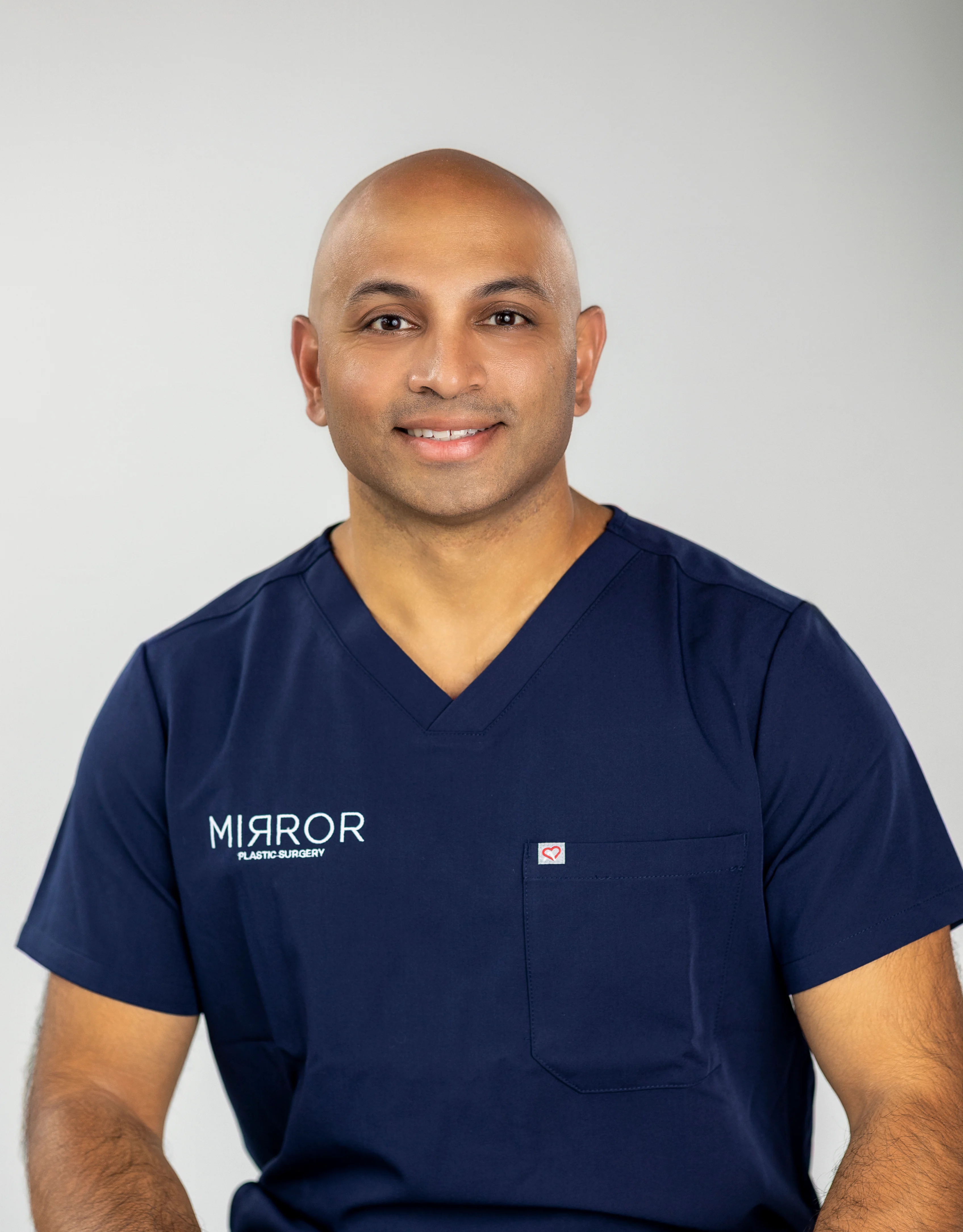
Written by: Dr. Akash Chandawarkar, Board Certified Plastic Surgeon, Mirror Plastic Surgery | Last updated: September 9, 2026
Key Takeaways
- Non-surgical neck tightening can refine mild to moderate laxity when treatment matches the specific anatomical cause.
- Ultherapy, RF microneedling, laser resurfacing, and neuromodulators each target different aspects of neck aging with distinct timelines and durability.
- Physician-led assessment helps identify whether skin laxity, platysmal bands, or submental fat is the main driver before treatment.
- Choosing a med spa for neck tightening should prioritize board-certified physician oversight, FDA-cleared devices, and honest recommendations.
In this guide, you will see how different treatments work, who they help most, and how to choose a qualified provider.
Why Neck Skin Ages And What That Means For Treatment
The neck often reveals age earlier than the face. Its skin is thinner, with fewer collagen and elastin fibers providing support. It also receives years of sun exposure with less protection than the face. Modern “tech neck,” the repeated downward gaze at screens, adds horizontal creases over time.
A 2026 narrative review in the Journal of Cosmetic Dermatology describes three overlapping patterns of neck aging: volume excess, skin laxity, and structural deficiency. Isolated nonsurgical treatment often underperforms when the main anatomical driver is misidentified. A physician’s assessment helps clarify this. One person’s “saggy” neck may come from submental fat, while another’s similar concern may stem from platysmal banding or true skin laxity. Matching treatment to anatomy gives the best chance of a satisfying result.
What Med Spa Neck Tightening Includes
Med spa neck tightening includes non-surgical procedures that improve neck skin laxity, texture, and contour. Common options are ultrasound therapy, radiofrequency microneedling, laser resurfacing, and injectable neuromodulators. These treatments stimulate collagen or relax specific neck muscles to soften sagging and wrinkles.
The right choice depends on which tissues are aging fastest in your neck. The next sections explain how each option works and when it makes sense.
Non-Surgical Neck Tightening Treatments And How They Help
Each neck tightening treatment has different strengths, mechanisms, and ideal use cases. Understanding these differences helps you and your physician build a focused plan.
Ultherapy: Ultrasound For Deeper Support
Ultherapy uses microfocused ultrasound with visualization (MFU-V) to deliver energy into deep foundational layers of the skin, the same tissue planes addressed in surgical lifts. The American Society for Laser Medicine and Surgery (ASLMS) notes that ultrasound therapy targets beneath the surface to gently heat, tighten, and lift tissue while leaving the outer skin intact. It is FDA-cleared for lifting the neck and submentum.
Retrospective data from Fabi and Goldman (2014) showed that 67% of subjects demonstrated blinded-reviewer improvement and 77.7% showed physician-rated improvement at 180 days after a single MFU-V session, with no link between outcome and age or Fitzpatrick skin type. Most patients notice subtle change at four to six weeks. Peak results usually appear at eight to twelve weeks as collagen rebuilds.1 A Singapore case series of 30 patients using an updated Ultherapy Prime protocol reported a mean pain score of 4.50 out of 10 with combined topical and oral analgesia. Downtime is typically minimal.
A 2026 systematic critical review of 57 studies found strong evidence that microfocused ultrasound improves mild to moderate facial and neck laxity. The safety profile was highly favorable, with most side effects limited to temporary redness and localized swelling. Results were consistently strongest in lower face and neck lifting.1
Radiofrequency Microneedling: Rebuilding Collagen From Within
RF microneedling combines tiny needles with radiofrequency energy to remodel collagen in deeper skin layers. This approach works well for crepey texture and mild laxity. Morpheus8 became the first fractional RF microneedling device with FDA clearance for soft tissue contraction (510(k) K240017) in July 2024, which supports its role in tightening.
RF microneedling usually involves two to four sessions spaced several weeks apart. Results build gradually and can last 12 to 24 months with maintenance.1 A 2026 retrospective study of 84 aging patients found that multipolar radiofrequency produced greater improvements in skin elasticity biomarkers and aesthetic outcomes than monopolar RF. In that study, 90.5% of multipolar RF patients maintained improvement at 12 months, compared with 57.1% of monopolar RF patients. These findings support careful device selection when planning treatment.
Laser Therapy: Resurfacing For Texture And Tone
Laser treatments, both ablative and non-ablative, improve skin quality by removing damaged surface layers and stimulating new collagen. They work especially well for sun damage, fine lines, and uneven texture. They are less effective for significant laxity, which involves deeper support structures.
Downtime varies by laser type. Non-ablative lasers often cause one or two days of redness. Ablative fractional CO2 laser resurfacing typically requires two to three days of recovery. Many patients see the best results when lasers are combined with tightening modalities such as ultrasound or RF microneedling.
Injectables: Neuromodulators For Platysmal Bands
Botox and similar neuromodulators can soften the vertical “neck cords,” or platysmal bands, that become more visible with age. Phase 3 evidence from Fabi et al. showed improvement of platysma prominence with onabotulinumtoxinA in a randomized, double-blind, placebo-controlled study. When injected into the platysma muscle, neuromodulators relax these bands and create a smoother neck contour.
A clinical guide for aesthetic practitioners distinguishes dynamic platysmal bands, which appear during contraction and respond well to toxin, from static bands present at rest due to skin laxity and collagen loss, which respond less. Results usually last three to four months and require maintenance. The neck contains vital structures close to the injection sites, so treatment should stay in the hands of a physician with deep anatomical training. At Mirror Plastic Surgery, Dr. Akash performs every neuromodulator treatment himself.
For more detail on this topic, see Mirror Plastic Surgery’s dedicated article on Botox For Neck Bands.
Thread Lifts: A Short-Lived Lift
PDO thread lifts use absorbable polydioxanone sutures to provide immediate mechanical lifting by suspending drooping tissue. Results are usually modest and last six to twelve months before the threads dissolve. For marked laxity, threads rarely provide the level of improvement most patients want. Ultrasound and radiofrequency devices generally offer more durable and noticeable tightening.
Comparing Neck Tightening Treatments: A Quick Reference
The table below summarizes how each treatment works, what it treats best, and how long results tend to last.
The table gives a snapshot of your options. The next section explains who benefits most from these non-surgical approaches.
Who Is A Good Candidate For Non-Surgical Neck Tightening?
Age predicts candidacy less accurately than tissue quality. Some people in their forties show advanced laxity from genetics, sun exposure, or weight changes. Others in their sixties maintain strong skin tone and respond well to non-surgical options. Ideal candidates have mild to moderate laxity, reasonable elasticity, and realistic expectations.
Non-surgical neck treatments usually create lift measured in millimeters. The change is subtle yet noticeable.1 Significant sagging rarely responds well to non-surgical methods because they cannot remove extra skin or reposition deeper structures. In those cases, a surgical neck lift often provides a more honest and durable solution. A thorough consultation clarifies which category you fall into and whether surgery or non-surgical care fits your goals.
What To Expect In A Consultation For Neck Tightening
A high-quality consultation feels unhurried and detailed. At Mirror Plastic Surgery, Dr. Akash Chandawarkar often spends up to an hour with each patient. He performs a top-to-bottom assessment that considers anatomy, goals, and the emotional reasons behind seeking treatment. He evaluates skin elasticity, submental fat, platysma activity, and bone structure. This information guides a tailored plan that may combine several treatments.
This level of attention is a reasonable standard to expect from any med spa offering neck tightening in the Tampa Bay area.
Schedule your personalized neck assessment with Dr. Akash to experience a physician-led evaluation.
How To Choose A Med Spa For Neck Tightening
Provider choice affects both safety and results. The Tampa Bay market includes many high-volume practices, so a simple checklist can help you focus on quality.
- Board-Certified Physician Oversight. Physician involvement matters, especially in the neck, which contains nerves, vessels, and the platysma muscle in close proximity.
- Use Of FDA-Cleared Devices. Reputable practices rely on cleared technologies. The Ulthera microfocused ultrasound device is approved to raise tissue in the brow, neck, and submentum without surgery, and Morpheus8 holds FDA clearance for soft tissue contraction.
- Thorough, Unrushed Consultations. Patient satisfaction is highest when expectations are realistic. Realistic expectations require time, education, and honest discussion.
- Honest, Anatomy-Based Recommendations. A provider who recommends surgery when non-surgical options will not deliver enough change shows a commitment to your outcome.
Mirror Plastic Surgery aligns with these standards. Dr. Akash is a Harvard-educated, Johns Hopkins-trained plastic surgeon who personally performs all non-surgical treatments. His training supports precise injections and energy-based procedures, and his recommendations focus on what your anatomy truly needs.
Frequently Asked Questions About Neck Tightening
Here are clear answers to common questions about non-surgical neck tightening and what you can expect.
Can Non-Surgical Treatments Actually Tighten Neck Skin?
Non-surgical treatments can tighten neck skin to a meaningful degree when laxity is mild or moderate and the right modality is chosen.1 Energy-based devices such as Ultherapy and RF microneedling stimulate collagen in deeper layers, which creates gradual tightening over weeks to months. These options can reduce crepiness, soften horizontal lines, and refine overall contour. They do not remove large amounts of excess skin or reposition deeper structures, which remain the domain of surgery. A physician consultation helps determine whether your anatomy aligns with non-surgical care or would benefit more from a surgical lift.
What Is The Best Treatment For Tightening Skin On The Neck?
The most effective treatment depends on your anatomy, skin quality, and main aging pattern. Ultherapy reaches deeper tissue planes and works well for mild to moderate laxity under the chin and along the jawline. RF microneedling addresses crepey texture and surface-level quality. Neuromodulators such as Botox or Daxxify target dynamic platysmal bands. Laser resurfacing improves sun damage and fine lines. Many patients see the best results from a combination, such as Ultherapy for deeper lift plus neuromodulators for bands. At Mirror Plastic Surgery, Dr. Akash builds a personalized plan based on a detailed anatomical exam.
Will Botox Tighten A Saggy Neck?
Botox and similar neuromodulators relax the platysma muscle and soften vertical bands. This change can smooth the neck when bands are the main concern. These medications do not tighten loose or crepey skin and do not reduce submental fullness. When laxity dominates, energy-based treatments such as Ultherapy or RF microneedling usually fit better. Patients with both banding and laxity often benefit from a combined approach. A physician-led consultation clarifies which pattern applies to you and which sequence of treatments makes sense.
How Many Sessions Will I Need, And How Long Do Results Last?
Session counts and longevity vary by modality. Ultherapy usually involves one initial session, with results building over eight to twelve weeks and maintenance scheduled based on follow-up exams. RF microneedling often requires two to four sessions spaced several weeks apart, with results lasting about twelve to twenty-four months. Neuromodulators need repeat treatment every three to four months. Laser resurfacing may involve one to three sessions, depending on laser type and desired correction. At Mirror Plastic Surgery, treatment plans focus on long-term care rather than isolated procedures.
Is Neck Tightening Safe, And What Are The Risks?
Non-surgical neck tightening has a strong safety record when performed by qualified providers. Common side effects include temporary redness, mild swelling, and tenderness that resolve within a few days. Neuromodulators may cause minor bruising that fades within three to seven days. Rare complications include temporary numbness, uncommon nerve effects, or pigment changes with lasers in susceptible skin types. Choosing a physician-led practice lowers these risks. The neck’s complex anatomy benefits from a surgeon’s understanding of nearby nerves and vessels.
Why Choose Mirror Plastic Surgery For Neck Tightening In St. Petersburg And Tampa
Mirror Plastic Surgery follows a concierge-style model that places safety first, function second, and aesthetics third. Dr. Akash personally performs all injectable and non-surgical treatments, applying a plastic surgeon’s understanding of neck anatomy. He remains supplier-neutral and sometimes advises patients to delay or skip expensive treatments when they are not needed. This approach builds trust and keeps the focus on long-term well-being.
The practice limits itself to one or two surgical procedures per day so that every patient, surgical or non-surgical, receives focused attention. This structure contrasts with high-volume “mill” environments and supports a calmer, more personalized experience.
Ready To Explore Your Neck Tightening Options?
Non-surgical neck tightening can create natural-looking refinement for mild to moderate laxity when treatment matches your anatomy and a qualified physician performs the procedure. In the St. Petersburg and Tampa Bay area, Mirror Plastic Surgery offers physician-led expertise and individualized care for med spa neck tightening.
Book your consultation with Ellie to get started. You can also call or text 727-361-6515, or email hello@mirrorplasticsurgery.com. Mirror Plastic Surgery is located at 780 4th Ave S, St. Petersburg, FL 33701.
Disclaimer: Results may vary from person to person. Editorial content, before and after images, and patient testimonials do not constitute a guarantee of specific results.
1 Results may vary from person to person. Editorial content, before and after images, and patient testimonials do not constitute a guarantee of specific results.