
Written by: Dr. Akash Chandawarkar, Board Certified Plastic Surgeon, Mirror Plastic Surgery | Last updated: September 9, 2026
Key Takeaways
- Surgical procedures deliver dramatic, long-lasting structural changes. Non-surgical treatments provide subtle, temporary improvements that require ongoing maintenance.1
- Provider qualifications drive safety and results. Board-certified plastic surgeons with deep anatomical training achieve safer, more precise outcomes than undertrained injectors.
- Long-term cost analysis often favors surgery. A facelift at $15,000 can cost less over 10 years than injectable maintenance programs totaling $30,000–$65,000.
- Recovery expectations differ significantly. Surgical procedures require 10–14 days of downtime, while non-surgical treatments usually allow same-day return to normal activities.
- Mirror Plastic Surgery offers physician-led care that combines surgical expertise with non-surgical precision. Schedule your personalized consultation to receive guidance tailored to your anatomy and goals.
Understanding The Landscape: What Surgical And Non-Surgical Really Mean
Both categories cover a wide range of treatments, and clear definitions help you make confident choices.
Surgical procedures are invasive and require incisions, anesthesia, and meaningful recovery time. Examples include facelifts, blepharoplasty (eyelid surgery), liposuction, and surgical Brazilian Butt Lifts (BBLs). These procedures physically restructure tissue and usually produce dramatic, long-lasting results measured in years to decades.1
Non-surgical procedures are minimally invasive and involve no incisions. They include neuromodulators (Botox, Dysport, Xeomin, Daxxify, Jeuveau), dermal fillers such as biostimulatory fillers like Radiesse, energy-based skin tightening, and non-surgical BBL using biostimulatory fillers. Results are more subtle and temporary, lasting months to a few years depending on the treatment.1
A critical distinction: “non-surgical” still means medical. Both categories require deep anatomical knowledge. The American Society of Plastic Surgeons emphasizes that even non-surgical procedures carry real risks when performed by providers without adequate training. The table below summarizes key differences in invasiveness, downtime, longevity, cost, and risk so you can compare them side by side.
| Attribute | Surgical Procedures | Non-Surgical Procedures |
|---|---|---|
| Invasiveness | Incisions and anesthesia required | No incisions, injections or energy-based devices |
| Downtime | Days to weeks of recovery; a facelift typically requires 10–14 days of initial healing with swelling lasting 3–4 weeks | Minimal to none; most patients return to normal activities the same day |
| Results Longevity | Standard SMAS facelifts last 7–12 years; deep plane facelifts 10–15 years1 | Botox lasts 3–4 months; dermal fillers last 6–18 months depending on product and area1 |
| 10-Year Cost Estimate | A SMAS facelift with annual injectable maintenance totals approximately $48,000 over 10 years | Comprehensive injectable-only maintenance from age 50 to 65 totals $60,000–$90,000 |
| Risk Profile | Surgical risks including infection, anesthesia complications, and scarring | Injection risks including vascular occlusion, tissue necrosis, asymmetry, and infection when performed by undertrained providers |
Why Provider Qualifications Matter More Than Procedure Category
The provider’s expertise is the strongest predictor of safety and satisfaction.
The American Board of Plastic Surgery (ABPS), established in 1937, is the only plastic surgery board recognized by the American Board of Medical Specialties. ABPS certification requires a medical degree from an accredited school, three years of general surgery residency, and three years of plastic surgery residency. Candidates must also complete two years of independent practice and pass both written and oral ABPS examinations. This training covers the full scope of reconstructive and aesthetic surgery, including complication management.
Med spa injectors may be nurse practitioners, registered nurses, or physician assistants operating under a physician’s delegation. In some states, individuals with far more limited training can inject. A 2025 review in the Journal of Craniofacial Surgery documented that filler complication rates rise significantly when injectors lack thorough anatomical training and proper technique. The FDA has issued safety communications about counterfeit botulinum toxin products circulating in the aesthetics market, which highlights the need for verified supply chains.
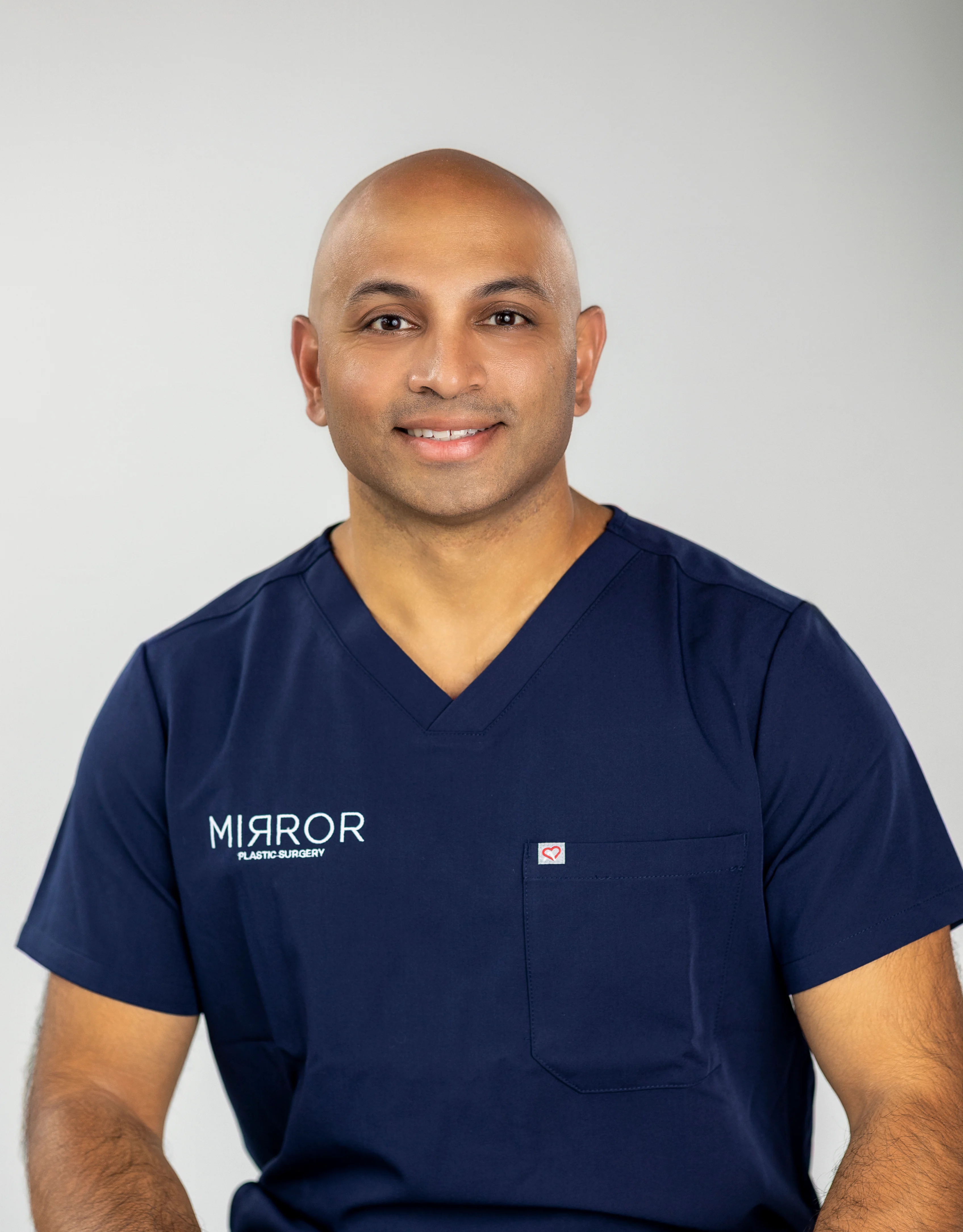
At Mirror Plastic Surgery, every injectable treatment is performed by Dr. Akash Chandawarkar, a board-certified plastic surgeon with fellowship training in aesthetic surgery at the Manhattan Eye Ear & Throat Hospital and Lenox Hill Hospital. Every injection reflects a surgeon’s command of facial and subdermal anatomy, which supports both safety and precision. Dr. Akash also serves as an advisory board member for Merz Aesthetics (makers of Radiesse) and Tiger Aesthetics, keeping him at the forefront of injectable innovation.
Before you book, run through this provider vetting checklist to confirm you are in safe hands:
- Verify board certification via the American Board of Plastic Surgery website.
- Ask whether the provider offers both surgical and non-surgical options, which signals comprehensive and unbiased guidance.
- Request before-and-after photos of patients with similar anatomy and concerns.
- Confirm the facility is accredited by AAAASF, AAAHC, or a state-licensed ambulatory surgical center.
- Ask specifically who performs the procedure and what their formal training includes.
- Ask about the protocol for managing complications.
Experience a physician-led assessment and see what an anatomy-driven consultation feels like from your first visit.
Cost Analysis: Upfront Price Vs. Long-Term Value
Non-surgical treatments often appear cheaper at first glance, yet long-term math can tell a different story.
A comprehensive non-surgical maintenance program, including neuromodulators, fillers, and skin boosters, costs approximately $3,000–$6,500 per year. A patient starting at age 45 and maintaining that program for 10 years will spend $30,000–$65,000, which can match or exceed the cost of a surgical facelift.
The concept of “cost per year of result” helps clarify value. A $15,000 facelift lasting 10 years costs approximately $1,500 per year, or about $4.11 per day.1 Annual Botox at $1,200 per year costs about $3.29 per day and continues indefinitely while providing no structural correction.
This per-year framing naturally raises the question of when surgery becomes the more economical choice. The break-even point between a non-surgical maintenance program at $4,500 per year and a facelift all-in cost of $15,000 is approximately 3.3 years. By year four, a surgical patient who reduces maintenance to $1,500 per year starts coming out financially ahead, and by year seven the gap can reach $15,000–$20,000 in the surgical patient’s favor.
A maintained liquid facelift program in major U.S. markets costs approximately $14,000–$22,000 across five years, which is similar to the upfront cost of a surgical facelift.
Mirror Plastic Surgery’s philosophy is to use the right amount of the right product for clear, natural results. As a supplier-neutral practice, every recommendation is based on your anatomy and goals, and not on commissions or product agreements.
Recovery And Downtime: Planning Your Real-Life Schedule
Recovery experiences differ sharply between surgical and non-surgical approaches, so planning ahead prevents surprises.
Surgical procedures require meaningful downtime. As noted in the comparison above, a facelift requires about two weeks of initial healing, with swelling persisting for several weeks and final results visible at 3–6 months. Liposuction involves soreness and bruising for about 10 days, with final results at six months as swelling resolves.
Non-surgical procedures offer minimal to no downtime. Most patients return to normal activities immediately after neuromodulator or filler injections. Even so, non-surgical treatments still require aftercare. Patients avoid strenuous exercise for 24–48 hours, refrain from touching the treated area, and follow the provider’s specific post-treatment instructions. The quality of that guidance depends entirely on the provider’s expertise.
Results: Subtle Vs. Dramatic, Temporary Vs. Long-Lasting
Results differ in both intensity and longevity between surgical and non-surgical options.
Non-surgical treatments offer subtle, gradual improvements. Neuromodulators soften dynamic wrinkles for 3–4 months.1 Biostimulatory fillers like Radiesse stimulate your own collagen production, with results lasting 12–18 months or longer.1 Radiesse typically lasts 12 to 18 months, with some patients seeing benefits for up to two years.1 These treatments work well for early aging signs, maintenance, and patients who value flexibility.
Surgical procedures create more dramatic, transformative changes. A facelift physically repositions descended facial tissues and removes excess skin, which injectables cannot accomplish. A study published in Plastic and Reconstructive Surgery found that 5.5 years after surgery, 76% of facelift patients still looked younger than they did before their procedure.1
Many patients worry about “overdone” or unnatural results. Repeated filler injections can cause volume distortion over time, including overfilled cheeks, pillow face, migration, or granuloma formation, and Botox overuse can create a frozen appearance. Dr. Akash’s full-face approach at Mirror Plastic Surgery focuses on seamless transitions between facial regions. This approach helps prevent the overfilled or asymmetric look that often appears when providers treat only a single area in isolation.
How To Choose: A Step-By-Step Decision Framework
This practical framework helps you clarify your needs before any consultation.
- Define your goals. Identify what concerns you most. Decide whether you want subtle refreshment or a more dramatic structural correction, and note the specific features that bother you.
- Assess your tolerance for downtime and risk. Decide whether you can take 1–2 weeks away from work for surgery and whether you feel comfortable with the small but real risks of anesthesia and incisions.
- Consider your budget, both upfront and long-term. Calculate the 5–10 year cost of each option and look beyond the initial price.
- Evaluate your overall health. Certain medical conditions or medications may rule out surgery or specific injectables.
- Seek a consultation with a qualified provider who offers both options. A clinic offering only injectables will only recommend injectables. A provider who performs both surgical and non-surgical procedures can give genuinely unbiased advice.
During your consultation, ask focused questions to understand your options clearly.
- What are the risks and benefits of each approach for my specific anatomy?
- How long will results last, and what maintenance will I need?
- Can you show me examples of your work with patients similar to me?
- What is your protocol for managing complications?
Red Flags: Warning Signs When Selecting A Provider
Certain patterns signal that a provider may not be safe or adequately qualified.
- Rushed consultations with little time for questions or a thorough assessment. A consultation taking less than 20 minutes and skipping medical history is a recognized red flag.
- High-pressure sales tactics or aggressive upselling of unnecessary treatments.
- Lack of board certification or vague answers about credentials that do not specifically name the ABPS.
- Inability to provide before-and-after photos or patient references with similar anatomy.
- A one-size-fits-all approach instead of a personalized treatment plan based on your anatomy.
- Dramatically low prices that seem too good to be true. Prices 30–50% below typical market rates usually indicate compromised safety, product quality, or provider expertise.
- Unaccredited facilities with no external quality verification.
- No clear complication protocol. A confident, detailed answer about complication management signals preparedness, while hesitation or vagueness is a warning sign.
Mirror Plastic Surgery’s concierge medicine approach offers the opposite experience. Expect hour-long consultations, a comprehensive top-to-bottom assessment, and honest communication about what you do and do not need. A physician personally performs every injectable and surgical procedure.
Frequently Asked Questions
What Is The Best Non-Surgical Facelift For Over 60?
No single option works best for every patient over 60. The right approach depends on your anatomy, degree of skin laxity, and goals. For patients over 60 with significant tissue descent, non-surgical treatments like biostimulatory fillers and energy-based skin tightening can improve volume and texture. They cannot physically lift descended tissues the way a surgical facelift can. A consultation with a board-certified plastic surgeon helps determine whether non-surgical approaches can realistically meet your expectations or whether surgery better matches your anatomy.
How Long Does A Non-Surgical Facelift Last?
A liquid facelift using dermal fillers and neuromodulators typically produces results lasting 6–18 months, depending on the products used and the areas treated.1 As mentioned earlier, biostimulatory fillers like Radiesse can provide results lasting well over a year. Maintenance treatments are required to sustain results, and the cumulative cost of those treatments over time can rival or exceed the cost of a surgical procedure.
How Do I Choose Between A Med Spa And A Plastic Surgeon?
Your decision should reflect both the complexity of your concerns and the provider’s qualifications. For non-surgical treatments, a board-certified plastic surgeon offers deep anatomical expertise and the ability to recognize and manage complications that a non-physician injector may miss. For surgical procedures, board certification by the American Board of Plastic Surgery is essential. A provider who offers both options, such as Mirror Plastic Surgery, can give you unbiased guidance based on your anatomy and goals.
Is A Non-Surgical BBL Safe?
When a qualified physician uses appropriate biostimulatory fillers, a non-surgical BBL can be performed safely. The gluteal region has complex vascular anatomy, and complications can be serious. The procedure should only be performed by a board-certified plastic surgeon or physician with advanced anatomical training. At Mirror Plastic Surgery, Dr. Akash uses biostimulatory fillers such as Radiesse and AlloClae for non-surgical BBL, prioritizing safety, symmetry, and natural-looking results tailored to each patient’s goals.
Can Non-Surgical Procedures Achieve The Same Results As Surgery?
Non-surgical treatments can address volume loss, skin texture, and dynamic wrinkles effectively. They cannot physically lift descended tissues, remove excess skin, or reposition underlying structural layers. For patients with significant laxity, jowling, or platysmal banding, surgery is the only option that achieves transformative, long-lasting structural correction. The most sophisticated approach to aesthetic medicine uses both categories together, with surgery for structural correction and non-surgical treatments for ongoing maintenance and skin quality.
The Most Important Decision Is Your Provider
Both surgical and non-surgical options have a clear role in aesthetic medicine. The most important factor is the expertise and philosophy of your provider. A board-certified plastic surgeon who offers both surgical and non-surgical treatments, and who prioritizes safety, function, and natural results, can guide you to the right choice for your anatomy and goals.
Mirror Plastic Surgery, led by Dr. Akash Chandawarkar, a Harvard-educated, Johns Hopkins-trained, board-certified plastic surgeon with fellowship training in aesthetic surgery, offers a unique combination of surgical and non-surgical expertise in the St. Petersburg and Tampa Bay area. Every treatment is performed by a physician with a surgeon’s command of anatomy. Every recommendation is grounded in evidence-based practice, honest communication, and a concierge medicine philosophy that limits the practice to one to two procedures per day so that every patient receives focused, personalized attention.
Ready To Explore Your Options?
Schedule a personalized consultation with Mirror Plastic Surgery today. Dr. Akash will conduct a comprehensive top-to-bottom assessment, answer your questions, and help you choose the approach that fits your anatomy, goals, and life.
Schedule your consultation with Ellie today or call and text 727-361-6515. Mirror Plastic Surgery is located at 780 4th Ave S, St. Petersburg, FL 33701.
Disclaimer: Results may vary from person to person. Editorial content, before and after images, and patient testimonials do not constitute a guarantee of specific results.
1 Results may vary from person to person. Editorial content, before and after images, and patient testimonials do not constitute a guarantee of specific results.