
Written by: Ellie Pranckevicius, FNP-BC, Aesthetic Nurse Practitioner & Aesthetic Injector | Facial Restoration & Regenerative Injectable Specialist, Mirror Plastic Surgery | Last updated: July 3, 2026
Key Takeaways
-
Neck laxity ranges from mild crepiness to severe descent, and effective non-surgical treatment depends on matching the modality to your specific severity and anatomy.
-
Radiofrequency microneedling, focused ultrasound, laser resurfacing, neuromodulators, and biostimulatory fillers each target different tissue layers and offer different degrees of tightening, downtime, and longevity.
-
Non-surgical options can meaningfully improve mild-to-moderate laxity, while patients with severe “turkey neck” redundancy are usually better served by a surgical consultation for more complete correction.
-
Provider expertise in cervical anatomy is critical, because incorrect depth or placement of energy or injectables can lead to suboptimal or unsafe outcomes and highlights the value of thorough, unhurried assessments.
-
At Mirror Plastic Surgery, patients receive personalized, anatomy-first evaluations and maintenance plans, so schedule your consultation today to explore the right neck-tightening approach for you.
How to Choose the Right Neck-Tightening Treatment for Your Anatomy
No single modality works best for every neck. A treatment only performs well when it matches the specific structural problem it targets. Neck laxity exists on a spectrum. Mild laxity involves early skin crepiness and subtle loss of jawline definition. Moderate laxity presents as visible platysmal banding, submental fullness, and more pronounced skin redundancy. Severe laxity involves significant soft-tissue descent and deep banding that usually exceeds what non-surgical tools can fully correct.
Beyond laxity grade, provider expertise in cervical anatomy determines safety and outcomes, and this factor plays a central role in every treatment plan at Mirror Plastic Surgery.
With that context in place, you can look more clearly at the specific treatment options and how each one addresses different layers of neck laxity.
Non-Surgical Treatments That Tighten Neck Skin
Several modalities play established roles in non-surgical neck rejuvenation. Each option has a distinct mechanism, candidacy profile, downtime expectation, and longevity window.
Radiofrequency microneedling delivers thermal energy through insulated needles into the dermis and superficial subdermal tissue. The controlled heat stimulates collagen remodeling and mild tissue contraction. This approach suits mild-to-moderate laxity, especially crepey skin texture. Downtime usually involves 1–4 days of redness and mild swelling. Results develop gradually over three to six months as new collagen matures.1 Most patients benefit from maintenance sessions every 6–12 months.
Focused ultrasound (HIFU-based platforms) targets the superficial musculoaponeurotic system (SMAS) and deep dermis using precisely focused acoustic energy. Because it reaches tissue depths similar to a surgical plane, it can address early SMAS laxity in a way few non-surgical options can. Candidacy is strongest for mild-to-moderate laxity with reasonably good skin quality. Downtime is minimal, and most patients return to normal activity the same day, although transient tenderness and mild swelling are common. Results emerge over two to three months and can persist for twelve to eighteen months before a touch-up session is needed.1
Laser resurfacing focuses on surface-level skin quality, including fine lines, crepiness, and pigmentation irregularities. Fractional non-ablative lasers carry lower downtime and work well for mild textural laxity. Ablative lasers can produce more significant tightening but require longer recovery and careful patient selection. In Florida’s high-UV environment, strict post-treatment sun avoidance becomes essential for safe healing.
Neuromodulators for platysmal bands, including Botox, Dysport, Xeomin, Daxxify, and Jeuveau, relax the vertical platysmal bands that become more visible with age and muscle hyperactivity. This targeted, anatomy-specific application requires precise injection placement to avoid affecting nearby swallowing muscles. Results appear within seven to fourteen days and typically last three to four months.1 Patients should view this as a maintenance treatment that refines appearance rather than a structural lift.
Biostimulatory fillers such as Radiesse stimulate the body’s own collagen production instead of simply adding volume. In the neck and décolleté, they can improve skin quality, restore subtle structural support, and address hollowing. These fillers work best for mild-to-moderate volume loss that accompanies laxity. Their effects build over several months and often form part of a layered, long-term plan.
Schedule a personalized neck-tightening consultation to determine which modality or combination best fits your anatomy and goals.
Non-Surgical Options for “Turkey Neck” by Severity
“Turkey neck” describes a combination of platysmal banding, submental fat, and skin redundancy. Each component responds to different non-surgical tools and has a different ceiling of correction.
Mild laxity: Non-surgical treatment often works very well at this stage. Focused ultrasound, radiofrequency microneedling, neuromodulators for early banding, and biostimulatory fillers can collectively create meaningful, natural-looking improvement. Patients can expect a refreshed, tighter appearance rather than a result that mimics a surgical lift.1
Moderate laxity: Non-surgical treatment remains a viable option, but results depend on a strategic combination approach and clear expectations. Moderate laxity usually involves both structural descent and surface-level changes. Effective protocols layer treatments by tissue depth. Focused ultrasound targets the deeper SMAS layer to address structural laxity. Radiofrequency microneedling refines skin quality at the dermal level. Neuromodulators relax visible platysmal bands. When submental fat contributes to fullness, Kybella (deoxycholic acid) should reduce that volume first so tightening treatments can work on a more ideal contour. Multiple sessions are common, and outcomes can be meaningful, although they do not match surgical correction.1
Severe laxity: Non-surgical modalities face clear limitations at this stage. Patients with substantial skin redundancy, deep banding, or significant soft-tissue descent usually benefit more from a surgical consultation. A provider who recommends non-surgical treatment for severe laxity without acknowledging this ceiling does not prioritize the patient’s long-term interest. At Mirror Plastic Surgery, the team discusses surgical options transparently when they offer a safer or more complete solution, because safety and function always come before aesthetics.
Why Neck-Tightening Results Depend on Provider Expertise
The neck is an anatomically complex region with little room for error. The platysma muscle, cervical branches of the facial nerve, submandibular gland, and multiple blood vessels all occupy a compact space. Injecting neuromodulators too deeply or in the wrong direction can affect swallowing. Applying energy-based devices at incorrect depths can cause burns or nerve irritation. Placing biostimulatory filler without understanding the subdermal architecture can create nodules.
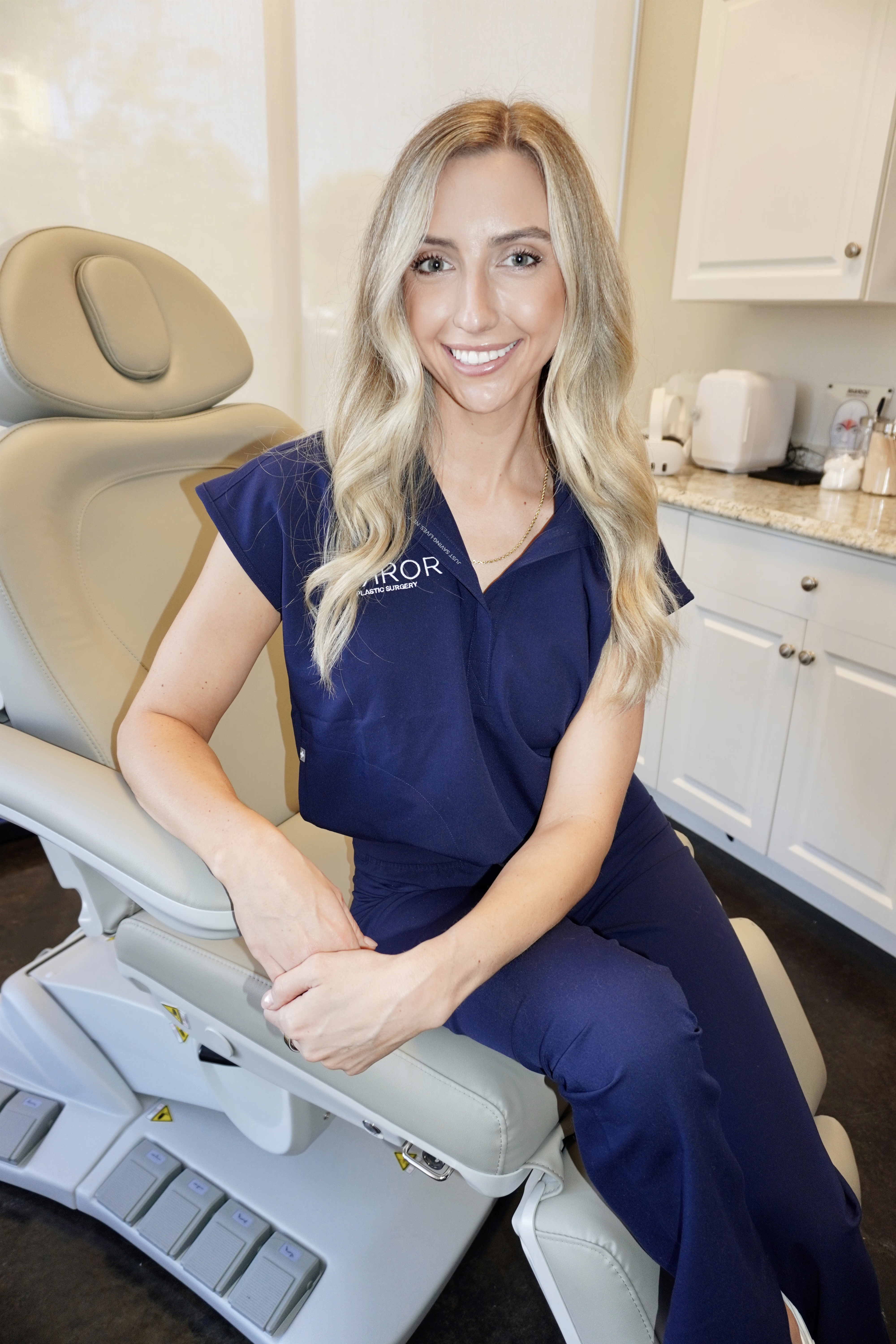
Ellie Pranckevicius, FNP-BC, brings a background that is rare in aesthetic medicine. She spent four years in the Neuroscience ICU at Tampa General Hospital, completed a 600-hour hands-on aesthetics licensure program, and earned graduate nursing training from the University of South Florida. Her neuroscience ICU experience supports a detailed understanding of cervical anatomy and the physiological stakes of precision injection work. Consultations at Mirror Plastic Surgery can extend up to an hour, which contrasts with the rushed, volume-driven model common in many high-throughput practices.
Tampa’s climate also shapes treatment planning and recovery. Florida’s year-round UV intensity means post-treatment sun avoidance requires active planning, not a generic aftercare sheet. High ambient humidity can influence wound healing timelines after laser resurfacing. A provider who does not account for these regional variables may underestimate their impact on both outcomes and comfort.
Experience an unhurried, anatomy-first consultation that prioritizes your safety and long-term results.
Questions to Ask During a Neck-Tightening Consultation
|
Question to Ask |
Why It Matters |
What a Strong Answer Includes |
|---|---|---|
|
How do you assess laxity severity before recommending a treatment? |
Confirms a diagnostic framework exists beyond visual impression |
Reference to tissue depth, skin quality grading, and muscle assessment |
|
What is the anatomical rationale for this specific modality at my laxity level? |
Tests depth of anatomical knowledge |
Explanation of tissue plane targeted and mechanism of action |
|
What results are realistically achievable versus what would require surgery? |
Ensures honest expectation-setting |
Clear ceiling of correction stated without upselling |
|
How does Tampa’s climate affect my recovery and sun-exposure protocol? |
Identifies local expertise and aftercare specificity |
Specific UV avoidance timeline and humidity-related healing considerations |
|
What is the maintenance schedule, and how will my plan evolve over time? |
Distinguishes long-term care from one-off procedures |
Modality-specific intervals and reassessment milestones |
Neck-Tightening Maintenance Plans and Practice Red Flags
Non-surgical neck tightening works best as an ongoing process, not a single event. Neuromodulators for platysmal bands usually require retreatment every three to four months to maintain relaxation. Focused ultrasound often warrants a repeat session every twelve to eighteen months as the SMAS continues to age. Radiofrequency microneedling results are typically sustained with annual treatments. Biostimulatory fillers may need an initial series of sessions, followed by yearly maintenance once the collagen response stabilizes.
A thoughtful maintenance plan signals a provider who cares about long-term outcomes. Certain patterns suggest the opposite. A provider who recommends the same package to every patient, regardless of laxity grade, relies on a preset protocol instead of a true assessment. A clinic that books multiple procedures in a single visit without a detailed diagnostic conversation prioritizes speed over safety. Pressure to purchase a bundled package during the first consultation, before any results have been evaluated, reflects a commercial tactic rather than a clinical recommendation. Ellie’s approach at Mirror Plastic Surgery follows a dentistry-style model. Professional treatments create change, and lasting results depend on understanding and consistent, individualized maintenance rather than a one-size-fits-all package.
Frequently Asked Questions
What is the most effective treatment to tighten neck skin?
As discussed earlier, the most effective treatment is the one matched to your specific laxity grade and anatomy. Mild cases often respond well to focused ultrasound or radiofrequency microneedling. Moderate cases usually benefit from combination protocols that layer energy devices, neuromodulators, and sometimes biostimulatory fillers. Severe cases typically require a surgical consultation to achieve meaningful correction.
Can a turkey neck be tightened without surgery?
Yes, many patients with mild to moderate laxity can see visible improvement with non-surgical options. The detailed breakdown of which modalities fit each severity level appears in the “Non-Surgical Options for ‘Turkey Neck’ by Severity” section above. The key takeaway is that non-surgical treatments can improve and slow progression but do not match the correction of a neck lift or platysmaplasty.1 Patients with severe laxity need an honest conversation about surgical consultation.
How do I choose between radiofrequency microneedling and ultrasound for my neck?
The choice depends on which tissue layer needs the most attention. Radiofrequency microneedling works within the dermis and superficial subdermal tissue, so it targets skin texture, crepiness, and mild surface laxity. Focused ultrasound reaches deeper and targets the SMAS layer, which makes it more suitable when early structural descent or loss of jawline definition appears. Many patients with moderate laxity benefit from both modalities in sequence. Ultrasound addresses the deeper structural layer, and radiofrequency microneedling refines the surface. A thorough consultation with layered anatomical assessment remains the most reliable way to select the right approach.
What recovery considerations apply in Tampa’s climate?
Florida’s high UV index represents the main recovery variable. After any energy-based treatment, especially laser resurfacing and radiofrequency microneedling, the skin becomes more photosensitive. Unprotected sun exposure can cause post-inflammatory hyperpigmentation or interfere with healing. In Tampa and St. Petersburg, where outdoor activity is common year-round, post-treatment sun avoidance requires planning. Many patients schedule treatments during lower-activity periods, commit to daily broad-spectrum SPF 50+, and use physical barriers such as hats when outdoors. High ambient humidity can also influence healing after more ablative procedures. You should expect your provider to discuss these regional factors clearly and give a specific aftercare protocol instead of a generic handout.
Making an Informed Neck-Tightening Decision
Non-surgical neck tightening in 2026 offers a wide range of options for adults with mild to moderate laxity. The core decision framework stays straightforward. Match the technology to the tissue layer and laxity severity. Choose a provider whose anatomical training fits the complexity of the neck. Build a maintenance plan that supports long-term goals instead of a one-time session.
For Tampa and St. Petersburg residents, Mirror Plastic Surgery’s injectables program, led by Ellie Pranckevicius under the clinical oversight of Harvard-educated, Johns Hopkins-trained plastic surgeon Dr. Akash Chandawarkar, offers a concierge-level alternative to volume-driven practices. The team’s commitment to hour-long assessments, supplier-neutral product selection, and safety-first treatment planning serves patients who want to understand their anatomy and make informed choices, not simply buy a package.
Start with a personalized neck assessment and receive a treatment plan built around your specific anatomy and goals.
Disclaimer: Results may vary from person to person. Editorial content, before and after images, and patient testimonials do not constitute a guarantee of specific results.
1 Results may vary from person to person. Editorial content, before and after images, and patient testimonials do not constitute a guarantee of specific results.