
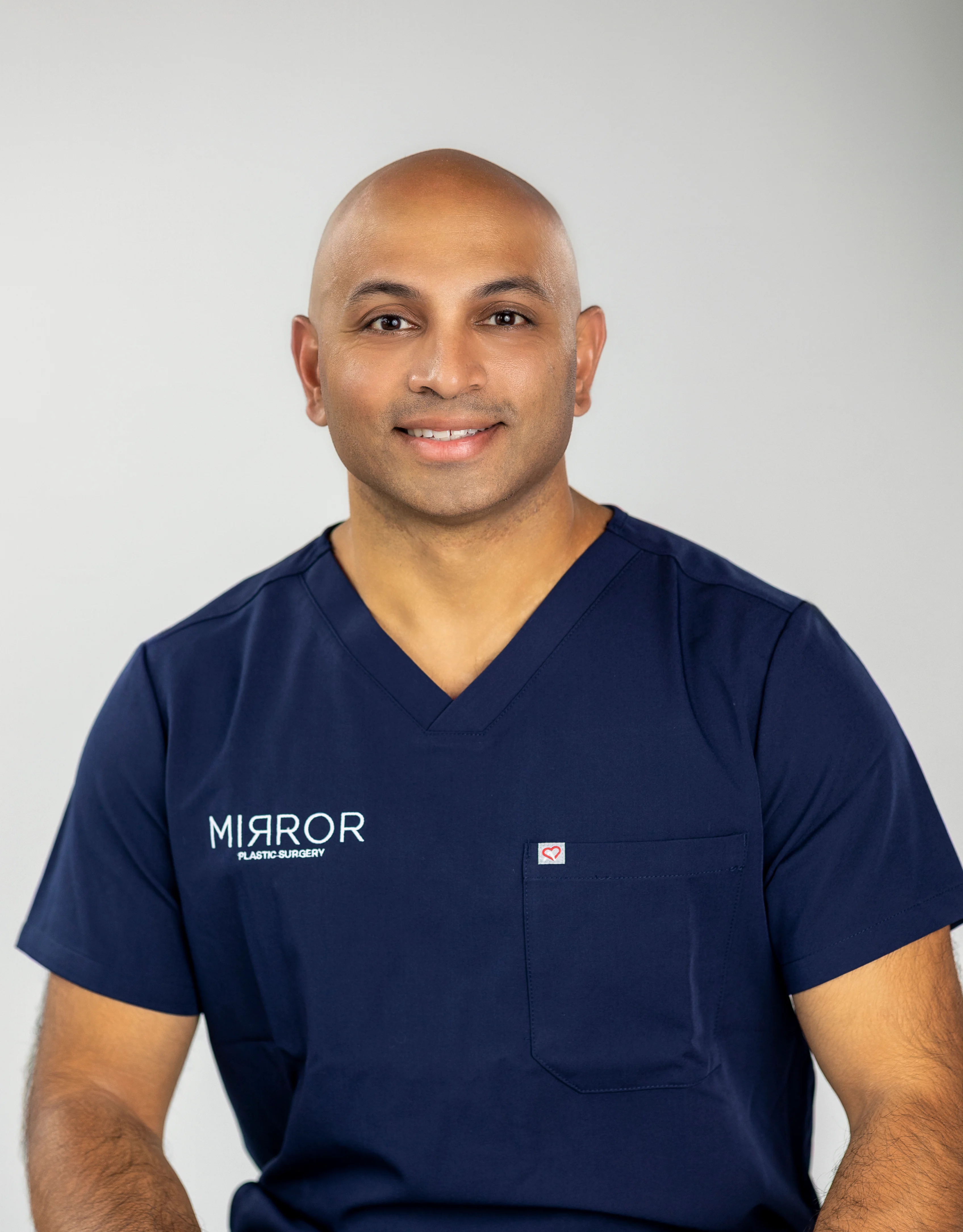
Written by: Dr. Akash Chandawarkar, Board Certified Plastic Surgeon, Mirror Plastic Surgery | Last updated: September 9, 2026
Key Takeaways On Tampa Laser Hair Removal Pricing
- Boutique med spa laser hair removal in Tampa typically costs $40–$400+ per session. Full 6–8 session courses usually range from $400–$2,500, depending on treatment area and technology.
- Advanced multi-wavelength systems like the Alma Soprano Titanium and DEKA Motus AZ+ cost providers $80,000–$160,000. These devices support safer, more consistent results across a wide range of skin types.
- Most patients complete 6–8 sessions spaced 4–6 weeks apart. Facial hair often needs 12 or more sessions because hormones and finer hair texture make it more stubborn.
- Laser hair removal delivers long-term, high-percentage hair reduction after a full course.1 Most patients then schedule 1–2 maintenance sessions annually.1 Treatment does not work on white, gray, blonde, or red hair.
- When choosing a provider, focus on surgeon-led practices with advanced FDA-cleared technology, thorough consultations, and clear pricing. Schedule a consultation to experience Mirror Plastic Surgery’s safety-first approach.
How This Tampa Laser Hair Removal Pricing Report Was Built
This report draws on published pricing from Tampa-area boutique med spas and medical aesthetic practices. It cross-references regional cost guides and peer-reviewed clinical literature on laser hair removal efficacy and session requirements. Device pricing and technology specifications come from manufacturer data and independent aesthetic device databases. All provider pricing appears as general market ranges to keep the analysis objective. Sources are cited inline throughout.
Cost Ranges By Treatment Area: 2026 Market Data
The table below shows typical per-session and full-course price ranges at boutique med spas in Tampa. Data is based on MedSpa Scout’s September 2026 Florida cost guide and published pricing from Nüde Laser, Elevate Med Spa, Sleek Aesthetics, and Florida Weight Loss and Wellness Clinic. These are market ranges, not quotes from Mirror Plastic Surgery.
| Treatment Area | Typical Per-Session Range | Typical Full Course (6–8 Sessions) |
|---|---|---|
| Upper Lip / Chin | $40–$75 | $240–$600 |
| Underarms | $60–$150 | $400–$900 |
| Bikini Line | $60–$150 | $400–$900 |
| Brazilian | $100–$250 | $750–$1,800 |
| Half Legs | $175–$240 | $1,100–$1,900 |
| Full Legs | $250–$400 | $1,100–$2,500 |
| Full Body Package | N/A | $2,000–$5,000 |
Most boutique med spas offer package pricing for 6–10 sessions. These packages usually reduce the per-session cost by 30–50% compared with paying visit by visit. Pricing also reflects device technology, provider credentials, and how the practice structures its packages. Multi-wavelength systems like the Alma Soprano Titanium cost more to purchase and maintain than older single-wavelength machines. That higher capital cost shows up in per-session pricing.
The DEKA Motus AZ+ carries a new-unit price of $120,000–$160,000, while new Soprano ICE Platinum units cost $80,000–$130,000. These investments often mark premium boutique practices that focus on technology and safety rather than volume.
For a deeper look at Brazilian-specific pricing, see Brazilian Laser Hair Removal Prices In Tampa: 2026 Report. For a broader overview of Tampa pricing across all provider types, visit Average Cost Of Laser Hair Removal In Tampa, FL.
What Boutique Vs. Chain Pricing Really Covers
Boutique med spas in Tampa often charge more per session than national chains because they emphasize personalized care, advanced multi-wavelength technology, experienced licensed providers, and safety-focused protocols. High-volume chain clinics usually compete on low prices. They may rush sessions, rely on minimally trained technicians using preset device parameters, and provide limited real-time physician oversight.
Florida state law requires physician supervision for laser hair removal, yet the level of involvement varies widely. At a surgical practice, a board-certified surgeon remains on site and actively oversees care. At Mirror Plastic Surgery, Dr. Akash Chandawarkar, a Harvard-educated, Johns Hopkins-trained, board-certified plastic surgeon, personally leads non-surgical treatments. His on-site presence means a surgeon’s understanding of anatomy guides every laser session.
Discount “unlimited sessions for $299” package contracts at high-volume clinics are a documented red flag. These offers often push staff to rush sessions to meet volume targets. Effective treatment requires precise fluence settings calibrated at each visit. A boutique practice protects results by adjusting device settings individually at every session. That process takes time and expertise and strongly influences whether a session produces lasting reduction or wasted energy.
How Many Laser Hair Removal Sessions Most Patients Need
Most laser hair removal providers recommend a package of around six treatments for a solid outcome. Only a portion of hair follicles grow actively at any given time, so multiple sessions spaced 4–6 weeks apart are necessary to treat each growth cycle effectively.
Session counts vary by body area and hormonal factors:
- Underarms, bikini area, arms, and legs: typically 6–8 sessions.
- Back and chest: often 8–10 sessions.
- Facial hair, especially upper lip and chin: frequently 12 or more sessions because of hormonal influence and finer hair.
- Hormonal conditions like PCOS: may require extra maintenance sessions beyond the initial course.
A prospective study of long-pulsed 1064 nm Nd:YAG laser treatment found that the share of patients classified as “achievers” rose from 5% after the third session to 56% after the sixth, with 4–6 week spacing. Completing the full course, rather than stopping early, drives meaningful results. A thorough consultation with a qualified provider sets a personalized session plan based on anatomy, hair characteristics, and hormonal history.
Get a personalized session plan from Mirror Plastic Surgery’s surgeon-led team.
Tipping Etiquette For Laser Hair Removal In Tampa
No tip is expected when laser hair removal is treated as a medical procedure, especially when a physician or nurse practitioner performs the treatment. In that setting, laser sessions fall under medical care rather than hospitality.
The etiquette depends on who performs the treatment:
- For procedures performed by licensed medical providers (MD, NP, PA, or RN), tipping is generally not appropriate.
- For laser treatments performed by a technician or esthetician in a spa context, a tip of 10–15% or a flat $20–$40 is welcome but optional.
- Laser hair removal performed by an MD, NP, PA, or RN is categorized as a medical procedure where tipping is “generally no.”
The American Med Spa Association notes a growing trend toward no-tipping policies at med spas. Many practices use this policy to reinforce a clinical environment rather than a retail spa feel. When unsure, ask the front desk about the tipping policy during your consultation.
How Permanent Laser Hair Removal Results Typically Look
The U.S. FDA clears laser devices for “permanent hair reduction”. This term means a long-term, stable reduction in the number of hairs regrowing after a treatment series. The FDA does not use the phrase “permanent hair removal” because no cosmetic technology destroys every follicle in every patient.
Clinical studies show high-percentage reduction after six to eight sessions.1 Regrown hair tends to be finer, lighter, and sparser.1 The long-term picture breaks into three stages:
- Immediately after a series, most treated hair is gone.
- Six to twelve months later, some fine regrowth often appears at a fraction of the original density.
- Around five years out, many patients report minimal regrowth that needs only occasional touch-ups..1
- Hormonal changes such as PCOS, pregnancy, and menopause can activate dormant follicles and create new hair growth.
- Most patients schedule 1–2 maintenance sessions per year, and some with stable hormones stretch maintenance to every 12–24 months.
One key candidacy point involves hair color. Laser hair removal works on darker hair but remains ineffective on white, gray, very light blonde, and most red hair because the laser targets pigment. Light brown and darker blonde hair can respond, yet results may be less predictable. A qualified provider should explain these limits clearly during consultation.
Who Makes A Good Laser Hair Removal Candidate
Candidacy for laser hair removal depends on skin type, hair color, medical history, and device choice. The classic ideal patient has fair skin and dark hair because the laser targets melanin in the hair follicle. If the skin is as dark as the hair or the hair as light as the skin, the risk of pigment changes or poor response increases. Modern technology has expanded safe options for more skin types.
Dual-wavelength platforms that combine Alexandrite (755 nm) and Nd:YAG (1064 nm) energy are safe across all Fitzpatrick skin types, including darker tones that older single-wavelength systems could not treat safely. The DEKA Motus AZ+ holds FDA 510(k) clearance for permanent hair reduction on all skin types (Fitzpatrick I–VI), including tanned skin, as does the Alma Soprano XL.
Key contraindications and safety considerations include:
- Reputable providers do not treat pregnant patients with laser hair removal, as the procedure is contraindicated at every clinical standard in 2026.
- Patients on isotretinoin usually need a six-month washout period before treatment.
- Active infections in the treatment area require postponement until the skin heals.
- Modern devices include integrated cooling to protect the epidermis and reduce discomfort, which has become the clinical standard in 2026.
- Safety checks at reputable clinics include a full medical history and skin assessment, a patch test 24–48 hours before the first session, written informed consent, and documented device settings for each visit.
A board-certified plastic surgeon brings deep anatomical knowledge to every candidacy assessment. That level of training goes far beyond what a laser technician or esthetician can provide.
How To Choose A Boutique Med Spa In Tampa
Several clear criteria help separate qualified boutique providers from high-volume operations that focus on price alone.
- Advanced Laser Technology: Ask for the specific device name before booking. A reputable Tampa provider uses Alexandrite or Nd:YAG lasers, not IPL devices marketed as lasers. Named, FDA-cleared multi-wavelength systems such as Alma Soprano Titanium, DEKA Motus AZ+, and Candela GentleMax Pro Plus set the current benchmark.
- Provider Credentials: Look for a board-certified plastic surgeon or experienced medical professional (RN, NP, PA) performing or directly supervising treatments. Ask who holds the handpiece and what clinical background they have.
- Consultation Depth: Expect a 30–60 minute consultation that covers a skin assessment, medical history review, and personalized treatment plan. A quick five-minute sales pitch signals a poor fit.
- Safety Protocols: Integrated cooling, patch testing, documented device settings per session, and clear pre- and post-treatment instructions should all be standard. The American Academy of Dermatology notes that working with a trained, experienced provider is the single biggest factor in safe and effective laser hair removal.
- Transparent Pricing: Look for published or clearly explained pricing with no hidden fees or pressure to prepay for oversized packages. Compare the full course price and ask what happens after it ends, rather than focusing only on the per-session rate.
Mirror Plastic Surgery meets each of these standards. Dr. Akash Chandawarkar, Harvard-educated, Johns Hopkins-trained, and board-certified by the American Board of Plastic Surgery, personally leads non-surgical treatments at the practice. The concierge philosophy means consultations can run up to an hour, device settings are calibrated individually, and the daily caseload stays limited so every patient receives focused attention throughout treatment.
Experience the Mirror Plastic Surgery difference by booking your consultation.
Frequently Asked Questions
How Much Does Laser Hair Removal Cost Per Session In Tampa?
At boutique med spas in Tampa, single-session prices typically range from $40–$75 for small areas like the upper lip, $60–$150 for underarms and bikini line, $100–$250 for Brazilian, and $250–$400 for full legs. Full courses of 6–8 sessions usually cost $400–$2,500 depending on the area, with package pricing cutting per-session costs by 30–50%. Full body packages covering multiple areas often run $2,000–$5,000 for a 6-session series. Pricing varies with device technology, provider credentials, and package structure. Mirror Plastic Surgery provides individualized quotes during consultation because every plan is tailored.
Do You Tip At A Med Spa For Laser Hair Removal?
When licensed medical professionals such as physicians, nurse practitioners, or registered nurses perform laser hair removal, it is treated as a medical procedure and tipping is not expected. This matches norms in other clinical settings. If an esthetician or laser technician performs the treatment in a spa-style environment, a 10–20% tip is appreciated but optional. Policies differ by practice, and some med spas now use explicit no-tipping policies to emphasize their clinical focus. Asking the front desk about tipping during your consultation avoids confusion.
Is 7 Sessions Enough For Laser Hair Removal?
For many body areas, seven sessions fall within the typical treatment range. Clinical guidelines often cite 6–8 sessions spaced 4–8 weeks apart as a standard course. Facial hair, especially on the chin and upper lip, behaves differently. Hormonal influence can make these areas require up to 12 sessions. Patients with PCOS or other hormonal conditions may also need additional sessions and more frequent maintenance. Many patients schedule 1–2 maintenance sessions per year after completing their initial course.
Is Laser Hair Removal Permanent?
Laser hair removal provides permanent reduction rather than complete permanent removal. The FDA defines this as a long-term, stable decrease in the number of hairs regrowing after a treatment regimen. Clinical studies show high-percentage reduction after a full course of 6–8 sessions, with any regrowth typically finer, lighter, and sparser. Hormonal shifts from pregnancy, menopause, or conditions like PCOS can activate dormant follicles over time, which explains why many patients choose periodic maintenance. Laser hair removal does not work on white, gray, blonde, or red hair because the laser targets melanin pigment. Clear expectations set during consultation support a satisfying outcome.
What Is The Best Laser Hair Removal Option In Tampa?
The strongest providers combine advanced FDA-cleared technology, experienced medical professionals, thorough consultations, and transparent pricing. Look for named, multi-wavelength laser systems such as Alma Soprano Titanium, DEKA Motus AZ+, or Candela GentleMax Pro Plus rather than IPL devices marketed as lasers. Prioritize practices where a board-certified physician or experienced licensed medical professional performs or directly supervises every treatment. A boutique practice that values safety, technology, and in-depth consultation over volume sets a strong standard. Mirror Plastic Surgery, led by board-certified plastic surgeon Dr. Akash Chandawarkar, represents that standard in the St. Petersburg and Tampa Bay area.
Conclusion: Focus On Safety, Technology, And Real Value
Boutique med spa laser hair removal pricing in Tampa in 2026 reflects the technology used, the provider’s credentials, and the quality of care. Tipping is generally not expected for medically delivered laser procedures, and choosing a provider based only on price often leads to ineffective sessions or avoidable safety risks.
A surgeon-led boutique practice like Mirror Plastic Surgery offers concierge-level experience, advanced technology, and deep anatomical expertise so every session counts. Dr. Akash Chandawarkar’s background, including Harvard education, Johns Hopkins training, board certification by the American Board of Plastic Surgery, and fellowship training at Manhattan Eye Ear & Throat Hospital, brings a high level of clinical judgment to non-surgical treatments.
Disclaimer: Results may vary from person to person. Editorial content, before and after images, and patient testimonials do not constitute a guarantee of specific results.
1 Results may vary from person to person. Editorial content, before and after images, and patient testimonials do not constitute a guarantee of specific results.