

Written by: Dr. Akash Chandawarkar, Board Certified Plastic Surgeon, Mirror Plastic Surgery | Last updated: September 9, 2026
What Does “Laser Hair Removal Before And After” Really Mean?
Laser hair removal before and after describes how your skin and hair change over a full series of treatments, usually six to eight sessions. Targeted laser energy damages hair follicles so they grow back more slowly and sparsely. Results vary with skin type, hair color, hormones, and the device used, yet most patients see significant long-term reduction.1 The “after” develops gradually through shedding phases and repeated sessions, so the full journey matters just as much as the final photos.
Key Takeaways
- Laser hair removal delivers long-term hair reduction through a series of six to eight properly spaced sessions.1 Results build over time.
- Results depend on skin type, hair color, hormonal factors, and the provider’s experience and technology.
- Preparation such as avoiding sun exposure, waxing, and certain skincare products supports both safety and effectiveness.
- Choosing a qualified, physician-supervised provider in Tampa has the greatest impact on safe, lasting results.
- Schedule your personalized consultation at Mirror Plastic Surgery to receive expert guidance and a tailored treatment plan from Dr. Akash Chandawarkar.
The Laser Hair Removal Journey: From First Session To Lasting Results
Before Treatment: How To Prepare For Your Session
Preparation sets the stage for safer treatments and better results. For a detailed walkthrough of first-session preparation, see What To Know Before Your First Laser Hair Removal Session. The essential steps are:
- Avoid sun exposure and tanning beds for at least two weeks before treatment, because tanned skin has a higher risk of burns and pigmentation changes.
- Avoid waxing, plucking, threading, or electrolysis for four to six weeks. Shaving is encouraged because it leaves the follicle intact for the laser to target.
- Shave the treatment area 12–24 hours before your session so laser energy can reach the follicle without surface hair blocking it.
- Pause retinoids, glycolic acid, and other exfoliating products on the treatment area for three to five days to reduce irritation risk.
- Arrive with clean, product-free skin, with no lotions, oils, makeup, or deodorant on the treated area.
During Your Treatment Session
During treatment, a handheld laser device glides across your skin while integrated cooling helps keep you comfortable. Most people compare the sensation to a rubber band snap or a warm pinprick. In a 2026 multi-center clinical study, the mean pain score during laser hair removal was 2.63 out of 10 on a visual analogue scale. Smaller areas like the upper lip take only a few minutes, while full legs can take up to an hour.
A skilled provider adjusts laser settings based on your Fitzpatrick skin type and hair color. Modern dual-wavelength platforms like the Candela GentleMax Pro combine Alexandrite (755 nm) and Nd:YAG (1064 nm) wavelengths. This combination allows safe treatment across a wide range of skin tones, with continuous surface cooling throughout every session.
Immediately After Treatment: What’s Normal
Redness, mild swelling around hair follicles, and a sunburn-like sensation are normal during the first 24 hours after laser hair removal. These reactions show that the follicles absorbed the laser energy as intended. Recommended immediate aftercare focuses on soothing the skin and preventing irritation.
- Apply cool compresses or aloe vera gel to ease warmth and redness so the skin can calm more quickly.
- Avoid hot showers, saunas, steam rooms, and strenuous exercise for 24–48 hours, because heat and sweat can aggravate the treated area.
- Skip makeup or deodorant on treated areas for at least 24 hours so the skin can breathe and recover.
- Apply broad-spectrum SPF 50+ on treated skin during daytime exposure and reapply every two hours to protect sensitive skin from UV damage.
The Shedding Phase: Why It Looks Like Regrowth
Visible shedding of treated hairs commonly occurs during weeks one through three after laser hair removal. Treated hairs may look like they are growing, yet they are actually being pushed out of the follicle. This response confirms that the laser damaged the hair.
Avoid plucking, waxing, or picking at shedding hairs and let them fall out naturally. Shaving remains fine during this phase. Visible reduction in hair density usually becomes obvious after sessions two and three. This gradual improvement leads naturally into planning how many sessions you will need overall.
How Many Sessions You Need For Lasting Results
Hair grows in three phases: anagen (active growth), catagen (transitional), and telogen (resting). Laser energy affects hair only in the active anagen phase. Because only 20–30% of body hair is in anagen at one time, you need multiple sessions to treat each follicle during its responsive phase.
Most patients need six to eight sessions spaced four to six weeks apart. Facial areas and the bikini line often require additional visits because hormones influence growth there more strongly. A 2026 prospective, multi-center study in Lasers in Surgery and Medicine (Ugonabo et al.) found that after five sessions of dual-wavelength laser treatment, hair count decreased by a mean of 84.6% across all treated areas, with continued improvement up to 12 months after the final session.1
The FDA-cleared claim for laser hair removal is “permanent reduction.” Some follicles remain active at a lower level, so maintenance sessions once or twice a year help sustain results, especially for hormonally influenced areas such as the face and bikini line.
Schedule a session-planning consultation at Mirror Plastic Surgery to discuss how many treatments your specific skin type and hair color may require.
What Affects Your Results? Key Factors To Know
Several personal and technical factors shape your before-and-after results.
- Skin Tone And Hair Color: Laser targets melanin in the hair follicle. Newer dual-wavelength platforms like the Candela GentleMax Pro safely treat Fitzpatrick skin types I through VI.
- Hair Thickness And Density: Coarse, dark hair responds fastest, while fine, light, red, or gray hair may need more sessions and can respond less predictably.
- Hormonal Influences: Conditions such as PCOS, thyroid disorders, pregnancy, and menopause can stimulate regrowth, which may require extra sessions or ongoing maintenance.
- Provider Skill And Technology: Dermatologist-supervised clinics report over 90% success rates for laser hair removal, compared to about 50% at unregulated facilities. The provider’s experience and the quality of the laser platform strongly influence both safety and outcomes.
How To Choose A Laser Hair Removal Provider In Tampa: A Physician’s Checklist
Provider selection shapes every stage of your laser hair removal journey, from safety to final results. Use this checklist when you compare Tampa Bay clinics:
- Credentials And Supervision: In Florida, laser hair removal must be performed by a licensed physician (MD or DO), or by a physician assistant, advanced practice registered nurse, or licensed electrologist under direct physician supervision, per Florida Statutes section 458.348. Confirm licenses through the Florida Department of Health portal.
- Technology: Ask which laser platform the clinic uses. The Candela GentleMax Pro is FDA-cleared, dual-wavelength, and proven across millions of treatments. Be cautious with IPL devices marketed as lasers, since a systematic review supported lasting hair reduction with alexandrite and diode lasers, while evidence for long-term IPL reduction was lacking.
- Consultation Quality: A reputable provider reviews your skin type, hair color, medical history, and goals in detail. Red flags include skipping medical history, no patch test, pressure for same-day treatment, and refusal to share device details.
- Before-And-After Photos: Credible photos show the same patient, consistent lighting, and realistic improvement across several sessions rather than a dramatic overnight change.
- Safety Protocols: Ask about cooling methods, test patches, and how the team manages complications. Warning signs include providers who cannot show a license, devices that are not FDA-cleared, and promises of permanent removal after one or two sessions.
Why Choose A Board-Certified Plastic Surgeon For Laser Hair Removal?
Care from a board-certified plastic surgeon offers a higher level of anatomical knowledge and a safety-focused approach compared with many high-volume med-spas. The American Academy of Dermatology notes that laser hair removal in inexperienced hands can cause burns, permanent skin color changes, and scarring.
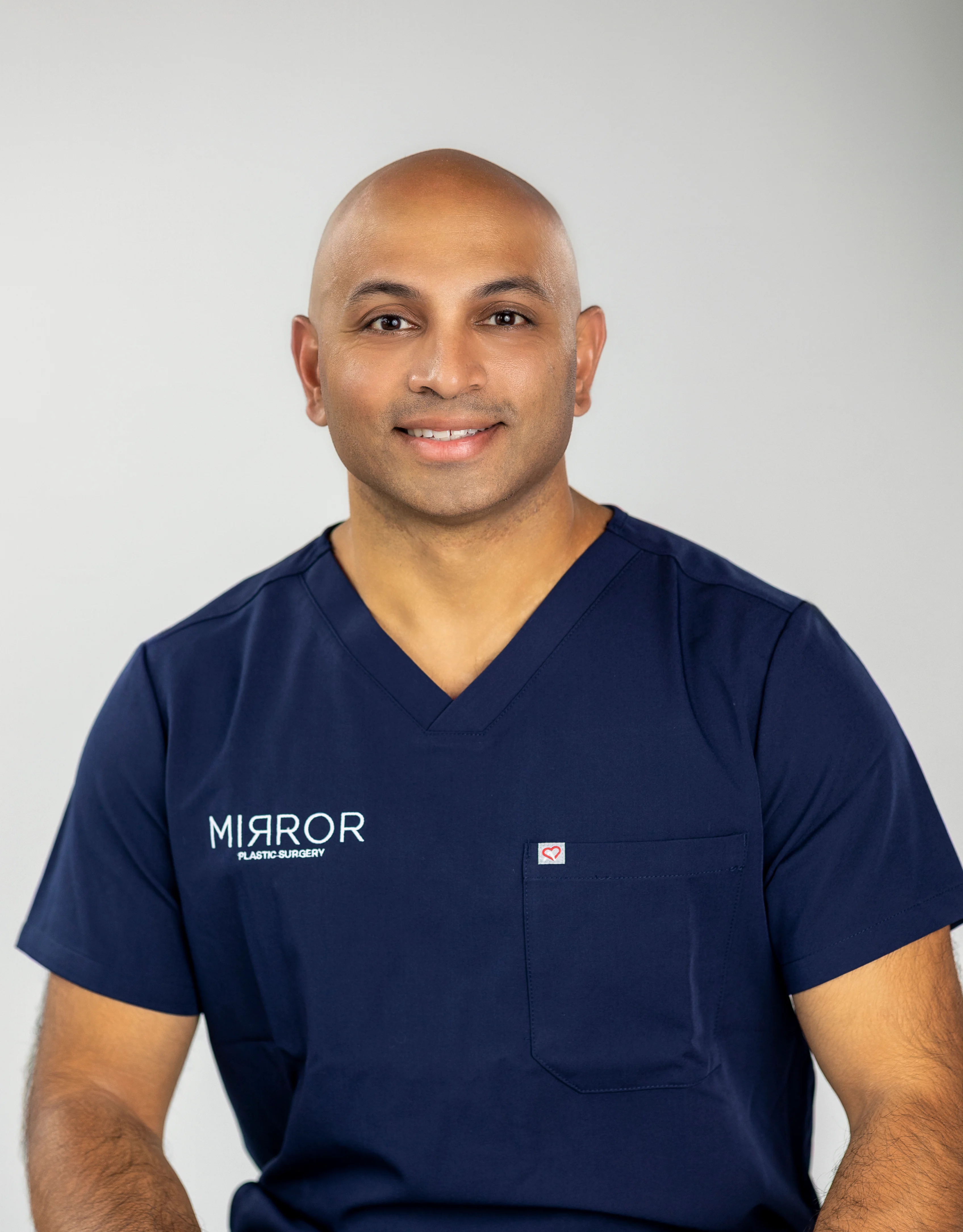
Dr. Akash Chandawarkar is a Harvard-educated, Johns Hopkins-trained plastic surgeon with fellowship training at the Manhattan Eye Ear & Throat Hospital, and he personally performs non-surgical treatments at Mirror Plastic Surgery in St. Petersburg. His concierge-level consultations, which can last up to an hour, emphasize education, honest communication, and realistic expectations. Instead of rushing patients through, Dr. Akash takes time to understand your goals and tailor your treatment plan to your anatomy and skin type. His practice follows a guiding principle of safety first, function second, and aesthetics third.
Frequently Asked Questions
Is Laser Hair Removal Painful?
Most patients describe laser hair removal as feeling like a rubber band snap or a warm pinprick. Modern lasers use integrated cooling systems that significantly reduce discomfort. In the 2026 clinical study mentioned earlier, the mean pain score was 2.63 out of 10, with the chest and abdomen rated as most sensitive and the neck and underarms rated as least sensitive.
How Long Do Laser Hair Removal Results Last?
After a complete series of sessions, most patients achieve 70–95% permanent hair reduction.1 Regrowth tends to be finer, lighter, and slower than before treatment.1 Maintenance sessions once or twice a year help preserve results, especially for hormonally influenced areas such as the face and bikini line. The FDA-cleared claim is “permanent reduction,” which means some follicles remain active at a reduced level.
Can Laser Hair Removal Be Done On All Skin Types?
Modern dual-wavelength lasers such as the GentleMax Pro mentioned earlier can safely treat Fitzpatrick skin types I through VI. Darker skin types need lower energy settings and longer wavelengths to reduce the risk of pigmentation changes. Provider experience and careful device selection matter most for Fitzpatrick types IV through VI, where inappropriate technology or settings increase the risk of pigmentary complications.
What Areas Can Be Treated?
Laser hair removal can treat almost any area with unwanted hair, including the face (upper lip, chin, sideburns), underarms, bikini line, Brazilian, legs, arms, back, chest, and abdomen. Session length and spacing vary by area. Facial areas often require more sessions due to hormonal influences, while underarms and legs usually respond more quickly.
What Are The Potential Side Effects?
Common, temporary side effects include redness, mild swelling around follicles, and a sunburn-like sensation that usually resolves within 24 hours. These signs indicate that the follicles responded to treatment. Serious complications such as burns, blistering, or pigment changes occur rarely when a qualified provider uses appropriate settings for your skin type. Seek prompt clinical attention for blistering, lasting pigment changes, redness or swelling beyond 48 hours, or any signs of infection.
Ready To See Your Own Before-And-After Transformation?
Laser hair removal offers safe, effective long-term hair reduction when a qualified provider uses modern technology and follows proper protocols. Real results depend on multiple sessions, thoughtful preparation, and clear expectations. Your choice of provider remains the most important factor.
If you are considering laser hair removal in the Tampa Bay area, start your laser hair removal journey with a consultation at Mirror Plastic Surgery to meet with Dr. Akash Chandawarkar. You will receive a personalized treatment plan, straightforward guidance, and a clear roadmap of what to expect at every stage. Call 727-361-6515 or email hello@mirrorplasticsurgery.com to schedule your appointment.
Disclaimer: Results may vary from person to person. Editorial content, before and after images, and patient testimonials do not constitute a guarantee of specific results.
1 Results may vary from person to person. Editorial content, before and after images, and patient testimonials do not constitute a guarantee of specific results.


