
Written by: Dr. Akash Chandawarkar, Board Certified Plastic Surgeon, Mirror Plastic Surgery | Last updated: September 9, 2026
Key Takeaways
- Laser hair removal is a medical decision that requires technology matched to your skin type and hair color.
- Only licensed physicians or supervised qualified providers should perform treatments; non-physician operators cause most complications and lawsuits.
- A thorough consultation includes medical history, skin assessment, and clear answers to technical questions about devices and protocols.
- Extremely low prices often signal outdated equipment or hidden costs; real value comes from fewer sessions and safer outcomes under physician oversight.
- Schedule a personalized consultation with Mirror Plastic Surgery for physician-led laser hair removal tailored to your skin type and goals.
Step 1: Choose Laser Technology That Matches Your Skin
The right laser for you depends on your Fitzpatrick skin type and hair color. Different systems have distinct safety and efficacy profiles. Three primary laser types dominate clinical practice.
| Laser Type | Best Skin Types (Fitzpatrick) | Key Benefits | Safety Considerations |
|---|---|---|---|
| Alexandrite (755 nm) | I–III (lighter skin) | Fast treatment, highly effective on dark hair, large spot sizes cover large areas quickly | High melanin absorption narrows the margin for error, burn and hyperpigmentation risk increases significantly on darker skin |
| Diode (800–810 nm) | I–V (broad range) | Deeper follicular penetration, versatile across mixed skin tones, effective on coarse hair | Lower epidermal risk than Alexandrite, less efficient on very fine hair |
| Nd:YAG (1064 nm) | IV–VI (darker skin) | Longest wavelength bypasses surface melanin, safest option for melanin-rich skin, deep follicular targeting | May require more sessions, can be less comfortable without integrated cooling |
Alexandrite lasers at 755 nm are best suited to Fitzpatrick types I–III because their high melanin absorption makes them fast and efficient on lighter skin with dark hair. That same high absorption raises the risk of burns and post-inflammatory hyperpigmentation on deeper skin tones. Diode lasers at 800–810 nm penetrate deeper than Alexandrite and are safely used across Fitzpatrick types I–V, which makes them a versatile single-wavelength option in mixed-population clinics.
Nd:YAG at 1064 nm carries the lowest melanin absorption of the three, so it bypasses the epidermis and targets the follicle root directly. That is why it is the preferred choice for Fitzpatrick types IV–VI. Dermatologist-supervised clinics treating darker skin tones reduce fluence to 30–50 J/cm² and extend pulse duration to 15–30 ms to minimize burn risk.
Multi-wavelength platforms, such as the Candela GentleMax Pro, which combines Alexandrite and Nd:YAG in a single device, allow one system to safely treat the full Fitzpatrick spectrum. A provider offering only one laser type cannot safely treat all skin tones. When a clinic cannot tell you which wavelength it will use for your specific skin type, that gap in knowledge is a meaningful warning sign.
Step 2: Check Provider Credentials And Real Oversight
In Florida, laser hair removal may only be performed by a licensed physician (MD or DO), or under direct physician supervision by a physician assistant, an advanced practice registered nurse, or a licensed electrologist with the state’s laser and light-based hair removal qualification. Estheticians and cosmetologists are not permitted to perform it. Regulations vary by state, and real physician involvement still differs widely between practice types.
Provider categories differ in meaningful ways:
- National chains and high-volume clinics: Package-driven, often technician-operated, with minimal physician involvement. These clinics prioritize throughput over personalized care.
- Med spas: Quality varies widely. Some are physician-owned with strong protocols. Many are investor-owned with no clinical background, which creates a business model that favors volume over vigilance.
- Dermatology and plastic surgery practices: Physician-led, with board-certified doctors who understand skin anatomy, laser physics, and complication management. These physicians are present to act if something goes wrong.
The stakes of this distinction are documented. In one study period, non-physicians performed a third of laser hair removal procedures yet accounted for 85.7% of related lawsuits. The American Academy of Dermatology recommends choosing a board-certified dermatologist or plastic surgeon for laser procedures, noting that risks in inexperienced hands include burns, permanent changes in skin color, and scarring.
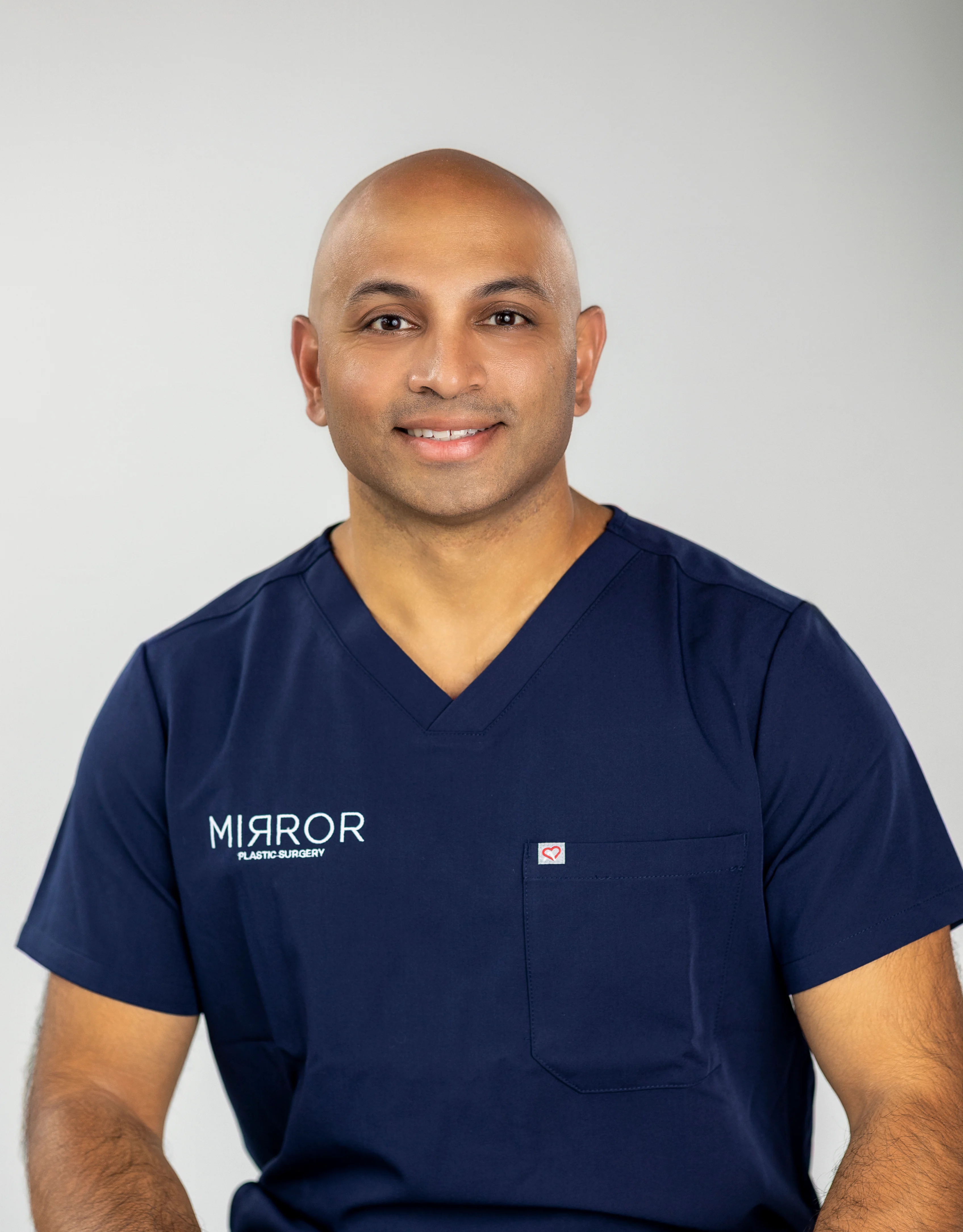
At Mirror Plastic Surgery, Dr. Akash Chandawarkar, a Harvard-educated, Johns Hopkins-trained, board-certified plastic surgeon, personally oversees laser hair removal treatments. That level of physician involvement is uncommon at most clinics and defines the difference between a concierge practice and a laser mill.
Step 3: Use Your Consultation To Get Clear Answers
A thorough consultation should last 30–60 minutes and include a medical history review, a Fitzpatrick skin assessment, and an honest discussion of candidacy. A rushed consultation usually signals a provider to avoid. Before you commit to any provider, ask the following questions.
- Who will perform my treatment, and what are their credentials?
- Is a physician on-site during treatments, or only on call?
- Which laser platform will you use for my skin type and hair color, and why?
- Can I see the device’s FDA clearance information?
- Will you perform a patch test before my first full session?
- How do you customize settings for different Fitzpatrick skin types?
- What is your protocol if a complication like a burn or pigment change occurs?
- How many sessions will I realistically need, and what results can I expect?
A provider who cannot answer these questions clearly, or who rushes past them, has already told you what you need to know. Vague answers to specific technical questions are a warning sign.
Mirror Plastic Surgery consultations are hour-long, top-to-bottom assessments. Dr. Chandawarkar explains the physiology behind each recommendation, discusses realistic outcomes, and answers every question. An informed patient stays safer and feels more confident.
Step 4: Compare Cost And Value So Deals Do Not Backfire
Laser hair removal pricing varies by treatment area, hair density, and number of sessions. The American Society of Plastic Surgeons reports a national average of approximately $697 per session. That figure reflects a broad mix of providers and often excludes consultations, numbing cream, and post-care products.
Extremely low prices frequently indicate outdated devices, undertrained staff, or hidden fees. A clinic charging less per session but using an underpowered IPL device may require twice as many visits as a medical laser clinic, which makes the total series cost higher despite the lower sticker price. A “$99 first session” promotion often excludes the areas patients actually want treated.
The long-term value equation matters more than the per-session rate. Dermatology practices typically charge 20–50% more than high-street med spas for the same area, but that premium buys physician assessment, device selection matched to your Fitzpatrick type, and qualified management of complications. Most patients need 6–8 sessions for 70–90% permanent hair reduction.1 Since many factors affect the total, a provider who reaches your goals in fewer sessions with the correct device may cost less overall than a discount clinic that requires additional rounds.
Mirror Plastic Surgery provides personalized quotes after consultation, based on what each patient actually needs. The practice follows a supplier-neutral approach, so recommendations reflect clinical judgment rather than vendor relationships.
Step 5: Spot Red Flags That Signal Unsafe “Laser Mills”
Specific warning signs help you avoid substandard providers.
- Pushy sales tactics or pressure to purchase a package on the first visit
- Inability to answer technical questions about laser wavelengths or Fitzpatrick skin typing
- A single laser type used for all skin tones, which creates a one-size-fits-all approach that cannot safely treat the full spectrum
- No patch test offered before the first full treatment session
- No physician on-site or immediately available for complications
- Consultations shorter than 15–20 minutes that skip medical history review
- Guarantees of permanent removal after a set number of sessions, even though the FDA defines results as “permanent hair reduction”
- Refusal to disclose the device manufacturer and model
A safe clinic feels unhurried, thorough, and open to questions. High-pressure “today only” tactics or pushing a large package on the spot are warning signs. Mirror Plastic Surgery offers no-pressure consultations, evidence-based recommendations, and direct physician availability for questions and complications.
Once you have chosen a safe provider, understanding safety and preparation helps you get the best outcome. The next section explains what to expect before and after treatment.
Safety And Preparation For Laser Hair Removal
Common side effects, such as redness, mild swelling, and warmth, typically resolve within a few hours to 2–3 days with proper aftercare. Serious complications like burns, blistering, and pigment changes stay rare when the correct laser matches the patient’s skin type and settings are properly calibrated. For darker skin tones (Fitzpatrick IV–VI), facilities without real-time integrated cooling report pigmentation complications 8 to 12 times higher than dermatology-led clinics, which shows why device selection and physician oversight matter.
Pre-treatment preparation includes:
- Avoid sun exposure and self-tanners for at least two weeks before treatment
- Stop waxing, plucking, or threading four weeks prior; shaving is fine because it leaves the follicle intact
- Discontinue retinoids and exfoliating acids five to seven days before your session
- Shave the treatment area 24 hours before your appointment
- Arrive with clean, product-free skin
Post-treatment care includes:
- Avoid heat sources such as hot showers, saunas, and intense exercise for 24–48 hours
- Apply SPF 30+ sunscreen daily to treated areas
- Do not pick at or aggressively exfoliate shedding hairs
- Contact your provider immediately if you experience spreading redness, blistering, pus, or fever
A physician-led practice is better equipped to manage complications if they arise. At Mirror Plastic Surgery, Dr. Chandawarkar’s oversight ensures that any adverse reaction receives prompt and appropriate treatment rather than a referral elsewhere.
Frequently Asked Questions
How Many Laser Hair Removal Sessions Will I Need?
Most patients need 6–8 sessions spaced 4–8 weeks apart. As mentioned earlier, that range usually produces a strong long-term reduction, but the exact number depends on hair density, color, skin type, and treatment area.1 Hormonally sensitive areas such as the chin, upper lip, or bikini line may require additional sessions because hormonal fluctuations can stimulate new follicle activity over time. Staying consistent with session spacing plays a major role in achieving the best cumulative outcome.
Is Laser Hair Removal Permanent?
The FDA defines laser hair removal as “permanent hair reduction”. Most patients achieve a long-term, stable reduction of 70–90% after a full course of treatment. Some regrowth is normal, particularly in hormonally active areas.1 Maintenance sessions once or twice a year can manage stray hairs and preserve results. Providers who guarantee complete permanent removal after a fixed number of sessions are overpromising, which should raise concern.
Does Laser Hair Removal Hurt?
Most patients describe the sensation as a rubber band snapping against the skin with a warm edge. Modern lasers with integrated cooling systems, such as cryogen spray or sapphire contact cooling, significantly reduce discomfort compared to older devices. Sensitive areas like the bikini line, upper lip, and underarms tend to feel more tender. Topical numbing cream applied 30–45 minutes before treatment can meaningfully reduce discomfort at these sites. Side effects generally decrease with each successive session as fewer active follicles remain.
Can Laser Hair Removal Be Done On All Skin Types?
Laser hair removal can treat all skin types when the correct laser is used. Alexandrite lasers suit lighter skin (Fitzpatrick I–III). Diode lasers offer a versatile middle ground across Fitzpatrick types I–V. Nd:YAG lasers are the safest choice for darker skin (Fitzpatrick IV–VI) because their longer wavelength bypasses surface melanin and reduces burn and hyperpigmentation risk. A qualified provider matches the laser to your Fitzpatrick type and adjusts energy settings accordingly. Providers offering only one laser type cannot safely treat the full skin-tone spectrum, so multi-wavelength platforms and physician oversight matter.
Laser Hair Removal Vs. Electrolysis: Which Is Better?
Laser hair removal treats large areas quickly and is cost-effective for most patients, but it only works on dark, pigmented hair. Blonde, red, gray, and white hair lack sufficient melanin for the laser to target, which makes laser ineffective for those hair colors. Electrolysis is the only FDA-recognized method for truly permanent hair removal and works on all hair colors, including unpigmented hair, but it requires significantly more sessions (typically 15–30 or more) and is more time-intensive and expensive for large areas. For most patients with dark hair, laser offers a more practical and cost-effective long-term solution. For those with light or unpigmented hair, electrolysis is the appropriate alternative.
Why Mirror Plastic Surgery Stands Out For Tampa Bay Laser Hair Removal
For St. Petersburg and Tampa Bay readers, Mirror Plastic Surgery delivers the physician-led standard described in this guide. Every key element, including appropriate laser technology, board-certified oversight, thorough consultation, transparent recommendations, and complication management, is built into the practice’s philosophy.
- Physician-led care: Dr. Chandawarkar, whose credentials are detailed above, personally oversees laser hair removal treatments rather than delegating everything to a technician.
- Concierge philosophy: Hour-long consultations, top-to-bottom assessment, and a guiding principle of safety first, function second, aesthetics third.
- Advanced technology: Access to multiple laser platforms matched to each patient’s skin type and hair color instead of a single device applied to everyone.
- Personalized treatment plans: No one-size-fits-all packages. Every plan is tailored to the individual’s anatomy, Fitzpatrick type, and goals.
- Supplier-neutral recommendations: Honest guidance based on clinical need rather than commission targets or vendor relationships.
Experience physician-led laser hair removal in St. Petersburg by booking your consultation with Ellie today. Call 727-361-6515 or visit the St. Petersburg office at 780 4th Ave S, St. Petersburg, FL 33701.
Conclusion: Choose A Provider Who Treats Laser As Medical Care
The best place for laser hair removal is the provider who matches the right laser technology to your skin type, operates under genuine physician oversight, and prioritizes your safety over session volume. National chains and high-volume med spas rarely offer all three. Mirror Plastic Surgery in St. Petersburg does, with a board-certified plastic surgeon personally involved in every treatment plan.
Ready to see the difference? Book your consultation with Ellie at Mirror Plastic Surgery. Call 727-361-6515 or visit 780 4th Ave S, St. Petersburg, FL 33701.
Disclaimer: Results may vary from person to person. Editorial content, before and after images, and patient testimonials do not constitute a guarantee of specific results.
1 Results may vary from person to person. Editorial content, before and after images, and patient testimonials do not constitute a guarantee of specific results.