
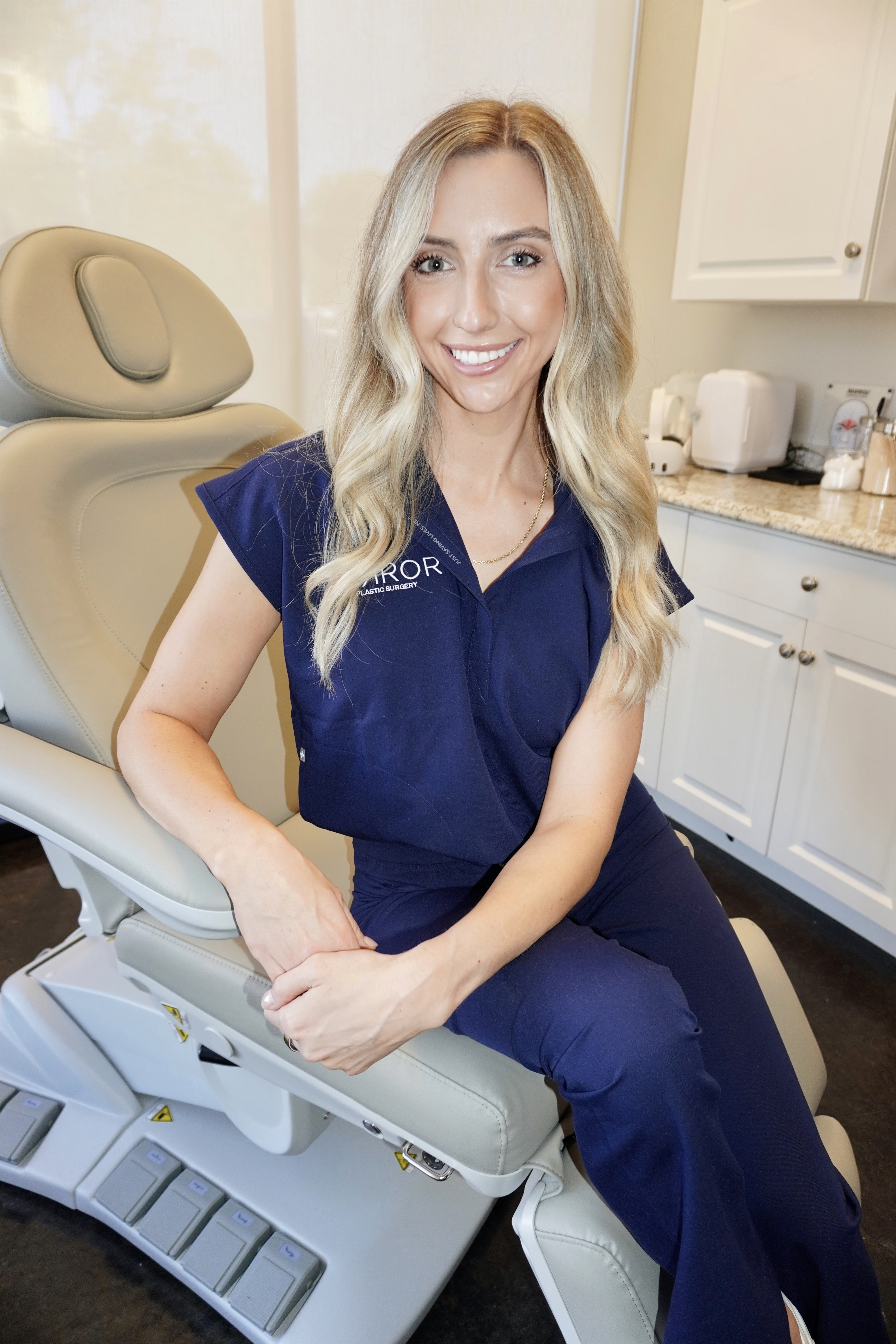
Written by: Ellie Pranckevicius, FNP-BC, Aesthetic Nurse Practitioner & Aesthetic Injector | Facial Restoration & Regenerative Injectable Specialist, Mirror Plastic Surgery
Key Takeaways for Tampa Laser Hair Removal Pricing
- Laser hair removal pricing in Tampa remains fragmented and often confusing, so transparent 2026 market data helps patients compare options more confidently.
- Per-session costs vary by body area and provider tier, and boutique med spas usually offer 6-session packages that deliver about 5–15% savings versus individual sessions.
- Most patients need 6–8 sessions for 80–95% permanent hair reduction, and skin tone, hair color, and hormonal factors influence the final treatment count.1
- Red flags such as pressure to prepay packages, outdated equipment, or rushed consultations under 15 minutes suggest a focus on sales instead of outcomes.
- Schedule your consultation with Ellie at Mirror Plastic Surgery to receive a personalized, evidence-based treatment plan tailored to your skin type and goals.
How This Tampa Pricing Report Was Built
Pricing data from Florida med spas provides the primary benchmark for this report. Secondary sources include Castellano Cosmetic Surgery Center’s 2026 Tampa market analysis, a 2026 Tampa market guide from Nude Laser, and national pricing benchmarks from the Cosmetic Surgery Cost Guide’s 2024–2025 ASPS industry survey compilation. This report focuses on boutique and independent med-spa providers rather than national franchise chains, because their pricing structures, consultation models, and device inventories differ significantly from the concierge standard described here.
Average Per-Area Costs at Tampa Boutique Med Spas
Tampa-specific per-session rates vary by body area and provider tier, which matches broader Florida pricing patterns. Published 2026 data is strongest for Brazilian treatments, which range from $150–$400 per session at boutique practices. For other areas such as the upper lip, underarms, bikini line, legs, back, chest, and full body combinations, pricing varies widely based on provider credentials, device type, and treatment area size.
Published 6-session package pricing also varies, because practices bundle areas differently and apply different discounts. An accurate quote for your situation requires an in-person consultation where the provider can assess your anatomy, hair density, and skin type.
These ranges reflect boutique-tier providers. Sessions advertised at $25–$40 for facial zones almost always involve outdated equipment, inadequately trained staff, or both, and they represent a documented safety and efficacy risk rather than a genuine value.
Session Counts for Lasting Laser Hair Removal Results
Most clients require 6 to 8 sessions to achieve 80–95% permanent hair reduction. Citrine Clinic’s clinical breakdown places face and back or chest areas at 8–10 sessions, while underarms, bikini, Brazilian, arms, and legs typically require 6–8 sessions. The biological reason is consistent across sources. Laser energy destroys only follicles in the active anagen growth phase during each treatment, so spaced sessions are needed to catch each growth cycle.
Several patient-specific variables influence the total session count:
- Hair color and thickness: Dark, coarse hair responds faster to laser energy, while lighter hair often needs more treatments and sometimes different technology.
- Skin tone: Darker skin tones (Fitzpatrick IV–VI) require calibrated energy settings, typically using Nd:YAG wavelengths, to reduce burn risk.
- Hormonal factors: Conditions such as PCOS can drive hormonally stimulated regrowth, especially on the face and neck, and can increase the total number of sessions.
- Treatment consistency: Missing sessions, waxing between treatments, or significant sun exposure can increase the total number of sessions required.
- Maintenance: Most patients need 1–3 maintenance sessions per year after the initial series to maintain results.
Package Pricing Versus Single-Session Costs
Package pricing usually delivers savings compared to single-session rates at the same provider, so it becomes the main value model once you trust a practice. Six-session packages typically cost 5–15% less than purchasing six individual sessions at the same practice.
A practical approach is to pay per session for the first treatment to assess skin response and shedding before committing to a multi-session package. This strategy matters most at boutique providers, where the consultation produces a personalized treatment plan that can only be confirmed once you see how your skin responds. The first session therefore acts as a calibration point that validates the planned settings and device choice, not just a simple transaction.
A full-body laser package can eventually cost less than years of waxing, especially when you factor in only occasional maintenance sessions afterward.
Tipping Norms at Boutique Med Spas
Beyond pricing and package decisions, many patients also want clarity on gratuity expectations. Tipping etiquette at medical spas differs from traditional day spas. Laser hair removal is a medical-grade procedure performed by licensed clinical staff, such as nurse practitioners, registered nurses, or licensed laser technicians, who work under physician oversight. Gratuity is not expected in the same way it is at a hair salon or nail studio, and many boutique med spas clearly discourage it to preserve a clinical relationship.
When a patient chooses to tip, the general range observed across Florida boutique med spas is 10–20% of the session cost for exceptional service. Tipping always remains discretionary. Patients should not feel obligated, and a provider who suggests otherwise is signaling a sales culture that does not align with a true clinical environment.
Red Flags to Watch for During Consultations
Several clear signals suggest that a provider prioritizes volume or revenue over patient outcomes:
- Pressure to prepay a full package at the first appointment before any skin assessment or test patch has been performed.
- No skin-type assessment using the Fitzpatrick scale or a similar framework before recommending a device or energy setting.
- Outdated or unspecified equipment. Sessions priced at $25–$40 for facial zones almost always involve outdated equipment or inadequately trained staff.
- Rotating practitioners. For patients with darker skin (Fitzpatrick IV–VI), continuity with one experienced practitioner using carefully judged lower settings is safer than rotating operators using default settings.
- No discussion of contraindications, including hormonal conditions, medications that increase photosensitivity, or recent sun exposure.
- Consultations under 15 minutes that skip medical history and move directly to pricing.
What Drives Price Differences in 2026
Understanding these red flags helps explain why legitimate providers often charge more. Four primary variables account for the wide price spread observed across Tampa boutique med spas:
- Provider credentials: Board-certified physicians or dermatology offices generally charge more than standalone beauty spas staffed by technicians with basic certifications. This premium reflects the added clinical accountability physician oversight provides, which becomes especially important for complex skin tones or hormonally driven hair growth.
- Laser technology: Nd:YAG lasers command a slight price premium at practices treating diverse skin tones because their longer wavelength reduces burn risk on darker skin. Diode and Alexandrite lasers are effective across a range of skin tones and often require fewer total sessions than IPL devices, which are not true lasers.
- Consultation depth: Boutique practices maintain clinician-to-patient continuity, cap daily procedure volume, and provide direct post-treatment access to the treating clinician. These elements add time and overhead, and that investment appears in pricing.
- Supplier neutrality: Practices not tied to a single device manufacturer or product line can choose the most appropriate technology for each patient’s skin type and hair characteristics, rather than defaulting to whatever equipment the clinic already owns.
Practical Decision Criteria for Tampa Patients
Several practical checks help Tampa patients identify higher-quality boutique med-spa providers for laser hair removal:
- Ask which laser platform will be used and confirm that it suits your Fitzpatrick skin type.
- Confirm that the same practitioner will perform every session in your series. A specialist clinic answers yes and provides a name, while chains usually say whoever is available will treat you.
- Verify that the consultation includes a full medical history review, not just a quick visual look at the treatment area.
- Request a written treatment plan that lists the device, wavelength, proposed energy settings, session spacing, and estimated total session count for your case.
- Confirm that the medical director is actively involved in clinical oversight, not just a name on a license. Reputable med spas require an initial face-to-face consultation with a prescribing provider to establish a practitioner-patient relationship and create a personalized treatment plan.
Variables That Affect Your Final Cost
Published price ranges serve as starting points, not guarantees. Individual cost will vary based on:
- Fitzpatrick skin type and the specific laser wavelength required for safe treatment
- Hair density and the total surface area within a named treatment zone
- Hormonal status, including active PCOS or medication-driven hair growth that may require additional sessions
- Use of Nd:YAG treatments for Fitzpatrick skin types V–VI, which can involve different costs compared to standard pricing
- Whether maintenance sessions are bundled into the initial package or billed separately
An accurate quote requires an in-person assessment by a qualified provider who reviews your medical history and examines the treatment area under clinical conditions.
Why Evidence-Based Consultations Matter in Tampa
Concierge and boutique models correlate with higher patient satisfaction than traditional high-volume settings. That gap continues to widen as Tampa-area consumers learn more about device types, wavelength suitability, and the clinical risks of undertrained operators. Laser hair removal performed by undertrained technicians on inappropriate settings for a patient’s skin tone carries documented risks of burns, scarring, or paradoxical hypertrichosis. Provider credentials and specific laser type therefore matter more than the lowest advertised package price.
The boutique model’s structural strengths, including capped caseloads, practitioner continuity, and individualized planning, are increasingly recognized by patients who have experienced chain environments. Aesthetic medicine should meet the same standards as any other medical specialty, with a thorough medical history, careful evaluation, and treatment reserved for appropriate candidates.
Frequently Asked Questions
Is laser hair removal 100% permanent?
Laser hair removal does not produce 100% permanence in every case. The FDA recognizes the outcome as “permanent hair reduction,” which means a significant and lasting decrease in the number of hairs that regrow after a complete treatment series. Most patients achieve 80–95% reduction after 6–8 sessions. Some follicles can reactivate due to hormonal changes, aging, or medication, which is why annual or semi-annual maintenance sessions are common. The degree of permanence varies by individual, body area, hair color, and the technology used.
Is 7 sessions enough for laser hair removal?
Seven sessions falls within the standard 6–8 session range discussed earlier and is typically sufficient for most body areas. Whether it is enough for you depends on how your hair has responded through each prior session. A qualified provider tracks shedding patterns, regrowth density, and follicle response, then adjusts the plan rather than applying a fixed number to every patient.
Do you tip at a med spa for laser hair removal?
Tipping is not standard practice at medical spas for laser hair removal, and many boutique providers do not expect or accept gratuity because the service occurs in a clinical context with licensed healthcare professionals. When patients choose to tip for exceptional service, 10–20% of the session cost is the range most commonly observed. The decision remains entirely discretionary. A provider or front-desk staff member who suggests that tipping is expected is behaving in a way that does not match a professional clinical environment.
Who is not a good candidate for laser hair removal?
Laser hair removal does not suit every patient. Very light, blonde, red, or gray hair often has too little melanin contrast for most laser wavelengths to target the follicle effectively, so results are usually poor regardless of session count. Active skin infections, open wounds, or inflammatory conditions in the treatment area are temporary contraindications. Patients on photosensitizing medications, including some antibiotics, retinoids, and acne treatments, usually need a washout period before treatment. Pregnancy is a standard contraindication. Patients with a history of keloid scarring should discuss risk carefully with a qualified provider before proceeding. A thorough medical history review during consultation remains the only reliable way to determine individual candidacy.
Summary of Tampa Boutique Laser Hair Removal Pricing
Tampa boutique med-spa laser hair removal pricing in 2026 spans a wide range by body area, from roughly $50–$150 per session for small areas like the upper lip to $300–$700 per session for full legs or full back. Six-session packages reduce effective per-session costs and represent the standard value model for patients completing a full treatment course. The standard 6–8 session course mentioned earlier delivers 80–95% reduction for many patients, although hormonal factors, skin tone, and hair characteristics can increase the total count. Provider credentials, laser technology, consultation depth, and practitioner continuity predict outcomes more reliably than advertised per-session price. An accurate, individualized quote always requires an in-person consultation with a qualified provider who has reviewed your medical history and examined the treatment area.
Disclaimer: Results may vary from person to person. Editorial content, before and after images, and patient testimonials do not constitute a guarantee of specific results.
1 Results may vary from person to person. Editorial content, before and after images, and patient testimonials do not constitute a guarantee of specific results.