

Written by: Dr. Akash Chandawarkar, Board Certified Plastic Surgeon, Mirror Plastic Surgery | Last updated: September 9, 2026
Key Forehead Botox Takeaways
This guide explains how many Botox units you may need for your forehead and how to keep results natural and safe.
- The typical clinical range for forehead Botox is 10–30 units, with the FDA-labeled dose set at 20 units for moderate to severe lines.
- The FDA requires treating forehead lines together with glabellar lines to keep brow muscles balanced and reduce brow ptosis risk.
- Muscle strength, gender, age, anatomy, and your goals all shape your final dosage.
- Placement and injector skill matter as much as unit count, and safety-focused technique keeps complication rates low.
- Schedule a personalized Botox dosage assessment with Ellie at Mirror Plastic Surgery in St. Petersburg, FL.
The FDA-Labeled Dose For Forehead Botox
The FDA has approved Botox Cosmetic for temporary improvement of moderate to severe forehead lines, with a recommended dose of 20 units divided into five injections of 4 units each across the frontalis muscle. This dose comes from controlled clinical trials and reflects tested safety and effectiveness.
A key detail often overlooked is that the FDA label specifies treating forehead lines in conjunction with glabellar lines to lower the chance of brow ptosis. The recommended combined dose totals 40 units, split between the forehead and glabella. This requirement reflects how brow muscles work together and is not a sales tactic.
The labeled dose offers a clinical starting point rather than a one-size-fits-all prescription. The FDA also notes that the safety and effectiveness of dosing more frequently than every three months have not been evaluated. This establishes three months as the minimum retreatment interval.
Personal Factors That Shape Your Botox Dosage
The FDA label provides a baseline. Your actual dose depends on several personal factors that a skilled injector evaluates during consultation. Muscle strength is the single biggest determinant, but other elements also matter.
- Muscle Strength And Size: The frontalis muscle varies significantly between individuals. Stronger, more active muscles require more units to achieve the same relaxing effect.
- Gender: Men typically need 20–30 units for the forehead compared to 10–20 units for women because of greater muscle mass and strength.
- Age And Skin Quality: Younger patients in their late 20s to 30s often have a stronger, more active frontalis and thicker skin, which can push dosing toward 20–25 units. Older patients may benefit from more conservative dosing to avoid brow heaviness, especially when brow descent already exists.
- Desired Outcome: Patients seeking a “baby Botox” effect that preserves natural movement often start at 8–12 units. Patients who want more complete smoothing may need 20–30 units.
- Previous Treatment History: Long-term patients often find they need less product over time as repeatedly relaxed muscles gradually lose bulk.
- Anatomical Variations: Patients who habitually raise their brows to compensate for low brow position require more conservative dosing to avoid brow drop.
Precise placement matters as much as unit count: 12 units placed correctly can produce better results than 20 units placed incorrectly. Provider expertise becomes the most important variable in your outcome. That expertise is especially critical when deciding whether to treat the forehead alone or together with the frown lines.
Why Forehead And Frown Line Treatment Work Best Together
The frontalis muscle is the only muscle that lifts the eyebrows. The glabellar complex, which includes the corrugator supercilii and procerus muscles, pulls the brows downward and inward. Treating only the forehead weakens the brow elevator while leaving the depressors unopposed, which directly contributes to brow ptosis and a heavy, hooded appearance.
The FDA label mandates treating forehead lines in conjunction with glabellar lines for this reason. The table below shows how different treatment approaches affect muscular balance.
| Treatment Approach | Typical Units | Clinical Consideration |
|---|---|---|
| Forehead Alone | 10–30 units | Higher risk of brow drop because depressors remain unopposed |
| Glabella Alone | 15–40 units | Forehead lines remain, and the brow can feel heavy |
| Forehead + Glabella | 30–60 units | Balances brow elevators and depressors for a natural look |
| FDA-Labeled Combination | 40 units | Split between forehead and glabella per prescribing information |
Many patients also treat crow’s feet for complete upper-face rejuvenation, bringing the FDA-labeled total to 64 units across all three areas.
Safety First For Forehead Botox
Patients often worry about brow drooping, hooded eyelids, or a “frozen” look. These complications remain uncommon when a provider understands facial anatomy and respects safe dosing. Clinical trials for the FDA-labeled combined protocol reported brow ptosis in 2% of subjects and eyelid ptosis in 2%.
Several safety principles guide every forehead Botox treatment at Mirror Plastic Surgery. First, the lower treatment row is placed at least 2 cm above the eyebrow to protect the brow-lifting mechanism. Second, injections stay at least 1 cm above the central eyebrow to reduce ptosis risk.
Third, the glabella is treated together with the forehead to maintain muscular balance, following the FDA label. Fourth, conservative doses are used in patients who already recruit the frontalis to hold their brows up, because these patients are more prone to brow heaviness.
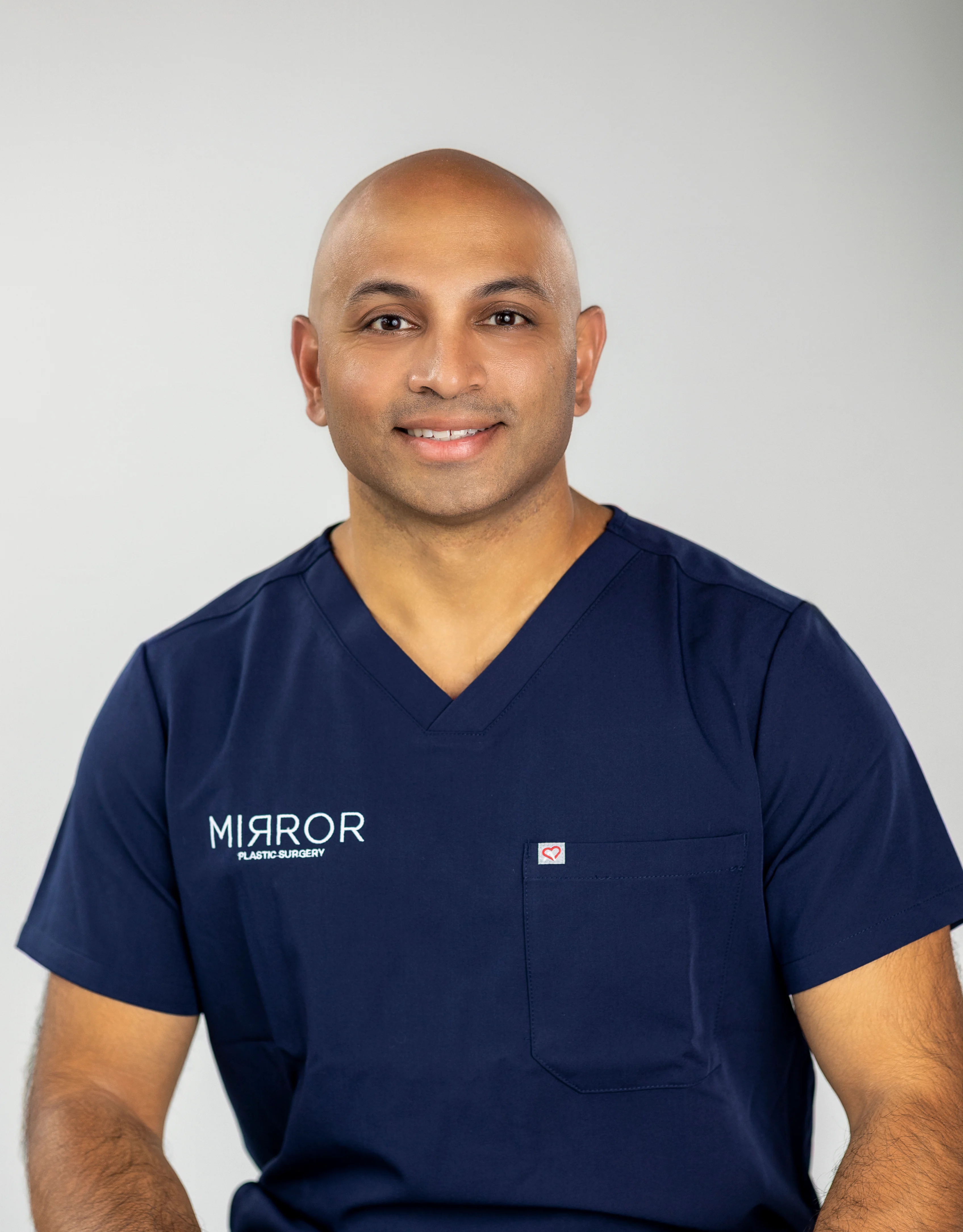
Dr. Akash Chandawarkar at Mirror Plastic Surgery performs a top-to-bottom assessment before every treatment. He evaluates brow position, muscle strength, and compensatory recruitment patterns. His surgeon-level command of facial and subdermal anatomy, developed through Harvard education, Johns Hopkins training, and fellowship in aesthetic surgery at the Manhattan Eye Ear & Throat Hospital (MEETH)/Lenox Hill Hospital, keeps safety at the center of each decision.
First-Time Forehead Botox: What You Can Expect
First-time patients usually start with 10–20 units for the forehead. This conservative approach shows how your muscles respond before any adjustment. It protects against over-treatment and gives you and your provider a clear baseline.
Results begin within 24–48 hours, peak at two weeks, and last about 3–4 months.1 A two-week follow-up visit allows your injector to review your movement pattern and decide whether any refinement makes sense. If results feel too subtle, additional units can be added at that visit. This staged approach is safer than aggressive dosing at the first session.
The goal at Mirror Plastic Surgery is to soften lines while preserving your ability to express emotion naturally. This philosophy reflects physician-led aesthetic care rather than a high-volume injection model. Talk with Ellie about your first-time Botox treatment plan with Dr. Akash.
Frequently Asked Questions
Is 20 Units Of Botox Enough For Forehead Lines?
For many patients, 20 units work well. Twenty units is the FDA-labeled dose for moderate to severe forehead lines, administered across five injection sites. Your exact needs still depend on muscle strength, gender, and your goals. Some patients do well with 10–15 units, while others with strong frontalis muscles may need 25–30 units. A consultation with a board-certified plastic surgeon provides a personalized plan.
How Many Units Of Botox For Forehead And 11s?
The FDA recommends a 40-unit combined dose mentioned earlier for forehead and glabellar lines. In day-to-day practice, combined treatment often ranges from 30–60 units based on muscle strength and anatomy. Treating both areas together supports balanced results and helps prevent brow drooping from unopposed brow depressors.
What Is The Minimum Time Between Botox Treatments?
The FDA-approved prescribing information sets a minimum interval of three months between Botox treatments. This guideline reflects available safety data, since more frequent dosing has not been studied. Most patients notice that results last 3–4 months, which fits naturally with this schedule.
Can Forehead Botox Cause Drooping Eyebrows?
Forehead Botox can cause brow ptosis in a small percentage of patients, similar to the 2% rate mentioned earlier from clinical trials. This occurs when the frontalis, the only brow elevator, becomes over-relaxed while brow depressors remain active. The FDA requirement to treat forehead and glabella together addresses this risk. Choosing an experienced injector who respects safe depth and placement guidelines further reduces the chance of drooping.
How Long Does Botox Last On The Forehead?
Forehead Botox usually lasts 3–4 months.1 Softening begins within 24–48 hours, and full results appear around two weeks.1 Some patients notice longer-lasting results after several treatment cycles as muscles become less active over time. Highly athletic patients may metabolize Botox faster and see a slightly shorter duration.1
Why Work With A Board-Certified Plastic Surgeon For Botox
Provider choice often determines whether your result looks natural or overly frozen. At Mirror Plastic Surgery, Dr. Akash Chandawarkar personally performs every neuromodulator injection, rather than delegating to a nurse or aesthetician. As a board-certified plastic surgeon with fellowship training in aesthetic surgery, he brings a surgeon’s understanding of facial and subdermal anatomy to each treatment.
Several features set Mirror Plastic Surgery apart from high-volume aesthetic clinics.
- Dr. Akash trained at Harvard, Johns Hopkins, and the Manhattan Eye Ear & Throat Hospital (MEETH)/Lenox Hill Hospital, one of the most prestigious aesthetic surgery programs in the country.
- The practice follows a concierge-style model with hour-long consultations and a comprehensive top-to-bottom assessment before recommending treatment.
- Mirror Plastic Surgery remains supplier-neutral and recommends the product that best fits your anatomy and goals instead of promoting a single brand.
- The team limits daily procedures so every patient receives focused, unhurried care rather than assembly-line treatment.
- The clinical philosophy follows a clear order: safety first, function second, and aesthetics third. This approach protects patients from the over-treatment that creates stiff, unnatural results.
Contact Ellie to experience physician-led Botox care at Mirror Plastic Surgery in St. Petersburg, FL.
1 Results may vary from person to person. Editorial content, before and after images, and patient testimonials do not constitute a guarantee of specific results.


