Written by: Dr. Akash Chandawarkar, Board Certified Plastic Surgeon, Mirror Plastic Surgery | Last updated: September 9, 2026
Key Takeaways
- Botox (onabotulinumtoxina) is FDA-approved for specific medical and cosmetic uses, with the first cosmetic approval granted in 2002 for frown lines.
- Approved cosmetic indications currently include glabellar lines, lateral canthal lines, forehead lines, and platysma bands. Other wrinkle treatments remain off-label.
- Off-label use is legal when a licensed physician deems it appropriate, and the FDA has not reviewed dosing or safety for that specific application.
- Counterfeit Botox is a real risk. Patients should verify authenticity by checking holographic labels, U.S. License 1889, and sourcing from authorized distributors.
What FDA Approval Actually Means for Botox
FDA approval tells you that Botox has been studied and shown to be safe and effective for specific uses. Before a drug like Botox reaches patients, the manufacturer must submit clinical trial data demonstrating safety and effectiveness for each indication. The FDA reviews this evidence and approves the drug only for the uses that meet its standards.
Here are key facts about Botox approval:
| Fact | Detail |
|---|---|
| Initial FDA approval | 1989 (medical: strabismus, blepharospasm) |
| First cosmetic approval | April 12, 2002 (glabellar lines) |
| Crow’s feet approval | September 11, 2013 (lateral canthal lines) |
| Forehead lines approval | 2017 |
| Latest cosmetic approval | October 2024 (platysma bands) |
| Regulatory classification | Biologic (BLA 103000) |
| Manufacturer | Allergan Aesthetics (an AbbVie company) |
FDA-Approved Medical Uses of Botox
Botox has a robust portfolio of FDA-approved medical indications where clinical trials demonstrated clear therapeutic benefit.1 These medical uses go far beyond wrinkle treatment.
- Chronic migraine: Prevention of headaches in adults experiencing 15 or more headache days per month (approved 2010)1
- Cervical dystonia: Reduction of abnormal head position and neck pain1
- Upper and lower limb spasticity: Management of muscle stiffness in adults and children age 2 and older1
- Overactive bladder: Treatment of urge urinary incontinence when anticholinergic medications fail1
- Severe primary axillary hyperhidrosis: Reduction of excessive underarm sweating when topical treatments are inadequate (approved 2004)1
- Blepharospasm and strabismus: Treatment of uncontrollable blinking and crossed eyes in patients age 12 and older
For these medical indications, Botox is often covered by insurance. Cosmetic use is always out-of-pocket. In contrast, cosmetic applications focus on appearance-related concerns and are considered elective.
FDA-Approved Cosmetic Uses of Botox
For cosmetic purposes, the FDA has approved Botox Cosmetic for exactly four adult indications. These are the only cosmetic areas on the official label.
- Glabellar lines (frown lines between the eyebrows), approved 2002
- Lateral canthal lines (crow’s feet), approved 2013
- Forehead lines, approved 2017
- Platysma bands (vertical neck bands), approved October 2024
Botox is FDA-approved only for dynamic wrinkles caused by repeated muscle movement. Static wrinkles that remain at rest fall outside the current cosmetic label. Providers often treat additional areas, and those uses count as off-label.
Off-Label Use: What It Is and Why It Matters
Off-label use means a licensed physician prescribes an FDA-approved drug for a condition, dose, or patient population not listed on the drug’s approved label. The drug itself has passed FDA review, while this particular use has not gone through that process.
Off-label prescribing is legal in the United States when a licensed healthcare provider judges an FDA-approved drug medically appropriate for a patient. The FDA regulates what manufacturers can claim and promote. It does not regulate how a licensed physician uses clinical judgment with an already-approved drug, a concept known as the “practice-of-medicine principle.”
Common off-label uses of Botox include:
- TMJ disorders and bruxism (jaw clenching)
- Masseter reduction (jawline slimming)
- Trapezius injections for shoulder contouring (“traptox”)
- Lip flip procedures
- Gummy smile correction
Many off-label applications carry strong clinical evidence, so off-label use is not inherently unsafe. Off-label status means the FDA has not validated specific dosing, safety margins, or injection templates for that use. Before any off-label treatment, patients should ask what evidence supports the use and what specific risks apply.
How to Verify Your Botox Is FDA-Approved and Authentic
Counterfeit Botox poses a real and growing safety concern. In April 2024, the FDA confirmed that counterfeit Botox had been administered to patients in multiple U.S. states, with the CDC reporting 22 people affected across 11 states and 11 hospitalizations. The problem persists, as in November 2025, the FDA issued warning letters to 18 websites illegally selling unapproved botulinum toxin products, and in September 2026 a Massachusetts med spa owner was sentenced to 46 months in prison for performing thousands of counterfeit Botox injections on more than 900 clients.
Use these steps to protect yourself:
- Choose a licensed medical professional. Botox is a prescription product that a qualified provider must administer, ideally a board-certified plastic surgeon or dermatologist.
- Ask to see the vial. Genuine Botox vials feature a translucent holographic label showing “Allergan” in a repeating pattern under light, a purple cap, and appear empty except for a white, dry film of powder at the bottom.
- Check the packaging. Authentic cartons display “Onabotulinumtoxina” as the active ingredient and “Allergan Aesthetics (an AbbVie company)” as the manufacturer. The U.S. License number 1889 must appear on both vial and carton.
- Verify the setting. Legitimate practices source products exclusively from authorized distributors and follow strict storage protocols. Botox must be stored in a temperature-monitored medical refrigerator at 2°C to 8°C.
- Be wary of deals that seem too good. Pricing far below market rates often signals counterfeit or improperly sourced product.
At Mirror Plastic Surgery, every neuromodulator is sourced exclusively through authorized U.S. distributors and administered by Dr. Akash Chandawarkar, a board-certified plastic surgeon with a surgeon’s command of facial and subdermal anatomy. Contact Ellie to learn more about our safety-first approach.
Safety and Side Effects: What the FDA Says
All botulinum toxin products carry an FDA boxed warning about the potential for distant spread of toxin effect, with symptoms that can include muscle weakness, difficulty swallowing, or breathing difficulties. No definitive serious adverse event reports of distant spread have been associated with dermatologic use at the labeled cosmetic doses.
Common side effects are typically mild and temporary:
- Injection-site pain or bruising
- Headache (9% for forehead lines)1
- Eyelid ptosis (3% for glabellar lines)1
- Brow ptosis (2% for forehead lines)1
Serious complications are rare when a trained professional with deep anatomical knowledge administers Botox. The FDA label itself states that Botox Cosmetic “should only be administered by physicians who understand the relevant neuromuscular and structural anatomy.”
Questions to Ask Your Provider Before Treatment
A good consultation feels like a two-way conversation. Before any Botox treatment, ask questions that clarify safety, experience, and product quality.
- Are you a board-certified plastic surgeon or dermatologist?
- What is your experience administering Botox?
- Can I see the vial before you prepare the injection?
- Is your Botox sourced from an authorized U.S. distributor?
- What are the specific risks and side effects for my treatment area?
- Is this use FDA-approved or off-label, and if off-label, what evidence supports it?
Frequently Asked Questions
Is Botox FDA Approved for Forehead Lines?
Yes. The FDA approved Botox Cosmetic for forehead lines in 2017, and providers typically administer it alongside glabellar line treatment to reduce the risk of brow ptosis. Botox is approved only for dynamic wrinkles caused by repeated muscle movement.
What Brands of Botox Are FDA Approved?
Botox (onabotulinumtoxina) is the brand name manufactured by Allergan Aesthetics (AbbVie) and holds the broadest FDA-approved cosmetic label, covering the four approved cosmetic indications. Other FDA-approved neuromodulators include Dysport, Xeomin, Jeuveau, Daxxify, and Letybo. Each product has its own approved indications and dosing units, so they are not interchangeable on a unit-for-unit basis.
At Mirror Plastic Surgery, Dr. Akash Chandawarkar offers all major neuromodulator brands and selects the most appropriate product based on each patient’s anatomy and goals.
Is Botox Safe for Long-Term Use?
Yes. When a qualified professional administers Botox appropriately, it has a strong safety record spanning more than three decades. Side effects are temporary and typically resolve as the effect wears off, generally within three to four months.1 The FDA has not identified cumulative safety risks associated with long-term use when treatments are properly spaced at least three months apart, as the safety and effectiveness of more frequent dosing have not been clinically evaluated.
What Is the Difference Between FDA-Approved and Off-Label Botox Use?
FDA-approved use means the agency reviewed clinical trial data and determined Botox is safe and effective for that specific indication at a specific dose. Off-label use means a licensed physician applies an already-approved drug to a condition, dose, or anatomical site not listed on the label. Off-label prescribing is legal and common in medicine, and off-label use lacks FDA validation for dosing and safety, which makes provider expertise and anatomical knowledge especially important.
How Do I Know If My Provider Is Using Authentic Botox?
Ask to see the sealed, labeled vial before it is prepared. As described earlier, authentic vials have a holographic label, a purple cap, and a small amount of white powder at the bottom. The outer carton must list the correct active ingredient, manufacturer, and U.S. License number 1889 on both the vial and carton. A 150-unit vial labeled as Botox is a red flag, because authentic Botox Cosmetic is sold only in 50-unit and 100-unit vials. If anything looks inconsistent, choose another provider.
Conclusion: Knowledge Is the First Step to Safe Treatment
Botox is FDA-approved, and that approval is indication-specific rather than blanket. Knowing which uses are approved, which are off-label, and how to verify authenticity helps you make confident decisions about your care.
The safest approach is straightforward. Choose a board-certified plastic surgeon with deep anatomical expertise who takes time to understand your goals, explains the evidence behind each recommendation, and prioritizes safety above all else. At Mirror Plastic Surgery in St. Petersburg, Florida, Dr. Akash Chandawarkar personally performs every injectable treatment, bringing a surgeon’s precision and anatomical knowledge to every session.
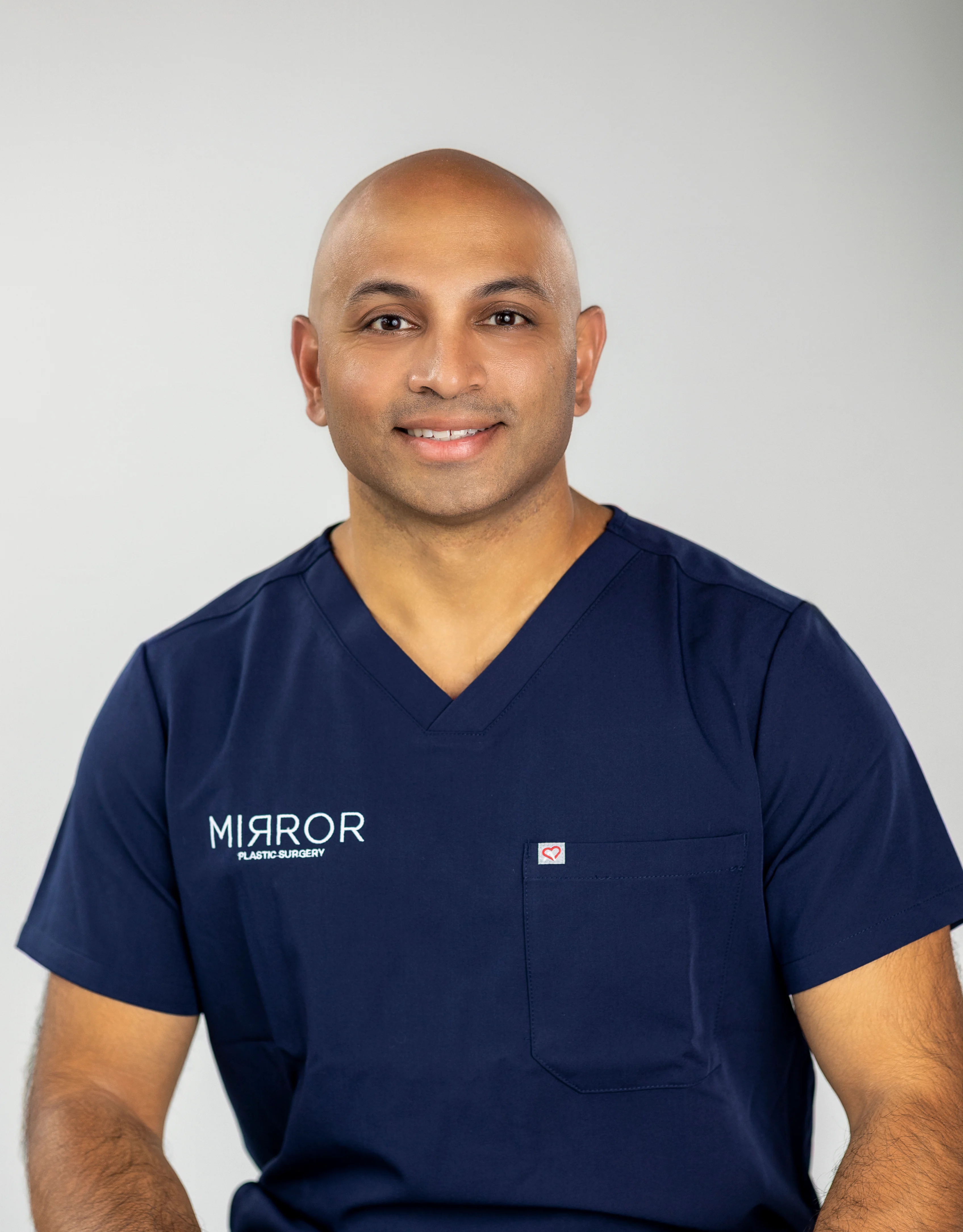
“FDA approval tells you a product is safe and effective for specific uses. It does not tell you whether the person injecting it understands the anatomy beneath your skin. That expertise, a surgeon’s command of facial musculature, is what makes the difference between a natural result and a complication.” — Dr. Akash Chandawarkar, MD, FACS, Board-Certified Plastic Surgeon
Disclaimer: Results may vary from person to person. Editorial content, before and after images, and patient testimonials do not constitute a guarantee of specific results.
1 Results may vary from person to person. Editorial content, before and after images, and patient testimonials do not constitute a guarantee of specific results.