

Written by: Dr. Akash Chandawarkar, Board Certified Plastic Surgeon, Mirror Plastic Surgery | Last updated: September 9, 2026
Key Takeaways
- The optimal age to begin laser hair removal is typically after puberty when hormones stabilize, most commonly between 18–30 years old.
- Hormonal fluctuations during puberty or menopause can trigger new hair growth, which makes results less predictable at those times.
- Teens under 18 may be treated on a case-by-case basis with parental consent and a physician evaluation, while patients over 40 can still achieve excellent results with possible maintenance sessions.
- Success depends on more than age, because skin and hair contrast, medical conditions like PCOS, medications, and overall skin health all influence candidacy and long-term outcomes.
- A personalized consultation with a physician helps determine the safest and most effective time to start laser hair removal.
Why Hormonal Stability Determines Your Ideal Starting Age
Laser hair removal works by targeting melanin in the hair follicle during the active growth phase, known as the anagen phase. When hormones, particularly androgens, fluctuate, they can activate dormant follicles and stimulate new hair growth, which can reduce the durability of treated areas.
During puberty, rising androgen levels cause vellus (fine, light) hairs to transform into terminal (coarse, dark) hairs in areas like the face, underarms, and bikini line. Treating these areas before hormones settle means new hair can appear in spots already treated. Treating an area before hormonal changes settle down can mean new hair appears in spots that were already treated, which reduces the lasting value of laser hair removal.
The FDA defines “permanent hair reduction” as at least a 30% stable decrease in terminal hairs lasting longer than the complete hair growth cycle, which ranges from 4 to 12 months. For patients with polycystic ovary syndrome (PCOS) or other hormonal conditions, the Endocrine Society’s clinical practice guidelines note that photoepilation is effective but does not stop hormones from activating new follicles. Maintenance sessions are often necessary regardless of starting age.
Schedule your hormonal profile assessment with Ellie to receive a physician-led evaluation of your candidacy for laser hair removal at Mirror Plastic Surgery in St. Petersburg, FL.
Age-By-Age Breakdown: What To Expect At Every Stage
Under 18: How Teens Can Safely Approach Laser Hair Removal
There is no universal medical minimum age for laser hair removal. A 2024 review in Pediatric Dermatology found that hair removal methods appear generally safe and well-tolerated in children, with no age restrictions for any modality. Most providers, including Mirror Plastic Surgery, still recommend waiting until hormonal patterns are more established.
Can A 14-Year-Old Get Laser Hair Removal? Yes, in specific circumstances. A 2023 systematic review in Lasers in Medical Science reported that children as young as 9 months have been successfully treated for congenital conditions. For cosmetic purposes, the decision requires a structured evaluation. The following conditions must be met before treatment is appropriate for a minor:
- Parental Consent, which is generally required for minors, though specific requirements vary by state and country
- A Physician Evaluation to assess hormonal maturity and candidacy
- The Teen’s Personal Motivation, rather than parental pressure
- Realistic Expectations about maintenance sessions
Is Laser Hair Removal Safe For 13-Year-Olds? Safety depends on the provider’s expertise and the teen’s skin type, rather than age alone. A 2023 systematic review in Lasers in Medical Science reported that pain control was a limiting factor in 65% of pediatric laser hair removal patients, with 25% requiring general anesthesia.
What Age Is Too Early? Treatment before puberty is rarely recommended for cosmetic purposes because hormonal fluctuations make results unpredictable. Most practices set internal minimums of 15–16. Some FDA-cleared devices specify use for adults aged 22 and older. Physicians may still use cleared devices off-label within the practice of medicine when clinically appropriate and properly documented.
A 2026 correspondence in Skin Research and Technology by researchers from Rutgers and Johns Hopkins recommends that adolescents considering elective cosmetic procedures undergo a structured counseling process, a medical-necessity assessment, and a cooling-off period of 2–4 weeks between consultation and procedure. This guidance aligns with Mirror Plastic Surgery’s concierge medicine philosophy of safety first.
Ages 18–40: The Optimal Window For Laser Hair Removal
The 18–40 window is widely considered the optimal period for laser hair removal. By this stage, puberty-related hormonal surges have typically stabilized, which makes results more predictable and durable.1 This popularity is reflected in the demographics.
During this window, patients typically need 6–8 sessions spaced 4–8 weeks apart, depending on the treatment area. Hormonally influenced zones like the face, underarms, and bikini line typically need 10 to 12 sessions spaced 4 to 6 weeks apart, while non-hormonal areas like legs, arms, and back usually reach good results in 6 to 8 sessions spaced 6 to 8 weeks apart.
Over 40: How Laser Hair Removal Performs Later In Life
Does Laser Hair Removal Work After 40? Yes, with important caveats. As people age, hormonal shifts from perimenopause and menopause can trigger new hair growth, particularly on the face and chin. The laser itself remains effective at targeting dark, coarse hair. The primary limitation after 40 is hair color rather than age.
Laser hair removal targets melanin, so gray, white, or light red hairs will not respond. If unwanted hair has begun to lose pigment, electrolysis may be a better option.
A 2026 survey of laser hair removal users found that effectiveness ratings were slightly lower among participants aged 41 and older (median 3 out of 5) compared to those 35 and under (median 4), though the authors note the small sample size limits conclusions. Older patients may need more maintenance sessions as hormonal changes continue to activate follicles. The table below summarizes how candidacy and expectations shift across age groups.
| Age Group | Recommendation | Key Considerations |
|---|---|---|
| Under 16 | Case-by-case only | Parental consent, physician evaluation, hormonal maturity |
| 16–18 | Generally appropriate with consent | Stable hair growth for 1+ year, teen-driven motivation |
| 18–40 | Optimal window | Hormonal stability, predictable results, 6–8 sessions typical |
| 40+ | Effective with caveats | Gray and white hair unresponsive, maintenance may be needed |
Beyond Age: Key Factors That Determine Your Candidacy
While age provides a useful framework, it is only one piece of the puzzle. A comprehensive candidacy assessment considers several additional factors:
- Skin And Hair Contrast: Lasers work best on dark, coarse hair against lighter skin. Very light blonde, red, white, or gray hair lacks sufficient melanin for effective treatment.
- Medical Conditions: PCOS, thyroid disorders, and other hormonal conditions can stimulate new hair growth even after successful treatment. A 2024 systematic review in JAMA Dermatology found that laser therapy improves hirsutism severity and psychological wellbeing in PCOS patients, but maintenance is essential.1
- Medications: Isotretinoin (Accutane) requires a 6-month waiting period after discontinuation. Photosensitizing antibiotics like doxycycline require a 2-week washout.
- Skin Health: Active dermatitis, psoriasis, or vitiligo in the treatment area should delay treatment, per a 2024 retrospective study in the Journal of Cosmetic and Laser Therapy.
At Mirror Plastic Surgery, every patient receives a top-to-bottom assessment by Dr. Akash Chandawarkar, a board-certified plastic surgeon, to determine candidacy based on these factors as well as chronological age.
What To Expect: Sessions, Results, And Maintenance
This section outlines the treatment process so you can set clear expectations before starting.
- Number Of Sessions: Most patients need 6–8 initial sessions, and hormonally influenced areas often require more.1
- Treatment Intervals: Sessions are typically spaced 4–8 weeks apart to align with hair growth cycles.
- Pain Level: Most patients describe a snapping sensation, and modern lasers include cooling mechanisms for comfort.
- Downtime: Temporary redness and swelling typically resolve within 1–3 days.
- Permanence: Laser hair removal provides long-term hair reduction rather than 100% permanent removal. As noted earlier, the FDA defines permanent hair reduction as a 30% stable decrease in terminal hairs. Most patients achieve 75–85% reduction after a full series, with touch-ups needed periodically.1
Questions To Ask Before Choosing A Provider
Clear questions help you separate medically rigorous practices from high-volume operations that prioritize speed over safety.
- Are you a board-certified physician or physician-supervised?
- What laser technology do you use, and is it FDA-cleared?
- How do you customize settings for my skin type and hair color?
- What is your experience treating patients in my age group?
- How do you handle hormonal conditions like PCOS?
- What is your protocol for managing complications?
Ask Dr. Chandawarkar your questions by booking a consultation with Ellie at Mirror Plastic Surgery, where every answer is grounded in surgical expertise rather than a sales script.
Why Choose A Physician-Led Practice For Laser Hair Removal
Laser hair removal is a medical procedure, and safety depends on the person wielding the laser. The American Academy of Dermatology warns that treatment “can be dangerous in inexperienced hands,” with risks including burns, scars, and permanent skin color changes.
At Mirror Plastic Surgery in St. Petersburg, FL, every laser hair removal treatment is performed under the supervision of Dr. Akash Chandawarkar, a Harvard-educated, Johns Hopkins-trained, board-certified plastic surgeon. His concierge medicine philosophy prioritizes safety first, function second, and aesthetics third. This approach ensures every treatment plan is evidence-based and personalized to each patient’s anatomy, hormonal profile, and long-term goals.
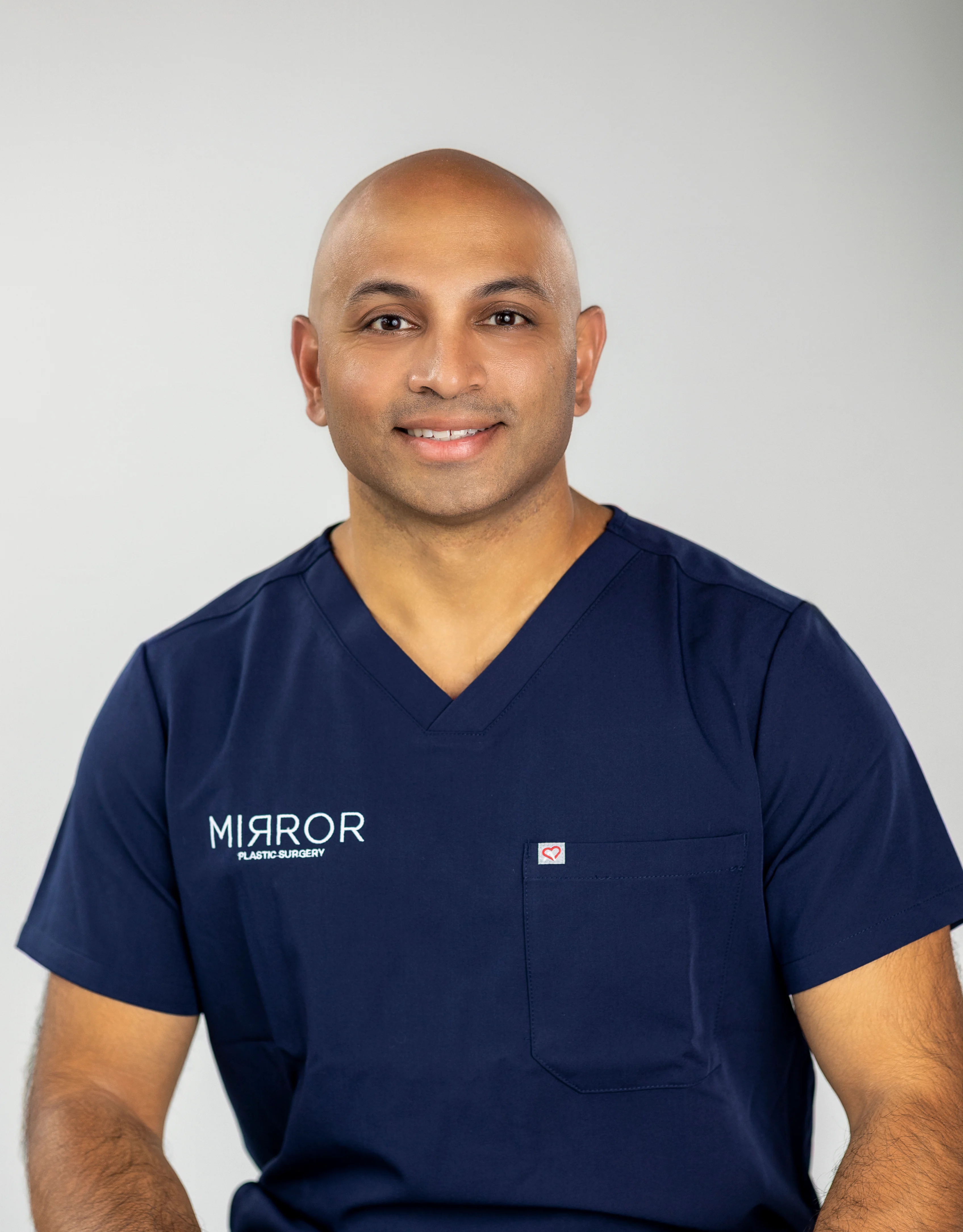
Mirror Plastic Surgery dedicates up to an hour to each patient’s initial assessment. The decision about when to start laser hair removal receives the same level of care and physician oversight.
Frequently Asked Questions
Can A 14-Year-Old Get Laser Hair Removal?
Yes, in specific circumstances with parental consent and a physician’s evaluation. As mentioned earlier, a 2023 systematic review found no absolute minimum age for laser hair removal, and children as young as 9 months have been treated for congenital conditions. For cosmetic purposes, most providers recommend waiting until hormonal patterns stabilize, typically around 16, because puberty-related fluctuations can reduce treatment permanence. The teen’s own motivation, ability to follow aftercare instructions, and a thorough medical history review are all essential prerequisites.
Is Laser Hair Removal Safe For 13-Year-Olds?
Safety depends on provider expertise and the individual’s skin type rather than age alone. As noted earlier, a 2023 systematic review reported that pain control was a limiting factor in 65% of pediatric laser hair removal patients, with 25% requiring general anesthesia. A physician-led assessment is essential before treatment at any age below 18. A cooling-off period between consultation and procedure is also advisable to ensure the decision is fully informed and teen-driven.
Does Laser Hair Removal Work After 40?
Yes, provided the hair still contains sufficient melanin. Gray, white, or light red hairs do not respond to laser treatment because the technology targets pigment in the follicle. Hormonal changes from perimenopause and menopause may activate new follicles over time, which means additional maintenance sessions are often needed. Many patients over 40 achieve excellent results on dark, coarse hair.1 A physician-led assessment that accounts for your current hormonal status and hair characteristics guides realistic expectations.
Is Laser Hair Removal Safe For PCOS?
Yes. As noted in the candidacy section, a 2024 systematic review in JAMA Dermatology found that laser therapy improves hirsutism severity and psychological wellbeing in PCOS patients. Because PCOS causes ongoing hormonal fluctuations, the laser treats existing hair but cannot prevent hormones from activating new follicles. Maintenance sessions are typically needed every 6–12 months. Managing the underlying hormonal condition, through medication or other physician-directed approaches, alongside laser treatment generally produces the best long-term outcome.
How Many Sessions Will I Need?
Most patients need 6–8 initial sessions, and hormonally influenced areas like the face and bikini line may require 10–12. Sessions are typically spaced 4–8 weeks apart to align with the hair growth cycle. Maintenance sessions are generally needed every 6–12 months, and this timeline can extend for patients with active hormonal conditions like PCOS or those undergoing significant hormonal shifts such as menopause. The exact number is determined during a comprehensive consultation based on your skin type, hair color, treatment area, and medical history.
Conclusion: Choosing The Right Time And The Right Physician
The best age to start laser hair removal is the point when your hormones are stable enough for results to last and when you have access to a physician who can assess your unique candidacy. For most patients, that window opens around 18 and extends through 40 and beyond, with individualized considerations at every stage.
Whether you are a parent researching options for your teenager, a young adult ready to invest in long-term hair reduction, or an adult over 40 navigating hormonal changes, the first step remains the same. A comprehensive medical consultation with a board-certified physician should guide your decision and prioritize your safety.
Start your personalized laser hair removal plan with a consultation with Ellie at Mirror Plastic Surgery, located at 780 4th Ave S, St. Petersburg, FL 33701. Call 727-361-6515 or email hello@mirrorplasticsurgery.com.
Disclaimer: Results may vary from person to person. Editorial content, before and after images, and patient testimonials do not constitute a guarantee of specific results.
1 Results may vary from person to person. Editorial content, before and after images, and patient testimonials do not constitute a guarantee of specific results.


