
Written by: Dr. Akash Chandawarkar, Board Certified Plastic Surgeon, Mirror Plastic Surgery | Last updated: September 9, 2026
Key Takeaways
- Most St. Petersburg Botox sessions in 2026 range from $200 to $700, depending on the areas treated and total units used.
- Board-certified plastic surgeons and dermatologists generally charge $16–$25 per unit, while nurse injectors usually charge $10–$16 per unit.
- Prices below $10 per unit often signal diluted or counterfeit product and create safety concerns.
- Most patients spend $900 to $3,600 per year on Botox, based on how many areas they treat and how often they return.
- Schedule a personalized Botox consultation at Mirror Plastic Surgery for transparent pricing and expert care from Dr. Akash Chandawarkar.
What Botox Costs In St. Petersburg, FL
Florida markets like Miami and Tampa sit in the $13 to $20 per unit range for Botox in 2026, which straddles the national band of $11 to $18 per unit. St. Petersburg, as a mid-market coastal city, generally tracks toward the lower end of that Florida range. The American Society of Plastic Surgeons reports an average Botox session cost of $435, but this blended figure across all treatment areas does not reflect the per-unit price patients actually pay.
Per-unit pricing is the most transparent structure because it rewards providers who are precise with dosing and gives patients visibility into exactly what they receive. That transparency is why you should always request both the per-unit price and the planned unit count before any treatment begins.
Average Botox Cost In St. Petersburg, FL: Per-Unit Pricing Breakdown
Most reputable practices in St. Petersburg price Botox between $10 and $16 per unit in 2026. Board-certified plastic surgeons and dermatologists typically charge $16–$25 per unit, while nurse practitioners and registered nurses typically charge $10–$16 per unit.
| Pricing Factor | St. Petersburg Range (2026) |
|---|---|
| Typical per-unit price | $10–$16 (most common band $12–$16) |
| Discount or promotional rate | $9.99–$12 |
| Physician-led practice (board-certified) | $16–$25 |
| Med spa or nurse injector | $10–$16 |
Prices below $10 per unit warrant scrutiny. AbbVie’s published wholesale acquisition cost is $656 for a 100-unit vial of Botox Cosmetic, and a small practice typically pays $500–$600 per vial before saline, supplies, and the injector’s time are factored in. Very low prices often signal dilution or underdosing, which can increase your annual spend once repeat visits are counted.
Sample calculation: 20 units for forehead lines at $13 per unit equals $260. Once you know the per-unit price, the next step is confirming how many units your injector plans to use.
Botox Cost By Treatment Area In St. Petersburg
Your total Botox cost depends on the areas treated and your individual muscle strength. The following estimates use the per-unit range above and published unit ranges from multiple 2026 sources.
| Treatment Area | Typical Units | Estimated Cost Range |
|---|---|---|
| Forehead lines | 10–20 units | $100–$320 |
| Frown lines (glabella) | 20–25 units | $200–$400 |
| Crow’s feet (per side) | 10–24 units per side | $100–$384 per side |
| Bunny lines | 4–8 units | $40–$128 |
| Lip flip | 4–6 units | $40–$96 |
| Jawline / TMJ / bruxism (per side) | 25–50 units per side | $250–$800 per side |
| Neck bands (Nefertiti lift) | 25–50 units | $250–$800 |
A classic upper-face treatment of forehead lines, frown lines, and crow’s feet often totals 40 to 60 units. At St. Pete rates, that combined treatment usually falls between $400 and $960. Men typically need 20 to 30% more Botox units than women in the same area because male facial muscles are denser, which increases total cost at identical per-unit rates.
These are market-based estimates. A precise quote requires a personalized consultation to assess your anatomy, muscle strength, and aesthetic goals.
Why Botox Prices Vary Across St. Petersburg Providers
Botox pricing in St. Petersburg reflects more than location. Several consistent factors drive variation across local practices.
Injector expertise and credentials. Board-certified dermatologists and plastic surgeons typically charge more than nurse injectors because they complete extensive medical training and develop specialized knowledge of facial anatomy. That premium reflects years of training in facial musculature, precision dosing, and complication management, expertise that directly impacts your safety and results. The injections themselves take only a few minutes, but the judgement behind them takes years to develop.
Product authenticity and sourcing. For Botox and Botox Cosmetic, AbbVie/Allergan Aesthetics is the sole authorized supplier in the United States. Bargain pricing may indicate diluted, diverted, or counterfeit product. In April 2024, the FDA confirmed counterfeit Botox in multiple US states, and some patients developed systemic botulism symptoms such as blurred vision, difficulty swallowing, shortness of breath, muscle weakness, and difficulty lifting the head.
Practice overhead and location. Practices in major metropolitan areas with higher overhead costs typically charge more than rural or suburban locations. Location alone does not define value, because experienced providers practice across all areas at a range of price points.
Consultation and aftercare depth. Practices that offer comprehensive care, including thorough consultations, detailed aftercare, accessible follow-up, and included touch-ups, usually charge more than those providing minimal support. This level of care often improves satisfaction and outcomes.
Botox Pricing For 20 Units In St. Petersburg
At the typical St. Petersburg per-unit range, 20 units of Botox costs approximately $200–$320. Twenty units often treats forehead lines or frown lines, though exact dosing is personalized at consultation. Beyond the initial cost, factor in a possible two-week follow-up, as the FDA label recommends a visit at that point to assess symmetry and efficacy and to administer touch-up injections if needed.
Botox Cost For Forehead Lines In St. Petersburg
Realistic forehead pricing usually includes treatment of the glabella as well. Treating forehead lines alone often requires also treating the glabella to avoid eyebrow heaviness. The FDA label specifies that forehead lines must be treated in conjunction with glabellar lines to minimize the risk of brow ptosis, with a recommended total dose of 40 units.
A combined forehead and glabella treatment in St. Pete typically costs $300–$600, depending on unit count and provider type. Patients with stronger facial muscles or deeper lines may require more units, which pushes totals toward the higher end of that range.
Safety Considerations For Low-Cost Botox In St. Pete
Recent public health reports highlight the risks of unlicensed botulinum toxin. In a recent 10-month period, state health departments reported 13 patients who were severely ill with suspected botulism after using botulinum toxin products from unlicensed sources. All were hospitalized and received botulism antitoxin, and some required intubation and mechanical ventilation. Protecting yourself starts with knowing the warning signs.
Walk away from any provider displaying these red flags:
- Cash-only pricing with no receipts or medical documentation
- No visible medical license or supervising physician
- Unlabeled or pre-drawn syringes
- Vials of white powder without labels, missing product name, strength, expiration date, manufacturer, lot number, or warnings
- Unrealistically cheap pricing and pressure tactics or “today-only” discounts
- Injections in non-medical settings such as private homes, hotel rooms, or pop-up events
- Injectors without a valid healthcare license, even though injections must be prescribed by a physician, NP, or PA and administered under medical supervision
Experienced dermatologists achieve Botox complication rates below 0.5%, while less-qualified practitioners report significantly higher adverse event rates.1 The risks of cutting corners include asymmetry, eyelid or brow ptosis, muscle weakness beyond the treatment area, and, in rare cases with counterfeit product, systemic botulism requiring emergency care.
Ready to get a safe, physician-led assessment? Schedule your consultation with Dr. Akash Chandawarkar at Mirror Plastic Surgery.
How To Budget For Botox In St. Pete
Botox results typically last 3–4 months, so most patients schedule treatments three to four times per year.1 At two to three return visits per year, annual spend on a full upper-face Botox treatment comes to roughly $1,000 to $3,600 at 2026 rates. A simple plan helps you budget confidently.
- Calculate annual costs. A $300–$500 treatment every 3–4 months translates to roughly $900–$2,000 per year for most St. Pete patients.
- Ask about loyalty programs. Allergan’s Allē rewards program can reduce per-session Botox costs by 10–20% for regular patients.
- Be cautious with prepaid packages. Committing to a provider before you feel confident in their skill can become costly if results disappoint.
- Consider long-term value. Precisely administered Botox may last longer and look better, which can reduce the need for touch-ups and save money over time.
- Factor in the consultation. A thorough consultation that clarifies what you do and do not need often delivers more value than a small discount.
Choosing Your Botox Provider In St. Petersburg: Med Spa Vs. Physician-Led Practice
St. Petersburg offers several types of Botox providers, and each model comes with different pricing and expertise. Knowing these differences helps you choose the right fit.
| Provider Type | Typical Per-Unit Price | Injector Qualifications |
|---|---|---|
| Chain med spa | $10–$14 | Nurse injector or esthetician |
| Boutique aesthetic clinic | $11–$17 | Nurse practitioner or PA |
| Physician-led practice (plastic surgeon or dermatologist) | $14–$25 | Board-certified physician |
An experienced injector learns to read differences in muscle strength, skin thickness, and expression patterns across thousands of patients. This experience lets them anticipate how a specific face will age and respond to treatment. That is why one patient’s Botox looks refreshed while another’s looks frozen, even with the same product.1
Mirror Plastic Surgery’s Approach. Dr. Akash Chandawarkar personally performs every injection. His Harvard education, Johns Hopkins training, and fellowship in aesthetic surgery at Manhattan Eye Ear & Throat Hospital support precise, natural results.1 Every new patient receives an up-to-hour-long consultation, a top-to-bottom assessment that prioritizes safety first, function second, and aesthetics third.
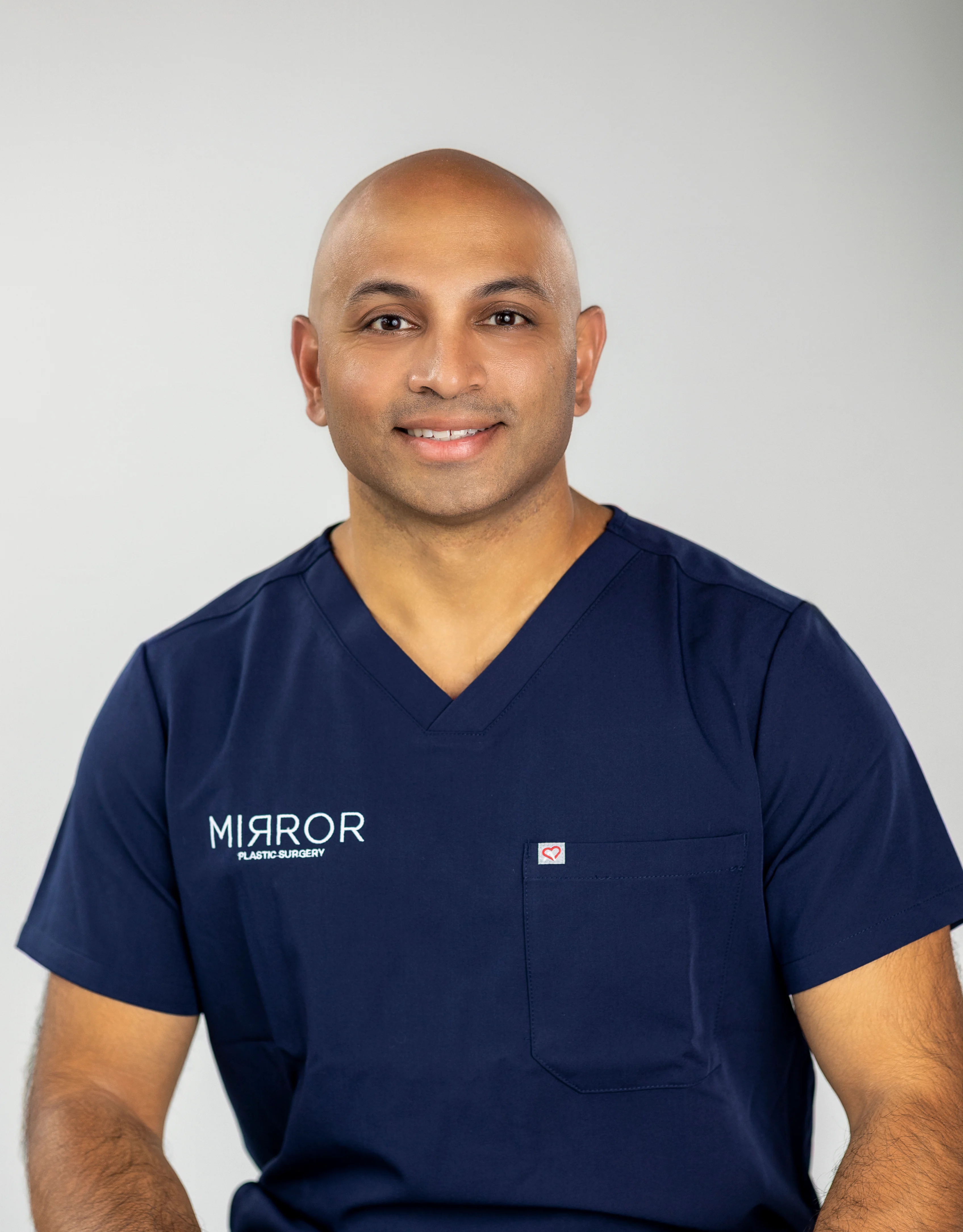
This concierge approach means you will not feel rushed, upsold, or pressured into unnecessary treatment. Dr. Akash also serves on advisory boards for Merz Aesthetics and Tiger Aesthetics, which keeps him at the forefront of injectable innovation.
Your Next Step: Get A Personalized Botox Quote In St. Petersburg
You now have a clear picture of what Botox costs in St. Petersburg and which prices raise concern. The next step is a personalized assessment from a provider who prioritizes your safety and natural results over sales quotas.
At Mirror Plastic Surgery, Dr. Akash Chandawarkar offers comprehensive consultations that take up to an hour. This time focuses on understanding your concerns, assessing your facial anatomy, and developing a treatment plan tailored to you. You receive transparent pricing and honest recommendations, even when that means advising you that you do not need treatment yet.
Mirror Plastic Surgery is located at 780 4th Ave S, St. Petersburg, FL 33701. You can reach the practice by calling or texting 727-361-6515 or emailing hello@mirrorplasticsurgery.com.
Start your personalized Botox consultation today and take the first step toward safe, natural-looking results.
Frequently Asked Questions About Botox Cost In St. Petersburg
How Much Do 20 Units Of Botox Cost In St. Pete?
At the typical St. Petersburg per-unit range, 20 units of Botox costs approximately $200–$320. Twenty units is a common starting point for forehead lines or frown lines in patients with moderate muscle activity. Your exact unit count depends on muscle strength, depth of lines, and your aesthetic goals, all of which are assessed during a personalized consultation. Men often require more units than women for the same area because of greater muscle density, which affects total cost.
Is 40 Too Late To Start Botox?
Botox works well for adults across a wide age range, including patients in their 40s. Many people in this decade use Botox to soften existing dynamic wrinkles and to slow the formation of new ones. A skilled, physician-level injector tailors dosing to your skin’s current condition, muscle strength, and aesthetic goals rather than applying a one-size-fits-all formula. Starting later simply means your treatment plan reflects where your face is today.
How Long Does Botox Last?
Most patients enjoy results for 3–4 months.1 First-time patients may metabolize Botox faster, sometimes 2–3 months, while consistent long-term users often see results lasting 4–5 months as treated muscles gradually weaken over time.1 Duration also varies by treatment area. Crow’s feet tend to fade sooner than glabellar lines, while masseter treatments can last 4–6 months.1
Underdosing is the most common reason results fade prematurely. Precise dosing from an experienced injector supports both better results and a more predictable annual budget.1
What Is The Difference Between Botox And Dysport?
Both Botox and Dysport are botulinum toxin type A products that relax dynamic wrinkles, but they are dosed differently. Dysport requires roughly 2.5 to 3 units to match the effect of 1 unit of Botox, so per-unit prices are not directly comparable across brands. Dysport may spread slightly more than Botox, which can help in larger treatment areas and feel less ideal for very precise placements.
Your injector should recommend the brand that best fits your anatomy, treatment area, and goals. Mirror Plastic Surgery offers multiple neuromodulator brands, including Botox, Dysport, Xeomin, Daxxify, and Jeuveau.
Do I Need A Consultation Before Getting Botox?
A proper consultation is essential for both safety and optimal results. Your provider should assess your full medical history, facial anatomy, muscle strength, asymmetries, and aesthetic goals before recommending any treatment. Accepting a consultation that lasts only a few minutes increases the risk of poor outcomes, including brow heaviness, asymmetry, or an overdone appearance.
At Mirror Plastic Surgery, new patient consultations can last up to an hour, giving Dr. Akash the time needed to understand your face and your goals before a single unit is planned.
Disclaimer: Results may vary from person to person. Editorial content, before and after images, and patient testimonials do not constitute a guarantee of specific results.
1 Results may vary from person to person. Editorial content, before and after images, and patient testimonials do not constitute a guarantee of specific results.


