

Written by: Dr. Akash Chandawarkar, Board Certified Plastic Surgeon, Mirror Plastic Surgery | Last updated: September 9, 2026
Key Takeaways
- A safe BBL requires a board-certified plastic surgeon who injects fat only into the subcutaneous layer above the gluteal muscle using real-time ultrasound guidance in an accredited facility.
- BBL mortality has dropped from 1 in 3,448 in 2017 to approximately 1 in 14,921 today when surgeons follow modern subcutaneous-only techniques.1
- Patients should verify green flags such as ABPS or ABCS certification, documented ultrasound use, accredited facilities, and realistic expectations before choosing a surgeon.
- Recovery safety depends on strict no-pressure protocols for the first two weeks, gradual activity reintroduction, and immediate reporting of warning signs.
If you want a personalized safety plan, schedule a consultation with Ellie at Mirror Plastic Surgery.
What Defines a Safe BBL in 2026
Three pillars define a safe BBL in 2026, and each one closes a specific safety gap. Together, they create a complete safety net.
- Board-certified surgeon: Certification by the American Board of Plastic Surgery (ABPS) or the American Board of Cosmetic Surgery (ABCS) confirms completed surgical residency, specialty training, written and oral examinations, and accredited facility privileges.
- Subcutaneous-only fat injection with ultrasound guidance: Fat stays above the gluteal muscle fascia and is placed with blunt cannulas of 4 mm diameter or larger. Real-time intraoperative ultrasound confirms cannula position throughout the procedure and adds a visual safety check beyond touch alone.
- Accredited surgical facility: The operating room holds accreditation from AAAASF, AAAHC, or an equivalent state-licensing body, with emergency equipment and qualified anesthesia personnel on site.
The reason subcutaneous-only injection is critical is anatomical. The gluteal muscle contains large veins (the superior and inferior gluteal veins) that connect directly to central venous circulation. If fat enters or passes below the muscle, it can reach those vessels, travel to the lungs, and cause a fatal pulmonary fat embolism. The subcutaneous plane contains no large-caliber veins with direct connections to central circulation, which is why the 2022 Multi-Society Practice Advisory on Gluteal Fat Grafting from ASPS, ASAPS, and ISAPS codified subcutaneous-only injection as the global standard of care.
The safest path to a BBL is to choose a board-certified plastic surgeon who performs ultrasound-guided, subcutaneous-only fat grafting in an accredited facility and who prioritizes your health over aggressive volume goals.
Meet with Ellie at Mirror Plastic Surgery to review your options with a surgeon who follows every one of these safeguards.
Current BBL Safety: What the Data Shows
The 2017 ASERF Task Force survey, which analyzed 198,857 cases across 692 surgeons, estimated BBL mortality at approximately 1 in 3,448. That was the highest rate of any cosmetic procedure at the time. Every confirmed death involved intramuscular fat injection. A 2018 review of 16 BBL deaths found that half of patients died on the operating table and the rest within three hours, all from pulmonary fat embolism caused by deep injection.
The safety picture has shifted. By 2019, after broad adoption of subcutaneous-only technique, BBL mortality fell to approximately 1 in 14,921, a more than fourfold improvement. Nonfatal pulmonary fat embolism rates dropped from 1 in 1,030 to 1 in 2,492. Follow-up surveys from 2019 to 2021 documented zero fatal pulmonary fat emboli across more than 12,000 cases performed with the safe technique. That mortality rate now matches abdominoplasty.
In July 2023, Florida became the first state to legally mandate ultrasound guidance for all BBL procedures under HB 1471, including documentation and video recording of every case. A 2023 analysis of BBL deaths in South Florida found that 92% occurred at high-volume, budget clinics rather than in properly accredited facilities.
BBL risks remain real, yet modern protocols prevent most catastrophic complications when surgeons follow current safety standards.
How to Choose a Safe BBL Surgeon: Green Flags vs. Red Flags
Your surgeon choice drives your BBL risk more than any other factor. Use this checklist to evaluate every provider.
Green Flags: Signs of a Safety-Focused Surgeon
- Board-certified by the ABPS or ABCS, with verifiable credentials
- Specific, documented experience performing BBL using modern subcutaneous-only technique
- Uses real-time intraoperative ultrasound guidance for every fat injection
- Operates exclusively in an accredited surgical facility (AAAASF, AAAHC, or state-licensed)
- Provides honest, realistic expectations and will advise against surgery when appropriate
- Offers comprehensive pre-operative education and an unhurried consultation of at least 30–60 minutes
- Transparent about complication rates and revision policies
- Limits daily surgical volume to maintain focus and safety
Red Flags: When to Walk Away
- Unrealistic promises such as “no scars, no downtime” or guaranteed results
- Non-accredited surgical facilities or office-based surgery without hospital privileges
- High-volume practices performing five to ten surgeries daily with rushed consultations
- Inability to clearly explain injection technique or answer anatomical questions
- Pressure to book immediately or pay a deposit before a full consultation
- Lack of verifiable before-and-after photos of patients with your body type
- Vague or evasive answers about complication rates or safety protocols
A safe surgeon places safety ahead of dramatic volume changes and welcomes detailed questions.
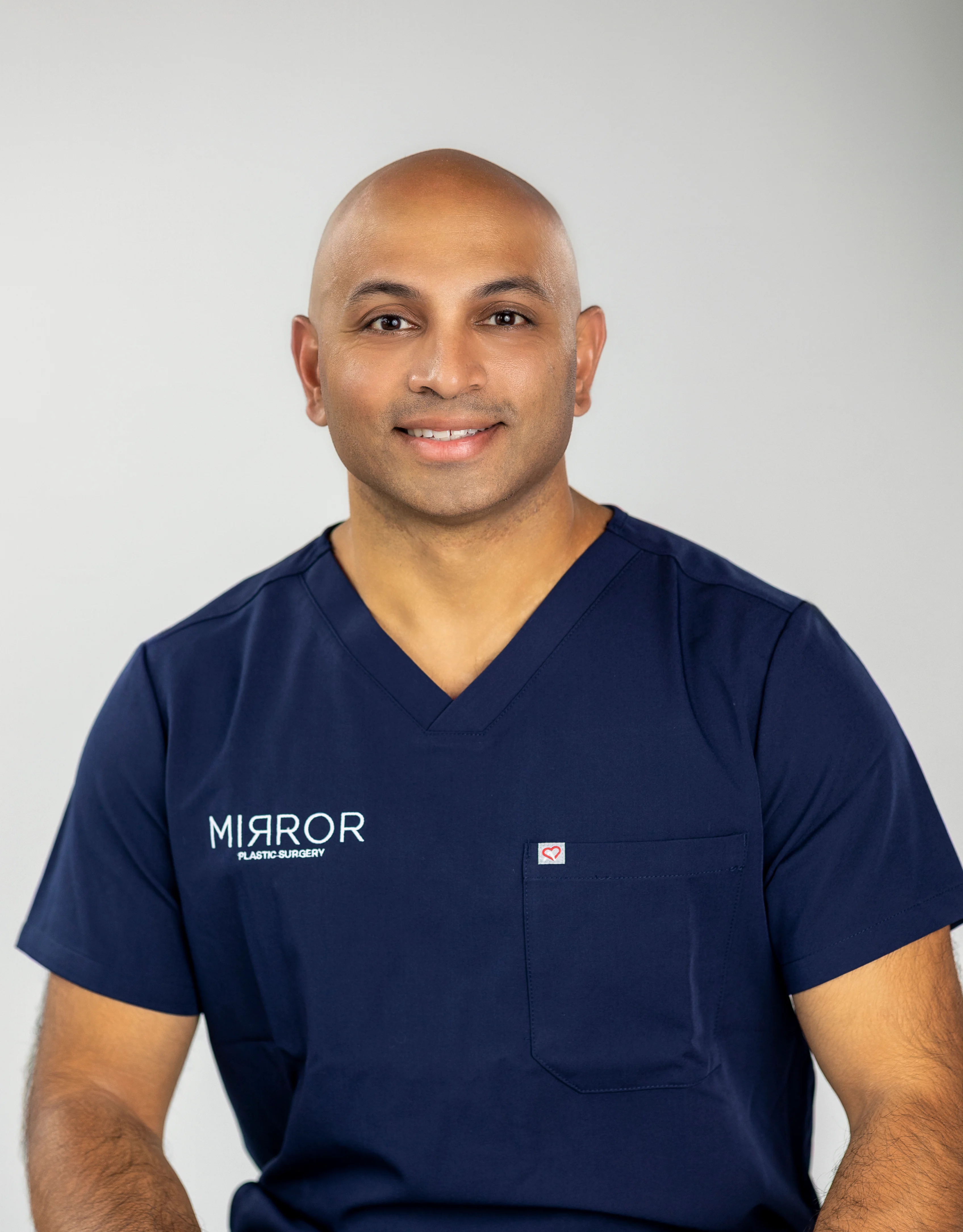
Dr. Akash Chandawarkar at Mirror Plastic Surgery exemplifies these green flags. He is Harvard-educated, Johns Hopkins-trained, board-certified by the ABPS, and fellowship-trained in aesthetic surgery at Manhattan Eye Ear & Throat Hospital (MEETH)/Lenox Hill Hospital. He limits his practice to one to two surgeries per day so each patient receives focused, unhurried care.
Who Is Not a Candidate for a BBL
Not every patient can undergo a BBL safely. Common disqualifiers include the following factors.
- BMI below 20–22, with insufficient donor fat for meaningful transfer
- BMI above 30–35, with increased surgical and anesthetic risks
- Uncontrolled medical conditions including diabetes, heart disease, or clotting disorders
- Active smoking or any nicotine use, since cessation of at least 4–6 weeks before and after surgery is required
- Personal history of deep vein thrombosis (DVT) or pulmonary embolism
- Inability to comply with post-operative positioning requirements, including avoiding direct sitting for two or more weeks
- Unrealistic expectations about what fat transfer can achieve
- Prior non-reabsorbable gluteal filler injections, which can harbor subclinical infections activated by cannula insertion
A thorough consultation is essential to assess these factors in person. A safe surgeon performs a top-to-bottom evaluation and will decline surgery when risk outweighs benefit. Dr. Akash’s concierge philosophy includes a comprehensive, hour-long consultation that reviews your health, anatomy, and goals together.
BBL Recovery Safety Tips: Your Week-by-Week Guide
Recovery is the phase you control most directly. Your habits during these weeks protect both your safety and your final shape.
Weeks 1–2: Protecting the New Fat Graft
The main goal during the first two weeks is to avoid pressure on the grafted fat so it can establish a blood supply.
- Sitting: Avoid direct sitting on the buttocks. If sitting is absolutely unavoidable for toilet use or a brief car ride, use a BBL pillow under the posterior thighs and keep sessions under 15–20 minutes. Research in Plastic and Reconstructive Surgery shows that graft viability drops when sustained pressure on the buttocks exceeds about 30 mmHg, a level reached easily on standard chairs.
- Sleeping: Sleep on your stomach or side only. Do not sleep on your back. Use pillows to stabilize your position and prevent rolling.
- Bathroom: You can sit to use the toilet. Lean forward so your weight rests on your thighs instead of your buttocks. A squatty potty or footstool helps elevate your knees and reduce pressure. Hydration and fiber-rich foods reduce constipation and straining.
- Compression garments: Wear garments as prescribed over liposuction donor sites, not over the buttocks, for 23–24 hours daily. Remove them only for showering.
- Medication: Take prescribed pain medication as directed. Avoid NSAIDs such as ibuprofen and aspirin, and avoid blood thinners unless your surgeon clears them.
- Activity: Walk gently every two hours to lower blood clot risk. Avoid strenuous activity, lifting, or bending.
Weeks 3–6: Gradual Return to Routine
- Sitting: Continue using a BBL pillow. Extend sitting to 20–30 minute intervals with standing breaks between sessions.
- Sleeping: Continue stomach or side sleeping. Many surgeons clear back sleeping with a BBL pillow buffer around weeks 6–8.
- Activity: Return to desk work with a standing desk or BBL pillow setup. Light walking remains encouraged. Avoid lower-body exercise until cleared.
- Warning signs: Contact your surgeon immediately for fever above 101.5°F, shortness of breath, chest pain, severe or worsening pain, one-sided leg swelling or warmth, or foul-smelling discharge from incision sites.
Weeks 6–8+: Long-Term Protection of Your Results
- Sitting: Many surgeons clear normal sitting around weeks 6–8. A cushion on hard surfaces for up to 12 weeks can support fat retention.
- Exercise: Start light cardio at week six, then progress to full exercise including lower body between weeks 8–12 with surgeon approval.
- Final results: Swelling resolves over 3–6 months. The “fluff and drop” phase usually appears around months 2–3 as transferred fat softens and settles into its long-term position.1
Arrange a recovery planning visit with Ellie to receive a protocol tailored to your anatomy and procedure.
Long-Term BBL Results: What to Expect 10 Years Later
Surviving fat cells from a BBL are permanent and behave like your native fat tissue. Roughly 50–75% of the initial transferred volume is retained beyond the first year, with results stabilizing by the six-to-twelve-month mark.1. The shape at one year usually matches your shape a decade later.1
Weight changes, aging, and pregnancy can still alter contours over time because grafted fat responds to the same metabolic signals as the rest of your body. Patients who keep their post-operative weight within a 5–10 pound range tend to see the most durable results.1. About 15–25% of patients pursue a touch-up procedure between years two and four to restore volume lost to natural resorption or weight shifts.1
A safe BBL starts a long-term partnership with your surgeon. Mirror Plastic Surgery’s concierge model supports ongoing care and maintenance, not just the day of surgery.
Managing Odor and Other Unusual Recovery Side Effects
A temporary, mild odor during the first 7–10 days after surgery is common. Trapped tumescent fluid, old blood, and buildup in compression garments cause this smell, rather than infection. Proper hygiene and regular garment cleaning usually resolve it.
A foul, strong odor combined with fever above 101.5°F, spreading redness, or thick pus may signal infection. Contact your surgeon immediately if you notice this combination. Persistent odor without these warning signs is uncommon and can be addressed during follow-up visits.
Questions to Ask Your Surgeon: Your Safety Checklist
Bring this list to every consultation. A safety-focused surgeon will answer each question clearly.
- Are you board-certified by the American Board of Plastic Surgery or the American Board of Cosmetic Surgery?
- Do you use real-time ultrasound guidance during fat injection?
- Do you inject fat exclusively into the subcutaneous layer and avoid the gluteal muscle?
- What size cannulas do you use, and what is your specific technique for fat injection?
- Do you operate in an accredited surgical facility?
- How many BBLs do you perform per year, and what is your complication rate?
- Can I see before-and-after photos of patients with my body type?
- What is your policy on revisions or touch-up procedures?
- Will you decline surgery if I am not a good candidate?
Why Mirror Plastic Surgery Is a Safe Choice for BBL in St. Petersburg
Mirror Plastic Surgery in St. Petersburg, FL, follows a concierge medicine philosophy that places safety first, function second, and aesthetics third. This clinical approach guides every decision before, during, and after your procedure.
As noted earlier, Dr. Akash Chandawarkar’s credentials and low-volume practice reflect the green flags described above. He is a Harvard-educated, Johns Hopkins-trained plastic surgeon, board-certified by the American Board of Plastic Surgery, with fellowship training in aesthetic surgery at MEETH/Lenox Hill Hospital and medical innovation training at Stanford University. He limits his practice to one to two surgeries per day. This contrasts sharply with high-volume clinics that perform many more cases and cannot provide the same level of individual attention.
For patients who are not surgical candidates or who prefer a non-invasive approach, Dr. Akash personally performs non-surgical BBL using biostimulatory fillers. As an advisory board member for Merz Aesthetics (Radiesse) and Tiger Aesthetics (AlloClae), he works directly with the teams that develop these products and brings deep product knowledge and anatomical precision to every non-surgical treatment.
If you want to explore surgical and non-surgical options in a safety-first setting, request a BBL consultation with Ellie at Mirror Plastic Surgery.
Frequently Asked Questions
How Safe Is BBL Now?
BBL safety has improved significantly since 2017, when mortality was estimated at approximately 1 in 3,448 procedures. As detailed earlier, modern subcutaneous-only technique with real-time ultrasound guidance has reduced mortality to about 1 in 14,921, a rate comparable to abdominoplasty. Remaining deaths in 2026 cluster mainly in medical tourism hubs with weak oversight and among practitioners without ABPS or ABCS certification who operate outside accredited facilities.
What Disqualifies You from Getting a BBL?
Common disqualifiers include very low BMI with limited donor fat, high BMI with elevated surgical risk, uncontrolled medical conditions, nicotine use, a history of DVT or pulmonary embolism, prior non-reabsorbable gluteal fillers, inability to follow positioning rules, and unrealistic expectations. A thorough, in-person consultation with a board-certified plastic surgeon is the only reliable way to confirm candidacy.
Can I Sit to Poop After a BBL?
Yes. Positioning matters most. Lean forward so your body weight rests on your thighs instead of your buttocks. Use a squatty potty or footstool to elevate your knees, which reduces pressure on the grafted area and improves comfort. Avoid straining by staying hydrated and eating fiber-rich foods. Brief, correctly positioned toilet use fits safely within standard BBL recovery protocols.
What Happens 10 Years After a BBL?
Surviving fat cells behave like native fat and respond to weight gain, weight loss, aging, and pregnancy. As mentioned in the long-term results section, most patients retain 50–75% of the transferred volume, and a subset may choose a touch-up within a few years. Large weight swings remain the biggest disruptor of long-term BBL shape.
How Do I Choose a Safe BBL Surgeon?
Look for ABPS or ABCS board certification, confirmed use of real-time ultrasound, strict subcutaneous-only injection, an accredited facility, transparent complication data, and a surgeon who limits daily surgical volume. A safe surgeon welcomes questions, shows before-and-after photos of patients with your body type, and clearly explains when surgery is not appropriate. Avoid providers who cannot explain their injection plane, pressure you to book quickly, or operate in non-accredited settings.
Conclusion: Taking Ownership of Your BBL Safety
BBL safety in 2026 rests on three pillars: a board-certified surgeon, subcutaneous-only fat injection with real-time ultrasound guidance, and an accredited surgical facility. Recovery protocols protect your results. Careful candidacy screening protects your health. The questions and checklists in this guide give you the tools to advocate for yourself at every step.
You now have a framework to distinguish a concierge, safety-focused practice from a high-volume clinic and to insist on the standard of care you deserve.
If you feel ready to discuss a safe BBL plan tailored to you, schedule your consultation with Ellie at Mirror Plastic Surgery. Call 727-361-6515 or email hello@mirrorplasticsurgery.com. Mirror Plastic Surgery is located at 780 4th Ave S, St. Petersburg, FL 33701.
Disclaimer: Results may vary from person to person. Editorial content, before and after images, and patient testimonials do not constitute a guarantee of specific results.
1 Results may vary from person to person. Editorial content, before and after images, and patient testimonials do not constitute a guarantee of specific results.


