
Written by: Ellie Pranckevicius, FNP-BC, Aesthetic Nurse Practitioner & Aesthetic Injector | Facial Restoration & Regenerative Injectable Specialist, Mirror Plastic Surgery | Last updated: June 28, 2026
Key Safety Takeaways for BBL Patients
- BBL safety in 2026 relies on verifiable standards such as board certification, ultrasound-guided subcutaneous technique, and accredited facilities.
- Patients need to confirm surgeon credentials, daily surgical volume limits, and post-operative monitoring protocols before scheduling surgery.
- Subcutaneous-only fat placement with real-time ultrasound guidance now represents the evidence-based standard that sharply reduces fat embolism risk.
- Individualized planning based on your anatomy and honest pre-operative counseling help reduce decision regret and support long-term satisfaction.1
- Schedule your personalized consultation at Mirror Plastic Surgery to receive a detailed, anatomy-focused assessment before choosing any gluteal enhancement.
How BBL Safety Has Evolved
The BBL safety profile has improved over the past decade as surgeons standardized safer techniques. The central advance is the move away from deep intramuscular fat placement, which carries the highest risk of fat entering the gluteal vasculature, toward strict subcutaneous-only injection. The American Society of Plastic Surgeons (ASPS) has published safety guidelines that reinforce subcutaneous placement as the standard of care. Real-time ultrasound guidance further narrows the margin for error by allowing surgeons to visualize cannula position throughout the procedure. Despite these gains, outcomes still depend heavily on individual surgeon technique, facility standards, and patient selection, so patients must verify these variables before committing to surgery.
How Mirror Plastic Surgery Builds a BBL Treatment Plan
Every patient arrives with different anatomy, fat distribution, skin laxity, and aesthetic goals. Responsible treatment planning starts with a comprehensive, top-to-bottom physical assessment that reviews donor site volume, gluteal proportions, skin quality, and structural asymmetries before any procedure is recommended. At Mirror Plastic Surgery, initial consultations can last up to an hour, which contrasts with high-volume practices that compress this process into a few minutes. This extended time supports individualized planning based on your unique anatomy, which forms the foundation of safer outcomes.1
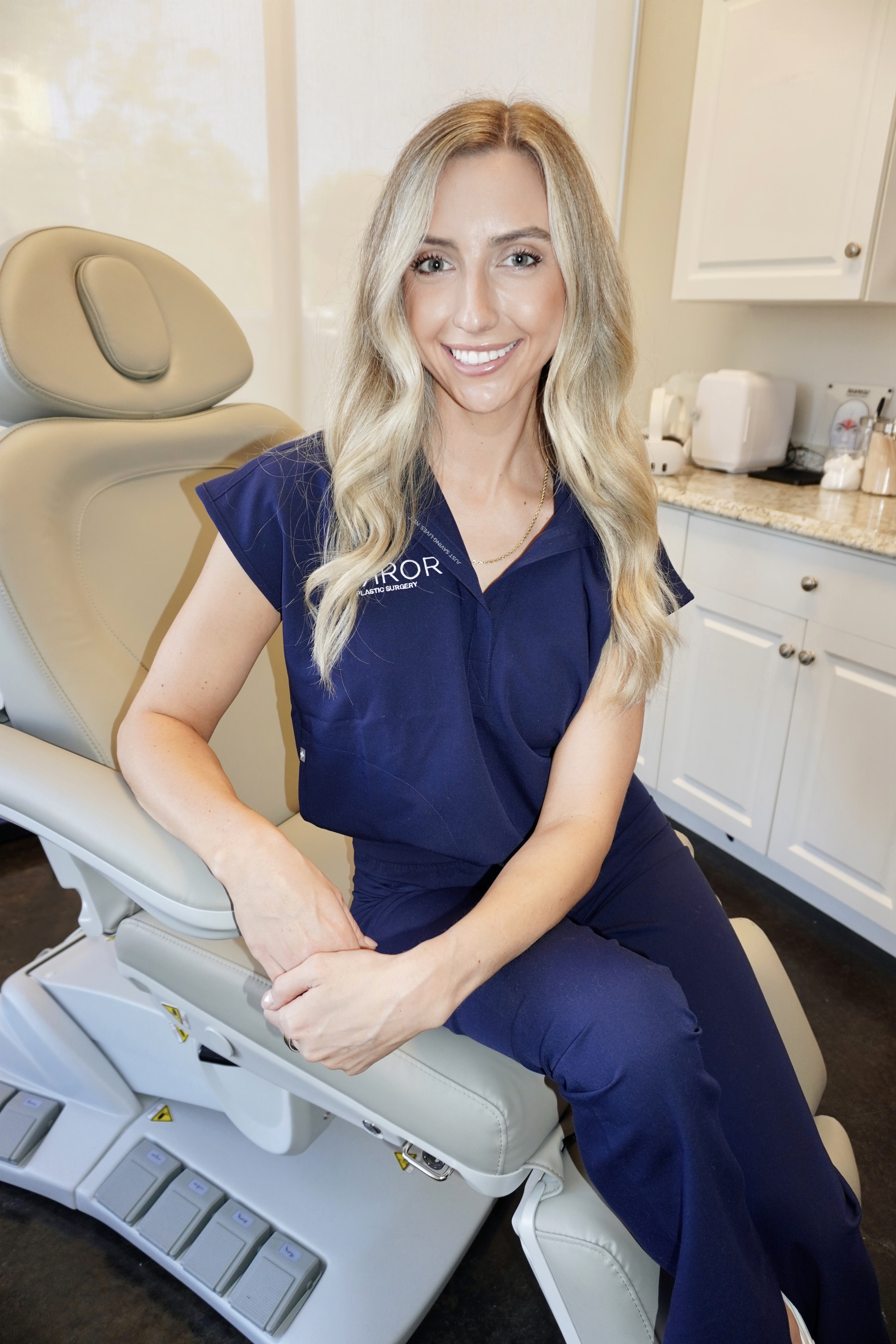
The team also weighs your emotional drivers and long-term goals alongside clinical findings. This combination of physical assessment and honest conversation reduces the risk of decision regret, asymmetry, or later corrective treatment.1
Start with an hour-long anatomy assessment at Mirror Plastic Surgery so you understand what is realistic for your body before choosing any gluteal procedure.
Safety Checklist: Verifying Your BBL Surgeon and Facility
Patients researching how to make sure a BBL is safe can use the following checklist as a minimum verification standard before selecting a surgeon or facility.
- Confirm board certification in plastic surgery. Verify that the operating surgeon holds certification from the American Board of Plastic Surgery (ABPS). Board certification confirms completion of accredited residency training, written and oral examinations, and ongoing continuing education. The ASPS recommends this as a non-negotiable first step.
- Require ultrasound-guided fat placement. Real-time intraoperative ultrasound helps confirm subcutaneous cannula position during fat injection. Ask directly whether the surgeon uses ultrasound guidance and request a clear, specific answer, not a vague reassurance.
- Confirm subcutaneous-only technique. Fat must be deposited in the subcutaneous layer, above the gluteal muscle fascia. Intramuscular or submuscular placement sharply increases the risk of fat embolism. This represents a non-negotiable red line.
- Verify facility accreditation. Surgery should occur in an accredited ambulatory surgical center or hospital, not an unaccredited office suite. Accreditation by bodies such as AAAHC or The Joint Commission signals adherence to safety and emergency-response standards.
- Ask about daily surgical volume. Surgeons performing five to ten procedures per day cannot provide the focused attention each case requires. This is why limiting daily volume is a meaningful safety indicator. A practice that schedules only one to two surgeries per day, as Mirror Plastic Surgery does, keeps the entire clinical team fully engaged with each patient before, during, and after the procedure.
- Complete a thorough pre-operative medication review. Certain supplements, anticoagulants, and medications increase bleeding risk or impair healing. A complete medication and supplement review should occur well before the procedure date, not on the morning of surgery.
- Confirm post-operative monitoring protocols. Ask specifically what post-operative monitoring is in place, how long you will be observed after surgery, and what the after-hours contact protocol is for complications. Practices with true concierge infrastructure provide direct access to clinical staff beyond standard office hours.
Pre-Consult Prep: Questions and Red-Flag Symptoms
Essential Questions to Ask During Your Consultation
- Are you board-certified by the American Board of Plastic Surgery?
- Do you use real-time ultrasound guidance during fat injection?
- Can you confirm that you use subcutaneous-only fat placement?
- How many BBL procedures do you perform per day?
- Where is the surgery performed, and what accreditation does the facility hold?
- What is your protocol if I develop a complication after discharge?
- How will my specific anatomy influence my results and recovery?
Red-Flag Recovery Symptoms That Need Immediate Care
- Sudden shortness of breath or chest pain, which requires emergency care immediately, because these symptoms may indicate fat embolism.
- Fever above 101.5°F beyond 48 hours post-op, which may signal infection that needs prompt evaluation.
- Rapidly expanding swelling, redness, or warmth at the surgical site, which warrants same-day contact with your surgeon.
- Numbness, tingling, or weakness in the lower extremities, which requires immediate clinical assessment.
- Wound separation or drainage with unusual odor, which calls for urgent contact with your surgical team.
Risks, Recovery, and What Many BBL Patients Wish They Knew
Decision regret occurs more often than the industry admits. Many patients later report that the emotional and physical recovery felt more demanding than pre-operative conversations suggested. Fat survival is never guaranteed, because a meaningful percentage of transferred fat is reabsorbed by the body. Final results may not appear for three to six months.1
Sitting restrictions during early recovery are real, uncomfortable, and logistically disruptive. Patients who underestimate this phase often struggle with compliance, which directly affects outcomes. The emotional strain of swelling, temporary asymmetry, and uncertainty about final results can feel significant, especially for patients who did not receive clear, honest pre-operative counseling. Choosing a practice that prioritizes direct, unbiased communication over reassuring sales language remains one of the most protective decisions a patient can make.
Common BBL Myths and What Actually Happens
Myth: All transferred fat survives permanently. Fat survival rates vary based on technique, patient biology, and post-operative compliance.1 Overfilling to compensate for expected reabsorption carries its own risks and does not replace precise technique.
Myth: Sitting restrictions are brief and manageable for everyone. Most protocols require avoiding direct pressure on the buttocks for two to six weeks. This change affects driving, desk work, and daily routines in ways patients often underestimate.
Myth: Bigger volume always produces better results. Results that match a patient’s natural anatomy and proportions consistently outperform high-volume outcomes in long-term satisfaction.1 Thoughtful planning that respects your frame, not maximum volume, guides evidence-based practices.
Comparing Surgical BBL and Non-Surgical Gluteal Contouring
| Factor | Surgical BBL | Non-Surgical BBL (Biostimulatory Fillers) |
|---|---|---|
| Primary risk | Fat embolism, infection, anesthesia complications | Injection-site bruising, asymmetry, product migration if improperly placed |
| Anesthesia required | General or IV sedation | Topical or local only |
| Recovery timeline | 6–8 weeks with activity and sitting restrictions | Minimal, with most patients resuming normal activity within 24–48 hours |
| Volume potential | Significant volume addition possible | Moderate enhancement, best for contouring, cellulite reduction, and hip dip correction |
| Longevity | Long-term, subject to fat survival and weight changes | Biostimulatory fillers (e.g., Radiesse, AlloClae) stimulate collagen, so results develop over months and require maintenance |
| Facility requirement | Accredited surgical center or hospital | Medical office or clinic setting |
| Anatomy dependency | High, because donor site fat availability is a prerequisite | High, because product selection and placement must match your anatomy |
Patients who lack sufficient donor fat, prefer to avoid general anesthesia, or are not surgical candidates can consider non-surgical gluteal contouring with biostimulatory fillers as a lower-risk pathway. These fillers can refine shape, reduce cellulite, address hip dips, and improve symmetry. Each non-surgical plan follows the same assessment-first, safety-focused approach used for surgical patients.
Explore a non-surgical contouring consult to learn whether biostimulatory fillers match your anatomy and goals.
FAQ
What is the safest BBL technique available in 2026?
The safest surgical BBL technique combines strict subcutaneous-only fat placement with real-time intraoperative ultrasound guidance to confirm cannula position throughout the procedure. This approach removes the deep intramuscular injection that historically drove the procedure’s mortality risk. Facility accreditation, board-certified surgeon selection, and limiting daily surgical volume remain equally important safety variables that patients should verify independently.
How long does BBL recovery actually take?
Surgical BBL recovery typically involves six to eight weeks of modified activity, including sitting restrictions that require a BBL pillow or prone positioning to avoid direct pressure on the buttocks. Swelling and asymmetry during this period are normal and do not reflect final results.1 Non-surgical BBL with biostimulatory fillers involves minimal downtime, with most patients returning to normal activity within 24 to 48 hours, although full collagen-stimulating results develop gradually over several months.
Is a non-surgical BBL a real alternative to surgery?
For patients seeking moderate enhancement, cellulite reduction, hip dip correction, or improved symmetry without surgery, non-surgical gluteal contouring with biostimulatory fillers offers a clinically legitimate option. It does not replace surgical BBL for patients seeking major volume addition, but it provides a lower risk profile, no anesthesia requirement, and minimal recovery. Results depend on a careful anatomy assessment and the injector’s depth of anatomical knowledge.1
What are the biggest red flags when choosing a BBL provider?
Major red flags include surgeons who cannot confirm subcutaneous-only technique or ultrasound guidance, facilities without verifiable accreditation, and practices performing five or more surgeries per day. Very short consultations that last under fifteen minutes and providers who cannot clearly explain how your specific anatomy will affect your results also signal concern. Pressure to book immediately, vague answers about complication protocols, and the absence of a thorough pre-operative medication review all warrant seeking a second opinion.
Conclusion: Using Safety Standards to Guide Your BBL Decision
BBL safety in 2026 depends on verifiable standards such as board certification, ultrasound-guided subcutaneous technique, accredited facilities, limited daily surgical volume, and planning tailored to your anatomy. Patients who apply these verification steps before committing to any procedure, surgical or non-surgical, place themselves in a stronger position to achieve results they will not regret.1 For those exploring lower-risk pathways, non-surgical gluteal contouring with biostimulatory fillers offers a credible option when planned and performed by a clinician with deep anatomical expertise.
Mirror Plastic Surgery’s concierge model exists for patients who refuse to compromise on any of these standards.
Schedule your St. Petersburg consultation to receive Ellie’s honest assessment of which gluteal enhancement path fits your anatomy and goals.
Disclaimer: Results may vary from person to person. Editorial content, before and after images, and patient testimonials do not constitute a guarantee of specific results.
1 Results may vary from person to person. Editorial content, before and after images, and patient testimonials do not constitute a guarantee of specific results.